Innovation starts at the molecular level.
With 20 FDA approvals already this year, including the first marketed PROTAC therapy, 2026 is showcasing the power of modern medicinal chemistry.
See May's approvals through #ChemDraw. ⬇️
New ChemDraw updates! 🚨
Version 26 delivers new capabilities for property calculations, biomolecule rendering, atomic standards, and Python integration.
Discover what’s new: https://t.co/hOLD59nWLO
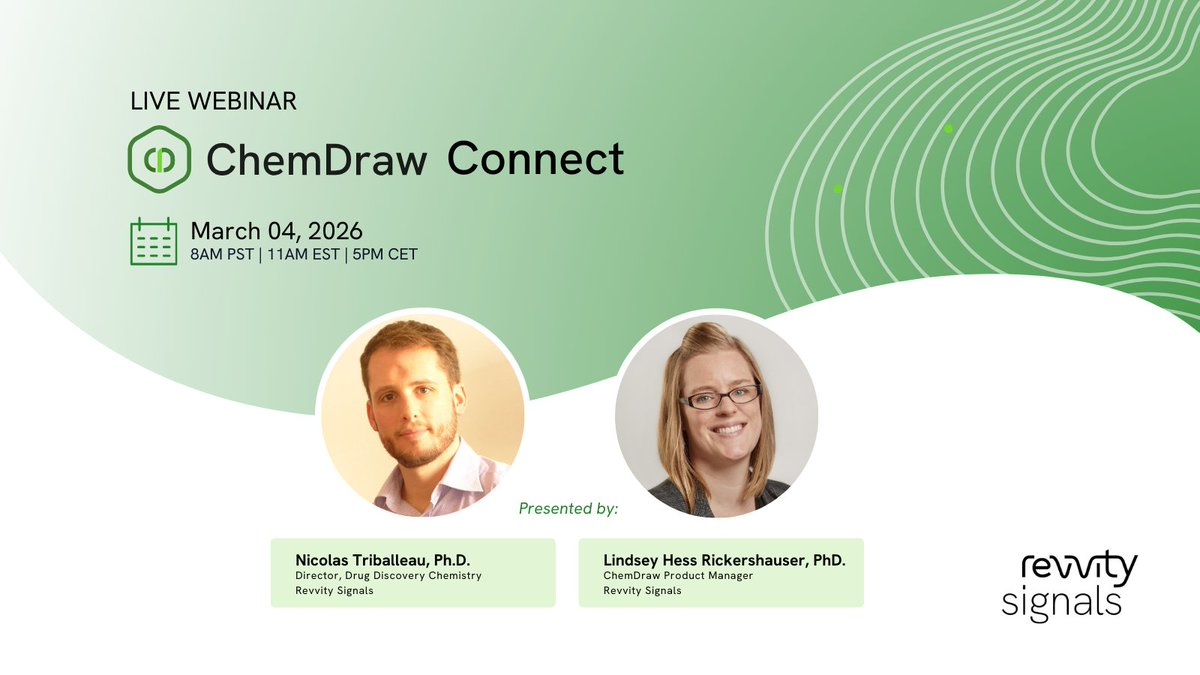
Drug discovery is evolving fast: from small molecules to biologics & conjugates. Managing diverse modalities shouldn’t slow you down.
Join our upcoming Connect to see how Signals ChemDraw brings clarity to complexity, and can help you focus on discovery: https://t.co/m0faGO8GGj
What gives a clover its green color? Chemistry, of course.
Today we’re celebrating #StPatricksDay with a #ChemDraw rendering of chlorophyll a.
Wishing you a day full of good fortune and great science! ☘️💚
#ChemDraw, now built for the cloud.
Join our next ChemDraw Connect to see how browser-based access and collaboration modernize chemistry workflows without sacrificing what users love about ChemDraw: https://t.co/007iMwFbAi
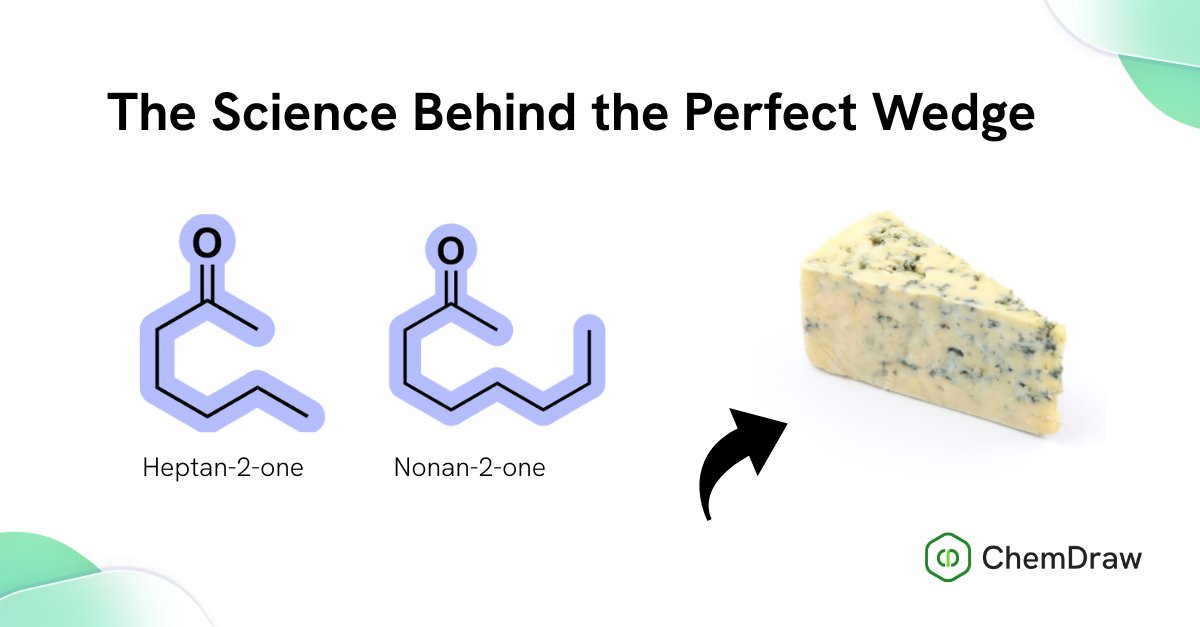
Ever wonder why blue cheese smells…like that?
For #NationalCheeseLoversDay, we turned to #ChemDraw to map the molecules behind the magic.
Heptan-2-one and Nonan-2-one are the key ketones that give blue cheeses their unmistakable, sharp aroma. 🧀
That gingerbread “zing” is chemistry at work. Gingerol (6-gingerol) transforms into zingerone or shogaol when heated, which is proof that molecular reactions make the season taste better.
Happy holidays! ✨
We recently asked several customers how #ChemDraw supports their work, and their answers blew us away.
Thank you to everyone who uses ChemDraw to move science forward. 💚https://t.co/5G5mJoaH0k
#ChemDraw40
When we asked #ChemDraw users how long they’ve been using it, the answers varied but the sentiment was the same: ChemDraw transformed their structures from “nice” to truly publication-ready. 💙✨https://t.co/mwJoK1xVnS
#ChemDraw40
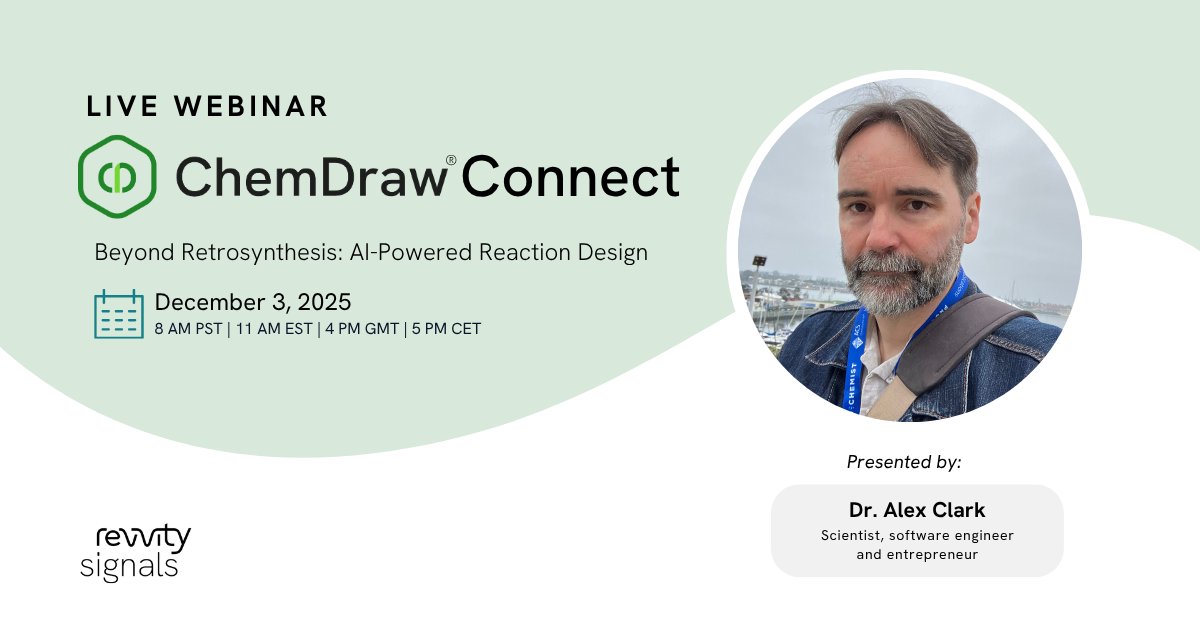
#AI is changing the way chemists design reactions.
📅Don't miss our next ChemDraw Connect webinar to see how #ML models can suggest solvents, catalysts, and reaction conditions, taking you beyond what retrosynthesis tools alone can achieve: https://t.co/JFJB3PO7oA
We asked #ChemDraw users to name their favorite feature. The responses?
Easy navigation. 3D cleanup. FAS typing.
Different answers, one theme: limitless creativity in building and visualizing chemical structures.
What will you draw next? 👇
#40yearsofChemDraw
As #BreastCancerAwarenessMonth comes to a close, we’re sharing a final breakthrough in cancer treatment.
In the 2000s, Trastuzumab emerged as a landmark therapy. It blocks cell signaling & triggers immune destruction of cancer cells. This ushered in a new era of cancer care.
This #BreastCancerAwarenessMonth, we’re honoring chemistry breakthroughs in cancer care.
💊 2000s: Trastuzumab came available. It targets the HER2 protein, blocking cell signaling & activating immune attack, ushering in an age of targeted therapy.
#DrugDiscovery
This #BreastCancerAwarenessMonth, we honor breakthroughs in chemistry for cancer treatment.
In the 1990s, Taxanes like paclitaxel emerged, revolutionizing therapy & stabilizing microtubules & halting cell division.
Drugs like paclitaxel remain staples in breast cancer care.
This #BreastCancerAwarenessMonth, we’re spotlighting milestones in chemistry-driven cancer therapies.
💊 1980s: Carboplatin emerged, forming DNA crosslinks.
💊 1990s: Capecitabine, an oral prodrug of 5-FU, became available.
Each breakthrough improved outcomes & tolerability.
As we honor #BreastCancerAwarenessMonth, we look back at the chemistry innovations that transformed cancer treatment.
💊In the 1960s, Anthracyclines like doxorubicin emerged & revolutionized therapy, blocking DNA replication & killing cancer cells.
During #BreastCancerAwarenessMonth, we’re reflecting on the breakthroughs that shaped cancer care.
💊 1950s: Antimetabolites like 5-fluorouracil emerged, mimicking DNA/RNA building blocks to disrupt synthesis & stop cancer cell replication.
A foundation of modern chemotherapy.
This #BreastCancerAwarenessMonth, we’re honoring breakthroughs that shaped modern chemotherapy.
💊 1940s: Alkylating agents, derived from WWII nitrogen mustard compounds, became the foundation for cancer treatment, disrupting DNA replication to stop tumor growth.
#chemdraw
How does #ChemDraw enable your research?
We asked a group of our customers that question and the answers were wide-ranging. But one theme stood out: they rely on ChemDraw every day.
Here’s to 40 years of ChemDraw powering discovery. 🎉https://t.co/IkPMkAiOee