Helping children lead healthy lives in a digital world through research, evidence-based recommendations, public education, and nonpartisan policy advocacy.
For years, #SocialMedia platforms have operated with limited accountability. A new ruling recognizes that design choices such as algorithms and engagement features, have real-world consequences for youth. Read our statement: https://t.co/2Ytt2N1BT0
#OnlineSafety#TechPolicy
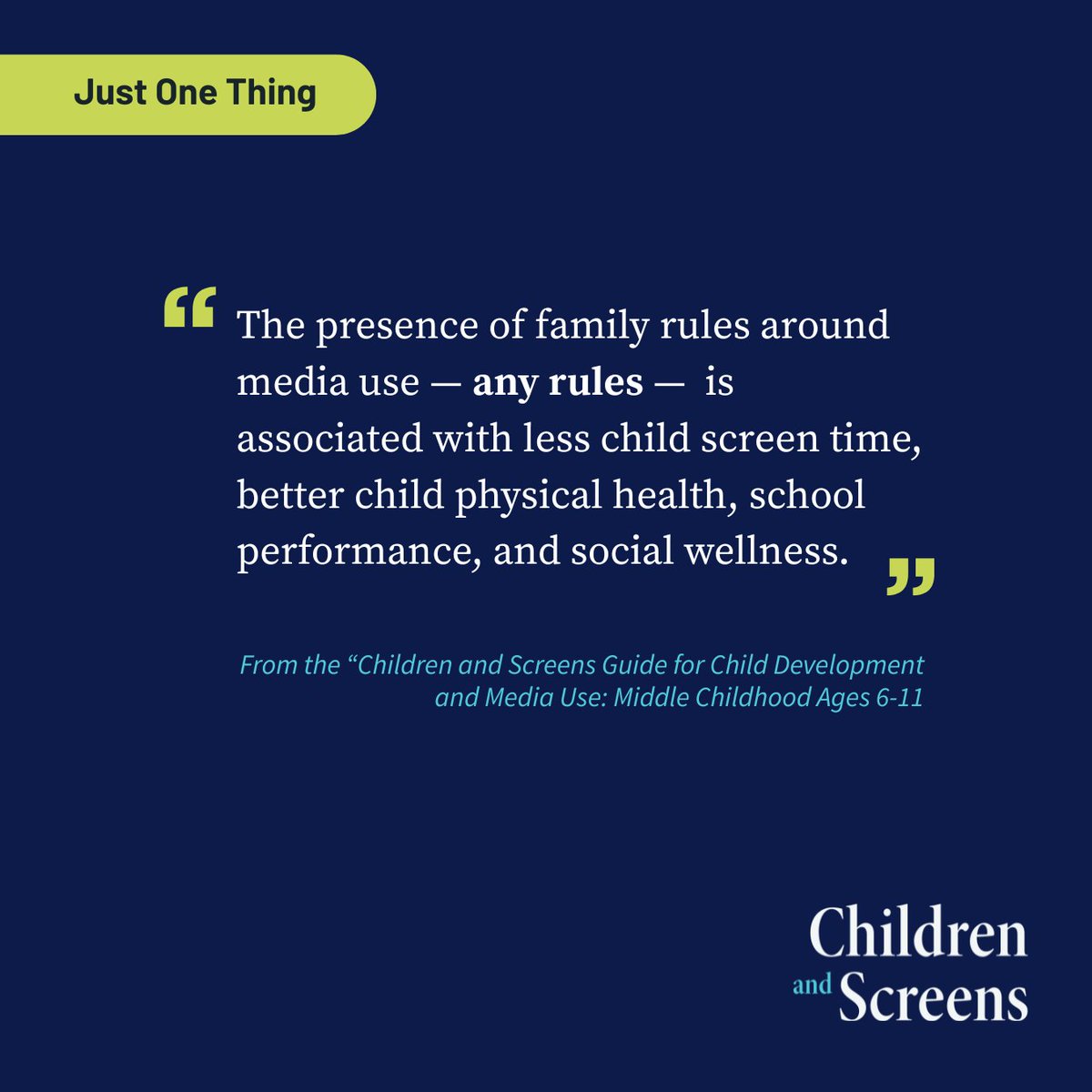
#JustOneThing to incorporate into your household this summer – be intentional and consistent about setting family rules around media use. Research indicates the presence of any kind of family rules about media use is associated with better child well-being.
Learn more from the Ages 6-11 Guide from Children and Screens 👉 https://t.co/Xdk5zt8NSD
What does the research say about the relationship between social media use and poor mental health outcomes in youth?
Download your copy of the NEW Research-at-a-Glance on “Social Media and Youth Mental Health” for a visual, printable summary to learn more 📲 https://t.co/TWmp3LfyYt
A recent cross-sectional survey study of adolescents found that increased physical activity was linked to improved internal motivation & #MentalHealth awareness, both of which were associated with a decreased risk for addictive short-form video use. Learn more: https://t.co/m9ALj3duia
The NEW expert-backed, evidence-based #TipSheet “Body Image and Media Use: A Guide for Parents” translates expert insights and the latest research into practical, actionable steps for guiding youth #SocialMedia use and encouraging positive #BodyImage development.
Read the tip sheet now 👉 https://t.co/aoUFh6KAQa
Brain rot is a lot like candy: a little now and again won’t hurt you. But the more you partake, the bigger a problem it can become.
https://t.co/TIf9aGIJnV
Learn the importance of co-viewing influencer content with your child and how to engage in active mediation of your child’s #SocialMedia feed from marketing expert Liselot Hudders, PhD, in the latest episode of #ScreenDeep.
Stream the podcast 🔊 https://t.co/TQsGrEEN7q
A recent long‑term observational cohort study found that infants with higher amounts of screen time displayed accelerated brain development patterns, slower decision-making skills in childhood, and increased levels of anxiety in adolescence. Learn more: https://t.co/MqQ9eegojR
#JustOneThing to practice today -- instead of focusing on the amount of daily screen time, learn from the experts & look carefully at the context of media use to determine appropriate limits for your young child.
Access more #ParentingTips on early childhood here 👉 https://t.co/7g0H24aSEE
In this clip from #ScreenDeep, Liselot Hudders, PhD, breaks down what her recent study on children under the age of 13 revealed about their ability to recognize commercial content integrated into influencer videos. Learn more🔊 https://t.co/TQsGrEEN7q
Social Media Harms Victim Remembrance Day #SMVRD reminds us that online experiences can lead to serious offline outcomes. Visit the #LearnAndExplore resource library today for resources on how to safeguard youth from the negative impacts of #SocialMedia use. 🔗 https://t.co/vZN4EWZV6x
This Social Media Harms Victim Remembrance Day #SMVRD, lean on evidence-based resources investigating social media’s impact on mental health outcomes for children and teens with the new Research-at-a-Glance on “Social Media and Youth Mental Health.” 🔗 https://t.co/1Z5K6R5RgH
Why is there a disconnect between how parents respond to harmful interactions on social media versus offline?
In this clip from #ScreenDeep, Imran Ahmed (CCDH) draws parallels between online and offline cruelty, urging parents to prioritize #OnlineSafety. Learn more: https://t.co/EmX4bP1uAO
Join our newsletter email list! ScreenShots brings you the latest research on the impacts of #DigitalMedia on #ChildDevelopment and new free parenting resources from Children and Screens along with policy updates and more!
Sign up today! 📧 https://t.co/ciC6bvs7UX
How do influencers and their sponsored content impact children’s thoughts, feelings, and behaviors?
Find out in the NEW #ScreenDeep episode as marketing expert Liselot Hudders, PhD, unpacks her research on the ins and outs of influencing. Tune in 🔊 https://t.co/TQsGrEEN7q
The expert-backed parenting #TipSheet “The ‘Social Brain’ on Screens” offers practical, evidence-based strategies for supporting social cognition in children and adolescents in the #DigitalAge.
Learn more #ParentingTips here 🔗 https://t.co/Dxf56DXkPs
Today is our Father's Day of Action for Online Safety! Join us to help pass the Kids Online Safety Act #fathersforKOSA 🦸♂️
Share your posts & videos today telling @SenTedCruz to markup KOSA now! #passKOSA
Learn more 🔗https://t.co/cJVeq2eDxP
A recent study of over 5,000 children under the age of 7 found that children who co-used media with their parents (talking, watching, or playing together) demonstrated more prosocial behaviors. Dive into the full study: https://t.co/oJodL4qY8T
Psychologist Anne Maheux, PhD, explores how online marginalization can negatively impact LGBTQ+ youth in unique ways in this #AskTheExperts short.
Learn more about how to help youth exploring their identity online in the Children and Screens Ages 11-18 Guide 🔗 https://t.co/8ms8SLyTab
Discover the big "Do's" and "Don'ts" for elementary schoolers’ healthy #DigitalMedia use and optimal development in the Children and Screens Ages 6-11 Guide!
Download your free copy of the guide now for more expert insights and evidence-based strategies: https://t.co/zHcuNrgBRh
The Children and Screens Evidence Council has released a new vote-based position:
7-2 in favor of screen-free Pre-K classrooms, citing the importance of play, social interaction, & hands-on experiences during a critical stage of #ChildDevelopment. Learn more: https://t.co/ksZyWYxeBV