@KhuluPhasiwe Secondly, is there really any need whatsoever for 1500 MW of new coal-fired power in SA? I would think not. Even IRP 2025 does not indicate any new coal-fired power in the years to 2043, and there is currently about 6800 MW of coal fired units in cold reserve.
Firstly, the court did NOT rule against new coal-fired power in SA per se. The court ruled that in including 1500 MW of new coal fired power in IRP 2019, and former Energy Minister Mantashe's Section 34 determination, and NERSA's concurrence, there was no evidence that the impact of 1500 MW of new coal-fired power on the environment, and on the health of children and future generations was even considered, and that the absence of any such consideration was unlawful. Does Minister Ramokgopa really have a problem with considering environmental and health impacts of coal-fired power?
I would suggest that the sole (100%) shareholder of Eskom (i.e the State) is entitled to transfer some of its assets to another (new) 100% state-owned company, with suitable shareholder (state) guarantees to protect the interests of lenders. I mean, we are dealing here with different parts of the same public sector balance sheet.
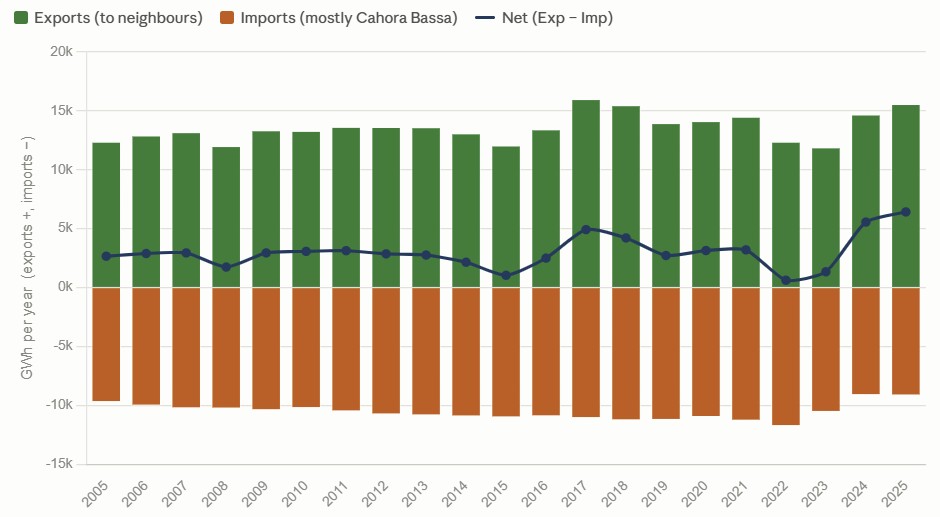
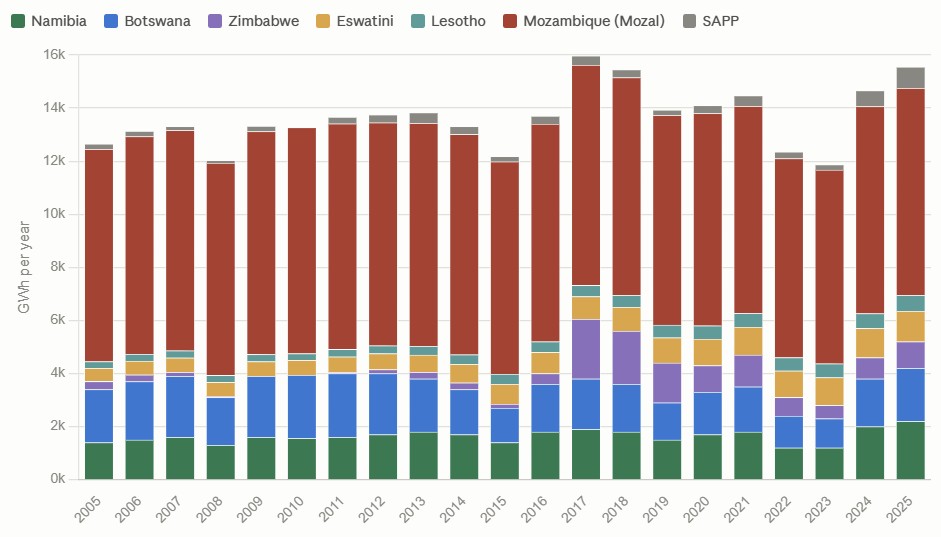
Electrical energy (GWh) imports, exports and nett exports - to and from Namibia, Botswana, Zimbabwe, Mozambique, Eswatini, Lesotho and the Southern African Power Pool (SAPP) - from 2005 to 2025. Note: South Africa is a nett exporter of electrical energy to the region. Source: EE Business Intelligence.
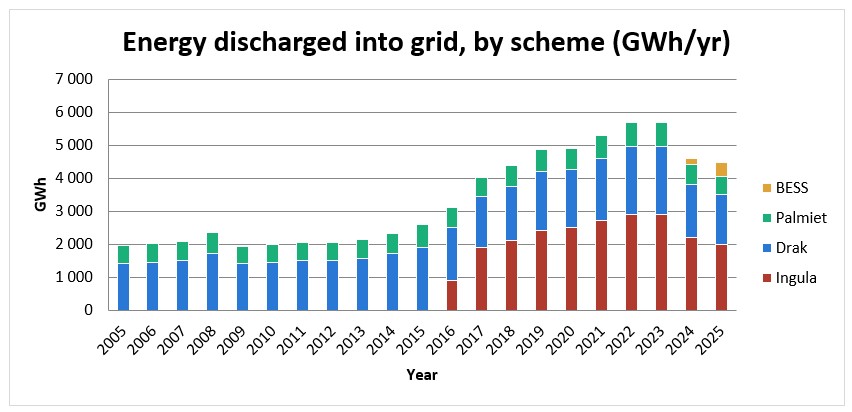
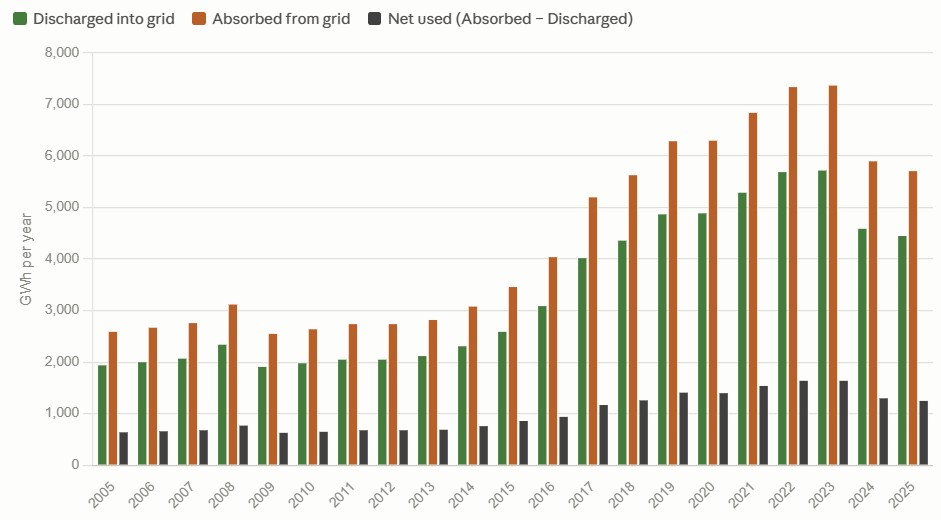
Electrical energy (GWh) generated, consumed and net consumption in SA - from pumped storage (Drakensberg, Ingula, Palmiet, Steenbras) and battery energy storage (BESS) - from 2005 to 2025. Note: pumped storage and BESS are net consumers of electrical energy over any year. Source EE Business Intelligence.
Electrical energy (GWh) generated in SA from private coal (excluding Kelvin), gas, backup diesel, and pulp, paper and bagasse cogeneration - from 2005 to 2025. Source: EE Business Intelligence.
Electrical energy (GWh) generated from peaking plant in South Africa - Eskom OCGT (Ankerlig, Gourikwa), IPP OCGT (Avon, Dedisa), hydro (Gariep, Vanderkloof), and other (Port Rex, Acacia) - from 2005 to 2025. Note: pumped storage and battery energy storage are excluded as these are nett consumers of electricity over any year. Source: EE Business Intelligence.
Electrical energy (GWh) generated from Eskom, municipal (Pretoria West and Rooiwal) and IPP (Kelvin) coal-fired power stations in SA - from 2005 to 2025. Energy from non-Eskom coal-fired power in SA from 2005 to 2025 is essentially negligable. Source: EE Business Intelligence.
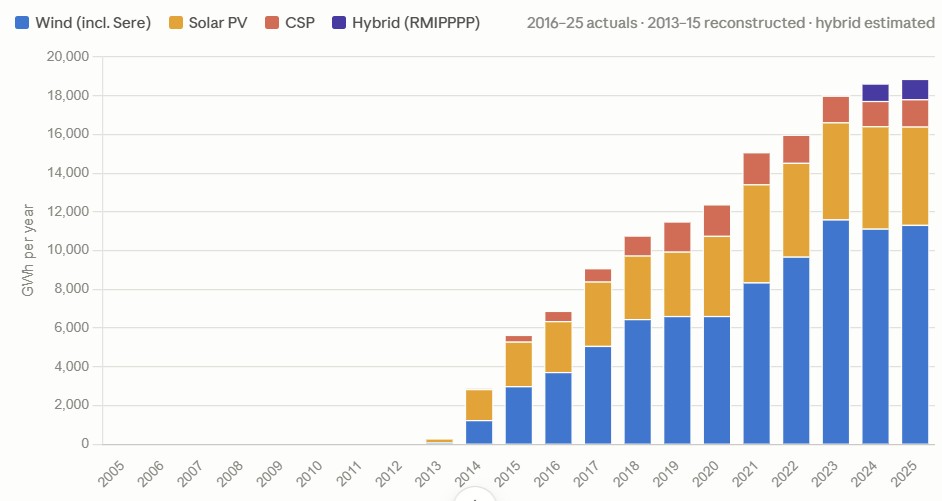
No, that is not correct, Paul. Read the graph carefuly. Privately procured wind and solar renewable energy in 2025 was about 40% of the total wind and solar renewable energy (TWH) generated in SA, with 60% being publicly procured renewable energy under the REIPPPP and RMIPPP, and Eskom Sere wind farm.
Electrical energy (TWh) generated in SA by both publicly and privately procured renewable energy plant in SA - from 2005 to 2025. Source: EE Business Intelligence.
Electrical energy generated by publicly procured renewable energy plant in SA - wind, solar PV, CSP, hybrid - via REIPPPP, RMIPPPP and Eskom Sere wind farm - from 2005 to 2025. Source: EE Business Intelligence.