I've spent 20 years building AI at Meta, Salesforce, and startups.
Last fall my team's AI agents started really working. I knew everything had changed.
Then my nieces, nephews, cousins started asking me how to get hired.
I haven't been able to stop thinking about it since. So I decided to leave and build something.
Today at #TIME100 Summit, we’re launching #NewWorkFoundation– free, open source AI tools for Gen Z navigating the worst entry-level job market in 37 years.
→ @dearCChq: what AI is doing to your profession
→ Field Report: best jobs for your major
→ JobClaw: match your strengths to roles + AI skills you need
Every job is becoming an AI job. Direct it, or be directed by it.
The future isn't automatic. I want to help #GenZ write theirs.
Grateful to have @AndrewYang joining as a Founding Advisor– someone who's been sounding the alarm on this longer than almost anyone.
https://t.co/7oEJKz8f6i
@TIME
What jobs will AI replace? That's the wrong question.
History shows that automation’s effect on jobs is never uniform. The impact on a job depends on which specific tasks gets automated: when automation causes the work remaining to require more expertise, wages rise because it’s harder to qualify for the job. When automation results in less expertise being needed, wages fall because many more people can enter the job, competing down wages (@MIT@davidautor).
Case 1. Direct replacement and displacement. Examples: translation work, customer support.
Case 2. Augmentation from automation of bottleneck tasks. Examples: radiology, software engineering.
Case 3. Job commoditization from automation of expert tasks and flooding of labor supply. Examples: taxi drivers, content creators.
Jevons paradox occurs in all of these scenarios, but the impact on jobs is very different. Especially now with self-improving AI, the evolution of jobs into these scenarios is dynamic and often hard to predict.
This is wonderful guidance from @clarashih on when students should start using AI. If you use it when you’re beginning something, you’ll make fewer mistakes—but never get the opportunity to learn from them. The best time to adopt it is when you have enough expertise to judge whether an output is good or bad, and use it as a tool to take your skills to the next level.
I very much enjoyed talking to Clara about how young people should prepare for the AI era. Watch here: https://t.co/AiAO4BsO9A
When a new technology comes along, it’s often young people who are most excited and old people who are most wary. For a time, this was true of AI. That is no longer the case. The Gen Z backlash to AI is one of the most fascinating developments in recent years. This is not a group of people rejecting something they don’t understand. They’re turning on something they know and use often.
Some of the concern is about what AI will do to the environment, but much of it is based on what the technology means for their job prospects. The data is still murky, but those worries are well founded. To get a sense of what young people are against, I sat down with @clarashih. Clara spent two decades in Big Tech before starting @dearcc_official to help young people get hired in the age of AI. We talked through what she’s seeing with the entry-level job market; which jobs are most exposed and which are most resilient; and what parents and universities should do. I was particularly intrigued by some of the interesting distinctions she drew between how one should use AI in different fields, such as computer science and media.
The issues we talked through, of course, don't just apply to young people. Entry-level jobs are disproportionately affected right now, but that’s going to change. Clara outlines a potential future where white-collar work falls into one of three buckets: people who make AI, people who use AI, and people who are managed by AI. The first bucket will command exorbitant salaries. But the second bucket, which includes most knowledge workers, is shrinking, and it might not be too long until many of them are in bucket three, and “shocked that the only jobs available to them are not nearly as desirable as the job that they've had.”
It was a fascinating, occasionally distressing, conversation that ended on a note of optimism. I hope you watch and subscribe.
https://t.co/AiAO4BsO9A
History tells us automation is rarely one-size-fits-all. Some roles will disappear like elevator operators of yesterday. For most, it’s more nuanced. AI chips away at some tasks within each occupation, often changing who can do the job. https://t.co/BEKIjAygun
What jobs will AI replace? That's the wrong question.
History shows that automation’s effect on jobs is never uniform. The impact on a job depends on which specific tasks gets automated: when automation causes the work remaining to require more expertise, wages rise because it’s harder to qualify for the job. When automation results in less expertise being needed, wages fall because many more people can enter the job, competing down wages (@MIT@davidautor).
Case 1. Direct replacement and displacement. Examples: translation work, customer support.
Case 2. Augmentation from automation of bottleneck tasks. Examples: radiology, software engineering.
Case 3. Job commoditization from automation of expert tasks and flooding of labor supply. Examples: taxi drivers, content creators.
Jevons paradox occurs in all of these scenarios, but the impact on jobs is very different. Especially now with self-improving AI, the evolution of jobs into these scenarios is dynamic and often hard to predict.
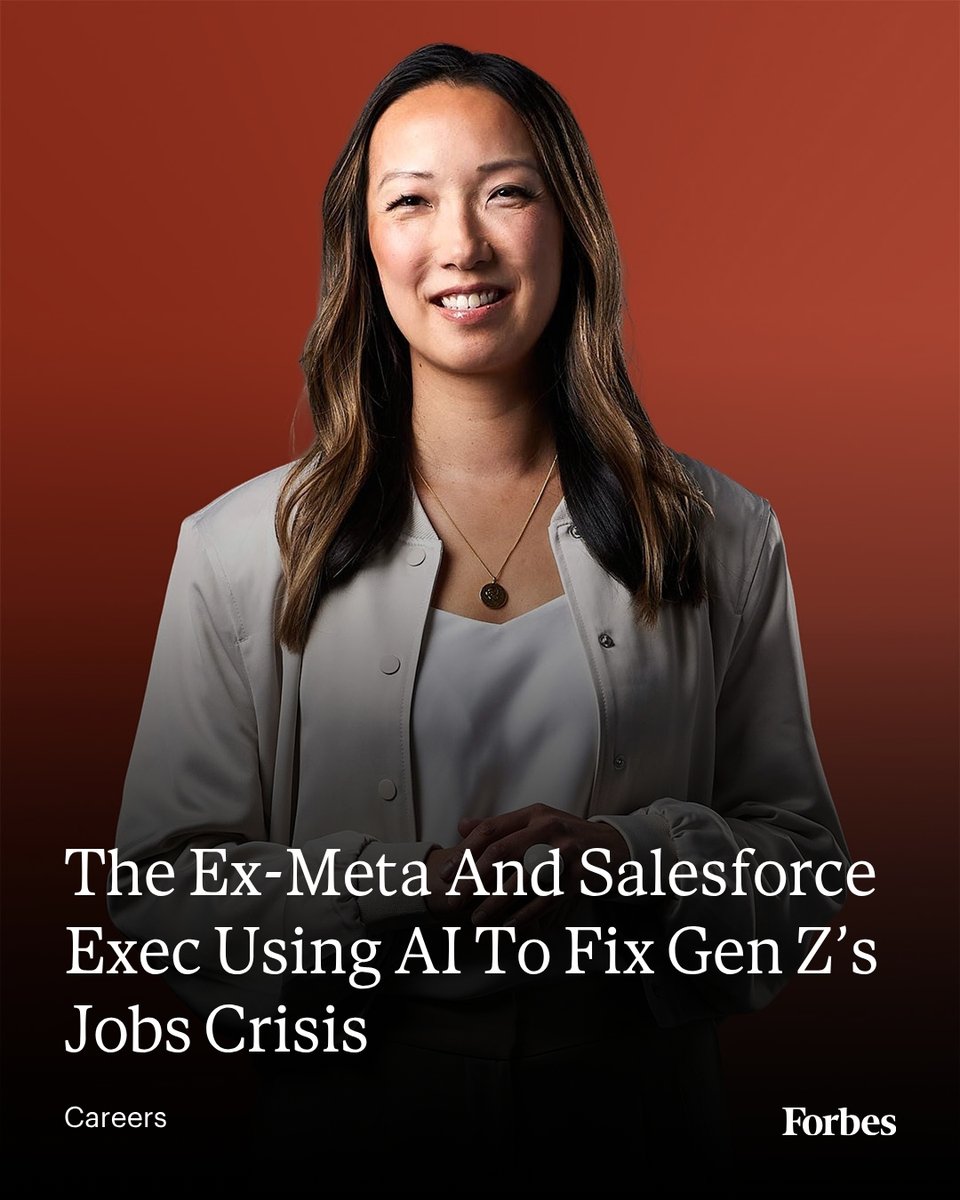
After seeing first-hand how artificial intelligence can transform hiring, tech exec Clara Shih started the New Work Foundation to help young people build careers using AI, rather than be replaced by it. https://t.co/CCKqQEZrFc
📸: New Work Foundation
History tells us automation is rarely one-size-fits-all. Some roles will disappear like elevator operators of yesterday. For most, it’s more nuanced. AI chips away at some tasks within each occupation, often changing who can do the job. https://t.co/BEKIjAygun
History tells us automation is rarely one-size-fits-all. Some roles will disappear like elevator operators of yesterday. For most, it’s more nuanced. AI chips away at some tasks within each occupation, often changing who can do the job. https://t.co/BEKIjAygun
Designers use AI more for engineering than for design.
Sales uses AI more for marketing than for sales.
HR uses AI more for finance than for hr.
If you think your job isn’t changing in the next three years because of AI, you are out of your mind.
The future of work post-AI should feel like opportunity, not anxiety. But for 2M recent grads today, it feels like hitting a brick wall.
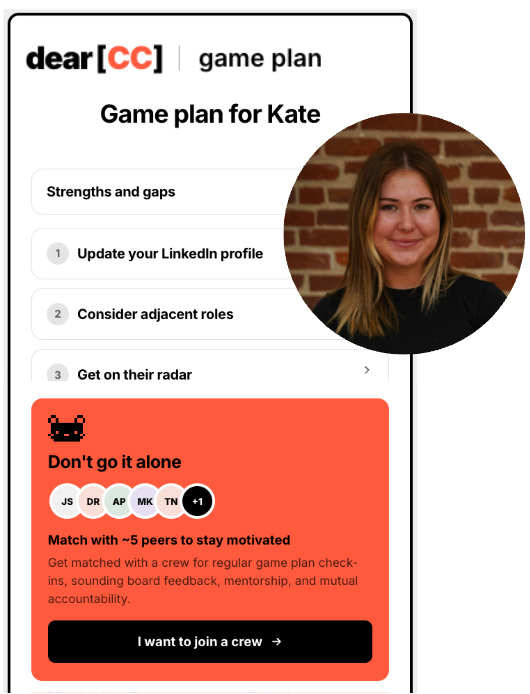
That's why we built @dearcc_official Game Plan, a free job search community and mentoring app. It helps give entry-level jobseekers the AI skill set, mindset, and network you need to stand out and get hired.
Instead of blasting out your resume, hone in on what to fix, who to reach, and how to prepare for the new work economy.
Try the beta or send to a young person you know: https://t.co/quAdIHo1lw
#careers #entrylevel #jobs #jobsearch #community
The future of work post-AI should feel like opportunity, not anxiety. But for 2M recent grads today, it feels like hitting a brick wall.
That's why we built @dearcc_official Game Plan, a free job search community and mentoring app. It helps give entry-level jobseekers the AI skill set, mindset, and network you need to stand out and get hired.
Instead of blasting out your resume, hone in on what to fix, who to reach, and how to prepare for the new work economy.
Try the beta or send to a young person you know: https://t.co/quAdIHo1lw
#careers #entrylevel #jobs #jobsearch #community
dearCC is part of the New Work Foundation, started by good friends of mine @clarashih@nrmehta. It's been fun to advise + watch them grow
If you'd like to get involved as a mentor, please visit: https://t.co/6RpJmaUAqL
Some friends of mine are trying to help young people find their footing in the AI era.
@dearcc_official built a free Game Plan to help young professionals turn your experience + goals into a path. Plus a crew of peers + mentor to support you.
Try it: https://t.co/PnRogdocBb
@clarashih and I hosted our first (in-person/virtual) offsite for New Work Foundation (NWF) yesterday in San Francisco (thanks to @BessemerVP for hosting!)
Our mission for the non-profit is to "equip young workers in America with the AI tools, skills, and community to navigate an AI-reshaped economy."
Some takeaways from trying to get this off the ground:
1. Everyone Wants to Help: When you state a universally important and shared goal like "helping young people to get started in their lives," the outpouring of support is limitless. We had ~25 all-volunteer humans join the meeting across all walks of life, from Gen Z folks looking for work to experienced executives searching for meaning. We started by asking everyone their "why" for interest in NWF. The answers were inspiring and collectively amounted to the idea that the future with AI can be great if we make it so.
2. This is a Startup: When Clara kindly asked me to join her as a co-founder, her approach really sold me. She wanted to run this like a startup, with lots of experimentation and fast failure. The problem we are trying to solve is clear. The solution is not. So it's fun to be in brainstorming mode.
3. Creativity Matters: Part of NWF is our DearCC content machine, producing podcasts and videos with recent grads talking about what it's like to find a job. We want to get more and more creative in how we produce the content. Expect some engaging stuff coming soon!
4. Claude Coding Our Way to Impact: We have been prototyping a number of solutions to help job seekers and it's been incredible to see our pace of iteration, given AI tools. StayRelevant (link below) is just one example of what's the come.
5. The Human Impact Is Real: My biggest takeaway is that we often intellectualize the jobs challenge - "how do we help people find roles?" Careers provide money and security, so they are important. But equally, we were heartened by the stories of job seekers who talked about the emotional toll - in particular, the loneliness of finding work. In our solutions, we want to make sure we help people with a sense of connection as well.
We're all honored to have this side gig to help in a small way. So fired up for what's to come!