One of the biggest misconceptions in high school sports is that coaching is primarily about practices, games, and wins.
The reality is that coaching has become one of the most challenging roles in education because coaches are expected to wear dozens of hats while being evaluated from every direction.
Every parent, player, administrator, and community member often has a different expectation of success.
One family wants college recruiting to be the priority.
Another wants playing time.
Another wants winning.
Another wants player development.
Another wants discipline.
Another simply wants their child to enjoy the experience.
The challenge is that those goals frequently conflict, and coaches are often expected to satisfy all of them simultaneously.
Most coaches are balancing far more than what happens between the lines. They manage team culture, player conflicts, parent concerns, academics, transportation, fundraising, budgets, equipment, scheduling, eligibility, social media issues, and the emotional needs of teenagers.
At the same time, every roster includes athletes with different abilities, goals, motivations, and commitment levels. Some dream of college athletics. Some are trying to make varsity. Some simply want to belong. Building one program that serves all of them is incredibly difficult.
Perhaps the greatest challenge is decision-making.
Who starts?
Who plays?
Who sits?
Who travels?
Who gets moved up?
Who gets cut?
Every decision creates opportunity for one athlete and disappointment for another. Even well-intentioned decisions can be viewed as favoritism or politics when seen through the lens of an individual family.
Recruiting adds another layer of complexity. Coaches are expected to help athletes pursue college opportunities while also managing the needs of an entire team. Supporting one athlete can sometimes raise questions from another family about their child’s opportunities.
Social media has amplified many of these challenges. One lineup decision, one difficult conversation, or one emotional moment can quickly become public discussion, often without the full context.
There are also pressures many people never see.
Pressure from administrators to represent the school well.
Pressure from parents to provide opportunities.
Pressure from athletes to help them achieve their goals.
Pressure from communities that often measure success by wins and losses.
Pressure to retain athletes in an era of increasing transfers and movement.
And all of this occurs while coaches are trying to develop young people, not just athletes.
What makes coaching difficult is not that people don’t care.
It’s that everyone cares deeply, but often about different things.
Parents focus on their child.
Players focus on their opportunities.
Administrators focus on the school.
Communities focus on results.
Coaches must somehow balance all of those interests while making decisions they believe are best for the team.
As a former college coach, athletic director, and high school administrator, I’ve learned that most coaches are not trying to hold athletes back, play favorites, or make life difficult for families. Most are simply navigating competing priorities, limited resources, and difficult decisions while trying to do what’s best for kids.
Because at its core, coaching has never really been about managing games.
It’s about managing people.
And that’s what makes it both incredibly challenging and incredibly important
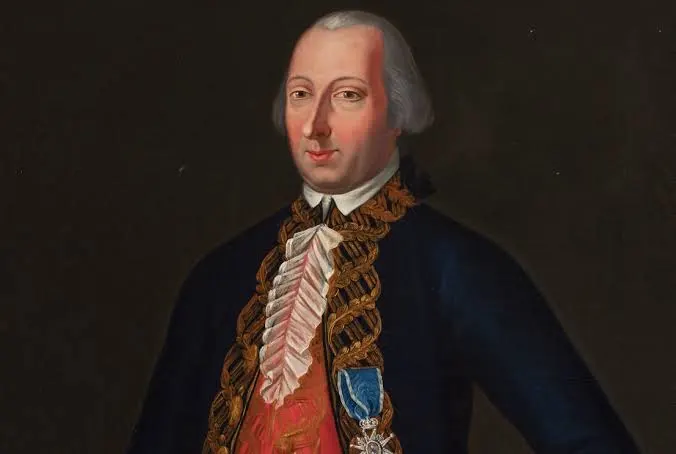
245 years ago today, a 35-year-old Spanish nobleman fired a single artillery shell that redrew the map of North America, broke British power in the Gulf of Mexico, and arguably saved the American Revolution. His name was Bernardo de Gálvez. He's not in your textbook. He should be.
When Spain entered the war against Britain in June 1779, the American cause was bleeding out. Washington's army was unpaid and shrinking. The Continental dollar was worth pennies. The British had taken Savannah and were preparing to take Charleston. France was helping, but France alone couldn't bankrupt the British Empire.
Spain could. And in New Orleans sat the man who would prove it.
Bernardo de Gálvez y Madrid was 33 years old, the governor of Spanish Louisiana, a battle-scarred career officer who had been wounded fighting Apaches in northern Mexico and Algerians in North Africa. The day he learned Spain had declared war, he didn't wait for orders from Madrid. He raised an army of Spanish regulars, Louisiana Creoles, free Black militia from New Orleans, Acadian refugees, German settlers, and Choctaw scouts, and he went on the attack.
In three months he took Manchac, Baton Rouge, and Natchez. The next year he took Mobile. The British presence on the Gulf shrank to one last fortress. Pensacola, the capital of British West Florida, defended by Major General John Campbell with 1,500 redcoats, the 3rd Waldeck Regiment of German mercenaries, loyalist battalions from Maryland and Pennsylvania, and a powerful alliance of Creek and Choctaw warriors led by the brilliant mixed-race chief Alexander McGillivray.
Gálvez arrived off Pensacola in March 1781 with 7,000 men and a fleet. The Spanish naval commander, Admiral Calbo de Irazábal, refused to enter Pensacola Bay. The entrance was narrow, raked by British guns at Fort Barrancas Coloradas, and treacherous with sandbars. So Gálvez did something insane. He boarded his own little brig, the Galveztown, hoisted his personal pennant, and sailed her into the bay alone, in full view of the British batteries, daring the Royal Navy to sink him. The British fired and missed. The Spanish fleet, shamed, followed him in. For this he was awarded the right to put the words "Yo Solo," meaning "I alone," on his coat of arms by the King of Spain.
The siege ground on for two months. Gálvez was shot in the abdomen and the finger directing artillery and refused to leave the field. The British defenses at the Queen's Redoubt, also called the Crescent, held against everything thrown at them. And then, on the morning of May 8, 1781, a Spanish howitzer crew lofted a shell over the parapet. It dropped, by pure luck or perfect skill, directly into the open powder magazine.
The explosion killed roughly 100 defenders in a single instant. Waldeck grenadiers, British regulars, loyalists, all gone. The blast tore the redoubt's wall open like paper. Spanish grenadiers and Louisiana militia poured through the breach within minutes and turned the captured British guns on the inner works. Campbell knew it was over.
The next morning, May 9, white flags went up. By May 10 the entire province of West Florida belonged to Spain. Over 1,100 British troops marched out as prisoners of war.
The strategic consequences were catastrophic for Britain. The Gulf Coast was lost. The Mississippi was a Spanish river from source to sea. Britain could no longer reinforce its southern armies by sea from the Caribbean, and the Royal Navy's Caribbean squadron had to be redeployed. Five months later, Cornwallis surrendered at Yorktown, in a siege funded in part by 500,000 silver pesos that Gálvez and the people of Havana raised in a matter of days to pay French Admiral de Grasse's fleet to come north.
Without that money, no French fleet. Without the French fleet, no Yorktown. Without Yorktown, no independence on those terms.
Gálvez was made Count of Gálvez and Viscount of Galveztown. The bay he charted in Texas still bears his name, Galveston. His portrait hangs in the United States Capitol by act of Congress. In 2014, he was made an honorary citizen of the United States, an honor given to only eight people in American history, including Lafayette, Churchill, and Mother Teresa.
He died of yellow fever in Mexico City at 40 years old, three years after the war ended.
Most Americans have never heard his name.
@FiredCoaches@HallTechSports1 Alabama allows 7th grade and up to participate in any varsity sport. Years ago there was a girl at Woodland High School who played varsity basketball from 7th grade all the way up. It’s not a years restriction here. It’s an age restriction.
Legends of the Fall might not be one of Brad Pitt’s best films, but I think it’s one of his best performances. This is a beautiful movie that won the Oscar for Best Cinematography & captures the Montana landscape so well. But Pitt is simply outstanding & the best part of the film
@RichfieldRich At the vast majority of schools in Alabama it’s already just a supplementary position. Really only the biggest schools have an AD who isn’t coaching something as well—we have about 160 kids in 9-12 and 13 sports and it’s supplementary.
@marksmelley@BenThomasPreps I am fully aware that the school districts employ electricians. I’m mostly talking about the extra cost to purchase them and/or the extra cost to operate them. There are a LOT of schools in this state that frankly will struggle to afford each of these things.
BREAKING: Jacksonville State will hire Spring Garden High School coach Ricky Austin to lead its women’s basketball program.
The Alabama High School Sports Hall of Fame member led Spring Garden’s girls basketball program to nine state titles.
Story: https://t.co/Jw1RP6atfn
Marcus Aurelius was the most powerful man on earth.
He could have had any woman he desired. Been drunk and partying for the rest of his life. No one would have stopped him.
He chose none of it.
Instead, he spent his nights writing privately about his daily struggle to live better. Those notes, never meant to be published became Meditations. The foundational text of a 2,000-year-old philosophy called Stoicism.
Here's what it actually teaches.
At its core, Stoicism begins with a single, uncomfortable truth: most things are not up to you.
Your relationships, your finances, your reputation, your body. You can influence these, but never fully control them. Even if you do everything right, misfortune can still find you. The economy collapses. Partners leave. Bodies fail.
But here's where Stoicism flips the script.
While you can't control what happens to you, you can always control how you respond. Your opinions, your actions, the position you take toward the world. These belong entirely to you. And according to the Stoics, that's where all your energy should go.
This doesn't mean becoming cold or emotionless, a common misconception about Stoicism.
The Stoics saw emotion as a deeply human characteristic. What they understood, though, is that it's not the emotion itself that determines your mood. It's the position you take toward it. When you learn to observe your feelings rather than be consumed by them, they lose their power over you. Emotions become like waves: they rise, they pass, and you remain standing.
That shift in perspective changes everything.
Marcus Aurelius lived this philosophy every single day. He had every reason not to.
Each morning, before facing the demands of running the world's most powerful empire, he practiced what the Stoics called praemeditatio malorum, negative visualisation. He would mentally prepare himself for the difficulty ahead:
"Today I shall be meeting with interference, ingratitude, insolence, disloyalty, ill-will, and selfishness."
This wasn't pessimism. It was readiness. A mind that has already confronted difficulty isn't rattled when it arrives.
He also carried memento mori, the constant reminder that life is temporary. Not as a morbid obsession, but as a tool to stay focused on what truly matters and let everything trivial fall away.
And that, ultimately, is what Stoicism is about.
We live in an age of endless distraction: notifications, opinions, noise competing for our attention at every turn. It's easy to scatter your energy across things you can't change and exhaust yourself in the process.
Stoicism offers a quiet, clear alternative: point your energy toward what's essential, and release everything else.
Marcus Aurelius had unlimited power, unlimited pleasure, and unlimited distraction available to him. He chose none of it and spent his nights writing about how to be better.
That alone might be the most Stoic lesson of all.
A high school basketball season isn’t just about wins and losses.
It’s about growth.
How does your team handle adversity?
How do they celebrate success together?
@jlunce There was some suggestion of separating the smaller private schools from the smaller public schools and putting only 32 in 1A. I could reasonably see that being done but I tend to agree with you. When we got that attendance numbers spreadsheet, that told me it’s not changing.