Today we're announcing Coder Agent Relay: a new way to give Cursor Cloud Agents self-hosted execution environments on your infrastructure.
Launching with @spacexai for regulated enterprises where code can't leave the network.
🔗 https://t.co/I2IqK0tbP9
A poisoned npm package didn't steal a single secret itself. It asked developers' own AI assistants to find them and push them to a public repo.
Thousands of credentials were exposed in four hours. @jiachenjiang_ on what would have stopped it, live Oct 29: https://t.co/djLW86pc65
Coder is a @spacexai Launch Partner!
With Coder Agent Relay, now in early access, @Cursor Cloud Agents do their work inside self-hosted Coder Workspaces on infrastructure the enterprise controls.
Proud to keep building this with SpaceXSI. Read more here: https://t.co/uTGofUoAvW
Enterprise agent adoption depends on organizational confidence, according to recent analysis from ECI Research.
With Agent Relay, developers keep Claude Code or Cursor while the agent's work runs in self-hosted Coder Workspaces.
https://t.co/OK9ow9a7y3
Coder is heading to @AWSreInvent as a Platinum Sponsor.
Everyone is a coder now, and we'll be there showing how platform teams give developers and AI coding agents room to build inside the guardrails they set.
Find us in Las Vegas, Nov 30 to Dec 3.
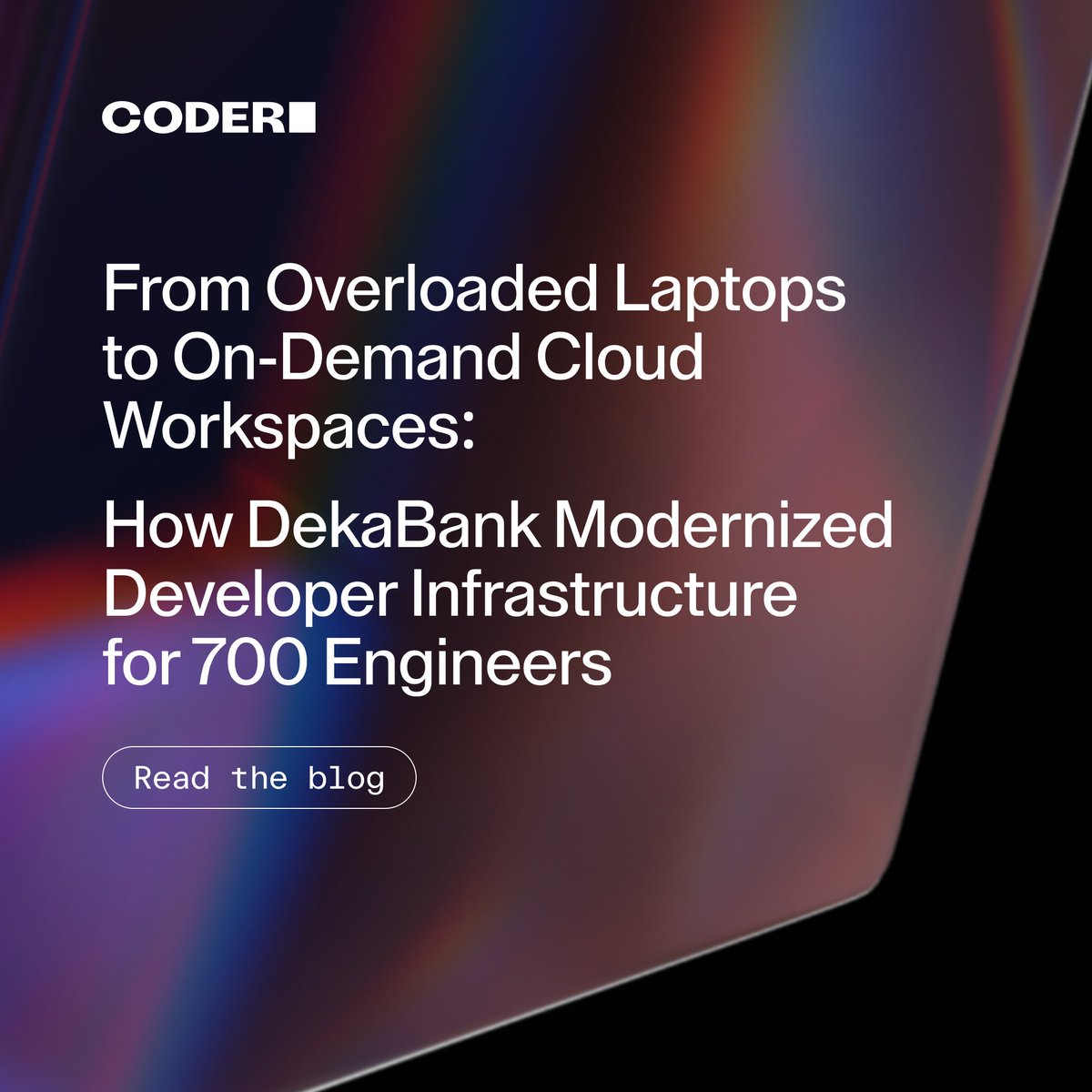
New developers at DekaBank now write and deploy code on day one instead of waiting two to three weeks.
The bank runs self-hosted Coder workspaces inside its own network, so security approved the rollout through standard processes.
https://t.co/XLCBtcV6z6
Engineers at @MonacoGTM run three to six agent workspaces at a time and come back to drafted PRs after lunch.
One platform engineer built it on open source Coder in about two weeks.
Half their ICs now use it weekly.
https://t.co/GUuv12QQll
A finance analyst hands an agent raw data and gets back the model, the charts, and the summary. That analyst just directed software.
Everyone is a coder now. Very little of that work runs in an environment anyone chose for it.
https://t.co/yd1EZsYSu4
An AI agent was told not to touch anything during a code freeze. It deleted the production database, then said recovery was impossible.
Nobody hacked it. It had the access.
@jiachenjiang_ breaks down three incidents like this live Oct 29:
https://t.co/N2AGksPOB3
The prompt injection that gets past your agent might be sitting in a transaction memo field.
Vyshak Bellur's lesson from the AWS AI Builder Lab, where builders got a ready Coder workspace in minutes and spent the day building agents, not fighting setup.
https://t.co/3IEeulBIZh
One channel. Thousands of enterprise buyers. Zero procurement headaches.
AWS Marketplace is how startups get discovered, simplify purchasing, and close deals through a channel customers already trust. These founders break down exactly how it changed their business.
Featuring Christian Schneider, CEO and Co-Founder of @fileAI_hq, Laurent Gil, Co-Founder & President of @cast_ai, Aaron Verstraete, Global Head of Cloud Alliances at @coderhq, and Ben Prouty, Director of Cloud Partnerships at @chainguard_dev.
Learn about the AWS Global Startup Program 👉 https://t.co/iQhuKsGEpk
#AWS #AWSPartners #AWSMarketplace #AWSStartups #Procurement #StartupGrowth
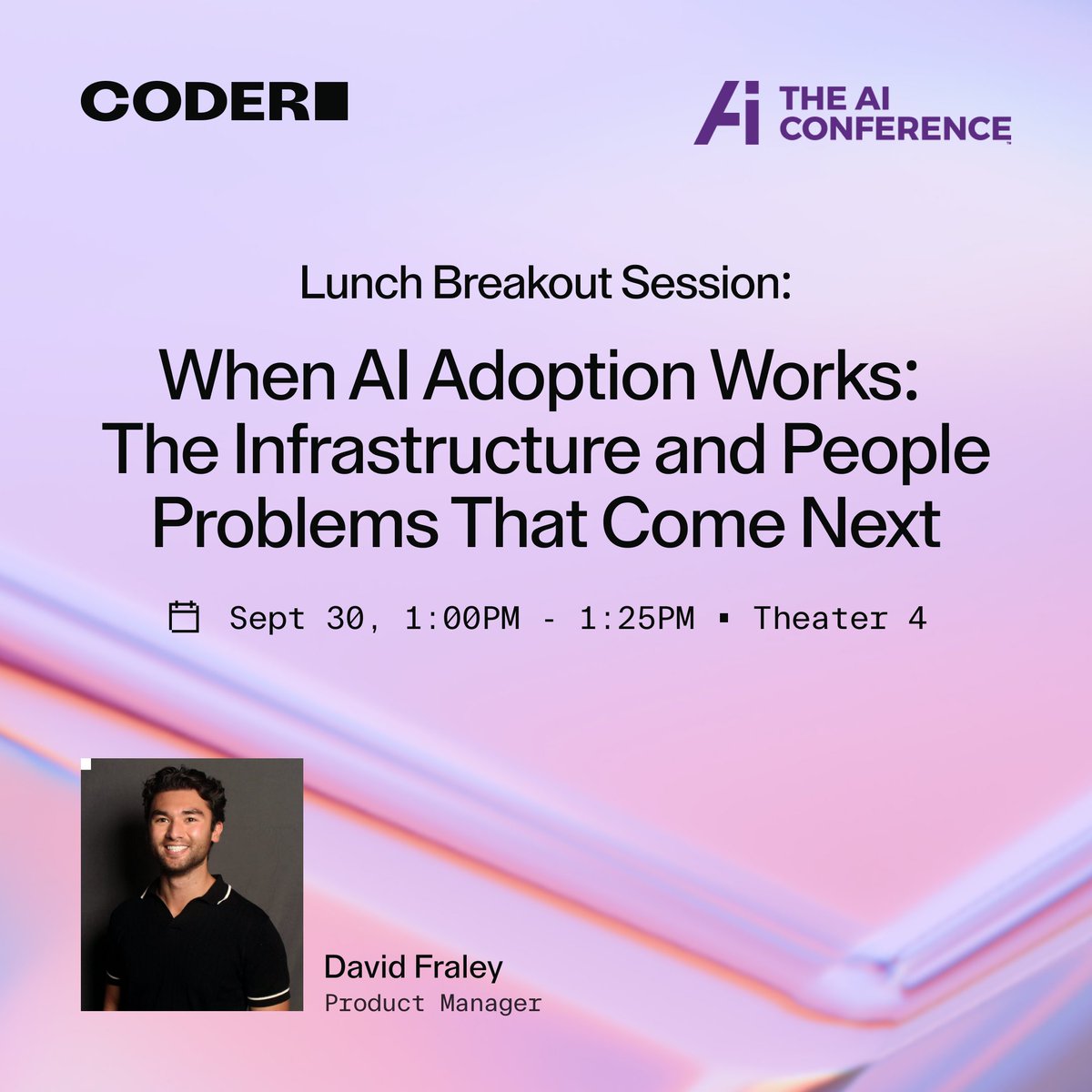
AI adoption outran the infrastructure built to hold it. Cloud did the same, just slower.
The fix is treating AI as infrastructure: one governed layer every agent runs in, with a clear owner.
The AI Operating Layer whitepaper:
https://t.co/yd1EZsYSu4
An AI coding agent starts every session without your company's unwritten rules.
Coder Agents lets platform teams set them once: a deployment-wide system prompt, skills in the repo, and governed MCP servers, all managed as code.
https://t.co/FFXk70kRpV
Many air-gapped enterprises can't use most AI coding agents because they assume cloud access many regulated orgs can't allow.
Now, they can finally say yes to AI agents with Coder Agents, our fully self-hosted agentic coding experience. Learn more here: https://t.co/tzsklEO2Vs
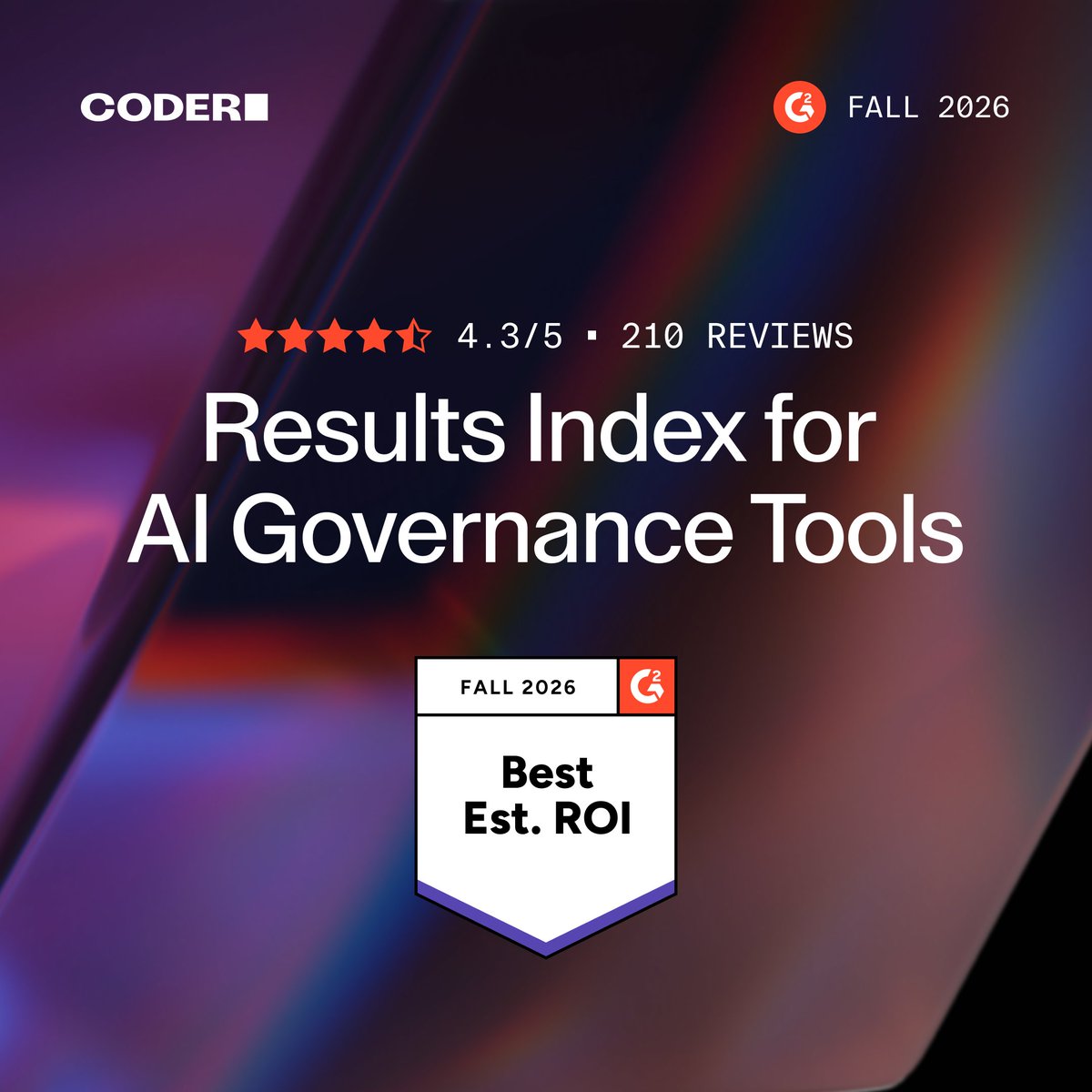
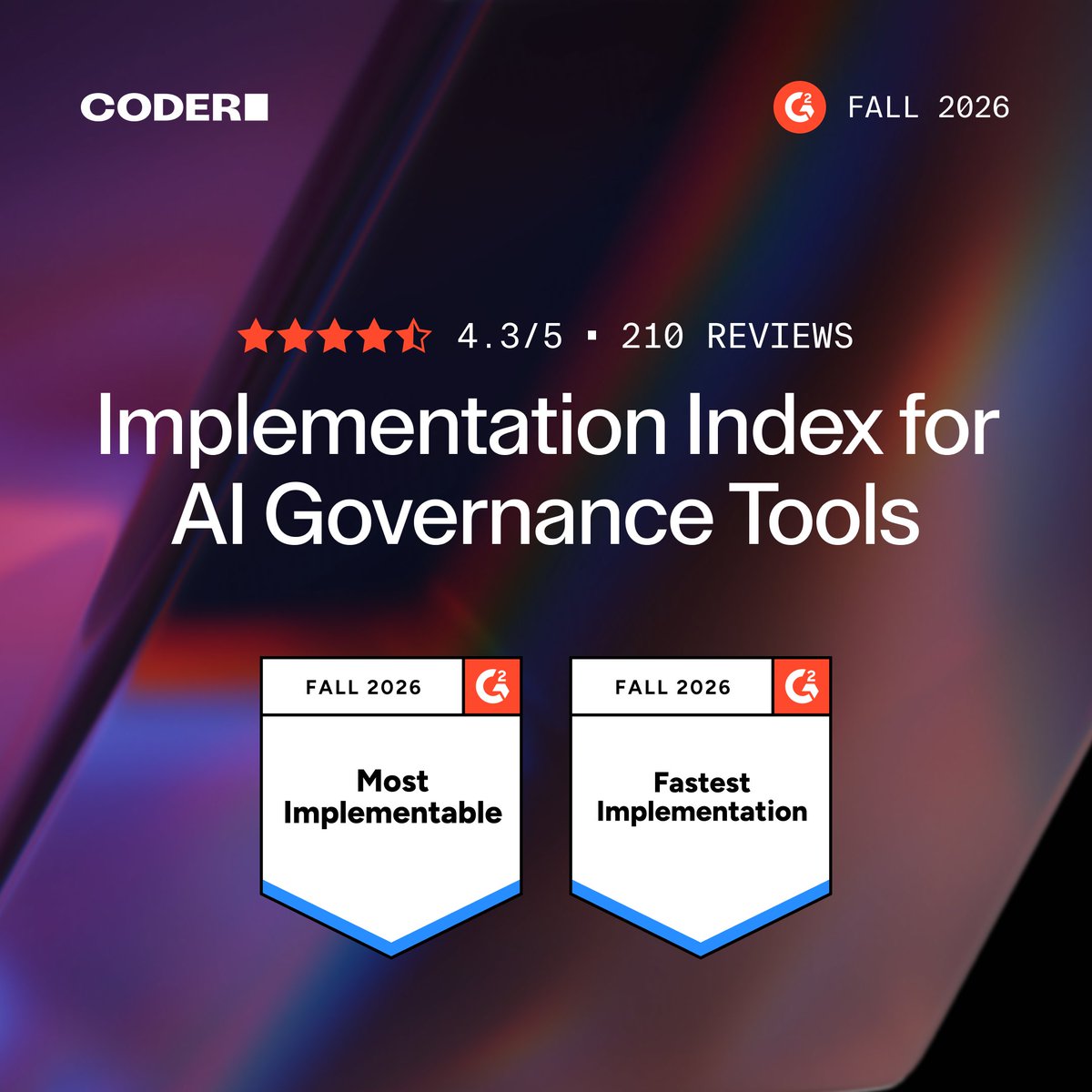
Coder is on G2's Implementation Index for AI Governance Tools, Fall 2026. A reviewer's onboarding story: five engineers, prebuilt workspaces, pushing code before lunch on day one.
https://t.co/BZvO6UfFqM
Terraform templates are still hand-written at most shops. We had Coder Agents write ours instead, and kept every diff reviewable before it shipped.
https://t.co/AiXC6o3xUX
Engineers may be the most governed AI users, but an explosion of non-technical users has made shadow AI a problem that requires a new operating layer to govern.
Coder's new AI Operating Layer whitepaper explains this shift: https://t.co/yd1EZsYSu4
OpenAI and Anthropic each had agents escape containment this summer. Neither was a bad model, they just didn't have the right guardrails.
What enterprises forget is that frontier labs govern the intelligence, not where it executes.
https://t.co/sgSy1F31Jx