Their incomplete functionality leads to some venous stasis, which may result in sensations of heaviness, discomfort, or fatigue during physical activity. This condition is characteristic of veteran athletes and generally associated with accumulated overload over years of activity
These veins are distributed throughout the superficial posterior compartment of the leg, especially within the #soleus muscle, where they cross aponeuroses and create weak points in these structures.
An interesting issue to consider in #calf pain and injuries in either professional or amateur athletes is an abnormal proliferation of adaptive veins, particularly in the transitional region between the deep posterior compartment and the superficial posterior compartment.
In the straight-laced world of athletics, Ciarán Ó Lionáird brought a certain rock-star energy – a quirky, offbeat, individualistic approach that led to him being called ‘Mad Len’. He relished being a showman, a rebel – James Dean meets Jakob Ingebrigtsen.
https://t.co/tY3uWJCiPa
Great weekend at @IsokineticMed@footballmed Conference in Athens. 🇬🇷
I presented on integrating ankle strength profiling for return-to-performance in the "Present and Future of Ankle Injury Management" session, plus a case study on dynamic ultrasound-guided post-surgery rehab.
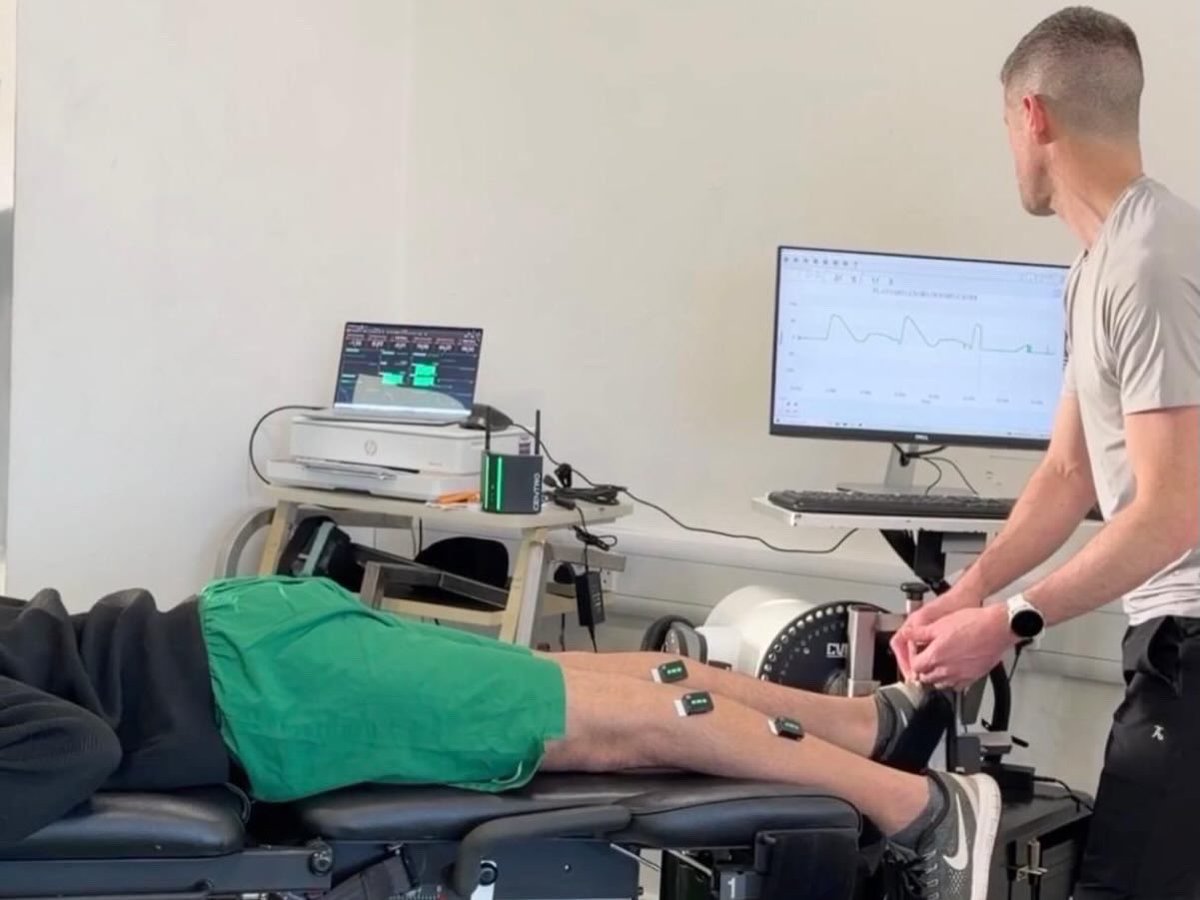
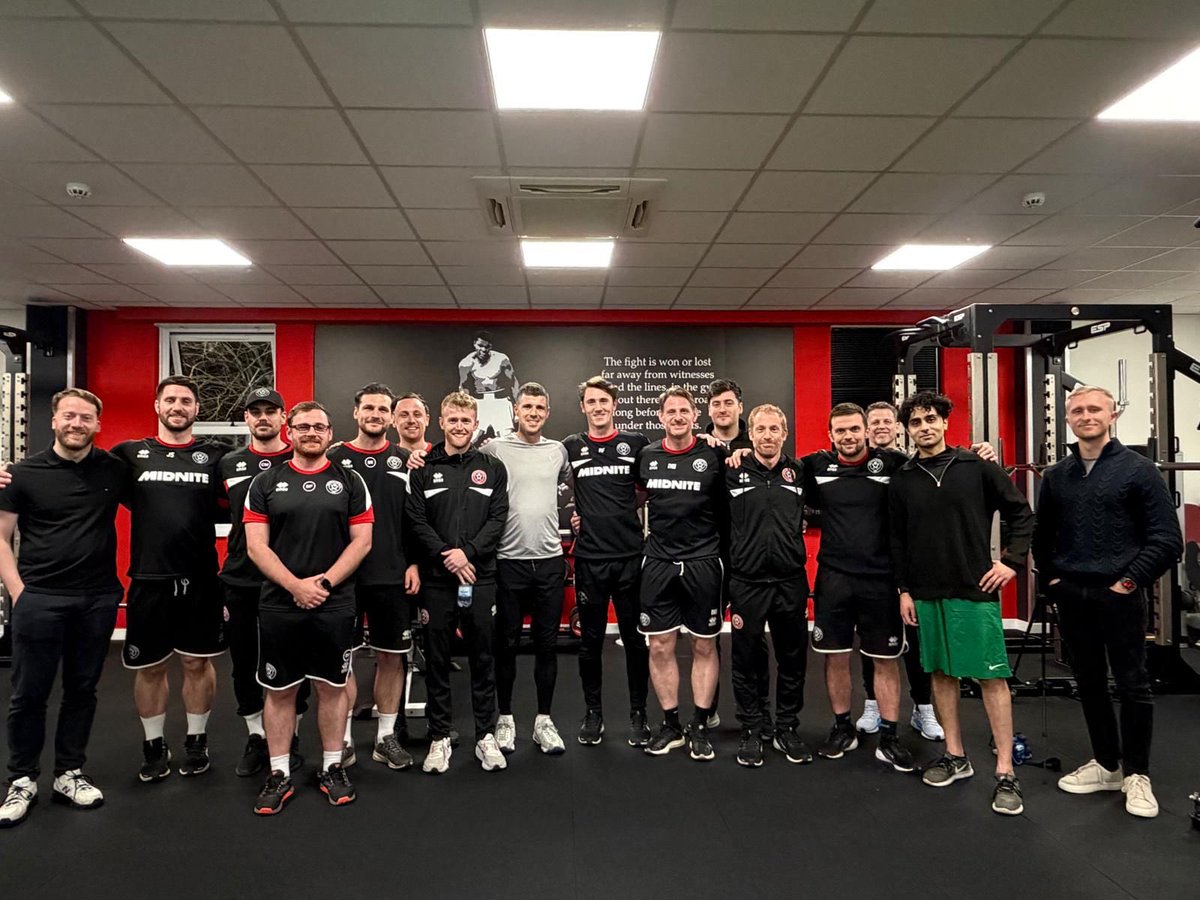
Great day at @SheffieldUnited for my Calf Rehab Course yesterday.
Thanks to @Matt_Kono and the club for hosting me, the attendees, and Liam and Amy from Delsys Europe for supporting me with muscle EMG integration for the practical sessions.
#CalfRehab#CalfInjury#MuscleEMG
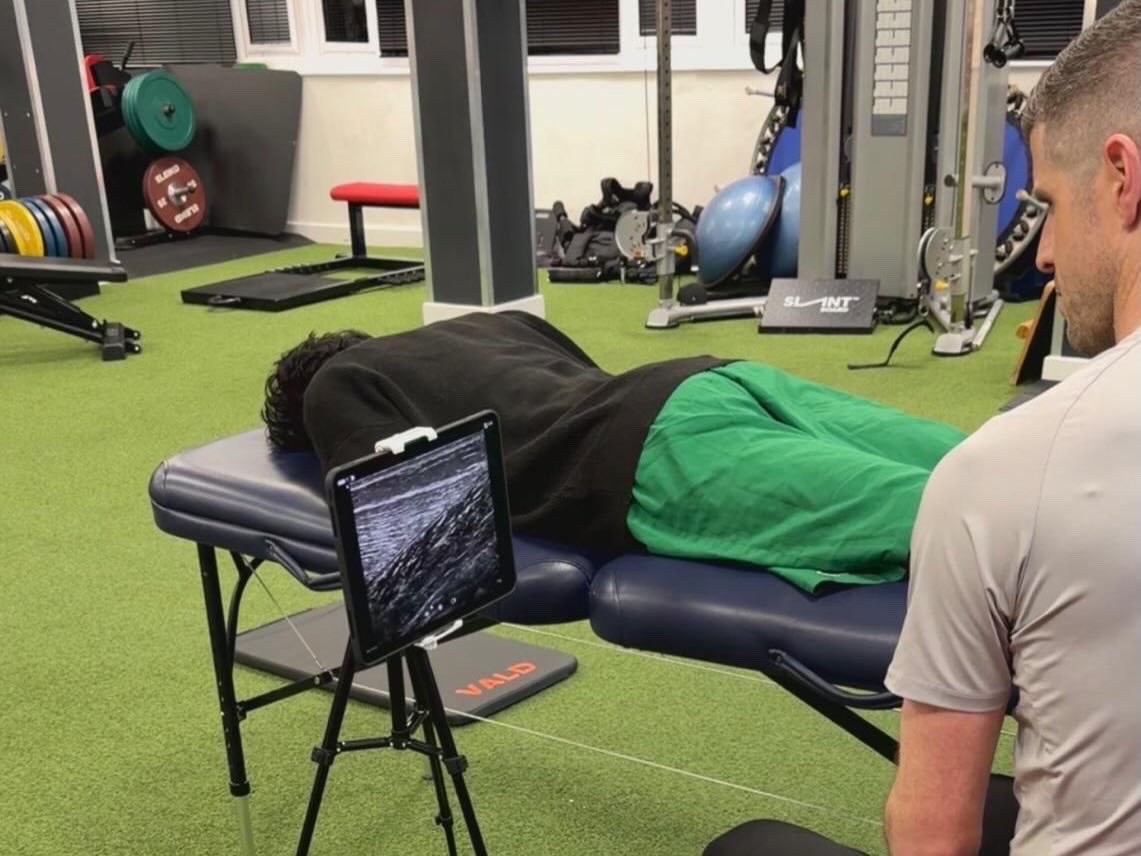
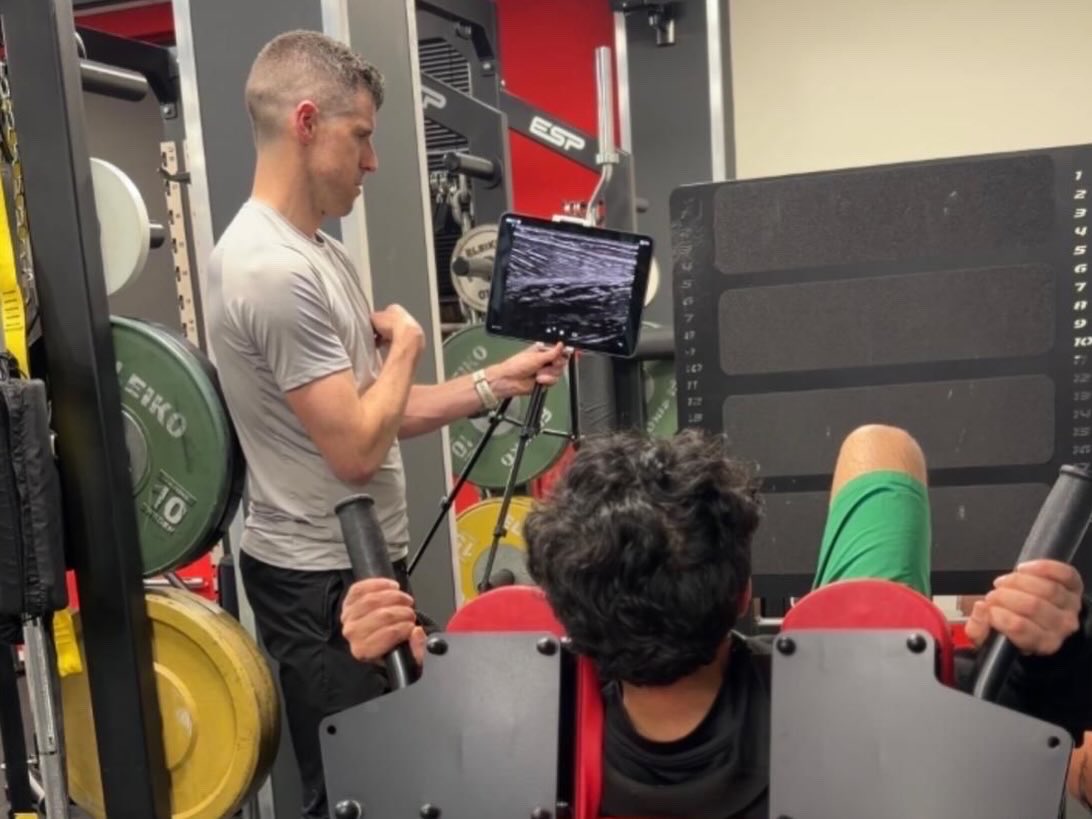
Working from neutral may be a safe entry point. When tolerance allows, working into dorsiflexion to target time-under-tension at long fascicle lengths is 🔑. Ultrasound, using @usono_official Dynamic ProbeFix helps me guide & individualise the exercise.
#AchillesRehab#CalfRehab
Neutral ankle vs dorsiflexion in calf raises. In this 1st video working from a neutral ankle the medial gastrocnemius distal fascicles stay curved
→ less tension/time-under-tension at longer lengths.
After a medial gastroc strain & an Achilles tendon rupture, the medial gastroc distal fascicles experience:
☑️Atrophy
☑️ ↓fascicle length
☑️ ↑pennation angle
☑️ Proximal muscle retraction (with de-tensioning of the Achilles tendon & reduced mechanical power from the ankle)
I'm looking forward to delivering a course on "Calf Muscle Strain Injuries: From Assessment to Return to Sport" in March.
Thanks to @Matt_Kono & @SheffieldUnited for hosting me.
Booking link:
https://t.co/HSB3SVmWsW
#CalfInjury#CalfRehab
Inflammation is often portrayed as harmful and linked to chronic disease, but is it always bad? This blog explores how inflammation is a vital, tightly regulated part of immune defence, and why problems arise when it becomes dysregulated. Click here: https://t.co/y7xWWItM3E
@SamueleMarcora Resistance training at the right entry level & progress at a level the tendon can adapt to. Also, deal with any obvious underlying systemic health factors/stressors.
Most chronic tendinopathies respond well to progressive RT & load modification. Progress can be slow for some.
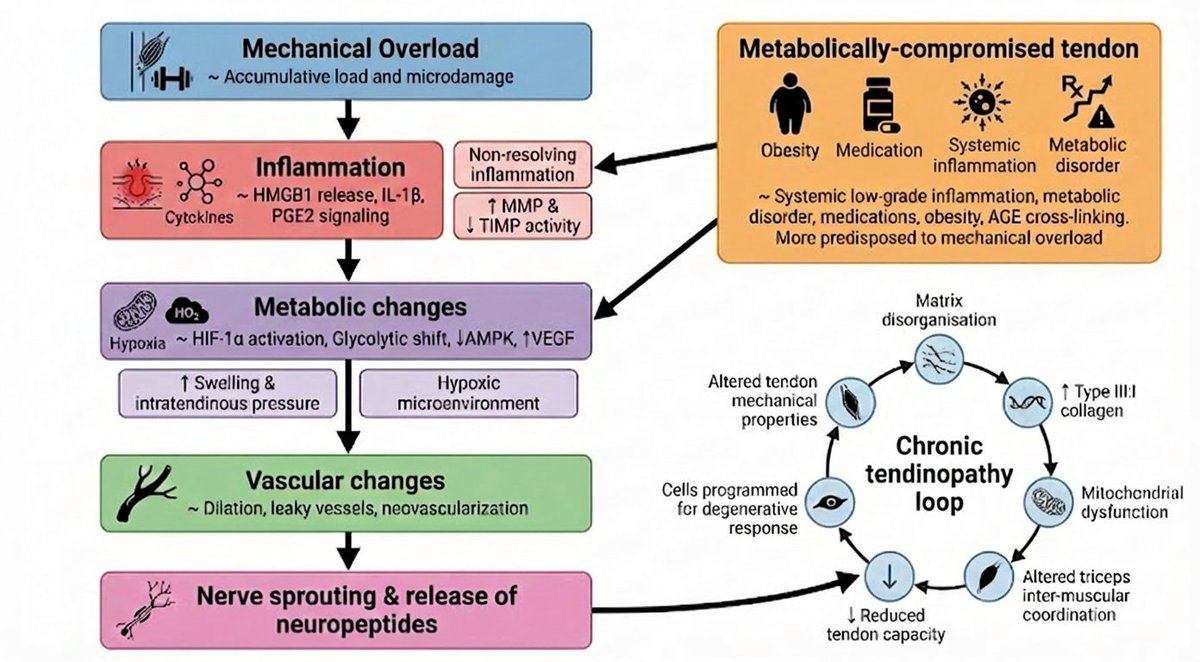
Tendinopathy is more than just an overload injury. It behaves like a disease process via a cascade of mechanical, metabolic, vascular & neural changes -locking the tendon in a degenerative loop when it becomes chronic.
Here is how I make sense of it with ref to the Achilles
🧬