CommodityMan is for traders, ranchers, farmers, and businesses exposed to commodity markets.
We turn raw data into ahead-of-the-curve market signals.
Follow for market moves, supply pressure, and early signals before they're obvious
Track markets deeper at https://t.co/kaoYuCUgyO
U.S. natural gas burn for power is expected to hold near record levels this summer at 43.7 Bcf/d, despite higher renewable generation.
EIA forecasts power-sector gas demand will reach a new record of 46.1 Bcf/d in summer 2027, driven in part by rising electricity demand from data centers and manufacturing facilities.
https://t.co/hDOz2H5Pxh
#CommodityMan #naturalgas #energy
Peanut prices moved higher again.
USDA reported average farmer stock peanut prices at 24.7¢/lb for the week ending May 30, while marketings declined to 70.9 million pounds.
Runner-type peanuts averaged 23.5¢/lb, up 1.0¢ from the prior week.
Lower marketings and firmer prices can signal tightening near-term farmer selling pressure.
https://t.co/49jYn6T47Z
Soybean oil breaks lower, falling 5.2% to 71.57 as heavy selling hits the market.
The move erases much of the recent rally and puts vegetable oil markets back on watch.
Soybean oil is a key input for both biofuels and food markets, making sharp moves worth watching across the broader vegetable oil complex.
This correlates with high soybean inventories causing loose supply.
The U.S. labor market remains stronger than many expected.
May payrolls rose by 172,000 versus expectations near 85,000, with unemployment unchanged at 4.3%.
For commodities, employment remains one of the clearest signals of underlying economic demand.
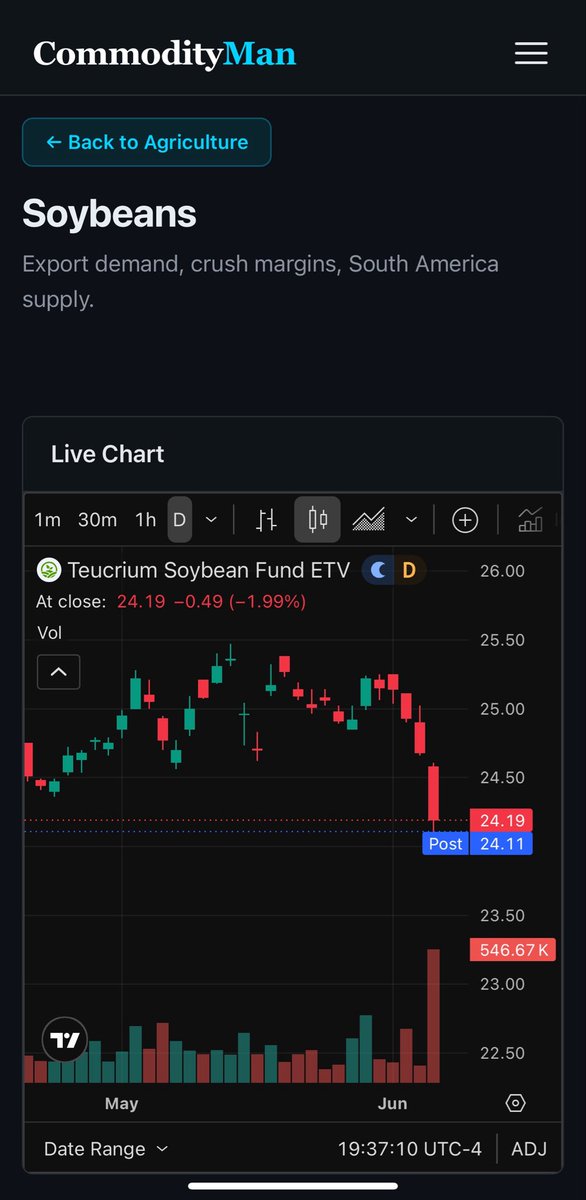
Soybeans down nearly 4% in the last 4 days.
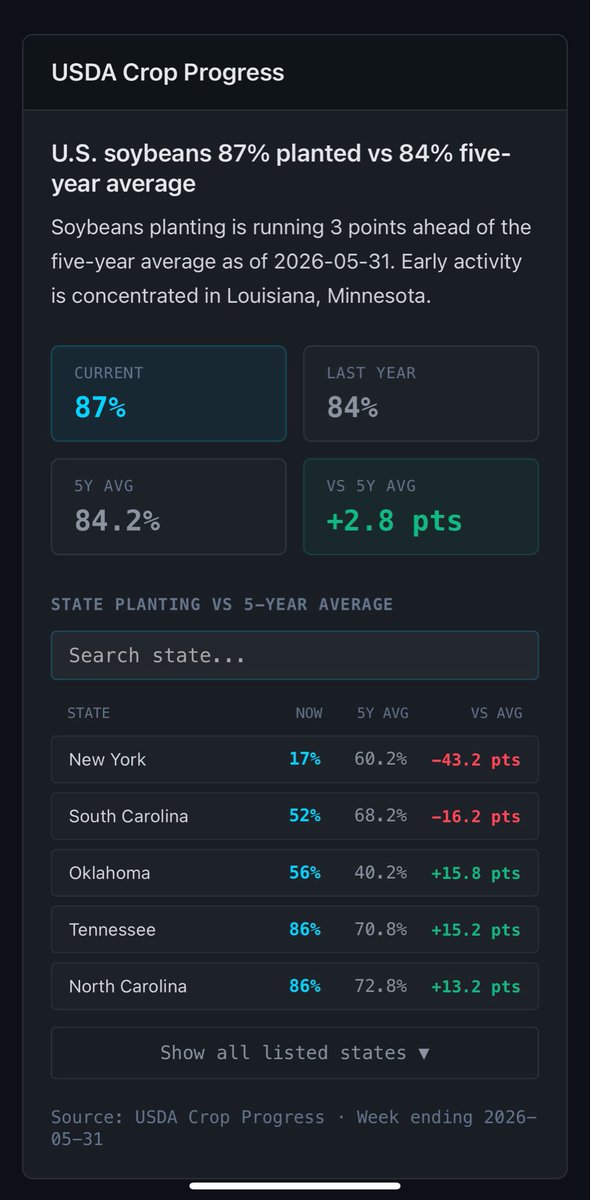
Inventories are 18% above 5 year averages along with higher than average plantings.
With a sharp move like this, what do you think is next?
#CommodityMan#soybeans
The U.S. Treasury completed its buyback of exactly $12.5B face value of existing nominal coupon securities maturing July 2026–May 2028.
They received $41.7B in offers and took the full maximum.
This is routine debt management: using cash to repurchase older/less-liquid ("off-the-run") Treasuries. It improves secondary-market liquidity in that maturity bucket, smooths future maturity peaks, and helps control auction sizes amid heavy issuance.
Overall debt isn't cut — new supply continues — but the composition and market functioning get fine-tuned. Part of the active 2026 buyback program.