@AlanLevinovitz@WIRED I have LC. I have a 130 IQ, 99th percentile critical thinking, and have read over 1500+ research papers on the subject.
Your article is misleading and factually challenged. Secondly, it minimizes the illness which is problematic.
You have a deep ignorance of this topic.
@JamesThrot@MichaelCWilder I have been saying this for 2+ years while being gaslit by neurologists who were so stupid they thought that reporting a low fever EVERY night was proof I had a psych issue instead of proof I was ill.
"Who takes their temp EVERY night?
"People with a persistent fever."
@WarPigsChief@fccincinnati I think the Miles contract is so bad, that it is a firable offense. What do you think?
At the time it looked horrible, now it is atrocious.
What do you think CA's rationale could have been? He has horrible critical thinking skills or something else at play. Berding meddling?
@swerrem@hannahspierMD There are numerous studies conducted on individuals who were sick before there were any vaccines and never received a vaccine.
You people are ate up in the head with your ignorance. 🪱 brains.
I literally don't have time or energy for this level of stupidity.
@hannahspierMD@pan_accindex Why don't you take advice based on merits rather than what the account is called?
You clearly have poor critical thinking skills.
I have read over 1500 research papers. No MD, yet I promise I know more about it than you do. (130IQ and 99th pct CAAP critical thinking.)
Five Years of Biological Receipts: How Chronic SC2 Destroys the Vascular System and Brain
For over 5 years, corners of the medical establishment have attempted to reduce a catastrophic, viral physical crisis down to anxiety, somatic symptom disorder, or an emotional attachment to labels. Meanwhile, the international scientific community has spent those same five years compiling an undeniable, structural ledger of organic damage.
PolyBio Research Foundation and the Long COVID Research Consortium (LCRC) have made one thing perfectly clear. This is a structural, endovascular, and neuroimmune war. It is not a psychological crisis.
How Chronic SC2 dismantles the vascular system and the brain over a multi-year horizon:
Tissue Persistence & Hidden Viral Factories
The virus doesn't clear after the acute phase. Digital transcriptomics and deep tissue biopsies show that SC2 viral RNA (antisense ORF1ab RNA, which indicates active replication) and Spike protein persist in deep tissue reservoirs including the gut wall, bone marrow, and lymph nodes years after initial infection. This ongoing cellular presence acts like an active factory, keeping the immune system locked in an inflammatory loop that drops virons directly onto vascular tissue.
The Vascular Toll
Continuous immune activation hits the cardiovascular infrastructure.
Endothelial Injury:
Current clinical data demonstrates a profound microvascular endotheliopathy, where the delicate endothelial cells lining the body’s smallest blood vessels are systematically injured, inflamed, and degraded.
Fibrin-Amyloid Microclots:
PolyBio's work with scientists like Dr. Resia Pretorius has mapped the widespread presence of anomalous fibrin-amyloid microclots and infected activated platelets. These dense, breakdown-resistant clots physically choke the microcapillaries, cutting off oxygen delivery to deep tissues and causing widespread cellular hypoxia.
NETs:
Innate immune cells (neutrophils) are hyper-activated, spitting out webs of DNA (NETs) that further clog the vascular highway and drive tissue degradation.
The Brain Attack: Perfusion & Leaky Barriers
When the microvascular highway is choked, the brain pays the price.
Hypoxia & Reduced Flow:
Studies confirm significantly reduced cerebral and microvascular blood flow. The brain is quite literally gasping for oxygen because clogged, narrowed capillaries cannot deliver adequate perfusion.
Blood-Brain Barrier Collapse:
Endovascular inflammation breaks down the tight junctions of the BBB. When the protective wall leaks, peripheral cytokines and inflammatory debris bleed directly into the central nervous system.
Neuroinflammatory Steady State:
Advanced neuroimaging (such as dual PET-MRI imaging by PolyBio-supported researchers like Dr. Michael VanElzakker) reveals active, neuroinflammation. Neural-derived exosomes show markers of severe astrocyte turnover. The brain is forced into a hyper-reactive inflammatory steady state, triggering profound cognitive deficits, verbal fluency drops, and severe dysautonomia.
🛑 Psychology Full Stop
When a patient has a leaky blood-brain barrier, amyloid microclots choking their capillaries, vascular compressions, and active virus in tissues, psychiatry and psychology are the wrong medical disciplines.
A psychologist cannot talk a fibrin-amyloid microclot out of a capillary.
Cognitive behavioral therapy cannot repair an injured endothelial lining or stop a viral reservoir in the bone marrow from churning out toxic proteins. Mindset tools for patients suffering from cerebral hypoperfusion and tissue hypoxia is a severe failure of basic clinical logic.
Reframing a measurable, multi-systemic vascular firestorm as an issue of identity is an act of clinical avoidance. Patients do not need coping to accept their own cellular disintegration. They need hematologists, vascular surgeons, immunologists, and targeted meds. The debate over semantics is over, the era of hard vascular mapping is here.
Five Years of Biological Receipts: How Chronic SC2 Destroys the Vascular System and Brain
For over 5 years, corners of the medical establishment have attempted to reduce a catastrophic, viral physical crisis down to anxiety, somatic symptom disorder, or an emotional attachment to labels. Meanwhile, the international scientific community has spent those same five years compiling an undeniable, structural ledger of organic damage.
PolyBio Research Foundation and the Long COVID Research Consortium (LCRC) have made one thing perfectly clear. This is a structural, endovascular, and neuroimmune war. It is not a psychological crisis.
How Chronic SC2 dismantles the vascular system and the brain over a multi-year horizon:
Tissue Persistence & Hidden Viral Factories
The virus doesn't clear after the acute phase. Digital transcriptomics and deep tissue biopsies show that SC2 viral RNA (antisense ORF1ab RNA, which indicates active replication) and Spike protein persist in deep tissue reservoirs including the gut wall, bone marrow, and lymph nodes years after initial infection. This ongoing cellular presence acts like an active factory, keeping the immune system locked in an inflammatory loop that drops virons directly onto vascular tissue.
The Vascular Toll
Continuous immune activation hits the cardiovascular infrastructure.
Endothelial Injury:
Current clinical data demonstrates a profound microvascular endotheliopathy, where the delicate endothelial cells lining the body’s smallest blood vessels are systematically injured, inflamed, and degraded.
Fibrin-Amyloid Microclots:
PolyBio's work with scientists like Dr. Resia Pretorius has mapped the widespread presence of anomalous fibrin-amyloid microclots and infected activated platelets. These dense, breakdown-resistant clots physically choke the microcapillaries, cutting off oxygen delivery to deep tissues and causing widespread cellular hypoxia.
NETs:
Innate immune cells (neutrophils) are hyper-activated, spitting out webs of DNA (NETs) that further clog the vascular highway and drive tissue degradation.
The Brain Attack: Perfusion & Leaky Barriers
When the microvascular highway is choked, the brain pays the price.
Hypoxia & Reduced Flow:
Studies confirm significantly reduced cerebral and microvascular blood flow. The brain is quite literally gasping for oxygen because clogged, narrowed capillaries cannot deliver adequate perfusion.
Blood-Brain Barrier Collapse:
Endovascular inflammation breaks down the tight junctions of the BBB. When the protective wall leaks, peripheral cytokines and inflammatory debris bleed directly into the central nervous system.
Neuroinflammatory Steady State:
Advanced neuroimaging (such as dual PET-MRI imaging by PolyBio-supported researchers like Dr. Michael VanElzakker) reveals active, neuroinflammation. Neural-derived exosomes show markers of severe astrocyte turnover. The brain is forced into a hyper-reactive inflammatory steady state, triggering profound cognitive deficits, verbal fluency drops, and severe dysautonomia.
🛑 Psychology Full Stop
When a patient has a leaky blood-brain barrier, amyloid microclots choking their capillaries, vascular compressions, and active virus in tissues, psychiatry and psychology are the wrong medical disciplines.
A psychologist cannot talk a fibrin-amyloid microclot out of a capillary.
Cognitive behavioral therapy cannot repair an injured endothelial lining or stop a viral reservoir in the bone marrow from churning out toxic proteins. Mindset tools for patients suffering from cerebral hypoperfusion and tissue hypoxia is a severe failure of basic clinical logic.
Reframing a measurable, multi-systemic vascular firestorm as an issue of identity is an act of clinical avoidance. Patients do not need coping to accept their own cellular disintegration. They need hematologists, vascular surgeons, immunologists, and targeted meds. The debate over semantics is over, the era of hard vascular mapping is here.
@bullishbruk ... More importantly, not just cancer, but many diseases where the immune system is in an exhausted / dysfunctional state. Ie. Long Covid, A.I.D.S. Prime markets where benefit could be had.
The FDA is an anchor for US health.
I could benefit from cheap Sulodexide, but no!
@DarioCpx How long can they manipulate $UCO? They literally can't do this forever and they are compounding the problem. I'm 10% oil and I'm just even. I watch world inventories plummet week after week and oil goes down?
@WarPigsChief It is a horrible contract that in no way I can understand. I'm not just saying this now, I said it when it was announced.
He is good, not a DP. Wouldn't even be in my top 5 CB in MLS.
The deal is legitimately bad...
1) Albright is terrible.
Or
2) Something we don't know.
@SterlingCooley No, because truth isn't the goal. Musk wants everyone to believe this 💩.
On it's face it's ridiculous.
In fact, AI "hallucinations" is a mistruth made up PR spin in itself. The models could be made to be more truthful/correct, but it wouldn't be as "pleasing" to use.
@CP24 “I cannot stress enough that simply writing down what officials say is not journalism; you have to analyze, critique, and contextualize those comments, or you’re nothing more than an RSS feed with hands.” -Ed Yong
https://t.co/K421NjORLF
This may be the most important thought I ever posted.
AI models as they exist today are extremely useful, but also useless.
Many of those who use AI won't fully understand this statement. For those people AI is implicitly dangerous.
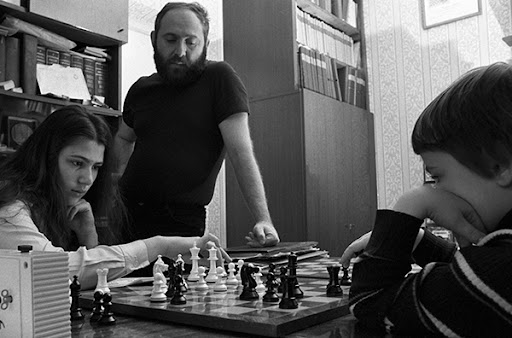
A Hungarian psychologist raised three daughters to prove that any child could become a chess grandmaster through early specialization. He succeeded. Two of them became grandmasters. One became the greatest female chess player who ever lived.
Then a sports scientist looked at the data and found something nobody wanted to hear.
His name is David Epstein. The book is called "Range."
The Polgar experiment is one of the most famous case studies in the history of deliberate practice. Laszlo Polgar wrote a book before his daughters were even born arguing that geniuses are made, not born. He homeschooled all three girls in chess from age four. By their teens, Susan, Sofia, and Judit were dominating tournaments against grown men. Judit became the youngest grandmaster in history at the time, breaking Bobby Fischer's record. The story became the gospel of early specialization. Pick a domain young, drill it hard, and you can manufacture excellence.
Epstein opens his book by telling that story honestly and then quietly demolishing the conclusion most people drew from it.
Chess works that way. Most things do not.
Here is the distinction that took him four years of research to articulate, and that almost nobody who quotes the 10,000 hour rule has ever read.
There are two kinds of environments in which humans develop expertise. Psychologists call them kind and wicked. A kind environment has clear rules, immediate feedback, and patterns that repeat reliably. Chess is the cleanest example. Every game ends with a winner and a loser. Every move is recorded. The board never changes shape. The pieces never invent new ways to move. A child who plays ten thousand games will see most of the patterns that exist in the game, and pattern recognition is exactly what chess mastery is built on.
A wicked environment is the opposite. Feedback is delayed or misleading. Rules shift. The patterns that worked yesterday may be exactly the wrong patterns to apply tomorrow. Most of the real world looks like this. Medicine is wicked. Investing is wicked. Building a company is wicked. Scientific research is wicked. Almost every job that involves a complex changing system with humans in it is wicked.
The Polgar sisters trained in the kindest environment any human can train in. Their success was real and the method was correct. The mistake was generalizing the method to fields where the underlying structure of the environment is completely different.
Epstein's research is what made the implication impossible to ignore.
He looked at the careers of elite athletes outside of chess and golf and found that the pattern was almost the inverse of what people assumed. The athletes who reached the very top of their sports were overwhelmingly people who had played multiple sports as children, specialized late, and often switched disciplines well into their teens. Roger Federer played squash, badminton, basketball, handball, tennis, table tennis, and soccer before tennis became his focus. The kids who specialized in tennis at age six and trained year-round for a decade mostly burned out, got injured, or topped out at lower levels of the sport.
The same pattern showed up everywhere he looked outside of kind environments. Inventors with the most patents had worked in multiple unrelated fields before their breakthrough work. Comic book creators with the longest careers had drawn for the most different genres before settling. Scientists who won Nobel Prizes were dramatically more likely than their peers to be serious amateur musicians, painters, sculptors, or writers.
The skill that mattered in wicked environments was not depth in one pattern. It was the ability to recognize when a pattern from one domain applied unexpectedly in another. That kind of thinking cannot be built by drilling a single subject. It can only be built by accumulating mental models from many subjects and learning to move between them.
The deeper finding is the one that should change how you think about your own career.
Specialists in wicked environments often get worse with experience, not better. Epstein cites studies of doctors, financial analysts, intelligence officers, and forecasters showing that years of experience in a narrow domain frequently produce more confident judgments without producing more accurate ones. The expert builds elaborate mental models that feel comprehensive and turn out to be increasingly disconnected from the actual structure of the problem. They stop noticing what does not fit their framework. They mistake fluency for understanding.
Generalists do better in wicked domains for a reason that sounds almost mystical until you understand the mechanism. They have less invested in any single mental model, so they abandon broken models faster. They are used to being a beginner, so they are not threatened by the discomfort of not knowing. They have seen enough different domains that they can usually find an analogy from one field that unlocks a problem in another. The technical name for this is analogical thinking, and the research on it is one of the most underrated bodies of work in cognitive science.
The single most useful sentence in the entire book is the one Epstein puts almost as a throwaway.
Match quality matters more than head start.
A person who tries six different fields in their twenties and finds the one that genuinely fits them will outperform a person who picked one field at fourteen and stuck to it on willpower alone. The lost years were not lost. They were the search process that produced the match. Every field they walked away from taught them something they later imported into the field they finally chose.
The reason this is so hard to accept is cultural, not empirical. We tell children to pick a path early. We reward the prodigy who knew at six. We treat the late bloomer as someone who failed to launch on time, when the data suggests they were running an entirely different and often more effective optimization process underneath.
The Polgar sisters were not wrong. The conclusion the world drew from them was.
If your environment is genuinely kind, specialize early and drill hard. If it is wicked, and almost every interesting human problem is, then the people who win are the ones who refused to specialize until they had seen enough to know what was actually worth specializing in.
You are not behind. You were running the right experiment all along.