"Nos llaman viejos porque creen que la vida empieza con ellos. Porque confunden juventud con inteligencia, redes sociales con profundidad y opinión con conocimiento."
Brutal @perezreverte
(Y sensacional la ilustración de Ricardo Martínez)
Multitud de estudios confirman que perdemos más masa muscular por no entrenar que por cumplir años.
Por supuesto que la edad hace todo un poco más difícil, y no podemos esperar sentirnos igual con 60 que con 30.
Pero el ejercicio es uno de los factores que más influye en cómo envejecemos.
Si quieres mantener tu autonomía y funcionalidad por más tiempo, entrena.
5 Perfiles profesionales
5 perfiles profesionales basados en el rendimiento actual, la contribución al futuro y en la bondad. Los grandes referentes son buenos profesionales y buenas personas
Hoy en @LaVanguardia
Most exercise and aging studies can't answer a basic question: is muscle deterioration from aging itself, or just from decades of moving less? A new Nature Aging study solved this by recruiting older adults who moved as much as people in their twenties.
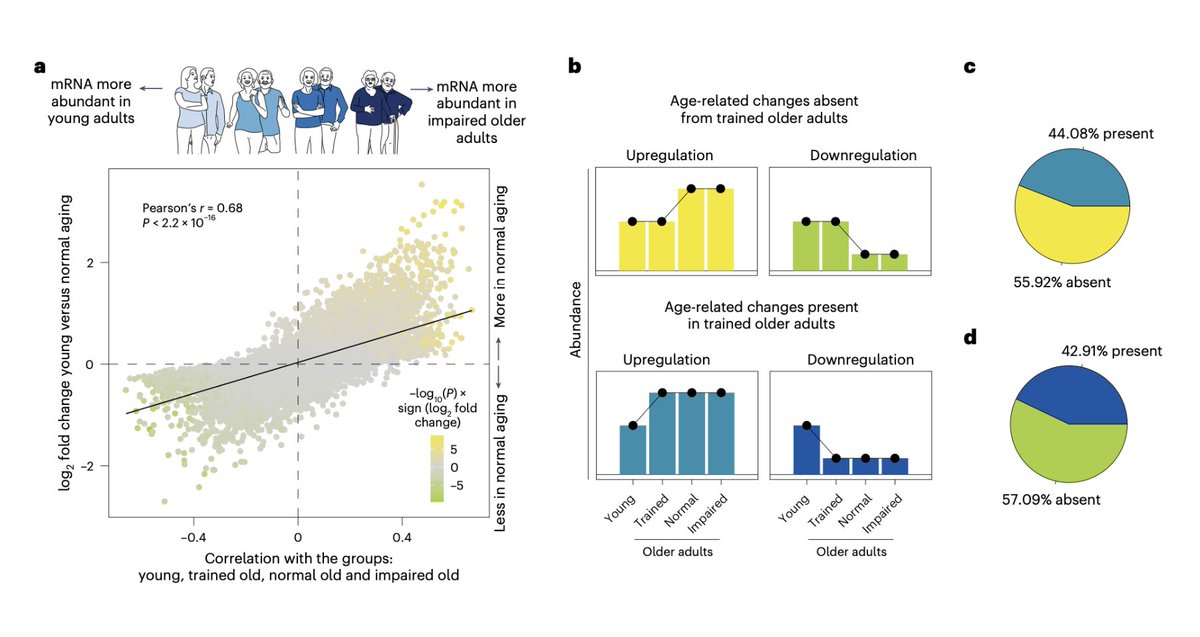
The researchers from Amsterdam UMC and Maastricht University recruited four distinct groups: young adults in their twenties, older adults whose daily step counts and high-intensity activity matched the young group, older adults who had trained consistently for years (three structured hour-long sessions per week for over a year), and older adults with early physical impairment.
They took muscle biopsies before and after a one-hour cycling session, then measured over 24,000 gene transcripts, 135 metabolites, and 1,383 lipid species.
By matching activity levels between young and older groups, any molecular differences couldn't be blamed on the older adults simply moving less. This isolated aging from inactivity for the first time at this molecular depth.
Key findings:
• The defining molecular signature of muscle aging is an energy crisis. Comparing young adults to activity-matched older adults, 1,106 genes were downregulated with age. These genes build the mitochondrial machinery that produces cellular energy: ATP synthase, cytochrome c oxidase, and NADH dehydrogenase subunits. Mitochondria are the power plants of cells, converting nutrients into ATP, the energy currency cells use to function. When these genes decline, cells lose their ability to generate energy efficiently.
• NAD+ levels declined and triglycerides accumulated inside aging muscle. NAD+ is a molecule required for energy production and cellular repair. Lower NAD+ means less capacity to convert fuel into usable energy. Triglycerides are stored fats, their accumulation inside muscle indicates unburned fuel piling up as the tissue loses its ability to process it.
• More than half the molecular signature of muscle aging was absent in trained older adults. Specifically, 57.1% of age-related gene downregulation and 55.9% of upregulation were missing in the trained group. Their muscle resembled young adults far more than their chronological age would predict.
• The changes training preserved were specifically the energy metabolism ones. Genes like NDUFS1 and COX5A, which were depleted in normally active and impaired older adults, sat at youthful levels in the trained group across all five mitochondrial respiratory complexes. The single most prominent feature of muscle aging turned out to be the single most preventable.
• Being generally active was not enough. Structured training was the difference. The normally active older adults walked as much as young adults, and their energy metabolism genes declined anyway. What preserved the youthful molecular profile was structured, sustained training. Filling a step counter and being genuinely trained are not equivalent at the molecular level.
• Roughly half of muscle aging persisted regardless of training. Changes in genes controlling synaptic transmission (how nerves communicate with muscle) and WNT signaling (a pathway regulating tissue maintenance and stem cell function) appeared in all older adults, trained or not. This unavoidable half is where drugs will have to work.
• The fittest muscle mounted the largest inflammatory response to exercise. All groups activated stress and immune genes after exercise, including IL6, IL1B, and TNF. But the magnitude scaled with fitness. Trained older adults most closely resembled young adults in their response, followed by normally active, with impaired older adults showing the most blunted response. The stress response to exercise appears to be the mechanism of adaptation, not damage to be minimized.
This raises a concern about anti-inflammatory longevity strategies. If the inflammatory stress response is how exercise produces its benefits, chronically suppressing inflammation may blunt the adaptation that exercise depends on. It doesn't mean inflammation is beneficial in general, but the timing and context matter.
A separate discovery: the proteasome appears to regulate NAD+. The proteasome is the cellular machinery that breaks down damaged proteins. When researchers inhibited it, NAD+ levels rose in both muscle and liver cells to a degree comparable to NAD+ precursor supplements. This opens a new route to understanding NAD+ decline that operates through protein turnover rather than just supplying more raw material.
The study draws a clear line between what lifestyle can address and what will require therapeutics. The energy metabolism decline, mitochondrial deterioration, and NAD+ depletion that define muscle aging are largely preventable through structured training. The synaptic and signaling changes that persist in all older adults represent the unavoidable half where drugs will need to work.
The decisions made about structured training in midlife determine which molecular trajectory muscle follows in later decades. Half of muscle aging is optional. The other half isn't. Knowing which changes belong to each category is knowing where behavior ends and biology takes over.
¿Quieres protegerte contra el estrés?
Haz 30 min de ejercicio intenso (70% de tu máximo).
Un estudio lo demuestra:
🔥 La subida de cortisol ante un estrés fue 50–75% más lenta tras entrenar fuerte.
🔥 El pico de cortisol llegó antes y más bajo
🔥 Recuperación 10 min más rápida al nivel previo al estrés (81 vs 91 min).
Truco práctico:
➡️ Si hoy tienes algo estresante, entrena intenso antes.
➡️ Si puedes, haz tu entrenamiento fuerte por la mañana: te deja “protegido” del estrés todo el día.
Los Nitruros de Carbono y Boro resisten presiones de hasta 135 GPa y temperaturas superiores a 1500 ºC.
Han demostrado ser incluso más resistentes que el diamante.
Bueno, pues los científicos confirman que la cara de Sánchez es más dura todavía
Decálogo para nuevos MIR
Cómo ser médico y no morir en el intento
*Si tenéis alguno cerca, acordaos que la baraja Ser Médico sigue disponible
https://t.co/dUSASDLXN9
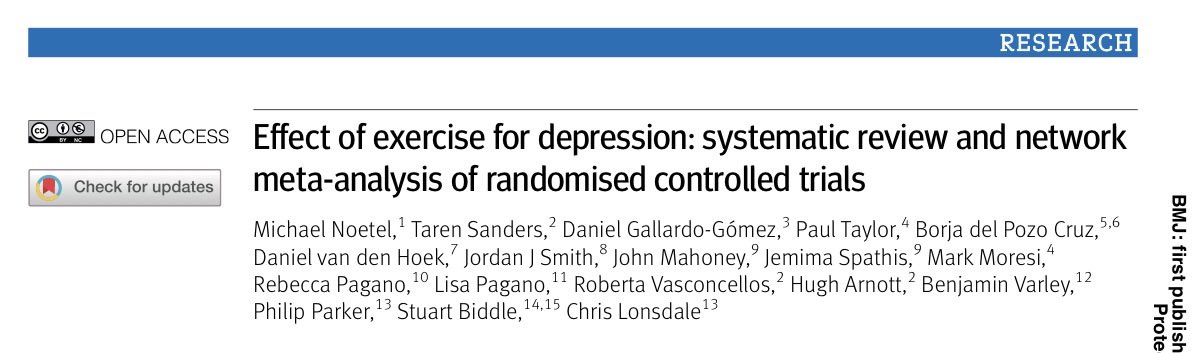
🚨 El ejercicio podría reducir los síntomas depresivos en torno a un 20-30% magnitud similar a algunos tratamientos antidepresivos.
El mayor beneficio se observó con:
🏃 correr
🏋️ entrenamiento de fuerza
Y cuanto MÁS intenso era el ejercicio, MAYOR era la mejoría.
218 estudios. 14.170 pacientes.
Os dejamos el último artículo publicado por el servicio sobre el impacto clínico de la enfermera de Ortogeriatría en el proceso asistencial a la fractura de cadera:
https://t.co/wupzdPNDBL
En resumen: ¡Pon una enfermera de Geriatría en tu vida!
📢 New paper in Archives of #Osteoporosis:
Data from the Spanish National Hip Fracture Registry (SNHFR) reveals both encouraging trends & persistent gaps in post-fracture osteoprotective treatment for older adults (≥75 years) in #Spain:
▶️ Osteoprotective prescription in SNHFR hospitals increased by more than 46% between 2017 and 2024.👏🏼
▶️However: osteoanabolic use remains limited & treatment is disproportionately directed to healthier patients.
Read more here 🔗 https://t.co/ZHffAOtEI5
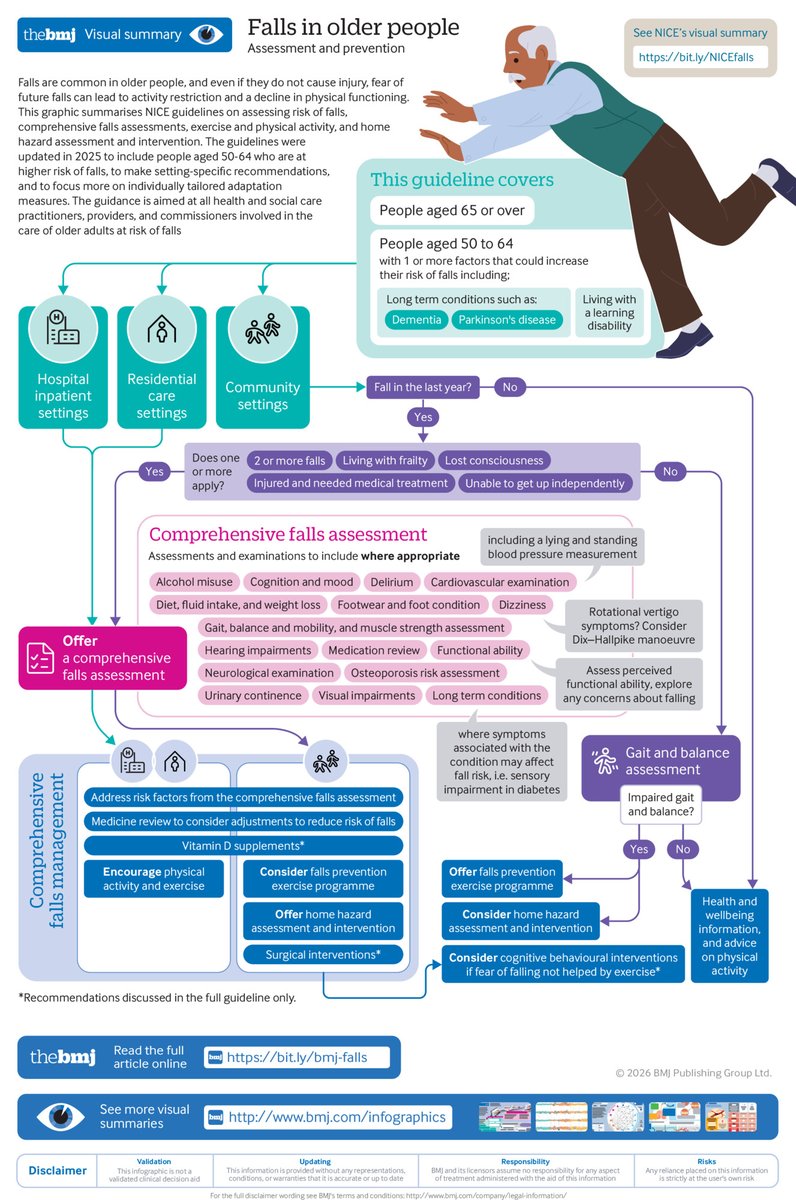
Falls are common in older people, and fall related injuries are a substantial cause of morbidity and mortality.
How should doctors assess the risk of falls? A summary of NICE guidelines, including a #BMJInfographic
https://t.co/s3P7sATuvU
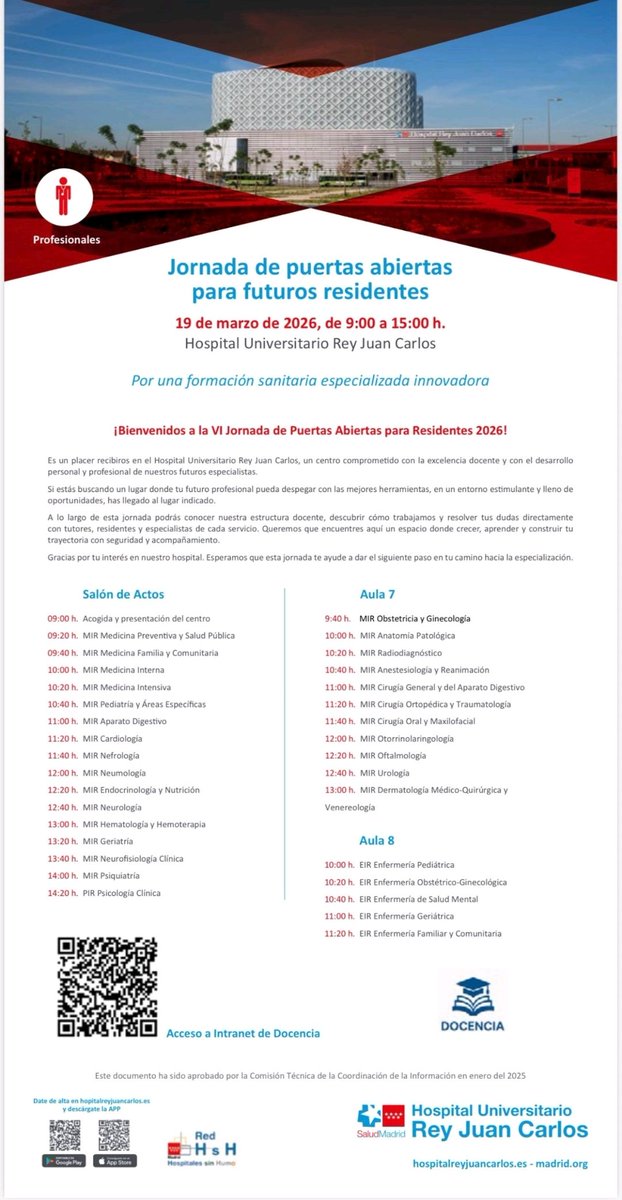
Si has hecho el MIR y te gustan las especialidades médicas, súmate a la más bonita, completa, compleja, alegre y con futuro (y presente) de todas. ¡Te esperamos en Geriatría del HURJC!