@TorbjrnBullJens What’s the latest on retaining the Mica license? Should we expect our shares to be further diluted? When will we finally see some positive news for the stock price? That’s the real pain K33 investors feel when they think about these questions.
It’s been a long time coming…
But the release of Overledger’s public side is here!
74 blockchains already connected to the Fusion Multi Ledger Rollup
$QNT
The #FusionRollup is live on mainnet.
The world's first multi-ledger rollup, purpose-built for institutions operating across multiple blockchains at once.
Learn more about the launch here: https://t.co/jAY6Y0KLF5
#QuantFusion#EnterpriseBlockchain#MultiLedger
@TorbjrnBullJens It’s been a tough slog for years now. Poor communication and presentation, and now a non-European stake of less than 50% that doesn’t close the gap to the announced 1,000 BTC in company holdings. Where is the company headed? What’s the plan Arcane, Arcario, K33, etc. …?
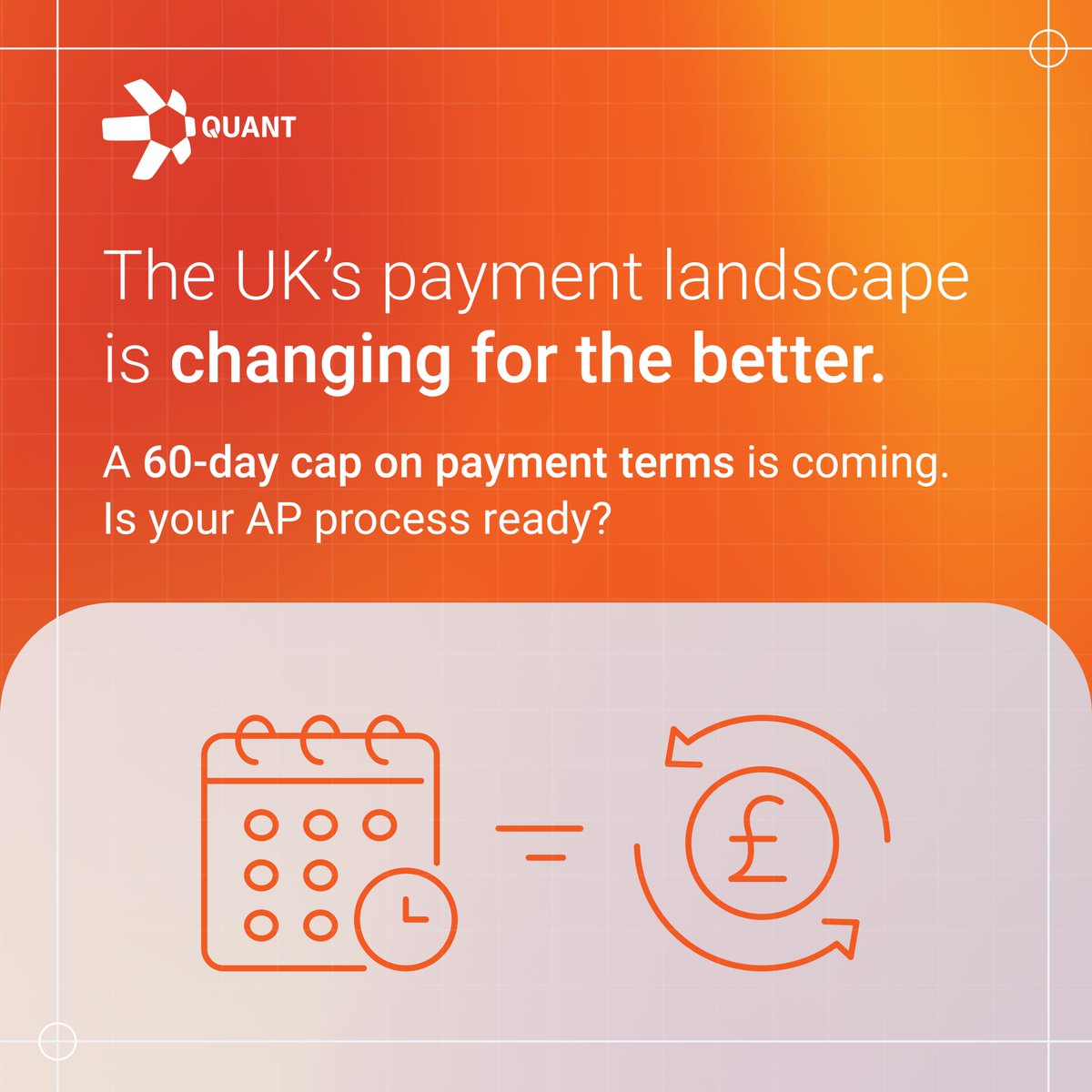
The UK has confirmed a mandatory 60-day cap on large-to-SME payments.
The context:
➡️SMEs are owed an avg of £66,770 each in unpaid invoices
➡️62.6% of all invoices are paid late
➡️38 businesses close every day due to cash flow failure
Implementation isn't expected until 2027, but contract audits, renegotiations and process changes need to start now.
Discover why this reform matters and what to do: https://t.co/FR2VZP1u0U
#AccountsPayable #CFOs #PaymentReform #QuantFlow
A decade in the making, we have published an ISO standard for blockchain interoperability.
This is a milestone I've been working towards since 2015, Remitt was founded with the conviction that blockchains could transform financial services but only if the industry solved interoperability and harmonised around global standards. Without that, blockchain would remain fragmented, siloed, and locked out of mainstream institutional adoption.
In April 2016, we published what was the world's first proposal for a blockchain standard (https://t.co/SL83Yl4Ejr) a bold move at a time when the industry was still largely focused on proofs of concept and competing protocol narratives, not standardisation.
The idea was simple but ambitious: if blockchains were going to serve global markets, they needed a common framework that transcended any single protocol or vendor.
Central to this thinking from the very beginning was the concept of a multi-gateway architecture, leveraging the know-how of 20 years of experience in cybersecurity to frame the principle that interoperability shouldn't depend on a single bridge or point-to-point connection, but on a layered gateway model that could abstract away the differences between underlying DLTs and connect them through a common interface. This was the architectural foundation of what would become Overledger, and it was also the design philosophy we brought to the standards process.
The belief was that a viable international standard for blockchain interoperability had to be protocol-agnostic and gateway-driven, enabling any DLT to communicate with any other DLT (any-to-any) and with existing networks, without requiring those ledgers to change how they operate. The standard and the technology were born from the same insight.
That same year, I worked closely with the team from @standardsaus (Standards Australia), who had the foresight in 2015 to champion the initiative at the international level. Together, we pushed for ISO to establish a dedicated Technical Committee for blockchain and not to be absorbed into an existing committee, but to stand on its own as a recognition that this technology warranted its own global standards programme. The industry demand was there, the use cases were multiplying, and the fragmentation was becoming a real barrier.
In September 2016, the New Work Item Proposal (NWIP) received global approval, and ISO formally gave the green light to establish a new Technical Committee (https://t.co/7biJjvHRk9). TC 307 — Blockchain and Electronic Distributed Ledger Technologies — was born (https://t.co/5SsFPIw0HH). The inaugural meeting was held in Sydney in April 2017, and from that moment the real work began.
As the standards work progressed internationally, the mission at Remitt was evolving too. What started as an effort to use blockchains for financial services and solve interoperability grew into something far larger, a full enterprise infrastructure platform for connecting any blockchain to any network. Remitt became Quant, and we built Overledger, the world's first blockchain operating system to deliver on that original vision. The multi-gateway architecture that informed the standards thinking became the core of Overledger's design: a technology layer that sits above all blockchains, providing institutions with a single integration point to access any DLT, any network, and any existing system. The interoperability challenge that drove the standards work was the same challenge we set out to solve commercially and the two efforts reinforced each other throughout.
For close to a decade since TC 307's formation, subject matter experts across the world have contributed their time and expertise to Working Group 7 — Interoperability is the committee I chair.
International standards are not built quickly they are built through consensus, technical debate, and relentless refinement. The same methodology and rigour that created the Internet, through publishing standards. The result is a published international standard for blockchain interoperability.
🔗 https://t.co/GRoR7fXNLQ
A huge thank you to @isostandards as the international standards developing organisation, to the team at @standardsaus who started the initiative in 2015 and worked tirelessly to get TC 307 approved and established globally, and to every subject matter expert who contributed to Working Group 7 over the years. This would not exist without that collective effort.
From a blog post proposing the world's first blockchain standard in 2016, to a published ISO standard in 2026 and from Remitt to Quant, from an architectural concept of multi-gateway interoperability to Overledger and a global standard, this has been a decade-long journey of building both the standards and the technology to make blockchain interoperability a reality for institutions worldwide.
There is still much more work ahead. More standards to develop, more to evolve, and more to build. But today, we mark a significant milestone.
#Blockchain #ISO #Interoperability #Standards #TC307 #DLT #Quant #Overledger
@TorbjrnBullJens Sixty six Capital's BTCs only "belong" indirectly to K33, as a shareholder with approximately 46%. Why are no BTCs being purchased, and when will the dilution of shares be stopped?
@TorbjrnBullJens When will the dilution finally stop?
„Transaction overview (non-binding)
… of which approximately 70 percent is expected to be paid in cash and approximately 25 percent in newly issued shares in K33, subject to final transaction documentation.“
Delighted to share that @quantnetwork has been selected for the @bankofengland’s Synchronisation Lab as part of the RTGS Future Roadmap.
Our use case: atomic, multi-bank treasury operations powered by Quant Flow and PayScript®. All payment legs settle together or not at all, eliminating partial settlement risk across multiple banks in a single action.
This is programmable finance that works within existing market structures, not around them.
https://t.co/I5rmbsDLAu
#RTGS #TreasuryManagement #PaymentsInnovation #FinancialInfrastructure #SynchronisationLab #ProgrammableMoney
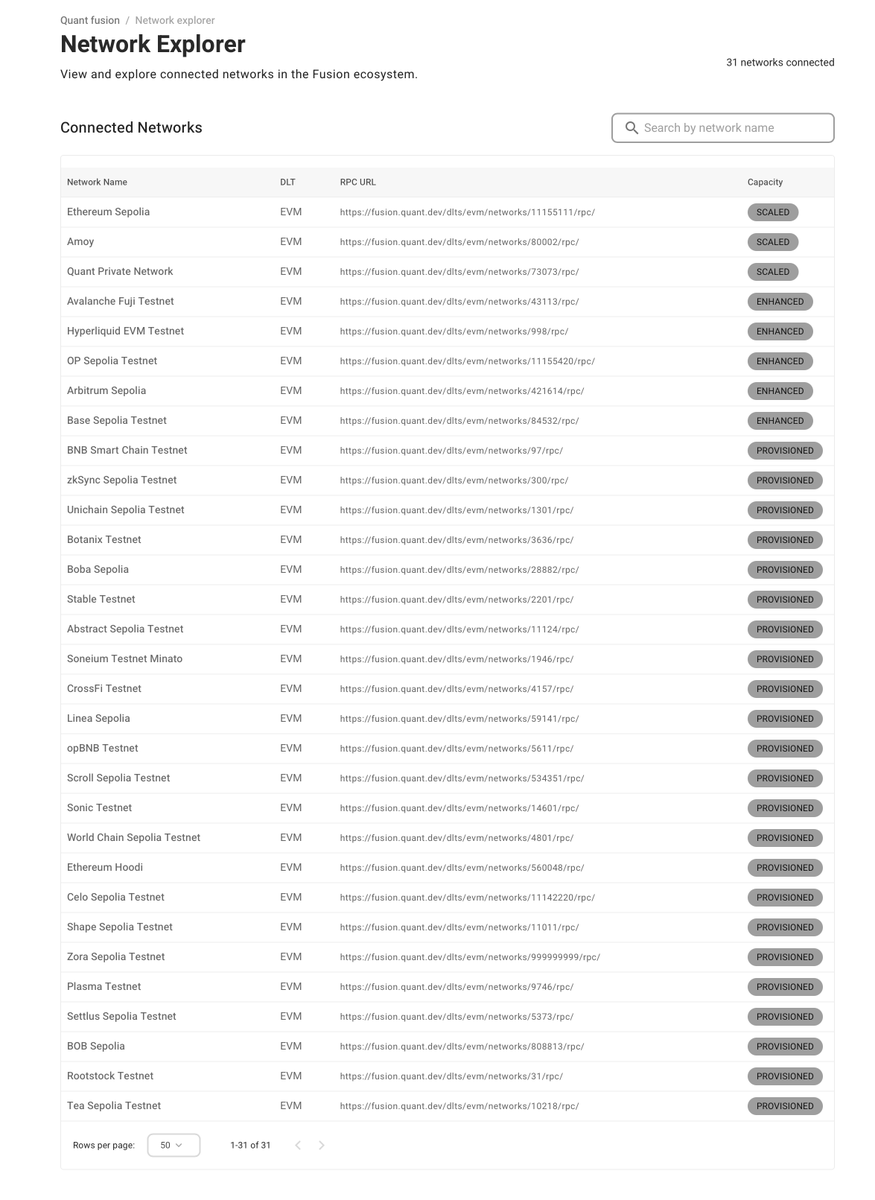
The Layer 2.5 Network of Networks @FusionLayer25 is coming together nicely!
31 Networks connected in the first hour! 🚀
Sign up and interoperate: https://t.co/N3rDK9bOYd
@TorbjrnBullJens What remains of the big announcement on June 18, 2025...?
K33 launches a share issue to finance the purchase of up to 1000 Bitcoin, with a minimum of SEK 85 million secured through pre-commitments
https://t.co/KNmKdJ1fUK
@fritzkola@RPalGar Ready for Davos!🇨🇭
Bitcoin is reshaping the financial system, and K33 is ready to contribute. I’m heading to Davos to present and represent K33. Send me a message if you’d like to meet up.
https://t.co/BJiBpLkUL5