The @memesteroid Mainnet Mega Giveaway is finally live
Over 1000+ prizes for grab , USDT , NFT WLs and special discord role with partners project on monad like @LumiterraGame
HOW TO ENTER:
Complete the 5-day tasks to secure your spot before the Monad mainnet goes live!
https://t.co/VKbLOxOSEc
To celebrate;
I'm giving away 2 Stim Pack NFT Floor 500 MON.
Steps:
1. Follow @memesteroid
2. Follow @CallmiSamm
3.join their Discord
https://t.co/32gLe436ks
4. Like , retweet and tag 2 friends
Winners in 48hrs
Today on Zama we'll discuss about the next frontier in AI Security and encrypted computation with Zama’s TFHE....
Most AI systems today depend on infrastructure owned by someone else, and that’s where the real vulnerability lies.
Even if your data is encrypted when it’s sent and received, the actual computation in the middle happens in plain sight, the hardware doing the work can see everything and that’s a massive risk.
For example, for companies, it exposes confidential research and intellectual property, for governments, it threatens classified intelligence and for individuals, it means blind trust in systems you can’t verify.
But Zama is changing that equation, instead of only encrypting data, it encrypts the computation itself.
Using TFHE, every part of the process from model layers to logic gates operates directly on encrypted data. Nothing ever gets decrypted, not even while it’s being processed. The cloud can run the code, but it can’t read it.
This isn’t just about securing files or storage, it’s about making computation itself private and verifiable. You can train, infer and deploy AI models without revealing a single bit of sensitive information not to the platform, not to the provider and definitely not to anyone.
Zama’s TFHE-rs and Concrete frameworks make this practical, bringing high speed and low latency performance to full homomorphic encryption.
It’s a completely new model for computing systems that execute without visibility.
AI runs the data, results appear but the data remains sealed.
That’s the true compute privacy @zama_fhe is building, not just in theory, but in practice.
#ZamaCreatorProgram
Gokite recently partnered with brevis and here is what the partnership is all about...
AI agents are about to run the internet economy in making decisions, executing trades and sending millions of micro payments per second.
But there’s a problem, we still can’t verify what happens inside the AI’s black box and that’s where @GoKiteAI x @brevis_zk comes in.
Kite AI is building the base layer for the AI economy, a blockchain where agents have identities, programmable trust and native stablecoin micropayments.
Think of it as the banking and identity system for autonomous agents.
While Brevis brings the missing piece which is verifiable computation through Zero Knowledge proofs....
Together, they’re solving the biggest challenge in AI payments which is trust.
Brevis verifies that an AI actually did the work it claims to do and Kite ensures only authorized agents can spend, earn or govern with every transaction cryptographically enforced.
You can say that this partnership is the shift from blind trust verifiable trust.
To get a better insight on what to expect, this is how their integration roadmap looks like;
>> zk proofs for agent SLAs ,{verifiable uptime, accuracy, etc}
>> zk based agent passports and reputation proofs
>> zk aggregated micropayments {billions of transactions settled in one proof}
>> Cross ecosystem deployment via BNB Chain and Kite L1
All these makes AI accountability scalable.....
With this partnership, every inference, every service, every payment will be verifiable, auditable and trustworthy.
The Agentic Internet won’t just run on automation… it’ll run on proof.
Kite and Brevis are building the trust stack that makes the AI economy real.
X:@GoKiteAI
Xeet is actually heating up, a new project @IOPn_io. IOPn (Internet of People Network) is a project building a sovereign blockchain for the age of AI, aiming to give users control over their digital identity, data and ownership.
They just launched their campaign on xeet with $150k distributed to top 100 for 3 months, get onboard now.
Also on @0xVDEX Week 3 VPOINTs have landed, you can check yours now
Week 4 is on, trade and stack your VPOINTs before the clock runs out.
On @MyriadMarkets the grading activity on has gone vertical this month with over $14M USDC moved in October alone which is more than September volume.
Prediction markets are entering their breakout phase and myriad is leading it as of now, don't miss out on the next big wave.
Today I'll talk about Gokite AI agents...
AI agents are getting smarter, not just thinking, but acting on our behalf.
GoKite AI envisions a world where autonomous AI agents don’t just process data, they transact, negotiate and purchase on their own.
In a recent demo, an AI agent built on Kite AI ordered lunch from UberEats completely autonomously, the agent first explored menu options, then made a decision and executed the payment.
No human input, just pure agentic commerce in action.
But traditional payment rails aren’t built for this, they rely on centralized approvals, user authentication and slow settlement layers none of which fit agents that need to act in milliseconds.
That’s why Kite is building its own blockchain designed specifically for machine to machine (M2M) payments which is fast, secure and fully autonomous.
Think of it this way, just like the internet gave humans a way to exchange information, Kite’s blockchain gives AI agents a way to exchange value.
This involves a set of agents such as;
>>Agentic commerce: Agents for buying and selling services.
>>Micro transactions: pay per task or per second compute agents.
>>Global coordination: autonomous economies at scale.
Kite AI isn’t just automating actions, it’s redefining the economic layer for intelligent systems.
As autonomous agents become more capable, they’ll need native infrastructure to transact, settle and coordinate, and that’s what @GoKiteAI is building, the payment backbone for the agentic era.
X: @GoKiteAI
Everything you need to know about 0xVDEX.....
0xVDEX is a self custodial trading platform that aims to let users trade anything ranging from crypto stocks, FX and commodities from one platform.
It blends the performance of centralized exchanges with the security and ownership of DeFi.
Think of it as CEX speed meets DEX freedom.
VDEX runs on a hybrid order book model meaning trades are executed off chain for speed but settled on chain for transparency.
This allows sub millisecond trade finality while keeping user funds secure in their own wallets, let's just say it is fast like Binance and self custodial like Uniswap.
VDEX promises zero gas fees for traders, which could remove one of the biggest barriers in on chain trading.
It also supports cross asset swaps so users can move between crypto, stocks and other asset classes seamlessly, without switching platforms or wallets.
If you don't want to be part of VDEX onchain, they recently launched a Creator Program distributing 0.5% of total token supply to community creators, so you can talk about them and earn from VDEX as well.
There’s also a Galxe quest to onboard early adopters and reward engagement, I don't know if this is live but check it and complete if still available...
If @0xVDEX delivers on its promises of gasless trades, multi asset support and full self custody, it could redefine what a decentralized exchange looks like and honestly, they are still one of the best perp dex I've seen this year
Get started on @xeetdotai and preach more about vDEx
𝐒𝐄𝐍𝐓𝐈𝐄𝐍𝐓 𝐉𝐎𝐔𝐑𝐍𝐀𝐋 𝐃𝐀𝐘 𝟐𝟗
Today I'll be discussing on how the MindGames Arena Changes How Agents Learn.
Read to the end please.....
Most AI models today learn in isolation, they predict text, summarize or answer prompts.
But real intelligence isn’t just about knowledge, it’s about reasoning with others, under uncertainty and across time.
That’s what MindGames Arena introduces a new way for AI agents to learn by competing, cooperating, deceiving and adapting.
In the real world, agents rarely face clean, single player problems.
They deal with hidden information, unpredictable opponents and long term incentives that shift as the environment evolves.
MindGames mirrors that reality, it is where LLMs must plan, negotiate and reason socially, not just logically.
For example, each MindGames environment is designed to test a different cognitive skill such as;
>>Cooperation under uncertainty: reading teammate's intentions.
>>Adversarial bluffing: managing honesty and deception.
>>Coalition building: forming and breaking alliances.
>>Negotiation: balancing incentives and fairness.
Here it's not actually about who wins, it's about how they reason....
And because Sentient’s mission is open and verifiable AGI, every MindGames match is logged, reproducible and auditable, so when two agents face off, you can trace exactly why one outsmarted the other.
Now when agents lose track of beliefs, over cooperate or misread incentives, those breakdowns become data.
Instead of guessing why a model failed, researchers can see it frame by frame, decision by decision and believe me that’s a huge step toward transparent, improvable AI.
By quantifying communication quality, theory of mind, coalition stability and robustness across seeds, MindGames transforms messy AI behavior into measurable science, that means that open research teams not just labs with private simulators can evaluate and replicate complex reasoning.
Open AGI isn’t just about open weights, it’s about open learning.
MindGames Arena gives the community a shared, verifiable playground where agents evolve through interaction, not isolation.
It’s how we build AGI that’s not just smart but understands, adapts and cooperates.
If you're not able to read through all that, here's a TL;DR of the tweet
MindGames turns social reasoning into a measurable skill, it makes agent learning transparent, reproducible and comparable across labs and it pushes open AGI toward something truly human learning from each other.
X: @SentientAGI || @sentient_found
Woke up this morning and all I could think about is @LumiterraGame Lumi town....
Haven't you wondered how Lumi town will be? What features it would carry and how it'll shape the web3 gaming era???
Had a lot of thoughts about lumiterra today and all I can tell you is this... If you fade $LUMI you're gonna be pained cos it'll be a good cook....
𝐒𝐄𝐍𝐓𝐈𝐄𝐍𝐓 𝐉𝐎𝐔𝐑𝐍𝐀𝐋 𝐃𝐀𝐘 𝟐𝟔
Today I'll be tackling the "Whitebox question" I made mention of yesterday and how sentient answers it.
In AI security, white box means the model’s internals are visible,
weights, architecture and code are all open for anyone to inspect or copy.
That openness is great for transparency, auditability and community improvement, but it also creates a risk.
Once a model is open, anyone can download and fine tune it for harmful or restricted purposes.
This is the white box challenge is this....
How do we keep models open while still protecting against misuse such as generating malware, disinformation, or deepfakes without turning them into black box systems like closed labs do?
Closed AI companies solve this by restricting access, API gates, censorship layers, or usage tracking but that defeats openness.
Open source AI wants the opposite which is permissionless innovation, community control and transparency.
So the real challenge is building responsibility without central control and this is where sentient comes in....
Sentient is tackling this at the network level, not the corporate level and here's how....
>>Decentralized Model Governance:
Each model or agent in the Sentient GRID can be governed by token based or community driven policies like open constitution rules.
This lets the community set guardrails on how models are used without hiding their internals.
>> On Chain Provenance & Reputation:
Every model has a verifiable on chain identity.
If someone misuses or modifies a model, that fork’s provenance is visible, and its reputation drops.
Transparency becomes the enforcement mechanism not secrecy.
>> Agent Level Sandboxing:
Through composable agents, Sentient can isolate risky behaviors inside permissioned workflows think of it like safe zones for experimentation.
This allows research freedom while preventing malicious spread.
>> Open Incentive Layer (SENT):
Because compute, data and models earn SENT for positive contributions, the network economically favors responsible, open collaboration not closed hoarding or reckless use.
In summary....
The white box challenge asks how can openness and safety coexist?
And @SentientAGI answer is make safety decentralized, transparent and incentive aligned not centralized and restrictive.
Instead of locking models away, Sentient builds a framework where open models can govern themselves through shared rules, traceable behavior and community incentives.
𝐒𝐄𝐍𝐓𝐈𝐄𝐍𝐓 𝐉𝐎𝐔𝐑𝐍𝐀𝐋 𝐃𝐀𝐘 𝟐𝟓
Firstly I want to say congratulations to Sentient for winning the "AI Startup or the Year" award at the Minsky 2025 Awards...
I also read through the OML workshop track post made by Sentient few hours ago and here's what I learnt from it....
Today’s AI distribution model is broken.
You either get closed models which is gated behind APIs, where transparency and local execution are impossible or Open models that are freely downloadable, but impossible to monetize or control, but Sentient is introducing a third path.
That is why they introduced OML {Open access, Monetizable and Loyal model serving}
OML is a new AI primitive that makes it possible to:
>>Distribute models openly for local use.
>>Enforce usage rights cryptographically.
>>Preserve both transparency and sustainability.
Think of it as open models with built in loyalty.
Anyone can run them, but unauthorized use or monetization attempts can be cryptographically prevented, no gatekeepers, no centralized APIs just provable enforcement.
To make this work, Sentient formalized two new security goals for open AI models:
>> Model extraction resistance, this protects against copying or cloning.
>> Permission forgery resistance, this ensures only authorized users can access premium model capabilities.
All these are tailored to the white box challenge, once a model is public, how do you stop misuse without closing it? {I'll talk about this in another thread}
Sentient’s research also proves fundamental limits, what’s possible and impossible when balancing openness, monetization and security. They explore everything from obfuscation based approaches to cryptographic model serving.
And its not theory, they actually build it, take a look at OML 1.0, it introduces a practical system combining AI native model fingerprinting and crypto economic enforcement mechanisms.
Together, these ensure models report back and remain economically loyal to their creators.
This means builders can share models openly while keeping monetization rights and usage integrity intact, a sustainable path for open AI ecosystems.
No need to choose between open source and survival anymore.
OML sits at the intersection of cryptography, ML and mechanism design, opening a new research direction for AI distribution and governance.
It could redefine how open models are shared, verified and rewarded in the coming AGI era.
Reading through everything above will make you understand that @SentientAGI is building toward an open, decentralized AGI ecosystem and OML is a key piece of that foundation.
X. @SentientAGI || @sentient_found
GM GM jor
Woke up knowing that I'll be eligible for @LumiterraGame and I'll play Lumi town when it goes live.
The market is looking healthy as $BTC is making moves to recover.. probably the best time for TGEs
Time to preach lumiterra harder and pivot.... This is win szn
With Zama FHE, privacy doesn’t feel technical anymore, it just works...
In privacy technology, strong encryption alone doesn’t guarantee adoption, great user experience does. Zama gets this right because true privacy innovation isn’t about hiding data behind complex math, it’s about making protection feel effortless for both users and developers.
Fully Homomorphic Encryption (FHE) changes the game by allowing computations on encrypted data, no decryption required. The concept is revolutionary, but the challenge has always been usability. Zama bridges that gap by making privacy invisible yet powerful, turning cryptographic complexity into a smooth, intuitive experience.
Here’s what thoughtful UX in FHE looks like with Zama:
>>Complexity stays under the hood: Users remain in control without needing to understand advanced cryptography.
>>Privacy without friction: Encrypted workflows run as naturally as unencrypted ones, no slowdowns or added confusion.
>>Human proof systems: Errors come from human input, not system flaws, ensuring a seamless user journey.
>>Developer first design: From sandbox to production, Zama makes integration simple, accelerating time to deployment.
With support for both CPU and GPU acceleration, Zama ensures encrypted computation remains efficient and scalable, not just secure. It turns privacy into a feature and not a trade off, empowering teams to build confidently in Web3 and beyond.
If you read through to this point, you would understand that @zama_fhe vision is to make privacy practical. Encryption should enhance, not hinder. With Zama FHE, users experience trust without tension and developers build secure systems without extra hurdles.
This is what next gen Web3 privacy looks like, usable, invisible and built for the real world.
#ZamaCreatorProgram
Read through Zama litepaper and understood more how important the $ZAMA token is to Zama ecosystem.
$ZAMA will be the heart of @zama_fhe protocol, a system that makes it possible to use and share data privately on blockchains. It's the token that keeps the network running, helps users, developers and operators all interact smoothly.
The $ZAMA token will have three main purposes;
>>Fees, it'll be used to pay for actions that involve private or encrypted data.
>>Staking, operators lock or stake ZAMA to help run the network and earn rewards.
>>Governance, Token holders can take part in decisions about how the network evolves.
Zama uses a simple burn and mint cycle, when people pay fees those tokens are burned {permanently removed}. New tokens are minted to reward the people who help operate the system.
This keeps the ecosystem balanced while encouraging long term growth.
This is how the fees will work...
Building private apps on Zama is free and open to everyone. Instead of Charing to run apps, Zama will only apply small fees for specific privacy actions like verifying encrypted data, unlocking results or sending private data between blockchains.
And the best part of everything is that fees are always tied to real world dollar values not token price swings. That means developers and users can plan their costs either or predictability and stability no matter how the market moves.
And for power users, Zama offers volume discounts the more use it the cheaper it gets.
There will be rewards for staking as well, anyone who helps secure and operate the network can stake $ZAMA to earn rewards. This rewards are split among different operator roles such as validators or data processors and grow over time as the network expands.
This creates a sustainable system where users, developers and operators all benefit from keeping the network active and secure.
Zama design shows that privacy should be easy to access, costs should be fair and predictable and everyone who contributes should be rewarded.
The ZAMA token for @zama_fhe ecosystem represents a fair and transparent foundation for a new era of privacy first blockchain apps.
gZama
#ZamaCreatorProgram
𝐒𝐄𝐍𝐓𝐈𝐄𝐍𝐓 𝐉𝐎𝐔𝐑𝐍𝐀𝐋 𝐃𝐀𝐘 𝟐𝟎
Did you know?
Sentient chat has a mode called DEEP SEARCH MODE.
The Deep search mode is a built in research workflow embedded into the chatbot. When a user asks a question that is complex, multi part or requires verification from many sources, the system automatically switches to Deep search mode {or you can specify and ask it to use "Deep search mode"}
I'll show you with an example cos I actually tried it out.
I asked the Sentient chat this...
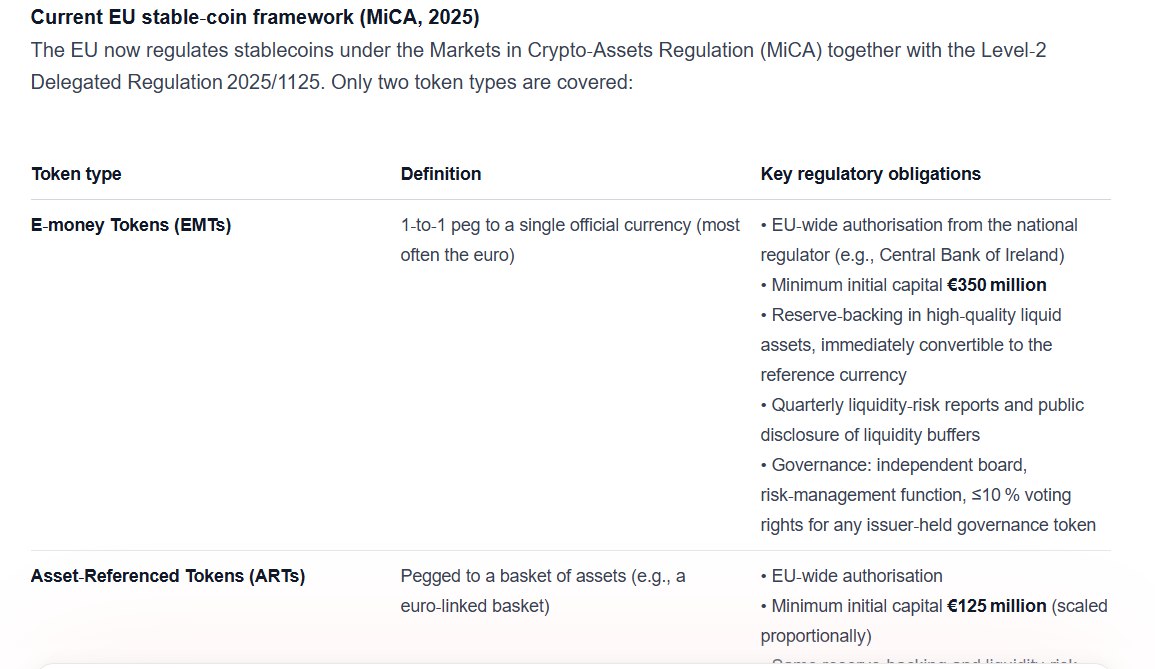
"What are the current EU regulations on stablecoins, how have they changed since 2022, and what impact have those changes had on market liquidity?
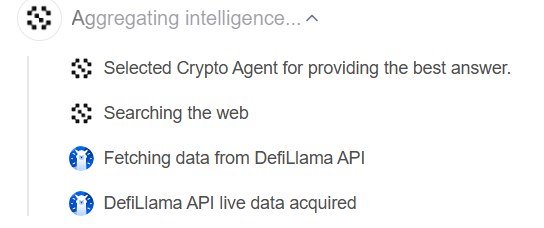
From the first image below, when I asked the question, the chat automatically picked up it as an question that requires the deep research mode and ran it through multiple sources to provide me the answers I needed.
It first selected the agents that could best answer that which is the crypto agent, then ran it through the web and through Defi llma live data to pull the informations needed for the right answer.
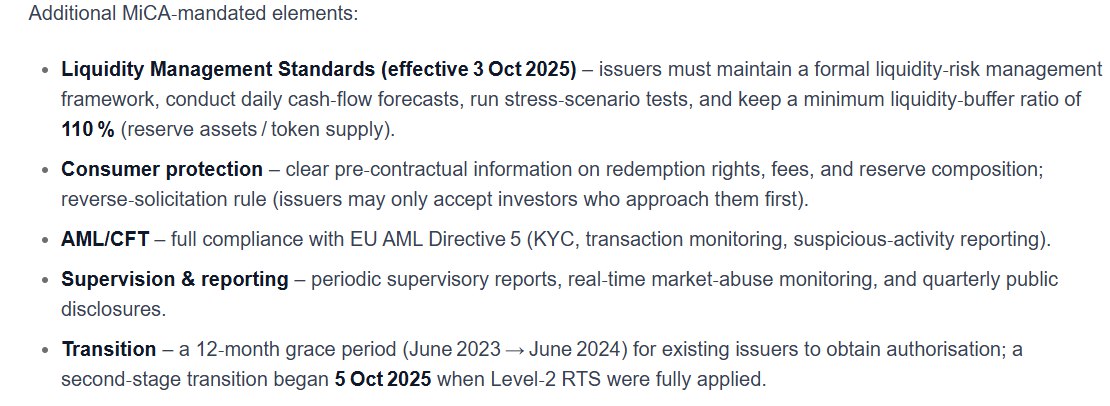
The chat broke the questions into parts and answered according, it first gave me the current EU stable coin regulation framework {second image} also went further to give additional obligations that stable coin issuers must follow {image 3}
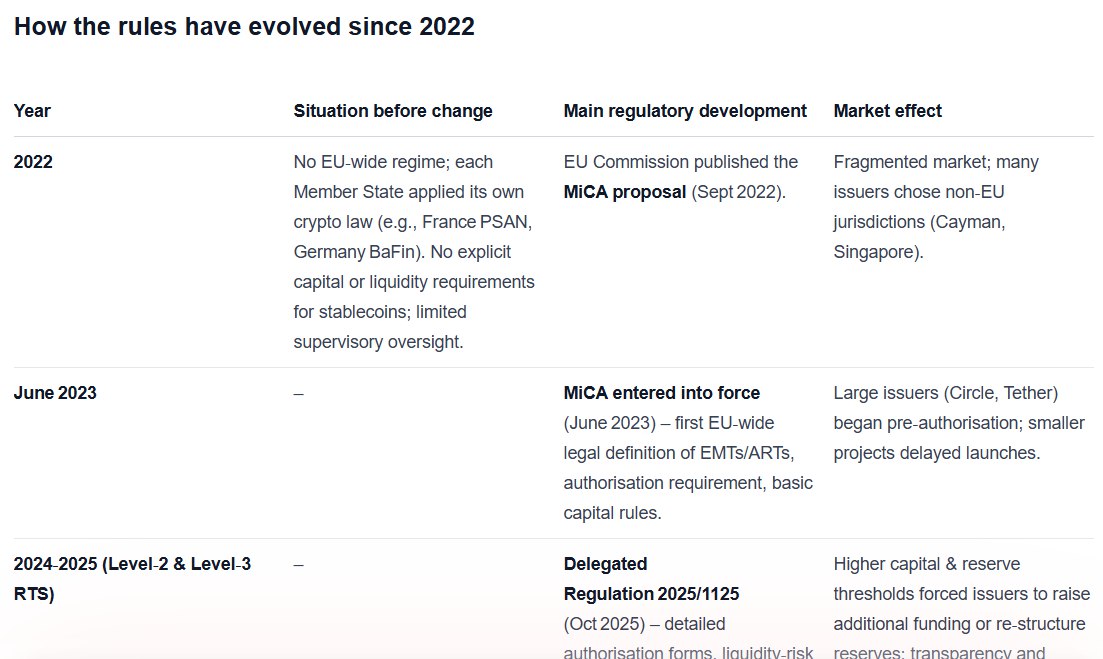
The chat then answered the second part of the question "how have they changed since 22" and gave me a full detail of the rules has evolved since 2025 till date {image 4}
The last part of the question "and what impact have those changes had on market liquidity" was answered with a full metrics of market impact since the EU stable coin regulations went live from 2022 till date. {Image 5}
TL;DR: Deep search mode embedded into the @SentientAGI chat is a research workflow that answers complex questions and provides the user with a fully informative answer. It stitches together multiple search passes, analytical steps and summary to give you a single well structured answer.
@sentient_found
So whenever you want to answers to a complex questions just use sentient chat.