Growing into the winning relationship
Holding period and pyramiding/doubling down into a winner or loser have the biggest impact for the aspired master trader.
These are not small variables. For the trader who aspires to the top, they are the only true variables.
People like to begin with entries. Fine. Entries matter. But the first real work is finding the pockets of edge: small caps, mid caps, large caps, each one becoming over time a liquidity-driven sliding scale forcing the growing trader to shift into a new version of himself. What worked at one size stops working at another. What looked like skill at one level becomes noise at the next.
Then comes compounding. Usually through an R system, whether you fully systematize it or compound naturally. Directly or indirectly, you are always measuring risk. You are always deciding how much of yourself to put behind the idea.
Then comes noise reduction.
Seeing less. Focusing more. Finding structure inside chaos. Learning what not to look at. Learning what not to care about. Putting structural elements (like scanners, prep, automated systems) in place. This is harder than people think, because most traders are not defeated by what they miss. They are defeated by what they cannot stop seeing.
Only after that do you earn the right to size exponentially.
Adding to winners. Averaging in. Pressing when the trade improves. Holding when the easy exit appears. Accepting that win rate and risk/reward live on a sliding scale, and that every serious trader must eventually decide where he belongs on it.
At the end, the game becomes judgment.
Can you grade the setup as it moves from bucket to bucket? Can you recognize when a B has become an A, when an A has become an A++, or when the thing you thought was elite was only dressed that way for a few candles?
This is most true in deep value. It is also true in parabolic shorts. The opportunity does not arrive fully formed. It reveals itself. Then your sizing and your holding period must adjust to the reality in front of you.
So here is the question.
Should you wait for the A++ entry when the A is already available?
Or would you rather miss the first entry so you can pyramid with greater certainty once the trade begins to prove itself?
There is no free answer. There is only the trade-off you can actually live with.
Win rates are easy to manipulate. You can raise them by taking profits too early, sizing too small, avoiding discomfort, and calling cowardice discipline.
But risk/reward and dynamic sizing are where the real alpha hides.
That is where the market wizardry is.
Not in being right often. In being enormous when it matters and pushing beyond, by appreciating the power of the true outliers and the range they offer as they reverse (or continue for some breakout strategies).
And that privilege is not given cheaply. The ability to push, to pyramid, to become your biggest in the best opportunities, comes only after mastering every earlier step.
You do not get to size like a monster because you are excited.
You get to size because you have earned precision. You have earned conviction. You have lived through dozens of account pullbacks, recoveries, new highs, false dawns, and near-breaks in belief.
Only then can you tolerate a smaller win rate in exchange for a huge winning tail.
Only then can you hold the trade long enough for the rare thing to pay you.
That part is not technique.
That part is earned, respect, held on to like a religion.
At the end all that remains is the tail, the tail of the alpha that blows off into account growth.
Are you truly able to get to that last stage only depends on building the strong foundation needed to support the monument that might live on in history.
THE SHORTEST TIMEFRAMES HAVE THE MOST EDGE!
This is a view I’ve mentioned before in interviews, but I’ve never taken the time to fully expand on.
In general, you want to be an expected value maximalist (within risk constraints). And the shortest human timeframes offer that. Yes, I mostly do bigger picture trades now but that’s due to scalability and quality of life, not bc they offer the most edge.
The paradox of markets is this:
-The shortest timeframes often have the biggest dislocations (most “edge per minute”)
-The longest timeframes often have the biggest tailwind (asset prices tend to rise over time)
-The middle is where many traders get chopped up
This principle is the reason why there were traders at Trillium that could be positive hundreds of days in a row. You’ll never see that with a swing trader or value investor.
1. Why short timeframes can have so much edge
At very short horizons, markets can be temporarily inefficient because of:
-forced behavior (stops, liquidations, margin pressure)
-delayed human interpretation of information
-mechanical flows around opens/closes
-short-lived supply/demand vacuums
Those create moments where price can be “wrong” for seconds/minutes relative to where it’s about to reprice.
In fact, at the extreme short end of human discretionary trading like the two following examples, you can find opportunities that approach 100% win rate with a profit factor of 10+. Of course there is a trade-off which I’ll get into.
2. Order flow imbalances
One of the biggest short-term edges is understanding order flow imbalance. Yes, these happen far less of the now than they used to as discussed in my interview yesterday with Serge. But they still exist particularly during times of market extremes.
-aggressive buyers/sellers temporarily overwhelm passive liquidity
-one-sided flow causes price to overshoot or stall
-liquidity can disappear at key moments, then refill at new levels
You’ll see this around:
-opening auctions
-panic flushes / squeezes
-large fund rebalancing windows
-crowded positioning unwinds
This is where the tape can get dislocated from “fair” value in the short run and where active traders can extract edge. It is also why some of those hyperscalpers like @EdBarry4 are positive so many days in a row.
3. Breaking news is where discretionary human traders still have the edge over algos in interpreting novel headlines.
There’s usually a sequence:
-headline reaction
-second-order interpretation
-positioning unwind/chase
-stabilization
If you’re prepared and fast, these windows can be highly asymmetric. In fact, breaking news can offer some of the best opportunities in existence, especially when applied to liquid instruments (think April 2025 tariff headlines!).
In fact, I’d argue tariff headlines due to their massive impact on global markets are some of the best expected value opportunities I’ve ever seen.
4. But there’s a tradeoff: liquidity + scalability
The shorter the timeframe, the more your edge depends on:
-execution speed
-order optimization
-fee minimization
-slippage minimization
So yes, edge can be highest in short windows but liquidity becomes the constraint. Many short-duration edges don’t scale without degrading returns.
That is why many traders post eye-watering returns in small caps but then you constantly see them doing their dumb small account challenges. It’s because their strategies don’t scale!
5. Beware the middle ground.
Take this thought experiment. Let’s say $AAPL flash crashes 90%. With near-certainty, Apple will bounce within minutes close back to the unaffected price. What happens overnight is more of a toss-up. What does the market do? Does news come out? Yet over the course of 5-10 years, it’s likely the $AAPL goes up.
In that middle ground, you take on variance from overnight risk, headline risk, and market risk. But don’t benefit much from the fact that over years, markets go up. It’s much more of a coin flip whether we go up or down any given day.
If I had to guess, the most edge is in tenths of seconds and seconds for humans. The least edge is in the window of weeks. Why not compete at even faster timeframes? Bc then you fight with HFT, commission structures, co-location, and more.
6. So how to apply this?
First, this is useful for the sniff test. Understanding that there is a trade-off between edge and liquidity is critical!
There is a reason why you see small cap traders that can scale a small account over 1,000% in a year (think early days of @theshortbear). There is also a reason why Warren Buffett has approached market returns.
It’s that trade-off between edge and scale. Similar to the general trade-off between win-rate and profit factor, it’s a safe assumption that these often tend to move inverse to each other. It’s the reason why that if I managed $1B my returns would probably get quartered and if I managed $10B my returns would approach market returns or worse.
This framework is also useful for finding the most edge and understanding your strategies. If you’re moving to a higher timeframe, you generally SHOULD expect more variance. That comes with the benefit of scalability.
Similarly, if you want to study micro-inefficiencies, particularly in less efficient markets like crypto, you can find some insane edges there.
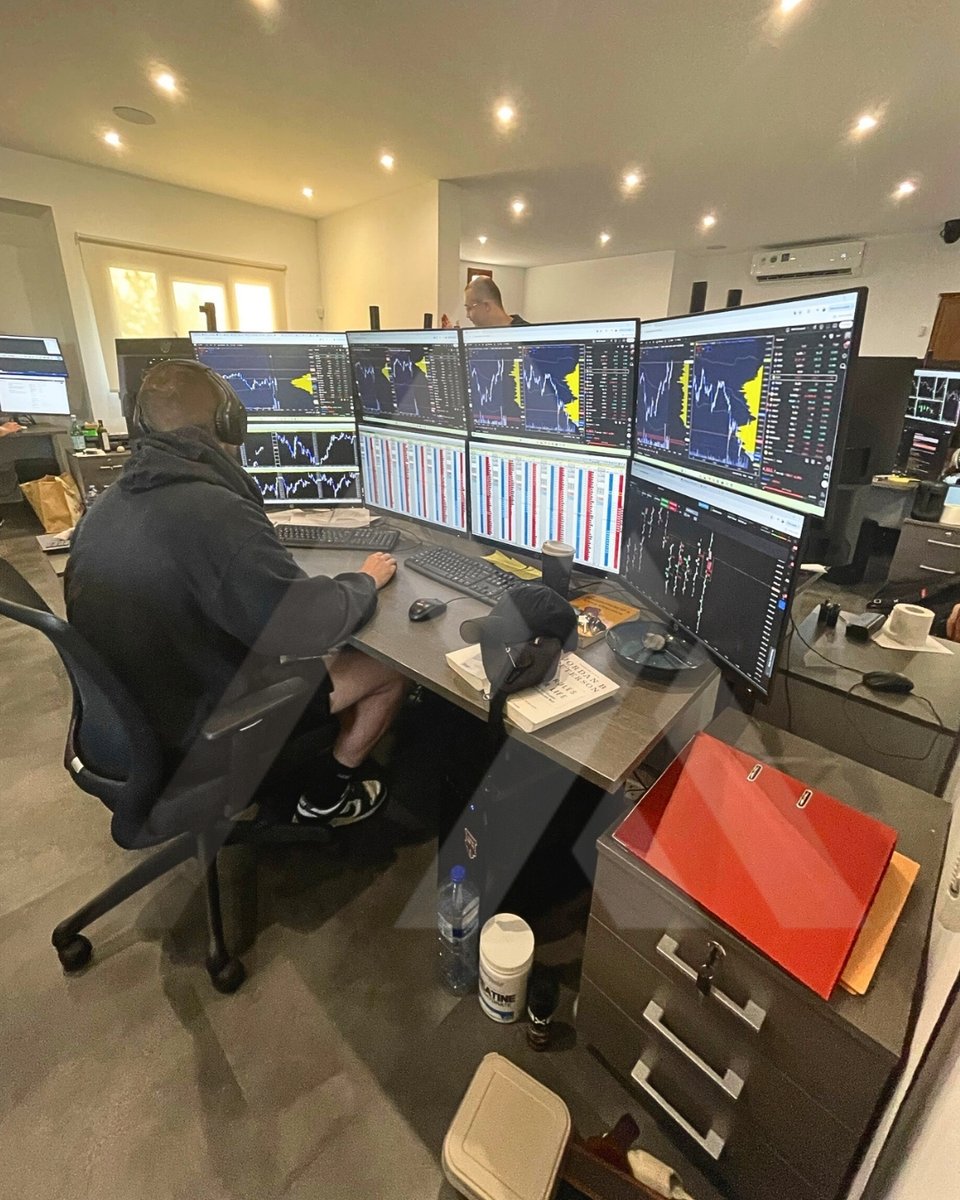
The screen is only the surface. The real edge is built in the quiet moments - reviewing patterns, tightening processes, and shaping the thinking that drives execution. It’s this unseen repetition that compounds into professional skill.
#trading#axiafutures#daytrading #tradingfloor #tradingteam
@_findingmyedge Awesome work again this year James, and thanks as always for sharing your journey with the trading community. Inspiring the next generation of Aussie traders
Figure out what you want.
Ignore the opinions of others.
Do so much work it would be unreasonable that you fail.
Realize it never mattered to begin with.
Help others once you get there.
Tape reading skills is an essential skill @smbcapital.
Recording your screens, watching back inflection points in big trades, is an effective way to build this skill.
Video PlayBack is a core daily habit @smbcapital to build your trading skills for developing traders.
Pro tip: If you're afraid to take the risk, write down in excruciating detail what you're actually afraid of having happen. Step by step what happens next when you fail. You'll often find it's not so bad when you spell it out.
Fear exists in the vague, not the specific.
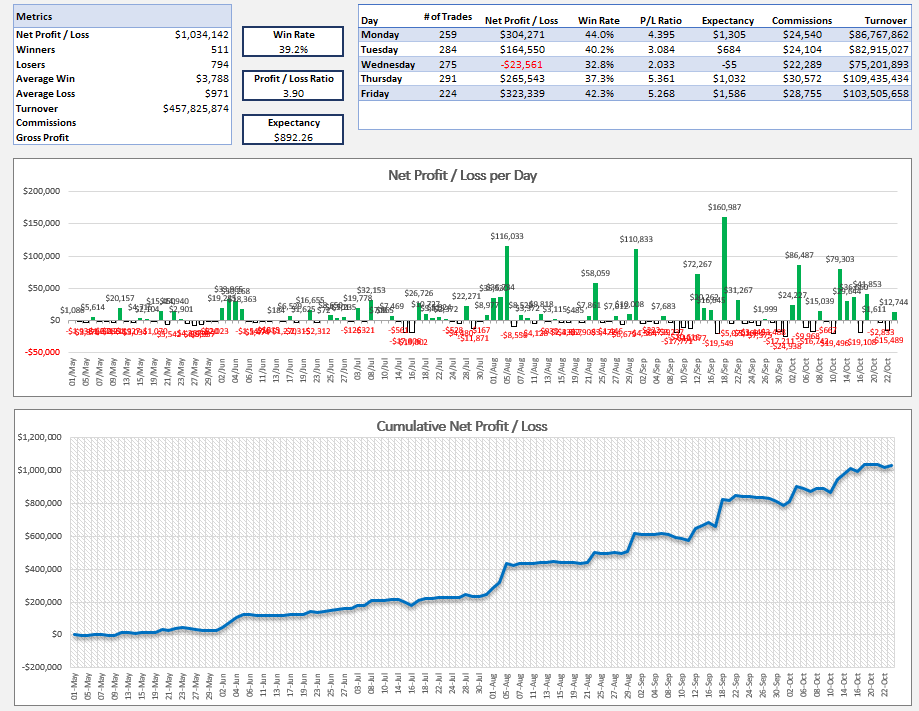
Feels a bit surreal to be posting this milestone - I started trading in 2021 and as recent as May this year I was still struggling. I was getting by but my growth was inconsistent and the trade-off between what trading was costing me personally and the returns I was getting just wasn't there. I had 15k in the trading account and had to sell my apartment just to get by. Purely from a lifestyle standpoint, I switched things up to focus more on swing trading. What started as an experiment snowballed pretty quickly into a really scalable style of trading for me (while also coinciding with a market conducive to this style). If you're struggling like I was - things can take much longer than you initially expect but can also change in an instant. I'm mindful that guys in the US sneezed and made this much on $BYND so my focus now turns to growth and scale with this strategy.
No one else shares this kind of insight in ASX equity trading. Follow @austinmitchyblu if you aren't already.
Reflections On A Record Day And Then A Big Give-back https://t.co/7SHibxyLX6
Your trading improvement comes from...
"the micro actions you are taking every single day. The tiny things that perhaps no one else notices." 👇👊
For traders, efforts like:
The PlayBook
Daily Report Card
Tape Playback
Tradervue
Build technology
Colloboration
How I Changed My Life | Rich Roll https://t.co/OCCKPD7cFG via @YouTube
It began with a tweet and ended with the crypto market imploding.
Surviving Friday was about understanding the plumbing—real edge lives in knowing market structure and being ready when your market breaks.
New free post
High performance isn’t a solo sport.
The data is overwhelming: Harvard’s 85-year study shows the strongest driver of long-term success isn’t IQ or resources—
It’s the quality of your relationships.
Why?
Because growth requires tension. Precision critique. Shared standards.
A real team turns mistakes into systems and ideas into execution.
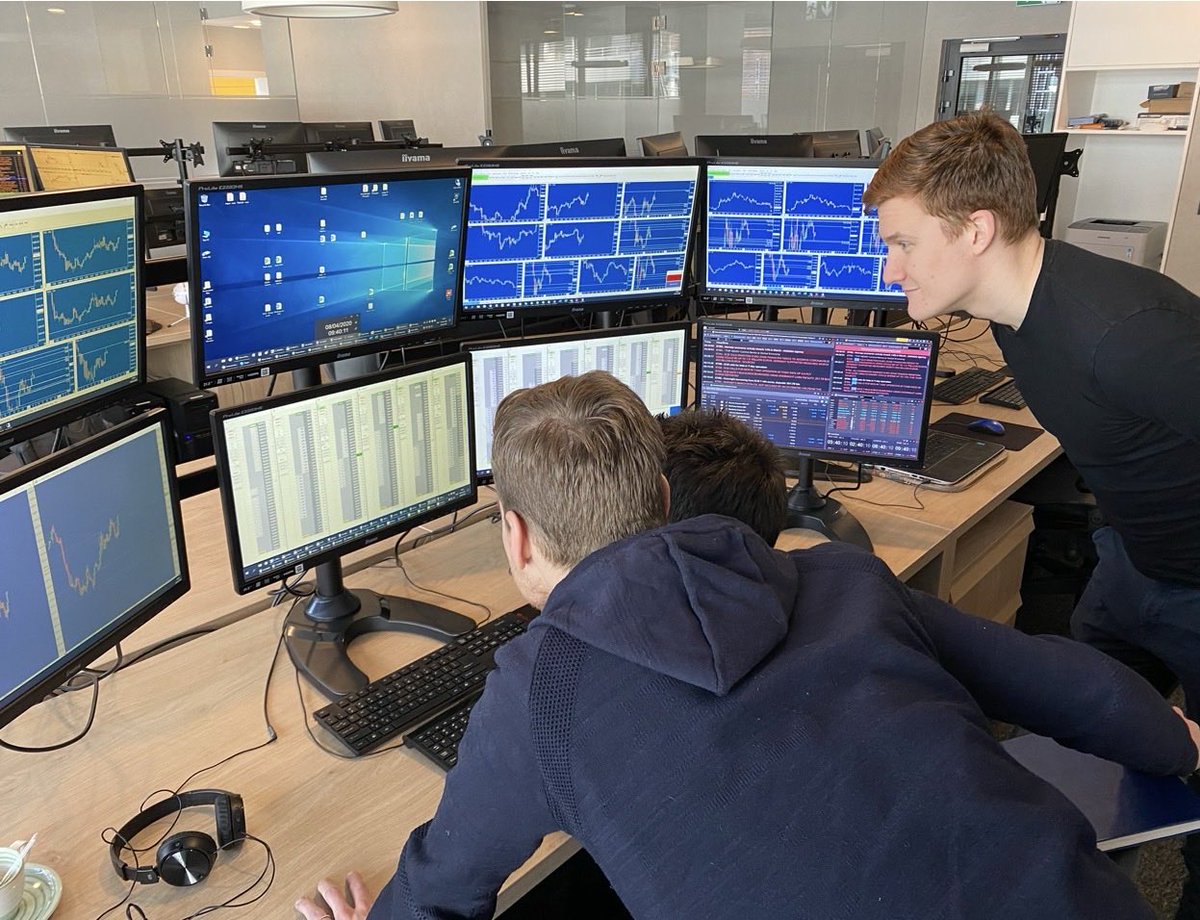
Great traders train together.
A CRITICAL MESSAGE TO ALL TRADERS
I would be remiss not to speak about the carnage that went on in the crypto markets yesterday. To those who just lost everything in the liquidation - this message is for you. And to those who had no exposure whatsoever - this message is also for you.
As awful as this moment feels, there is no undo button. But life does go on. I know that feeling. That pit in your stomach, that internal prayer that all of this is a bad dream. That desire that you could just go back in time and make those small changes you were so close to making. I feel you. I’ve been there multiple times.
No matter how many times it happens, it feels like your world collapses. You try to control your thoughts but your mind goes right back to what happened. It all seems hopeless. But if you’ve ever built anything once, you’ve already proven you can build again. Whether you lost $1,000, $1 million, or $100 million, the pain is real. Nobody’s pain should be minimized.
No matter how rich you are, you still feel those same primal emotions. We are programmed to feel that way. In fact, the more you lose, the heavier it often feels because the more your wealth has become your identity.
But recognize this: what you are feeling is our primal programming. Our evolutionary psychology to preserve and protect resources. That programming is flawed though.
We always have one ability: to take control over our thoughts and feelings. To recognize that we don’t need to keep reliving the same pain. As they say in Buddhism, being struck by the first arrow hurts. But we don’t need to keep forcing ourselves to get hit by the 2nd and 3rd and 4th. Even if it feels impossible, we can focus on the breathe and find control over our thoughts and emotions.
Money isn’t the most important thing in life. The things that truly matter can’t be bought, and they can’t be taken away by a liquidation - your health, your loved ones, your integrity, your ability to start again. The biggest gift we have is life itself and the freedom to carve a new future. That agency is what defines us as humans.
Get outside. Spend time with friends and family. Seek help if you need it. There is always room for a brighter tomorrow as long as you remember that you still have agency.
What you are feeling isn’t new. For millenia humans have felt this. Elon Musk and some of the greatest smartest wealthiest humans to ever have lived have also been on the precipice of losing it all. Multiple times. Every success story comes from those who persevered when it seemed darkest.
One of the most dangerous traps of wealth is how easily it fuses with our ego. Nobody is immune. Even when we are aware of it. Not me, not you, not any human. It’s part of our condition. The larger the number, the easier it is to confuse your net worth with your self-worth. Buddhism teaches that suffering comes from attachment. You are not your account balance. You are not your status as a trader. You are much more than that.
The hard truth is that the biggest lessons in life are usually learned through the rearview mirror. What’s done is done. The only way forward is to accept responsibility and move on.
Many peg their worth to the wealth of others. We see people around us make insane wealth. People we view as dumber or less deserving. So we ourselves increasingly move out on the risk spectrum to try to keep up. We must always play our own game.
The people we end up chasing might themselves one day lose it all. Never ever try to keep up with what others are doing. That is part of the toxicity of social media and the pnl porn that occurs on this platform. Play your own long game.
I speak out against the cherry-picked bs gain porn. It was everywhere the last few weeks. So many people try to justify the pnl sharing. How many people were wiped out from simply trying to keep up w the that selective pnl porn posted on social? How many of those posters will quietly fade away after this event?
The best thing you can do? Get away from the screens. Get off social. Stop looking at charts and prices. Spend the weekend outdoors. Appreciate the beauty of the sunset. Of nature. Notice that the world still goes on. As massive as this feels, it will pass with time and you will be better for this. The same way every awful thing in your life also came to pass and you came through stronger.
But make sure if you are learning this lesson, you only learn it once.
It is a brutal but necessary reminder: leverage kills. Markets will always surprise you. Never keep all your eggs in one basket. Segregate accounts. Keep a rainy-day fund in safe assets. Protect your downside before you chase the upside.
Over the long run, everyone will face fat tail events that can bankrupt you with leverage.
If you weren’t caught in this wipeout, count yourself lucky… and take this as a free lesson learned without paying the tuition. Reflect deeply on your own exposure and the risks you might not even see, especially the hidden leverage that comes from overconfidence in bull markets.
You only need to get rich once. Don’t let the market teach you that lesson the hard way.
Much love. Be safe. Try to find gratitude. You always have agency. No matter how bad anything gets.
-(The One) Lance B
Our Profession.
You come to realize one of the market’s great paradoxes: absorbing a loss under fire is an almost mechanical act, a quiet surrender to the inevitable.
The true crucible of character, however, is found in choosing to walk away from the table when the cards are falling in your favor, especially as the bets grow wilder and the intoxicating pull of the final, collective wager tempts everyone to go all in.
And the truth, much like in Poker, is that the table is not designed for everyone to win. By its very nature, the market funnels the winnings into the hands of a disciplined few. To find yourself moving in unison with the crowd, feeling the comfort of shared conviction, is often the final assurance that you are no longer the hunter, but the prey.
The discipline to rein in risk during a market crescendo requires a quiet courage that is rarely celebrated. The world will always cheer louder for the gambler who goes all-in and wins than for the strategist who loses less than everyone else.
This path demands a solitary mind. You must stand firm in your own logic when the only seemingly rational choice is to surrender to the street's roar.
It’s the loneliest job in the world, yet it’s also the most clarifying.
After enough seasons have passed, after 90% of the voices you once knew have fallen silent, you realize the market is a relentless mirror.
In the end, it shows you exactly what you're made of.
Iv been thinking a lot about obsessive behaviour and how the most skilled trading practitioners exhibit obsessive like behaviours. My thoughts can be summarised by this msg I sent a colleague.