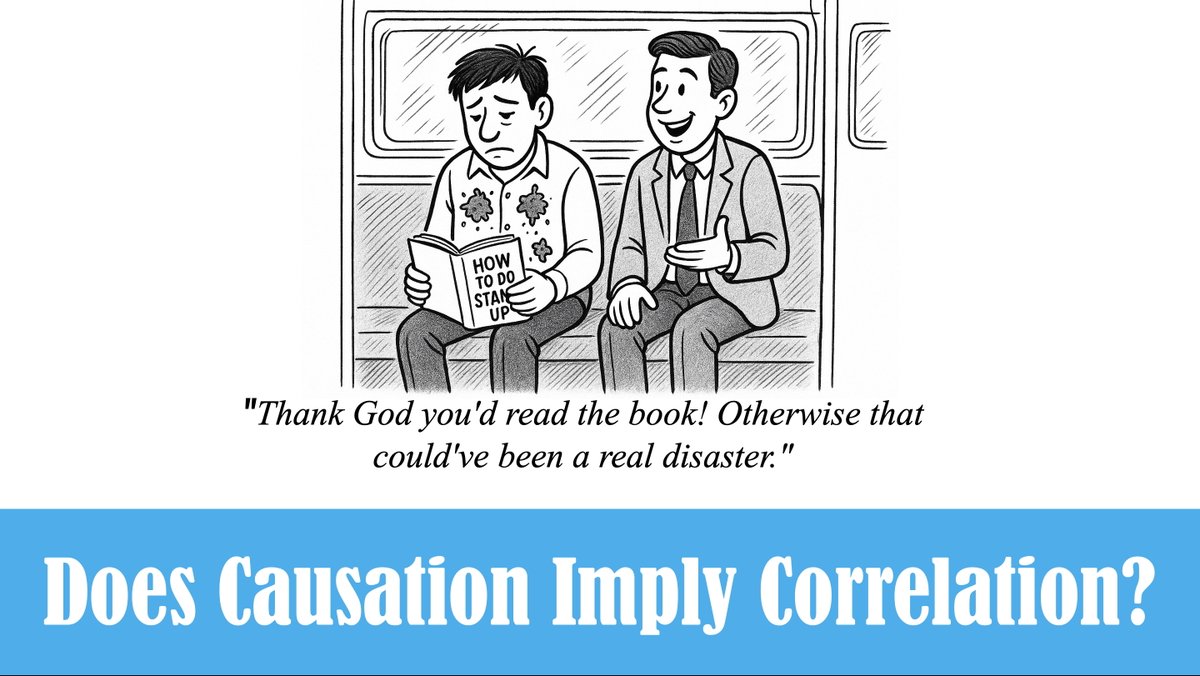
New video on how to generalize experimental results - Why it’s hard to characterize the problem within standard causal models, how Bareinboim and Pearl's transportability framewore helps, and why extrapolation ultimately goes beyond transportability.
https://t.co/vz8DSnnb4l
In the newest episode, I consider the debate over whether demographic variables such as race and gender are causes. In it, I clarify what's at stake, and what the answer does (and doesn't) depend on.
https://t.co/QC4cGJvsuA
I am delighted to introduce 6 wonderful Harris PhD students who are on the job market this year.
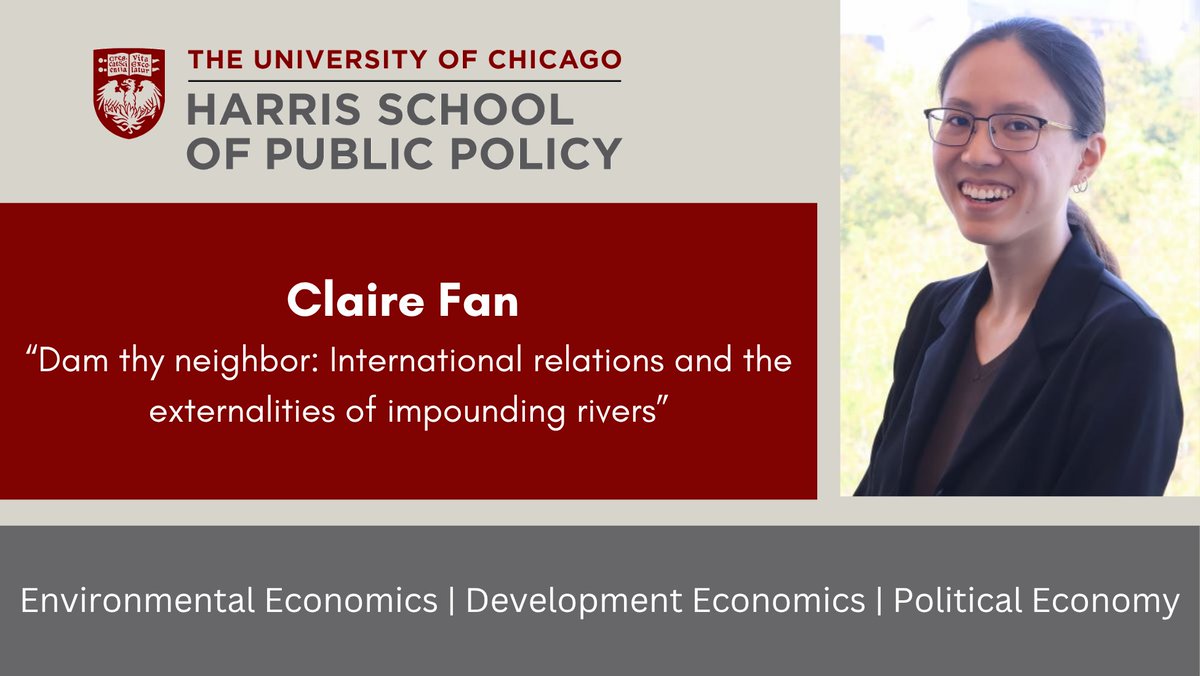
Claire Fan estimates the economic costs of hydro dams in foreign downstream countries. She finds that despite the lack of a central international authority, countries with cooperative international relations can mitigate these externalities. https://t.co/0Do4F2tQCv
A new episode on the Manipulation Theorem, which is not as well-known as it should be, but has hugely influenced philosophers. I cover hard vs soft interventions, why causation doesn't require human agency, and whether causation requires open systems.
https://t.co/fJ0ebg8XtN
What does it mean to assign probabilities to causal parameters? In just one minute and 33 seconds, I explain why this is puzzling, and how you can nevertheless make sense of it.
https://t.co/vLbG7QHPak
In the latest episode, I relate Bostrom's simulation argument to debates over the causal faithfulness condition. I get into interpretations of probability, why "coincidental"≠"improbable", and what it means to assign a probability to a causal parameter.
https://t.co/F7tC2l2VLM
I've now posted an episode on the causal faithfulness condition. Faithfulness says much more than just that causal paths don't cancel, and raises foundational questions about causation, probability, and underdetermination.
https://t.co/NlyzH7lLQQ
I just posted a video on the Front-Door criterion, which enables you to identify an effect using mechanisms. This video is more technical than the others, but really illustrates how causal graphs create a bridge between causes and probabilities.
https://t.co/H8E11CEZyT
After a bit of a summer pause, I'm back to making episodes. In this episode, I explain the notion of confounding, and clarify why confounders should not be thought of as alternate explanations of an observed effect.
https://t.co/3Ml9bxNgVy
@david_lagnado@BetsyOgburn might know something about this. She's been called to testify about evidential relevance in some recent court cases in the US.
I decided to make an intro episode, to provide some orientation for the later episodes. In it, I introduce DAGs and explain how causation is a strategy for managing complexity.
I spent a lot of time improving the sound quality, so I hope that paid off.
https://t.co/G9ph8wgFhU
@david_lagnado ...also, now that I'm learning more stats, I'm seeing that lots of the measurement issues about categorical vs continuous etc might interact in interesting ways with the causal side of things, though I'm at the beginning of the my thought process there...
How can a drug raise the chance of recovery in a population, while lowering the chance in both men and women?
The answer is Simpson's paradox, which still confuses people. Here I clarify it, w/ examples from COVID-19, and testing police discrimination.
https://t.co/b8ApocTFnl