Waku 1.0-RC is here! ⛩️
The minimal React framework, now with:
- fully type-safe navigation API
- experimental instant navigation
Final call for feedback before v1.0! 🚩
https://t.co/KC71g8y4SQ
⛩️ Waku v1.0.0-beta.8 is out!
I believe this is the last release in the beta phase. Seriously, try out the minimal RSC framework and share your feedback!
https://t.co/Eiw3VPh0gi
@maiahmac I'm not familiar with how others implement it. Waku already had a way to keep static parts (shell), so I implemented the feature on top of it.
⛩️ Excited to announce Waku v1.0.0-beta.7!
Waku is the minimal React framework for full-stack apps of any size.
We're nearing the end of the beta phase. Give Waku a try and share your feedback!
https://t.co/6Z016zhMPq
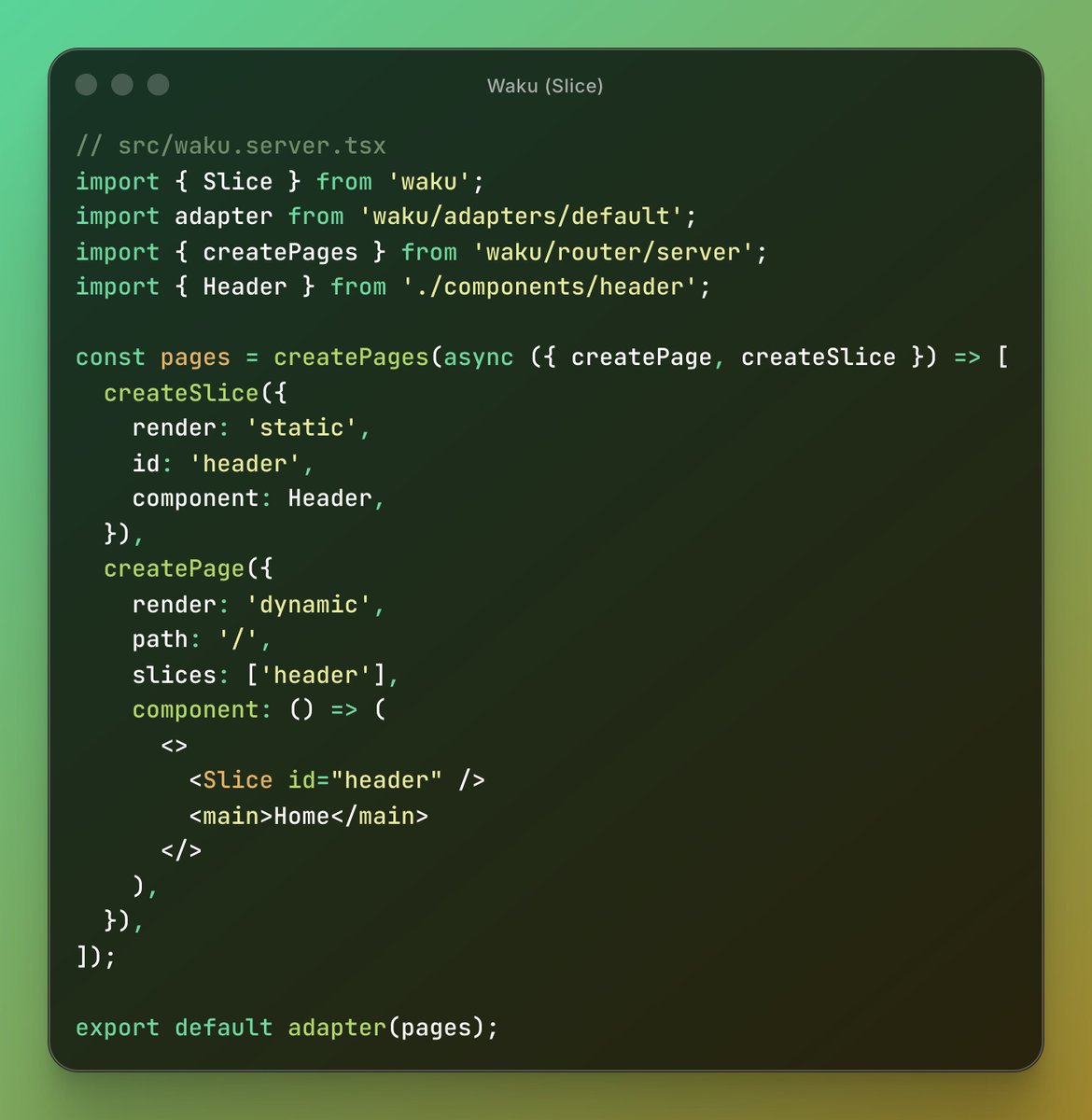
Waku's Slice is inspired by Gatsby's Slice.
The idea is the same. You define a shared component once, then put a <Slice> placeholder where you want it. It renders once and is reused on every page.
Gatsby does this with static HTML at build time. Waku does it with RSC.
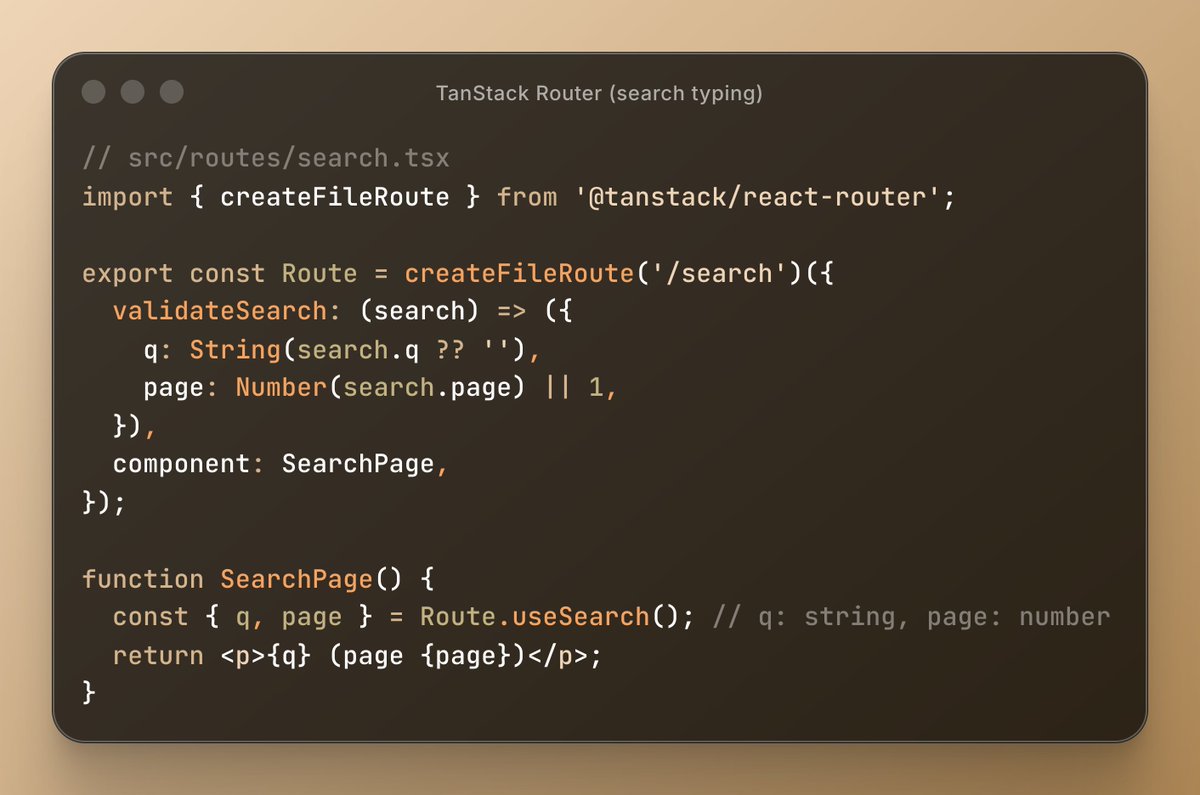
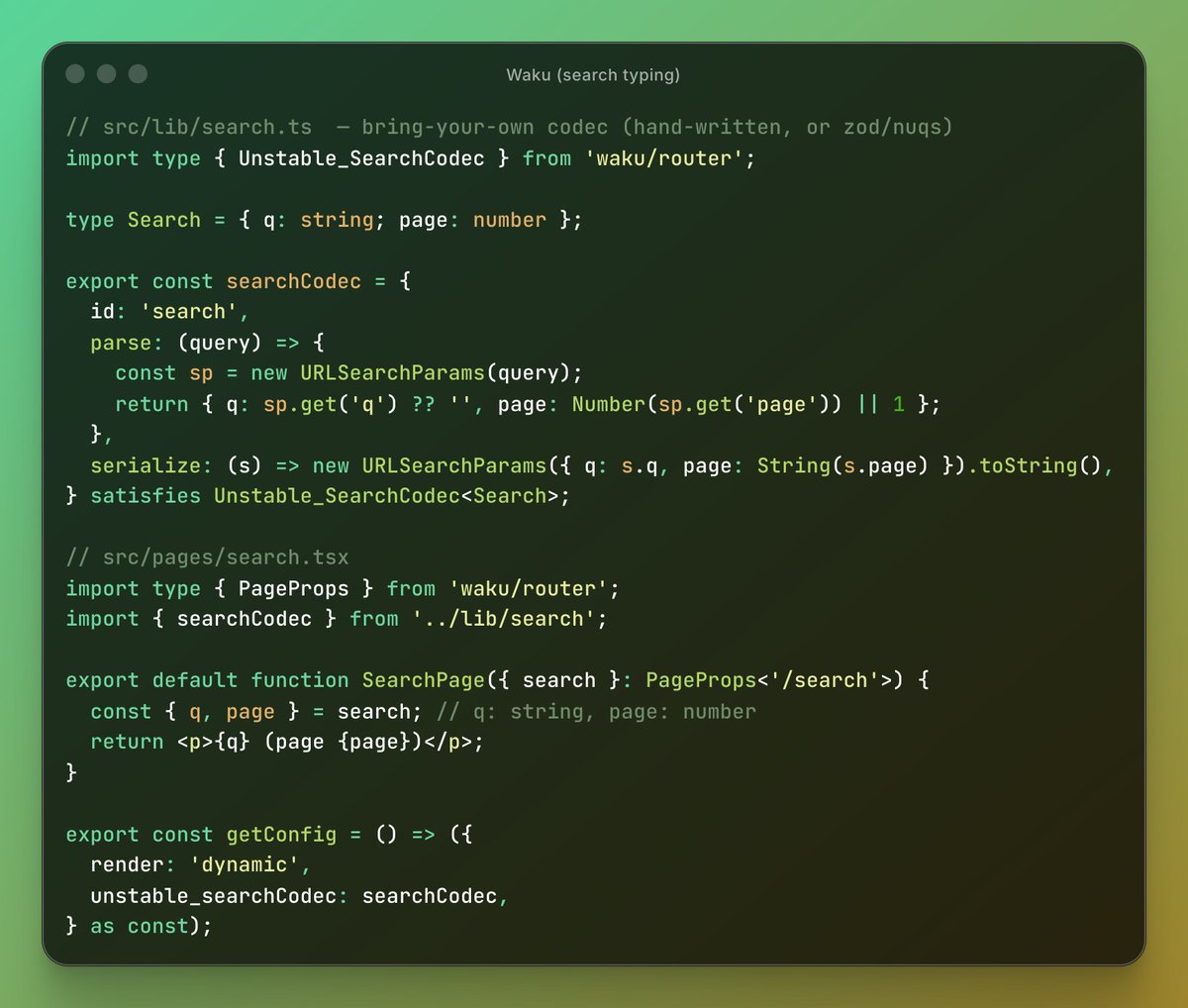
Waku now supports search params typing (opt-in), like TanStack Router has done before.
Both give you typed search, but their coding styles are different, as the requirement is different.
Waku: a typed prop from a codec you provide. TanStack: validateSearch + useSearch.
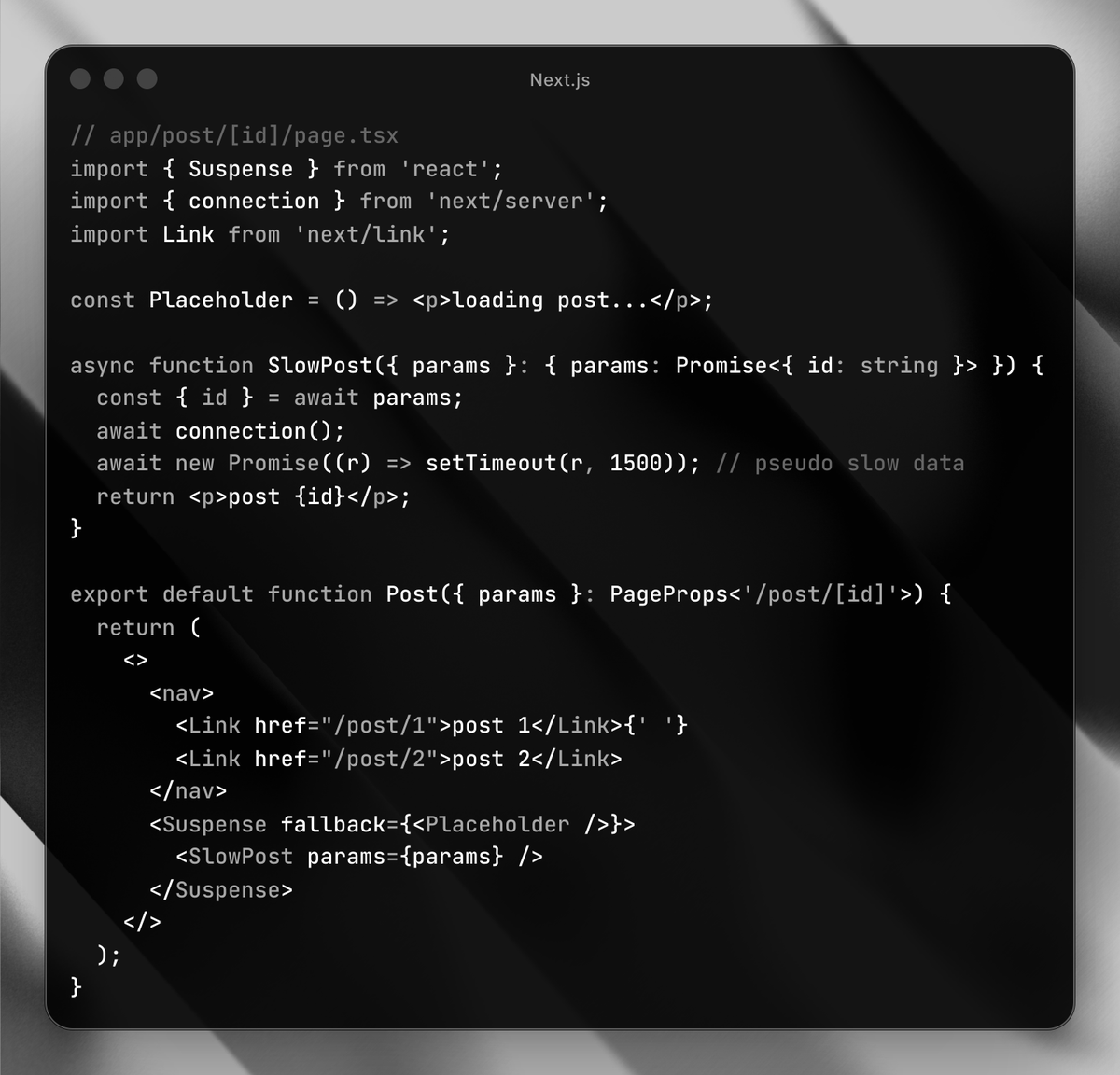
Inspired by Next.js's Instant Navigations, Waku now does it partially too.
Click between /post/1 and /post/2. Shell and placeholder stay instant, the body streams after the fetch.
Next: automatic, one file. Waku: opt-in, two files, since it doesn't want to rely on a compiler.
Inspired by Next.js's Instant Navigations, Waku now does it partially too.
Click between /post/1 and /post/2. Shell and placeholder stay instant, the body streams after the fetch.
Next: automatic, one file. Waku: opt-in, two files, since it doesn't want to rely on a compiler.