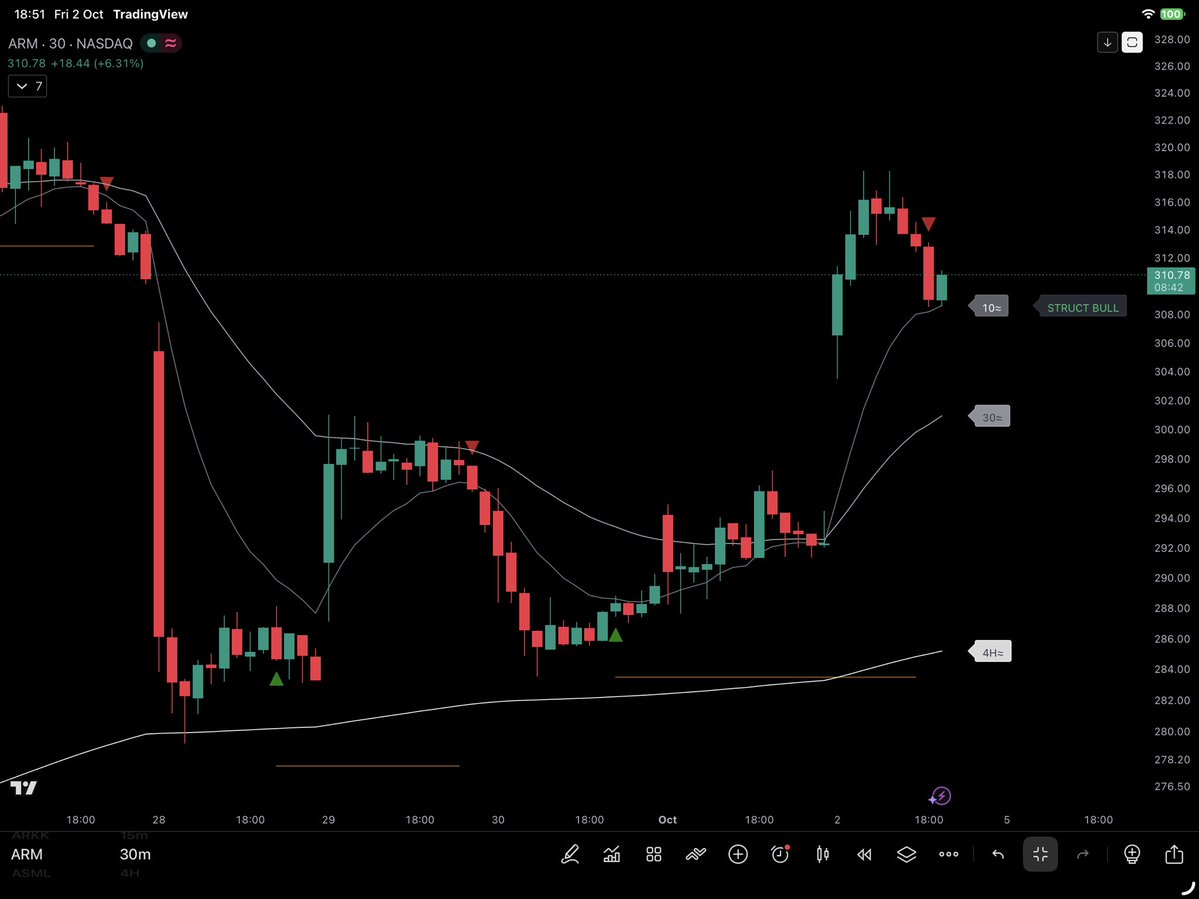
@AnkurPatel59 In the end, it comes down to how long you plan to hold and how much risk you’re okay with—both setups could work fine.
But I think Setup A fits better with a steady “wait for the pullback and confirmation” approach that keeps you from getting shaken out too easily.
TL;DR: The danger is not picking the wrong company.
The danger is going "all in" into the right company at the wrong point in the market cycle -- with no objective framework for when to get out.
I completely understand the temptation.
But the real question is not "which company can go for 20 years or more"
It is: "what happens if my timing is wrong?"
A great company can still destroy capital if bought in the wrong regime. I've learned that the hard way.
$50k is already decent capital. Concentrating it into one name can absolutely change your life -- but only if the market environment, sector, stock structure, momentum and risk management are aligned.
The danger is confusing conviction with certainty.
Personally, I would not put the whole pot into one company and just "leave it for a 20 years." I'd want a framework that tells me:
When is the broad market supportive?
When is the sector leading?
When is the stock actually in accumulation?
When is momentum strengthening?
When is the thesis invalidated?
Where do I get out if I am wrong?
A 20 year move usually feels obvious in hindsight, but during the journey there will be brutal pullbacks, fake breakouts, news shocks, earnings gaps and emotional pressure.
The stock matters, of course.
But the regime matters more.
The best company in the wrong market can still be a painful hold. The right company in the right regime, with a defined exit plan, is a very different proposition.
My honest view: don't look for a single miracle name first. Build the decision framework first. Then let the strongest names reveal themselves.
TL;DR: The danger is not picking the wrong company.
The danger is putting £130k into the right company at the wrong point in the market cycle — with no objective framework for when to get out.
I completely understand the temptation.
But the real question is not “which company can 2–3x?”
It is: “what happens if my timing is wrong?”
A great company can still destroy capital if bought in the wrong regime. I’ve learned that the hard way.
£130k is already serious capital. Concentrating it into one name can absolutely change your life — but only if the market environment, sector, stock structure, momentum and risk management are aligned.
The danger is confusing conviction with certainty.
Personally, I would not put the whole pot into one company and just “leave it for a year or two.” I’d want a framework that tells me:
When is the broad market supportive?
When is the sector leading?
When is the stock actually in accumulation?
When is momentum strengthening?
When is the thesis invalidated?
Where do I get out if I am wrong?
A 2–3x move usually feels obvious in hindsight, but during the journey there will be brutal pullbacks, fake breakouts, news shocks, earnings gaps and emotional pressure.
The stock matters, of course.
But the regime matters more.
The best company in the wrong market can still be a painful hold. The right company in the right regime, with a defined exit plan, is a very different proposition.
My honest view: don’t look for a single miracle name first. Build the decision framework first. Then let the strongest names reveal themselves.
Permission
Most traders aren’t short of signals.
They are short of permission.
Permission to act.
Permission to wait.
Permission to leave it alone.
That was the point of this morning’s work.
Not another indicator.
A cleaner way to stop fighting the thing that matters.
The bigger move.
When the structure is clear, the decision gets quieter.
And quiet decisions are usually better decisions.
Survival.
Opportunity can be discretionary.
Risk cannot.
Most blown accounts happen when traders reverse those priorities.
They build systematic entry rules.
Then manage risk based on hope, conviction, emotion or opinion.
A setup can be flexible.
A stop loss should not be.
The market decides whether I’m right.
I decide how much I’m willing to lose if I’m wrong.
Observation.
I’ve spent a lot of time studying different market frameworks.
Many are built around finding catalysts, narratives, earnings surprises, news events, or explaining why a stock is moving.
There’s nothing wrong with that.
But over time I became interested in a different question:
What if I didn’t need to know why?
What if I could simply observe whether capital was arriving, participating, and staying?
That’s led me down a very different path.
One focused on alignment rather than prediction.
Environment rather than headlines.
Behaviour rather than opinions.
The strange thing is that markets often reveal the answer before the story becomes obvious.
I don’t need to know why capital is moving.
I just need to know where it’s being treated best.
So I built a framework that watches capital, not headlines.
Most Charts Fail This Test…
I’ve spent thousands of hours studying charts.
Not looking for the next moonshot.
Trying to understand a simpler question:
Why do some assets attract capital while others destroy it?
Eventually, I built a way of seeing what most charts were quietly telling me.
It doesn’t predict.
It observes.
Most charts fail the test.
A few don’t.
I didn’t learn this from a course.
Or a book.
Or someone else’s playbook.
The market was my teacher.
And the tuition fees were significant.
The funny thing is that once you start seeing markets this way, you stop chasing opportunities.
You start waiting for them.
Patiently.
Preservation.
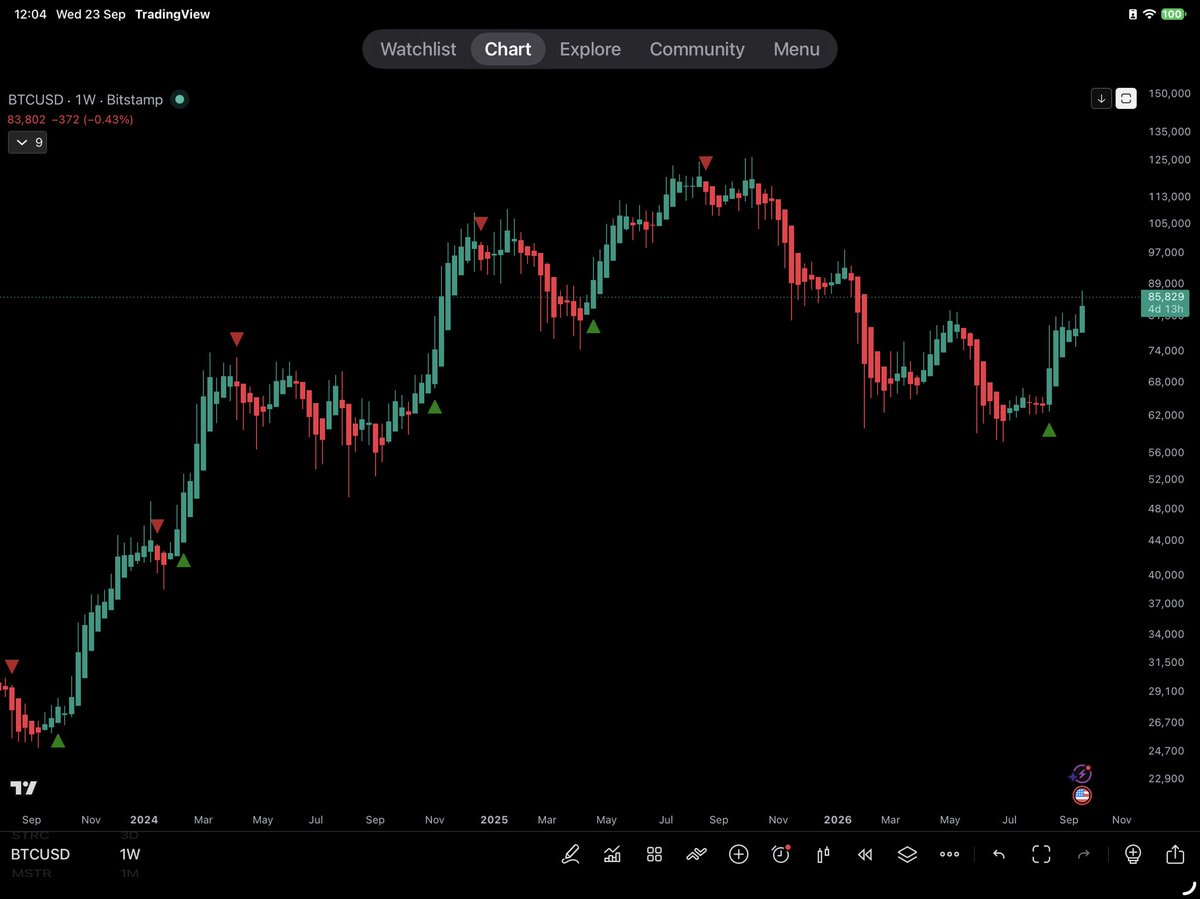
Weekly E-mini S&P futures.
Most people see a chart and ask:
“How much higher can it go?”
I ask a different question:
“If I was managing serious capital, would I still want to be involved here?”
That question led me to spend years building a framework focused on participation and protection.
Not prediction.
Protection.
The green marker isn’t the interesting part.
The red marker is.
Because knowing when to stop participating has had a bigger impact on my long-term results than trying to predict how much further a trend can run.
Capital preserved is capital available for the next opportunity.
I like your honesty, and sage advice.
I think most people underestimate how much work happens before the first consistently profitable trade.
Not just learning markets.
Building a framework.
Testing ideas.
Discarding assumptions.
Spending thousands of hours observing what actually works.
Ironically, the goal isn’t to become a better day trader.
The goal is to become a better allocator of capital.
For me, that means focusing primarily on swing opportunities where the environment, structure and participation are aligned.
By the time trading starts looking simple, there’s usually a lot of unseen work behind it.
Loyalty.
The market owes us nothing.
Not Bitcoin.
Not stocks.
Not gold.
No asset deserves loyalty.
Capital should be treated like a ship at sea.
When the weather changes, you adjust course.
When the storm arrives, you seek safe harbour.
When conditions improve, you sail again.
Hope is not a strategy.
Observation is.
Adaptation is.
The true safe haven is knowing when to move.
Craft.
A strange thing has happened.
The more I learn about markets, the less I care about predictions.
I care about process.
I spend most days in charts, building, testing, observing.
It doesn’t feel like work.
It feels like curiosity with a scoreboard.
Over the past two years I have built a framework that I genuinely wish I had possessed years ago.
Not because it predicts the future.
Not because it catches every top or bottom.
But because it helps answer a far more important question:
“Does this asset still deserve my capital?”
That single question would have saved me from mistakes that every investor eventually makes.
The market remains the same.
The charts remain the same.
The difference is that I now look through a different lens.
I think that’s how you know you’re on the right path.
Noise
The market doesn’t reward noise.
It doesn’t reward screenshots.
It doesn’t reward predictions.
It doesn’t reward followers.
It rewards discipline.
Observe.
Wait.
Allocate.
Protect capital.
Then repeat.
Quietly.
Ocean.
A rough week doesn’t mean the ocean has changed.
A rough week does mean you should check the sea state.
The mistake is confusing a pullback with a shipwreck.
Context first.
Allocation second.
Prediction never.
Allocate.
A Bitcoin maximalist asks:
“Will Bitcoin go higher?”
An allocator asks:
“Does it deserve capital right now?”
Those are very different questions.
The market does not reward conviction.
The market rewards capital aligned with opportunity.
Patience.
The market doesn’t care.
Just like the ocean does not care whether you launch your vessel or stay in port.
It does not care what you want.
It does not care what you need.
It does what it does.
A prepared sailor studies the sea state first.
If conditions are favourable, he launches.
If a storm arrives, he seeks safe harbour.
If conditions are poor, he waits patiently.
Markets are no different.
Most people try to fight the ocean.
Professionals observe it.