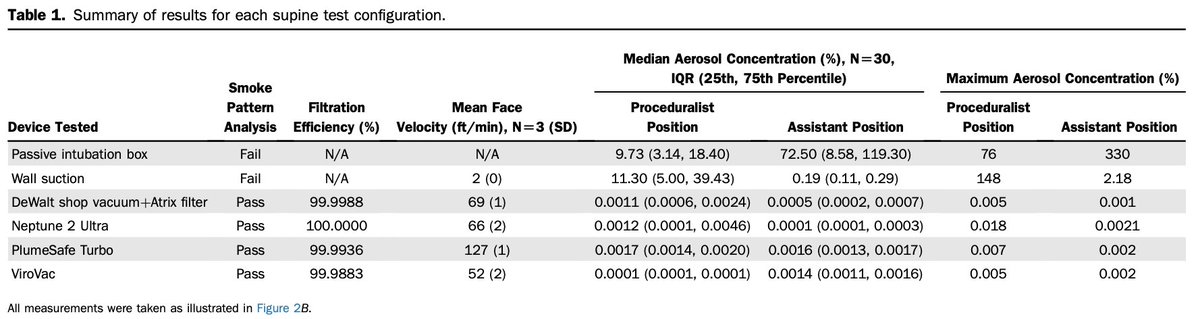
@precordialthump For example, we found that the airflow generated by wall suction was wholly inadequate to contain our test aerosols. Clinically, we see this in the operating room when we try and suction smoke using a yankauer and wall suction. This is why smoke evacuators are used in surgery.
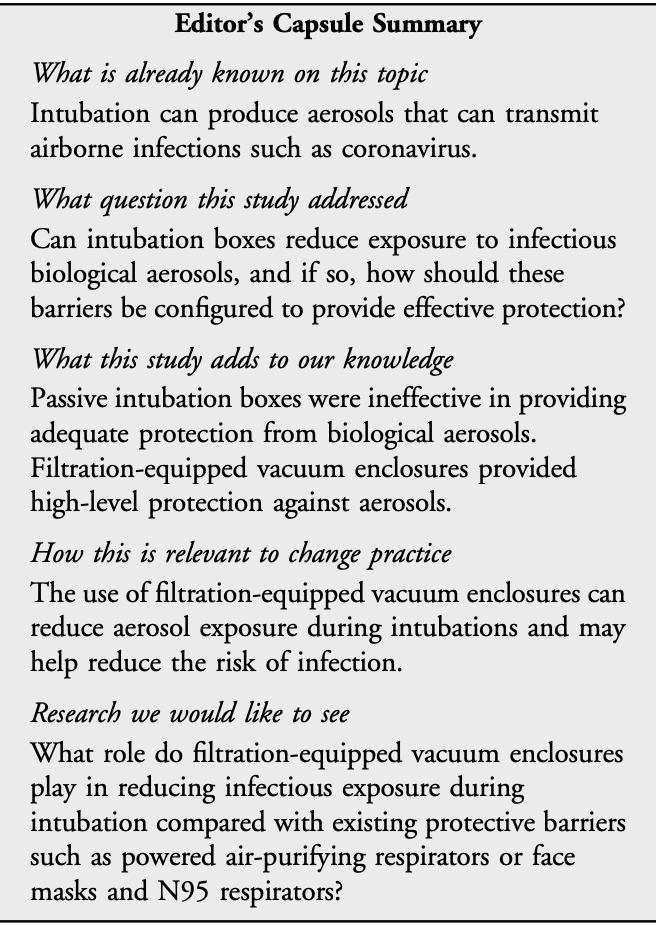
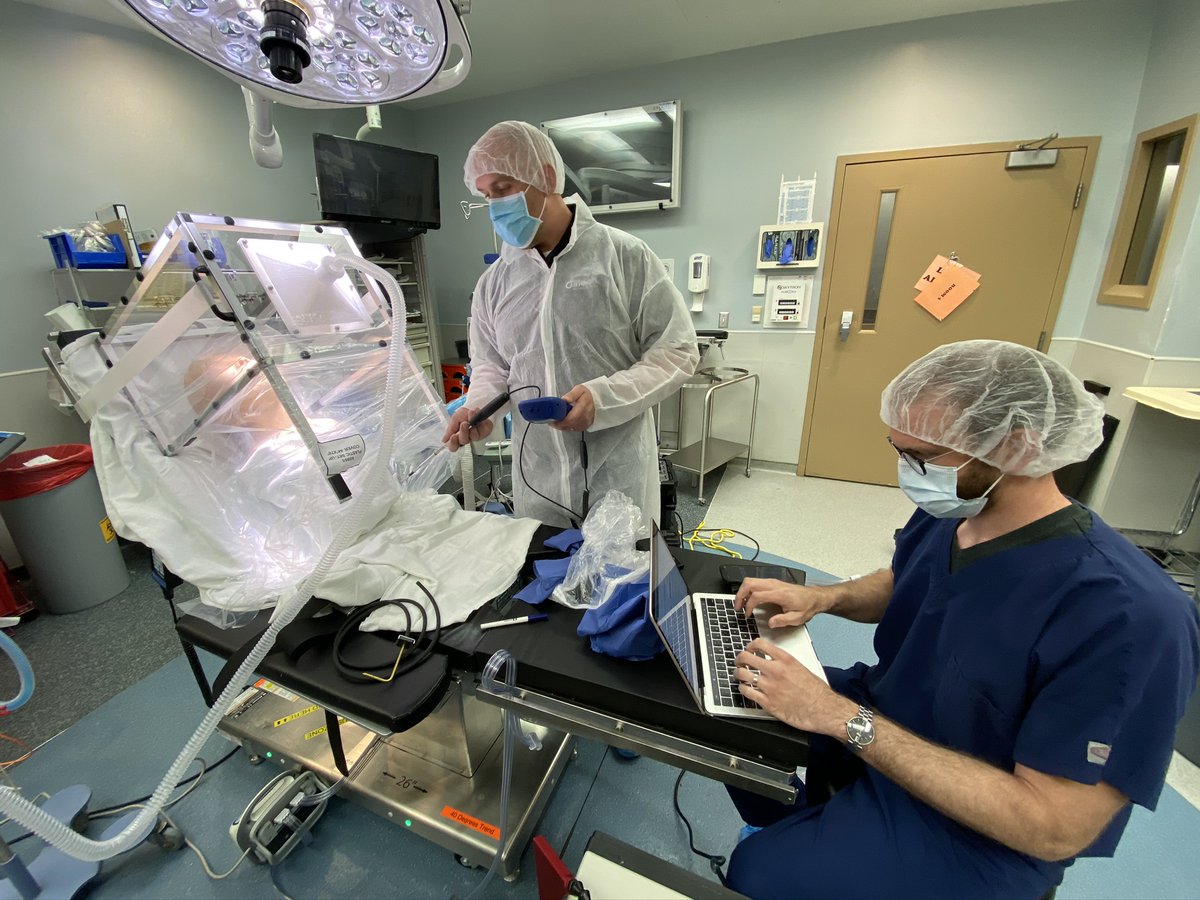
@precordialthump We feel that the major contribution of our study is not to simply introduce another "intubation box" to the world, but instead to provide other groups with a more rigorous way to test their own devices.
The @US_FDA just revoked the Emergency Use Authorization (EUA) for aerosol boxes! They may no longer be manufactured or used in the USA under this authorisation.
FDA cited two papers in their decision, both published in @Anaes_Journal! (links below...)
https://t.co/b1fdsx1hJx
Our team at @UPMCnews@PittPlasticSurg@upmcem @ArmyResearchLab @PittTweet has developed a new form of protection against against airborne pathogens and #Covid.
Read about the Individual Biocontainment Unit (IBU) here:
https://t.co/jsQqQ1I6tM
Researchers from UPMC and the @ArmyResearchLab created an individual biocontainment unit to keep front line health care workers safe while they provide life-saving care. https://t.co/2L1h25CnpW
I'm honored to be part of such a dedicated and capable team from @UPMCnews @ArmyResearchLab @PittTweet@PittPlasticSurg.
Read our study published in @AnnalsofEM on creating and testing a new form of PPE against aerosolized pathogens:
https://t.co/I07mdzfeYO
Opinion: Health care workers should be confident that any equipment they use will protect them from Covid-19 infection as they treat patients. Intubation boxes, though well-intentioned, haven't yet been rigorously tested. https://t.co/JFrWGwUTz1