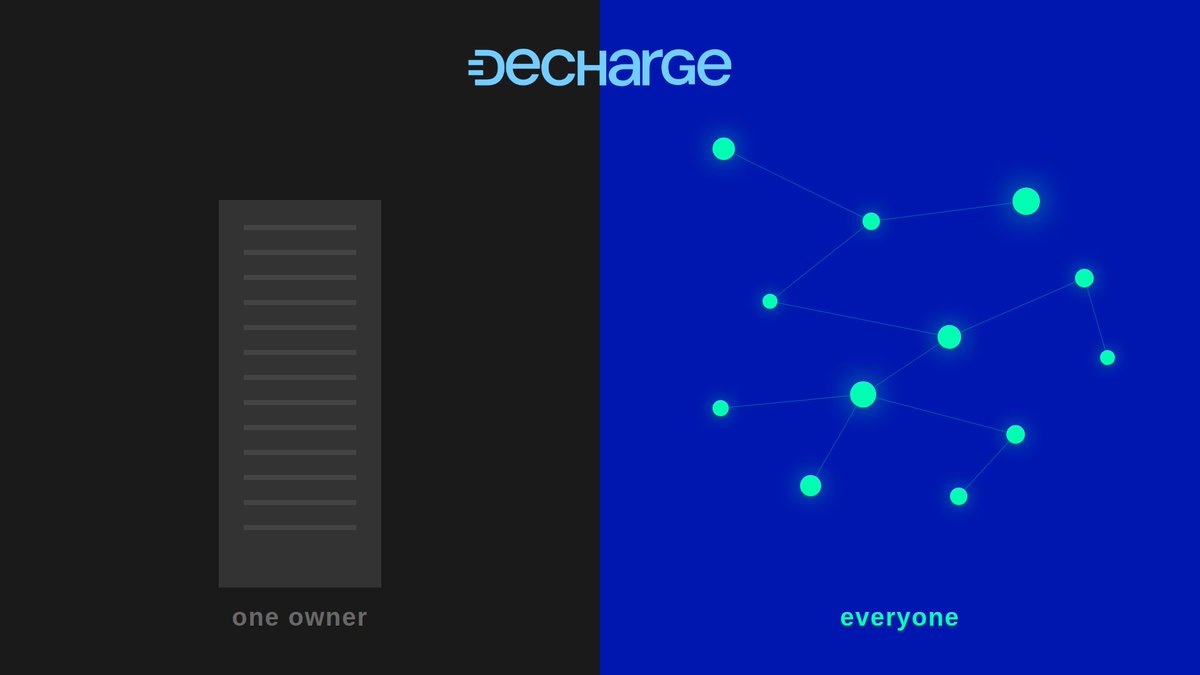
500 chargers. 10,000 units. One question we keep getting: "what do I actually own?"
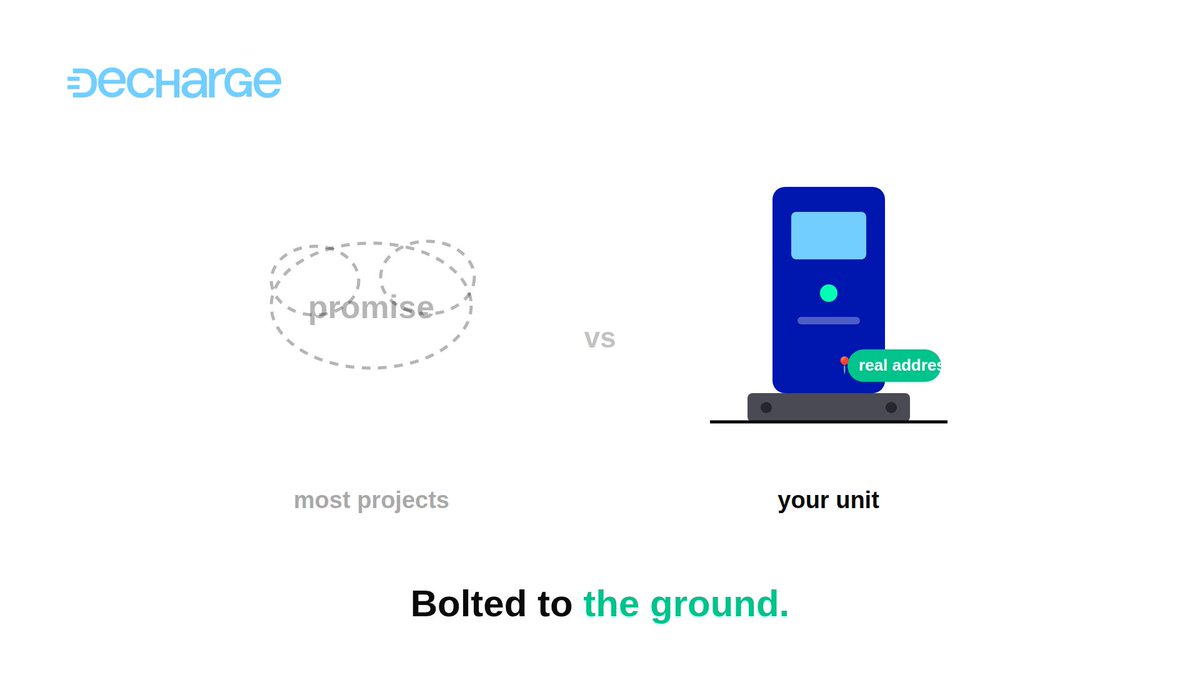
Deployment Unit = A unit is 1/20th of a specific charger at a Scout-validated US location.
Not a token promise. Not a whitelist spot. A share of physical hardware that gets installed, maintained, and promoted by DeCharge.
When drivers charge, revenue covers operations first. What remains flows to unit holders as network rewards. DeCharge keeps a small share for running it.
$100 gets you in. $2,000 gets you a full charger.
Reserve your unit 👇https://t.co/aWExHjmMQ2
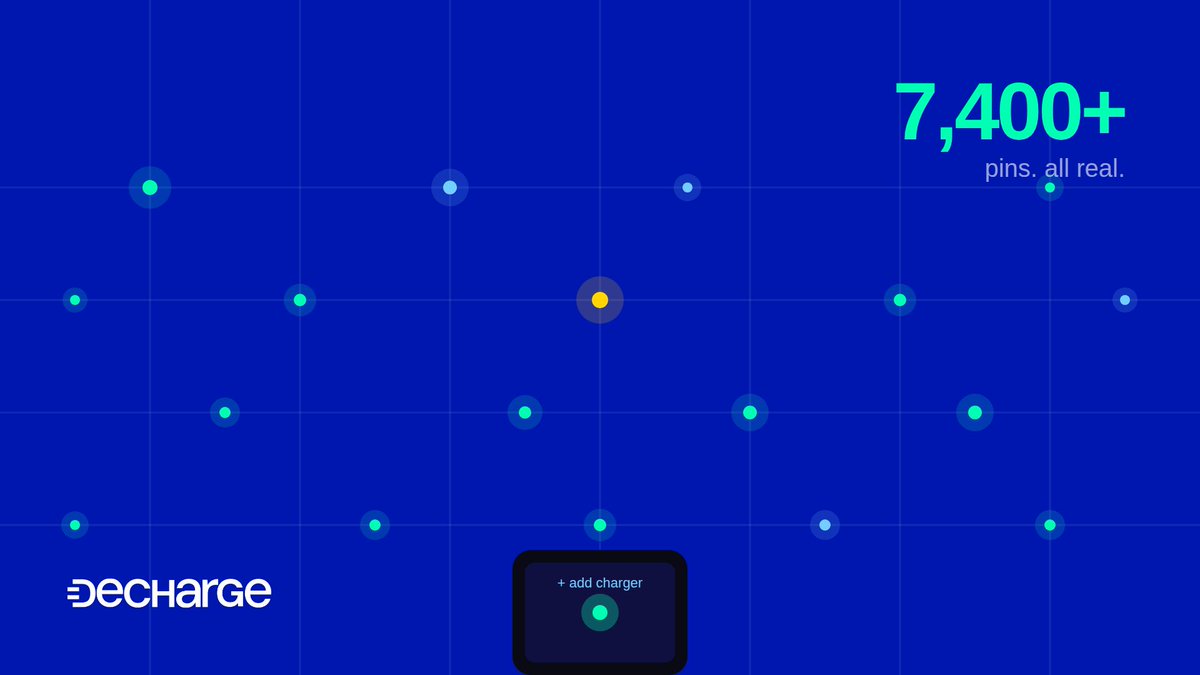
7,400+ chargers mapped by the Scout community and counting.
Every mapped location is demand data no boardroom could buy. It's drivers telling the network exactly where infrastructure belongs.
This is what demand-first deployment looks like at scale.
EV owner starter pack:
Range calculated three times before any road trip.
A charging app folder on your phone.
One charger you trust with your life.
A backup plan for the backup plan.
It shouldn't be like this. We're working on it.
This is what the Scout dapp is for.
Map and validate charger locations around you, contribute to the network and earn DeCharge Points:
https://t.co/16doHFxKD7
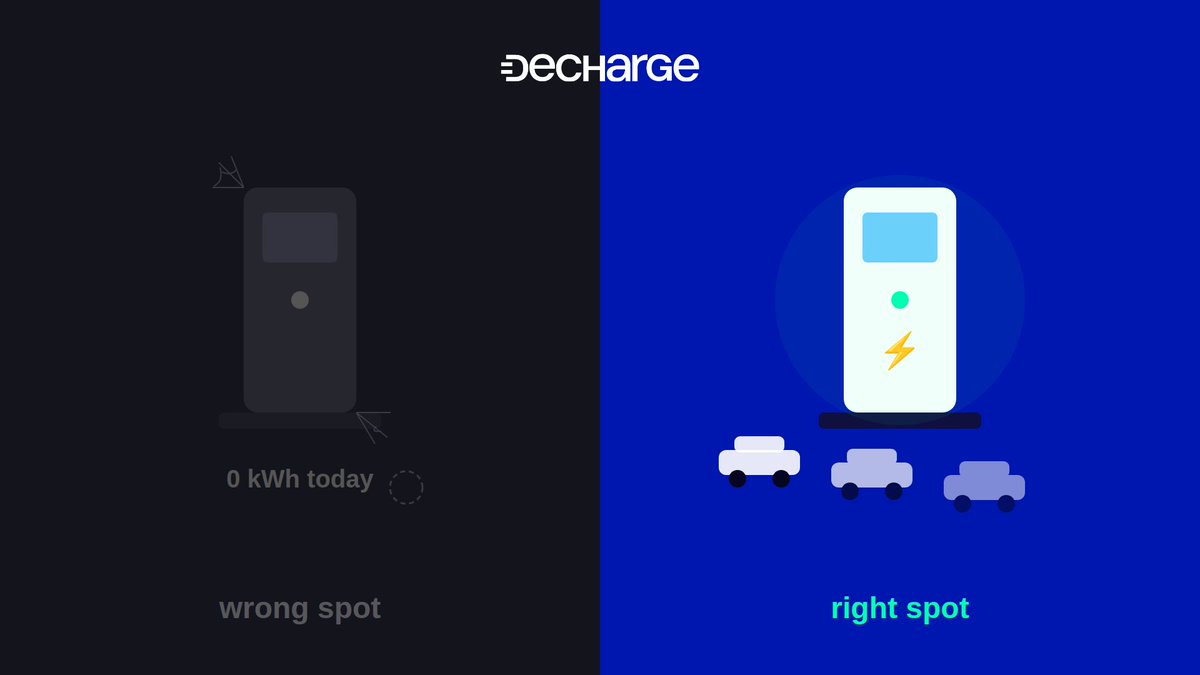
An EV charger in the wrong spot is just expensive street furniture.
Utilization is everything. A charger used 10 hours a day and a charger used 10 minutes a day cost the same to build.
That's why we validate demand before deploying a single unit. Location isn't a detail. It's the whole business.
Myth: EV charging infrastructure is a solved problem, the chargers just need time to roll out.
Reality: Deployment is bottlenecked by capital cycles, not technology. A charger that takes 3-12 months to approve and install isn't a rollout. It's a queue.
Fixing the queue is the whole game.
Most people think EV chargers fail because of bad hardware.
Usually wrong. They fail because nobody maintains them, nobody promotes them, and nobody picked the location based on real demand.
Hardware is 20% of the job. Operations are the other 80%. That's the part most networks skip.
Every Charge America deployment unit is fully managed.
▫️We scout the location.
▪️We install through our own team or partner network.
▫️We drive traffic through promotions.
▪️We maintain the hardware.
You fund it once. The network does the rest.
Join here → https://t.co/aWExHjmf0u
Quiet update from the network:
🔹2,000+ nodes live across Asia.
🔹7,300+ chargers mapped by the Scout community. 🔹Deployment cycles running 10-12 weeks against an industry standard of 9-12 months.
Just infrastructure getting built.
Our Quest Board with partners is officially live 🎉
Complete the tasks, earn extra XP:
1️⃣ Follow @mozifinance
2️⃣ Download the @QRwallet_X app
3️⃣ Retweet the @ZNSConnect post
4️⃣ Follow @DeCharge
5️⃣ Follow @clusterprotocol and @codexero_xyz
6️⃣ Follow @arkada_gg
Every completed quest adds XP to your daGama score. Don't wait until the last day!
Start here: https://t.co/OXsJUurtFb
Our Quest Board with partners is officially live 🎉
Complete the tasks, earn extra XP:
1️⃣ Follow @mozifinance
2️⃣ Download the @QRwallet_X app
3️⃣ Retweet the @ZNSConnect post
4️⃣ Follow @DeCharge
5️⃣ Follow @clusterprotocol and @codexero_xyz
6️⃣ Follow @arkada_gg
Every completed quest adds XP to your daGama score. Don't wait until the last day!
Start here: https://t.co/OXsJUurtFb
DePIN in one sentence: instead of one company owning infrastructure, thousands of people own pieces of it and earn as it gets used.
Wireless networks did it. Mapping did it. GPU compute did it.
Energy is next. And EV charging is the front door.
Solar panels made homeowners into power producers. The same shift is coming for EV charging.
Except this time you don't need a roof, an electrician, or $20K.
Join the network that handles the rest.
🎙️ daGama x DeCharge: join our X Space "What Makes Something Tokenizable?"
🔗 Join us: https://t.co/U20QwWqIDH
Not every real-world asset makes sense on-chain — and figuring out what does is one of the most important questions in DePIN and RWA today.
Together with @DeCharge, we'll explore what actually qualifies something for tokenization, how verification and infrastructure shape that answer, and where the next wave of tokenizable assets is likely to emerge.
🗓️ Date: Tuesday, 13:00 UTC
🎤 Speakers:
▪️ Dr. Prakash Kamaraj – Co-founder, @DeCharge
▪️ Gabriel Hattar – CEO, @dagama_world
🔔 Set a reminder and join the discussion!
In 10 years, someone will own a piece of the EV grid the way people own solar panels on their roof.
That future is being built right now.
Not by a utility company. Not by a government program.
By a community.
We couldn't find a reliable charger when we bought our first EV.
So we built the thing we needed.
Two years later: 2,000 nodes live. 10-12 week deployments vs the industry's 9-12 months. 5,800+ locations mapped by real drivers.
Range anxiety is an infrastructure problem. Infrastructure problems have solutions.
Old model:
One company raises $500M
Builds chargers where it makes sense for them
You drive. They profit.
New model:
500 people each put in $100
Chargers go where the community actually needs them
You drive. Everyone profits.
One of these is already happening.
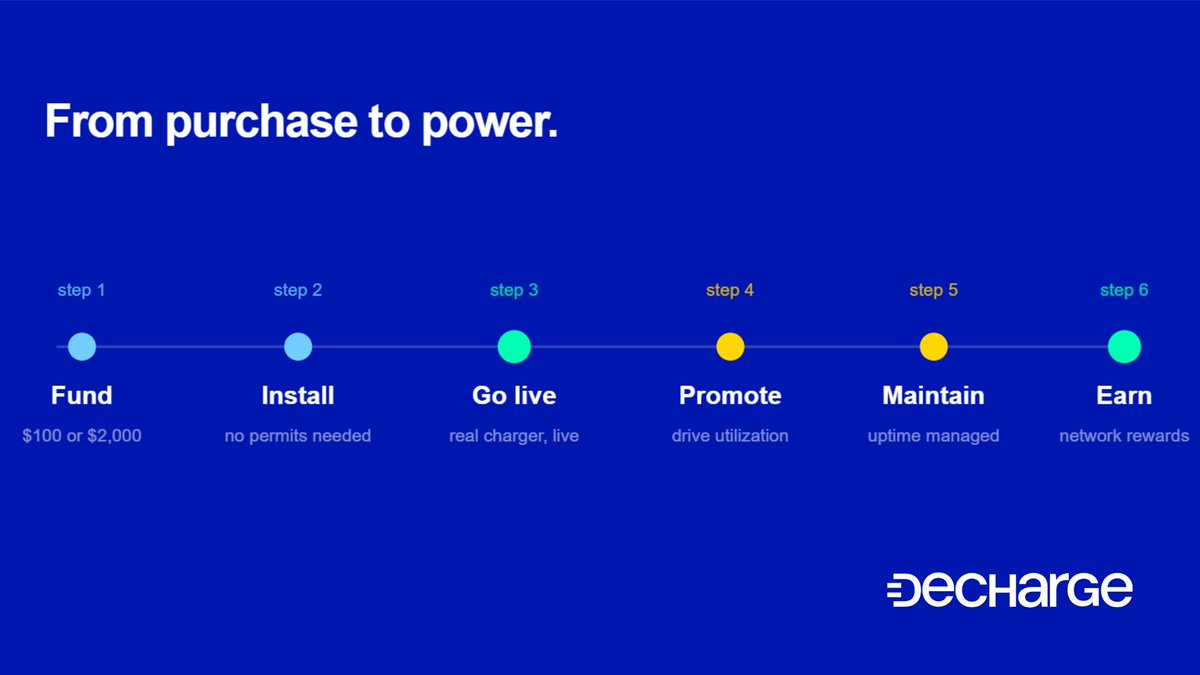
You just bought a deployment unit. What happens next?
1⃣ Your funding goes toward a specific, Scout-validated charger location, one of the 500 planned across the US.
2⃣ DeCharge (or a partner installer) installs the hardware on-site. No permits, no electrical work, no logistics on your end.
3⃣ Once installed, the charger goes live and starts serving EV drivers in that area.
4⃣ DeCharge runs ongoing promotions and visibility campaigns so local drivers actually find and use the charger.
5⃣ Maintenance and uptime are handled by our team, keeping the charger operational over time.
6⃣ Revenue from charging sessions flows in, costs get covered, and network rewards get distributed to unit holders.
That's the full lifecycle. One unit, one real charger, one ongoing operation behind it.