What will the price of BTC be on 00:00 UTC May 16?
Reply with your prediction in $USD.
The 10 closest predictions will win $5 $USD + 10 $INVENT each!
Start this mission in the Invent Money app to participate.
Submissions close 00:00 UTC May 15.
✅ VALIDATION AT THE EDGE
Unicity eliminates the shared asset ledger construct entirely.
Like cash, tokens move p2p and are locally verifiable at the edge with zero trust
Two consequences of this architecture that enable autonomous AI >>>
Autonomous AI needs an internet built for machines
✨ True P2P - no central ledger
🌐 Validation at the edge
🚀 Agent-Agent with speed that scales
Built for billions of daily transactions
Join early for the upcoming airdrop:
https://t.co/jVEpzG8awh
@MemeCore_M@Grayscale Officially recognized on @ZachXBT ! We’re just getting started.
Please provide a single data point to support your $6B mkt cap at a top 20 token and why insiders hold >90% of supply.
🤖 Community Question:
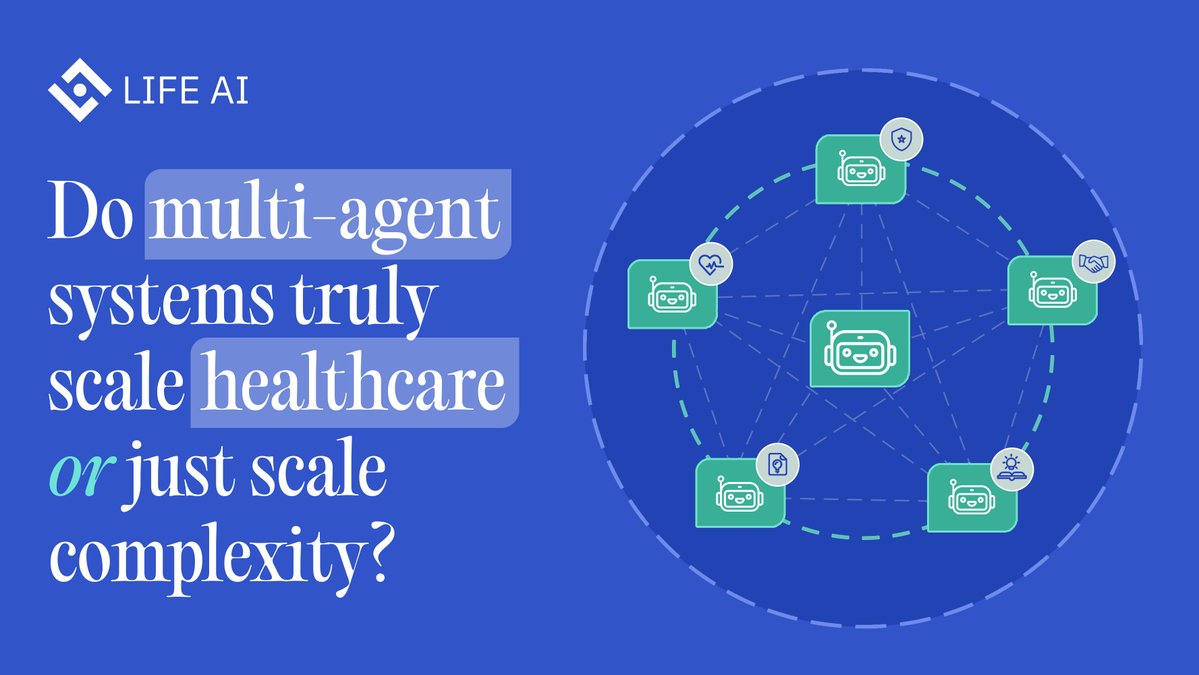
Do multi-agent systems truly scale healthcare or just scale complexity?
Viewpoint A: Scalable Coordination
Healthcare workflows are too complex for a single agent.
Multi-agent systems split tasks, cross-check outputs, and improve efficiency at scale, especially in areas like care coordination and prior authorization. With the right guardrails, they offer a practical path forward.
Viewpoint B: Compounding Risk
More agents also mean more risk.
Errors can cascade, decisions become harder to explain, and accountability gets blurred. As systems grow, governance becomes more difficult and scaling too early increases exposure.
👇 Drop A or B and share your perspective
🌐 Community Question: With soaring investment and valuations in AI, is the AI bubble real or a myth?
Viewpoint A: The AI Bubble Is a Myth
Supporters argue that AI reflects a fundamental shift in computing. Demand for AI infrastructure continues to grow rapidly as industries adopt AI across areas such as healthcare, robotics, and digital biology. They also point to falling compute costs, improving reasoning capabilities, and expanding real-world applications as evidence that the growth is driven by genuine technological progress rather than speculation.
Viewpoint B: The AI Bubble Is Real
Critics warn that AI valuations and investment could be driven by hype and expectations of rapid breakthroughs. They argue that spending on infrastructure and startups could outpace real revenue and adoption, creating risks of market correction similar to the Dot-com Bubble.
👇 Drop A or B and share your perspective
🌐 Community Question:
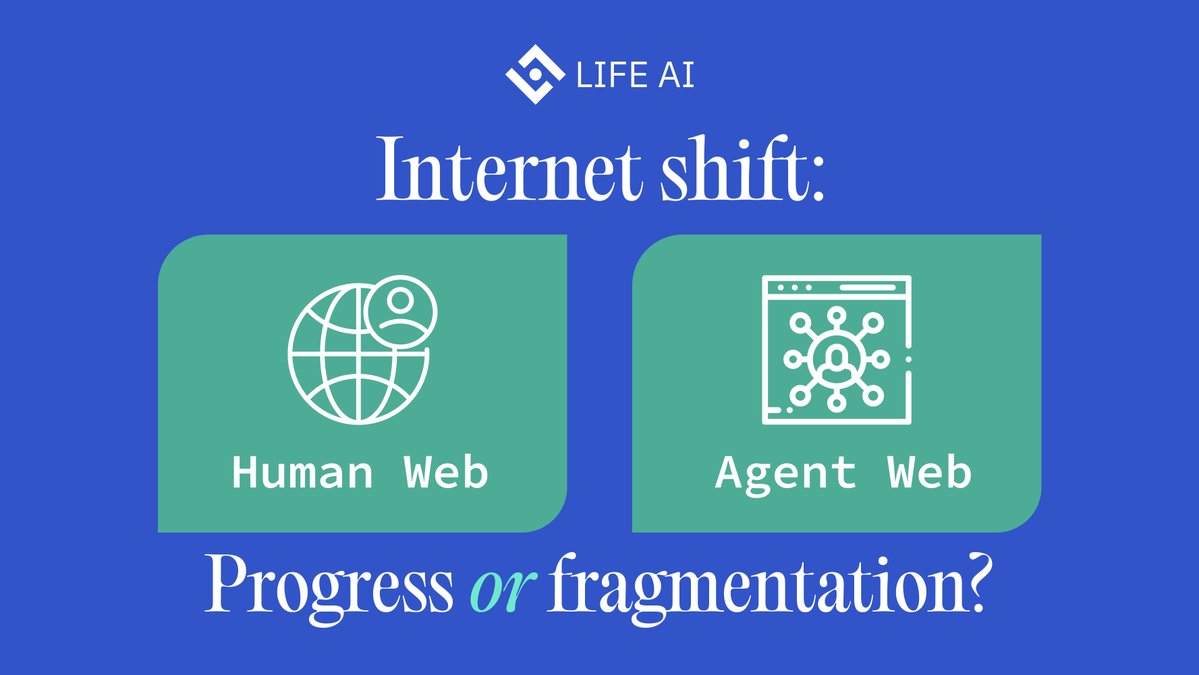
As the internet evolves to support autonomous AI agents, splitting into the Human Web (interfaces for people) and the Agent Web (API-driven infrastructure for machines), will this shift drive innovation and automation, or fragment and dehumanize the online experience?
Viewpoint A: A New Layer of Internet Intelligence
The rise of AI agents interacting directly with digital systems could transform the internet into a more intelligent infrastructure. Agents can automate tasks such as trading, payments, data analysis, and content generation, enabling a new agent economy. This machine-to-machine coordination may significantly improve efficiency, scalability, and innovation across industries.
Viewpoint B: Erosion of the Human-Centered Web
Expanding the Agent Web may reduce the role of the Human Web, as machines increasingly interact through APIs rather than human interfaces. This could create privacy and security risks, weaken traditional web models, and concentrate power in automated systems, potentially leading to a fragmented internet with less authentic human participation.
👇 Drop A or B and share your perspective
🩺 Community Question: Is the “AI five layer cake” framework sufficient to power healthcare AI systems?
(The “AI five layer cake” framework: Energy → Chips → Infrastructure → Models → Applications, introduced by Jensen Huang of NVIDIA)
Viewpoint A: Yes
Healthcare AI aligns with the stack. Energy, chips, and infrastructure enable intelligence generation at scale. Medical models, trained on clinical and biomedical data, interpret complex signals; applications then deliver value through radiology assistance, drug discovery, and clinical workflow automation.
Viewpoint B: Not entirely
The stack shows how capability is produced, but impact depends on translating that capability into clinical use. Strict validation, regulation, and the need to integrate with hospital workflows slow translation; consequently, healthcare applications often scale more slowly than the underlying AI stack.
👇Drop A or B and share your perspective
🩺 Community Question
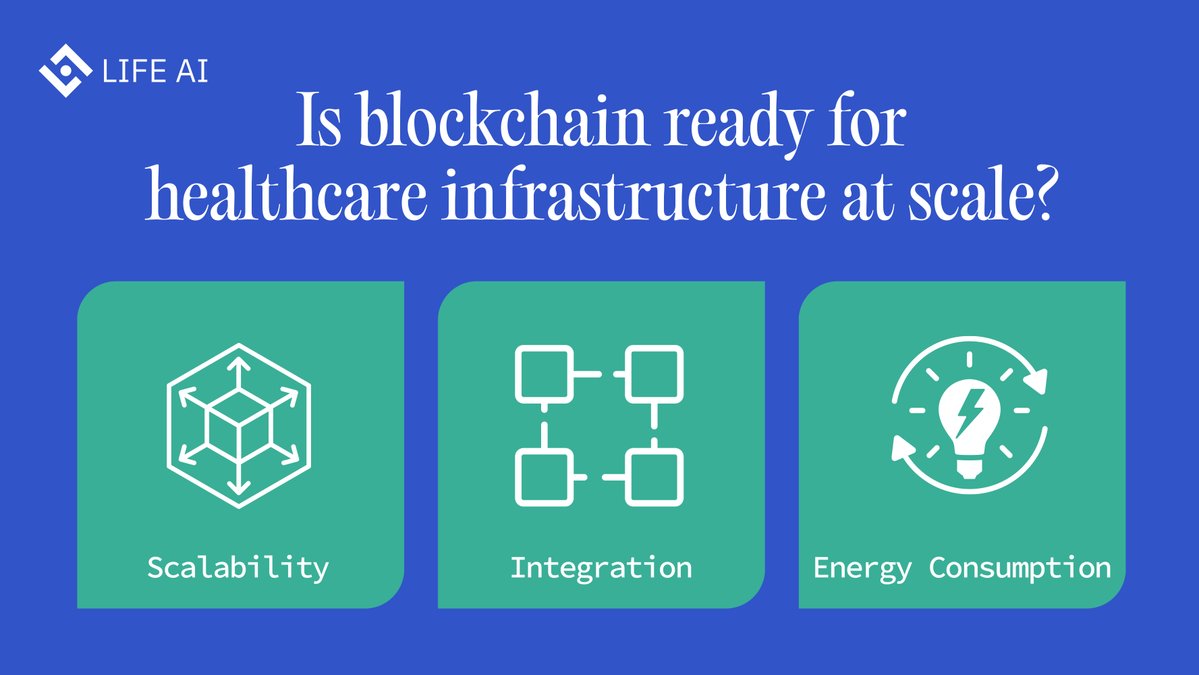
Is blockchain ready for healthcare infrastructure at scale?
Viewpoint A: Structural barriers remain.
Blockchain still struggles with scalability for large health datasets, integration with legacy hospital systems, and regulatory compliance. Operational adoption remains limited, with most initiatives still at the pilot stage.
Viewpoint B: The technology is maturing.
New blockchain architectures are improving speed, efficiency, and scalability. Hybrid models are advancing interoperability with existing healthcare systems. Early pilots also show progress toward secure, patient controlled data sharing.
👇 Comment A or B and share your perspective.
🩺 Community Question
Is blockchain ready for healthcare infrastructure at scale?
Viewpoint A: Structural barriers remain.
Blockchain still struggles with scalability for large health datasets, integration with legacy hospital systems, and regulatory compliance. Operational adoption remains limited, with most initiatives still at the pilot stage.
Viewpoint B: The technology is maturing.
New blockchain architectures are improving speed, efficiency, and scalability. Hybrid models are advancing interoperability with existing healthcare systems. Early pilots also show progress toward secure, patient controlled data sharing.
👇 Comment A or B and share your perspective.
🩺 Community Question:
Healthcare is a paradox: trillions spent and cutting-edge technology, why is humanity only getting sicker?
Viewpoint A: The healthcare system is broken (reactive, wasteful, poorly coordinated).
The system prioritizes treatment over prevention, carries massive administrative waste, and fails to use advanced technology efficiently. The result is high spending and weak outcomes.
Viewpoint B: The real drivers lie outside healthcare (social factors, lifestyle, inequality).
Healthcare accounts for only a small share of health outcomes. Poverty, obesity, unhealthy lifestyles, and inequality are the root causes. Increasing medical spending alone does not address the core problem.
👇 Drop A or B and share your perspective
Just ripped my Predictor Card!
Ready to claim instant cash prizes, free packs and more.
Welcome to Prediction Play on @upshot_cards
Your turn
https://t.co/oRznBjkgid
🩺 Community Question:
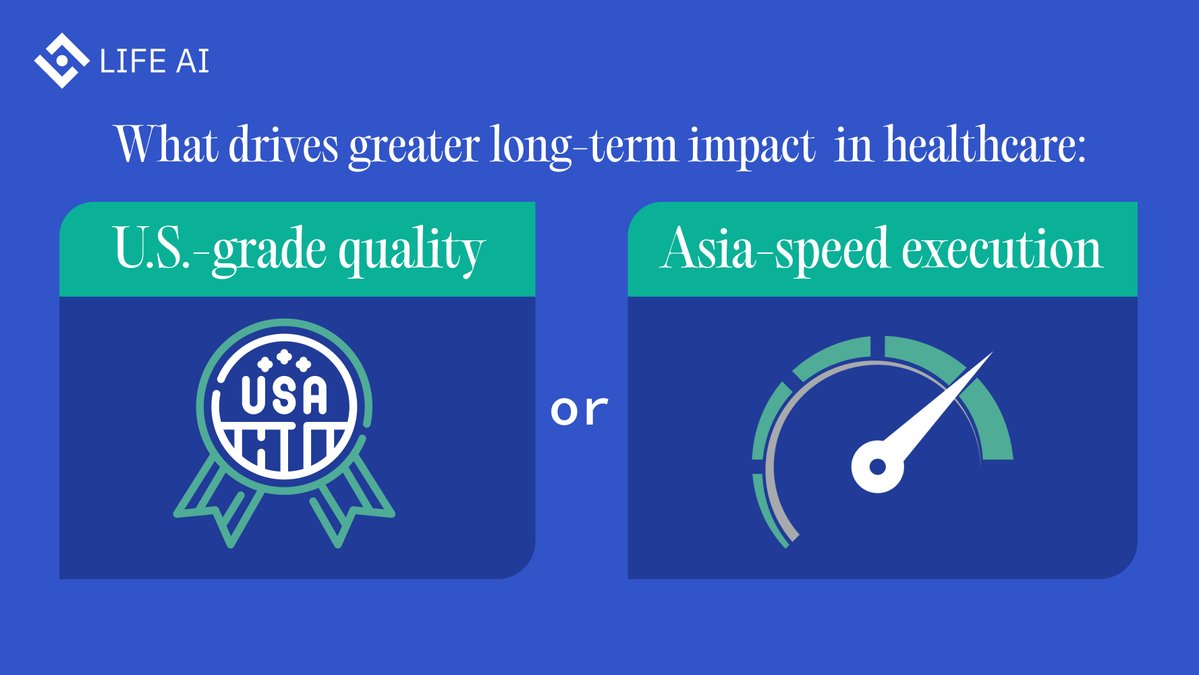
In medical innovation, what drives greater long-term impact:
U.S.-grade quality for rigorous validation and strict regulation
or Asia-speed execution for faster approvals and rapid scale?
Viewpoint A: U.S.-Grade Quality
Through institutions like the U.S. Food and Drug Administration, the U.S. emphasizes deep clinical validation before approval.
Rigor reduces risk, protects trust, and supports durable breakthrough innovation.
Viewpoint B: Asia-Speed Execution
Countries such as China and India accelerate approvals and deploy innovations at scale.
Faster access can save lives, especially in high-burden diseases.
👇 Drop A or B and share your perspective.