Lifelong educator champion. Believer in the promise of young people. CEO @CtrEdEcon. Former: Tchr., Supt., CSSO, NFP leader @gatesfoundation & @NatGeoEducation.
"Let’s take a moment to look at new ways schools and districts are designing experiences that spark curiosity, deepen understanding, and prepare students for a future that's still unfolding." - @drvickip shares our latest newsletter. https://t.co/RG9oWXcmEh
"For decades, many of us have focused on developing leaders, strengthening institutions, and scaling solutions. Those efforts remain essential. But, the challenges we face today... share something important in common. They are all networked challenges – challenges with causes, consequences, and solutions that are interconnected across people, institutions, and systems. And, because they are networked, our responses — and leadership approaches — must be networked too." - Tommy Loper, The Aspen Institute
This idea resonates. Human flourishing doesn't happen in isolation. It happens through relationships and communities that help people learn and grow together.
https://t.co/p2U5tfNIG3
When ideas travel, I'm reminded that educators, policymakers, and leaders around the world are asking many of the same questions.
Thank you, @forbesjapan, for helping bring these ideas to a broader audience. I look forward to continuing the conversation.
My prediction: within a few years, the anxious question dominating faculty meetings today, "Did AI write this?" will begin to fade. A more important question will replace it:
What are our students able to build now that they never could before?
That's the future I explore in my latest column.
https://t.co/Bs7D7bDLPj
As AI becomes increasingly capable, much of the public conversation has focused on essays, plagiarism, and detection. NCEE's @drvickip suggests a different challenge for education: designing learning experiences that cultivate human judgment, creativity, and problem framing while leveraging AI to expand what learners can create and contribute.
Whether you agree or disagree, it's a conversation worth having.
Read the article here: https://t.co/U3aJs0NNSy
We do not protect creativity by shielding young people from the defining tools of their generation. We protect it by helping them develop the judgment, curiosity, empathy, and expertise that those tools cannot replace, and then inviting them to build things that matter. https://t.co/IRmLsD0ovF
The Ocean Exploration Trust leads with a commitment to bringing educators into real scientific research, not as observers but as partners. It's a powerful model for making real-world learning accessible to students.
We got to see this firsthand when my colleagues Valeria Gamarra and Drey Baez-Alicea set sail on the @EVNautilus for an 11-day expedition in the Pacific Ocean. They're helping shape Depths of Discovery, a new project-based science curriculum that connects middle and high school students to authentic scientific inquiry, career exploration, and ocean stewardship.
Working alongside scientists, engineers, navigators, communicators, and ROV teams, they experienced the technologies, teamwork, and diverse career pathways that make deep ocean exploration possible.
Exploration is powered by people with different talents, backgrounds, and passions working together to solve big challenges. I love that we can bring this message to students.
I'm proud of our partnership with organizations like OET that help translate the real world into meaningful classroom experiences.
"The more powerful AI becomes, the more essential human curiosity becomes." Appreciate this piece from Stanford Accelerator for Learning's Isabelle Hau sharing strategic, thoughtful moves educators can make to encourage wondering in their students.
It complements something I've been thinking about recently: curiosity is where learning begins. And when students pair that curiosity with knowledge, judgment, and purpose, they can use AI to create things we couldn't have imagined just a few years ago.
https://t.co/9OD7kQSkCq
If you're a graduate student looking for an internship this school year, or you know someone who is, we'd love to hear from you.
And please share this opportunity with anyone who might be a great fit. https://t.co/aCuWXsHeJ0
We’re looking for current Master’s or PhD students to intern with our Policy and Research & Evaluation teams during the upcoming school year. Contribute to impactful projects on global education systems.
Applications will be accepted on a rolling basis through July 31.
Learn more and help spread the word: https://t.co/CNB3XMdEd5
My prediction: within a few years, the anxious question dominating faculty meetings today, "Did AI write this?" will begin to fade. A more important question will replace it:
What are our students able to build now that they never could before?
That's the future I explore in my latest @Forbes column. Take a look. I'd love to hear your thoughts. https://t.co/zsjpJOJoRo
A snapshot from our recent All Hands meeting at the @CtrEdEcon and a reminder that behind every report, partnership, and idea is a team deeply committed to expanding opportunity for learners.
We're celebrating colleagues moving into retirement, graduate school, and new opportunities, and there is so much good work ahead. Onward!
Dr. #RobertBallard is often celebrated for discovering the Titanic, but his deeper legacy lies in something more enduring: learning how to see in the dark and helping others do the same.
🎈Happy Birthday, Bob! Thank you for allowing me to tell your story of #UncommonLeadership. https://t.co/zw8Gz4JOEA
This moment does not need more noise. It needs leaders who can create clarity and help people remember where they are going.
More in my latest article: https://t.co/Y9e3DAaUb2
I recently shared a piece that was picked up by @forbesjapan!
https://t.co/Tsl2bIvhFL
It would seem that across the globe, many of us can relate to the notion that this moment does not need more noise. It needs leaders who can create clarity and help people remember where they are going.
Here's a link to the original article: https://t.co/T3PN7AaUBa
In my work and travels, I often come across moments of wisdom that stay with me.
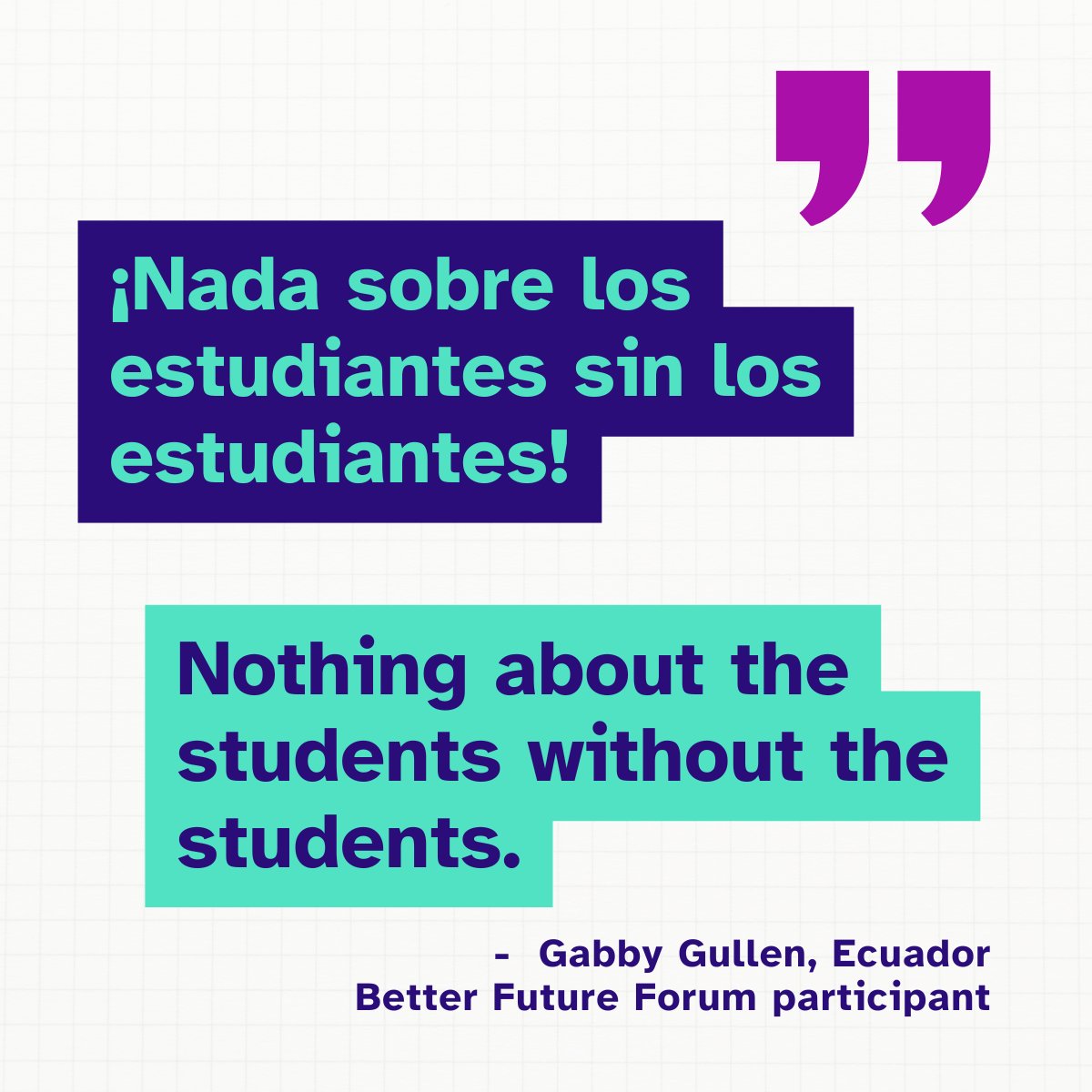
This simple yet profound statement from a participant at Teach For All's Better Future Forum is one of those.
As we imagine the future of education, let's ensure young people are not just the beneficiaries of change, but partners in shaping it.
"Under what conditions does student voice move from symbolic to structural?"
A powerful question and the focus of this thoughtful piece from @AASAHQ, featuring the National Student Board Member Association's Rida Karim and Luke Lippitt.
Their reflections offer important lessons for superintendents, school boards, and education leaders committed to authentic student engagement.
https://t.co/NVfIsfvAQM
"For years, education celebrated the heroic leader. The tireless fixer. The person willing to work longer, move faster, and absorb more pressure than everyone else. We rewarded urgency and admired endurance. But the future will not be built by exhausted people holding together fragmented systems through sheer force of will." - @drvickip
📖 For education leaders thinking beyond the next initiative, this is a must-read. https://t.co/Zf6fKjpuZg
On a recent visit to a middle school integrating Career Connected Learning across the curriculum, we talked with students about the value of their experiences and about student voice and agency. They were not shy about sharing their ideas and insights.
Three simple, insightful statements:
My colleagues have written about the importance of ensuring students are active participants in shaping how technology supports teaching, learning, and assessment. https://t.co/p2KoFsec05
Future-ready systems make space for student voice, agency, and authentic engagement in conversations about what learning should look like in an AI-driven world.
Excited to see this work with @AASAHQ taking shape: https://t.co/lFQV2w8kQ3
🌐 How do we measure real learning when a machine can replicate the results?
🌐 What skills should be prioritized when AI can increasingly perform well in various professional, knowledge-based tasks?
🌐 And how can universities integrate this technology without losing the human critical thinking that higher education is built on?
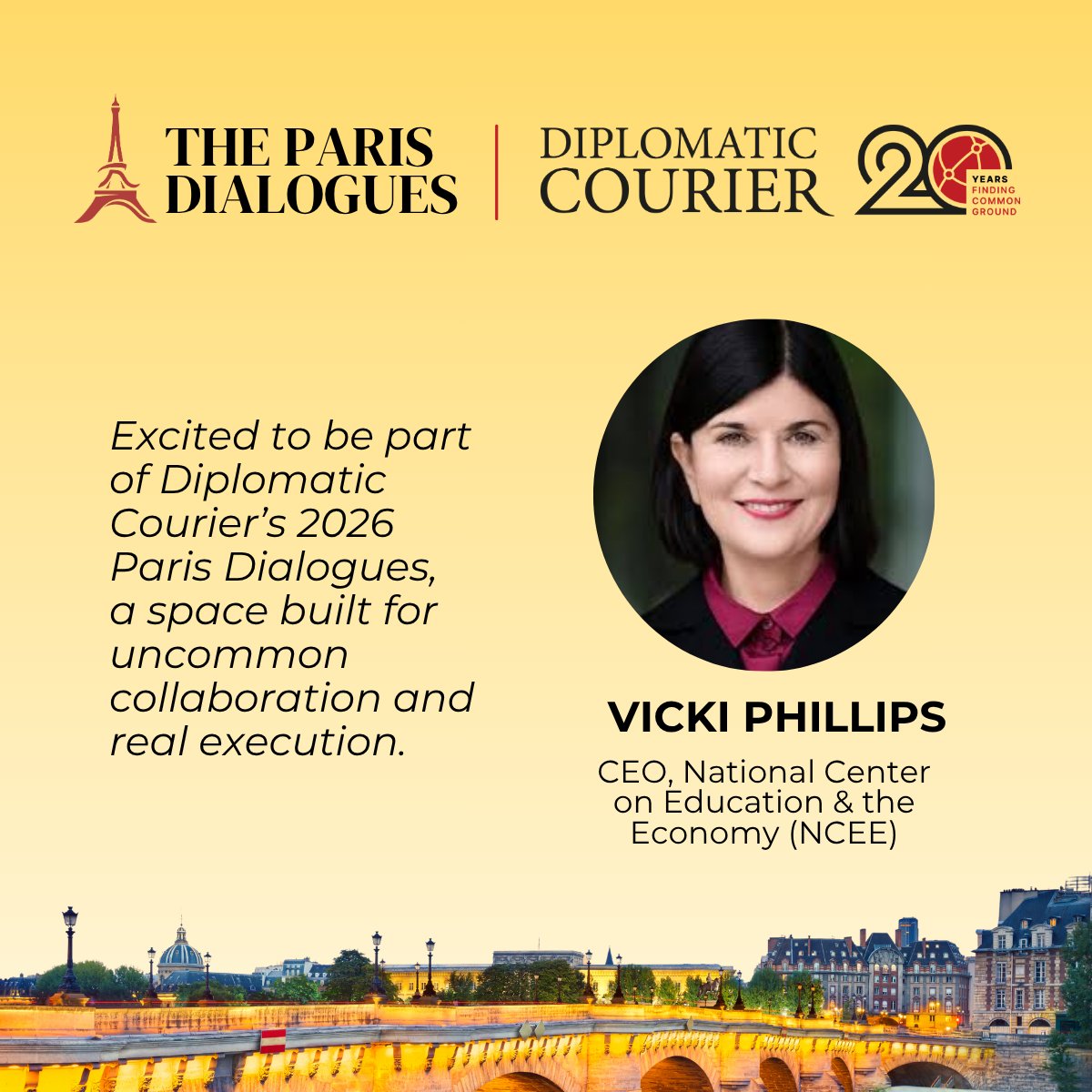
Looking forward to being part of a conversation on higher education and AI, exploring questions that are front and center for so many of us in education.
https://t.co/trwuRjG1PN Diplomatic Courier