Elections and constitution building enthusiast. Passionate about youth, legislative accountability and community organizing. Lover of God and builder of people
I’m excited to share that In That Moment is now available on Amazon. Please order your copy (ies) today and support this important cause. Every purchase helps a child with a disability stay in school in three African countries. 🙏🏿🙏🏿🙏🏿
The most profound political communication we, the people, have received from much of the political class this election season is that many are unprepared for legitimate political competition. Instead, they appear to be preparing for war, determined to capture power and manipulate the 2027 elections by any means possible.
Now, we have a choice to make, allow them to succeed or assert our sovereignty as a people through the ballot. I propose three actions:
First, show up to vote, but don’t show up alone. Make a commitment to mobilise at least five more people to vote. The more voters turn out, the harder it becomes to manipulate the elections. The attacks on political opponents and the increasingly violent political rhetoric are designed to instil fear, intimidate voters and discourage electoral participation. We must not surrender to fear.
Second, when you show up to vote in 2027, vote and keep watch over your vote. The best antidote to distrust is vigilance, not disengagement. Our responsibility as citizens does not end with casting a ballot. We must remain vigilant and ensure that every vote is counted and that the will of the people is respected.
Third, know the rules of the game and defend them at all times. Understand the electoral laws and procedures. When the rules are violated, document the violations, expose them and amplify the evidence.
Nigeria’s democracy is worth our fight, our sacrifice and our resilience. We cannot afford to surrender our sovereignty to political actors who believe that power belongs to them rather than the people.
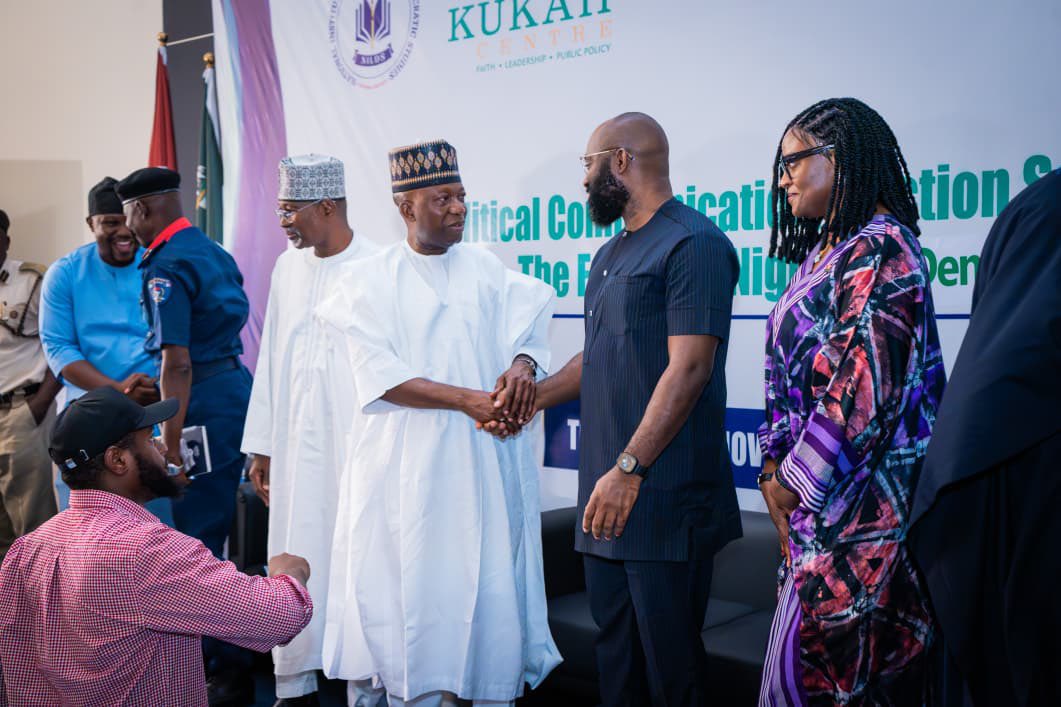
These are some of the thoughts I shared this week at a Chatham House event on #NigeriaDecides2027 and at a conference on political communication hosted by the Kukah Centre and the National Institute for Legislative and Democratic Studies (NILDS).
#WatchingTheVote
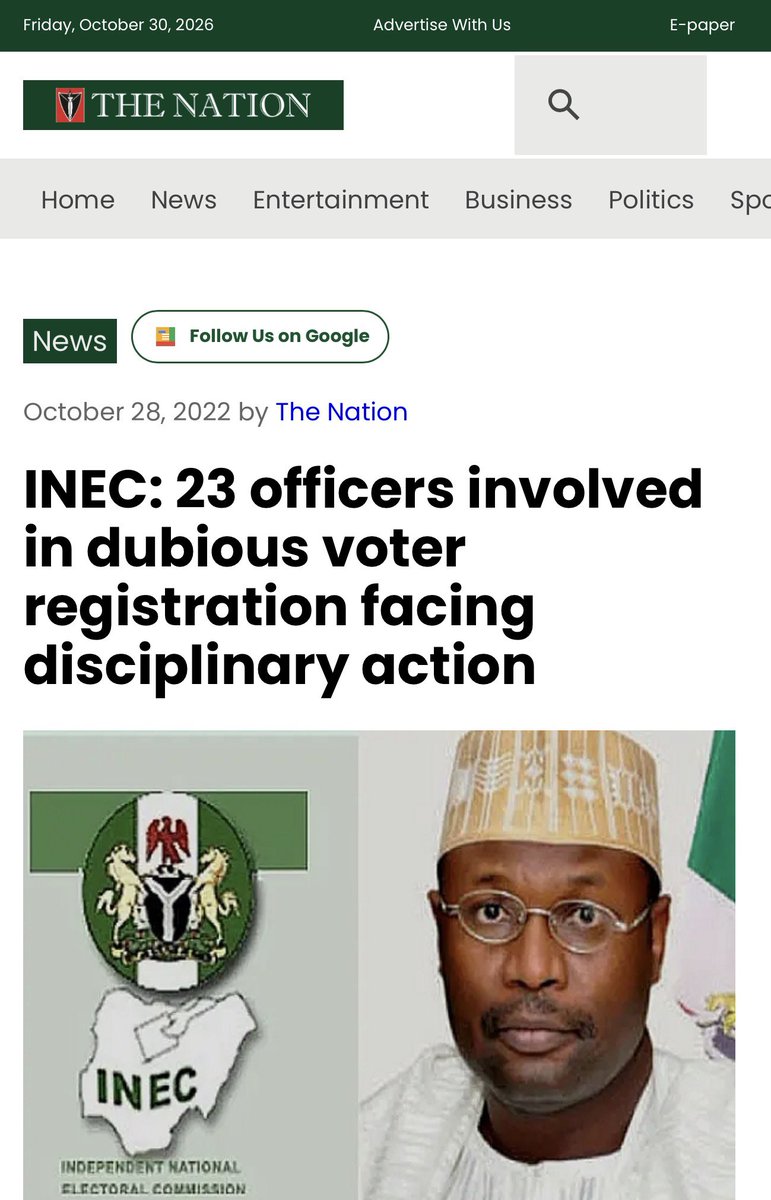
It is encouraging that INEC has admitted its registration officials were responsible for the irregularities uncovered in the voter register. However, there must be serious consequences for those found culpable. This reinforces a fundamental point we have consistently made that Nigerians must not trust the BVAS and IReV than the people who operate them. Technology does not guarantee electoral integrity when those managing the systems are compromised. The personal integrity, and impartiality of INEC officials is critical for credible elections.
If a registration official can manipulate the voter register, what prevents a compromised election official from uploading falsified result sheets to IReV? Nigerians must therefore pay closer attention to the conduct of election officials, particularly those responsible for voter accreditation, results management and transmission.
#NigeriaDecides2027 #WatchingTheVote
As our Election Manipulation Risk Index (EMRI) shows tampering with voter register has always been a tool for election manipulation used by politicians and compromised INEC officials. In the lead-up to the 2023 elections, there were confirmed cases of padding of the voter register. Some INEC officials implicated in these irregularities were reportedly investigated, yet the public never received an account of the disciplinary measures taken against those implicated.
In 2026, we seem to be witnessing a disturbing recurrence of the same problems. Will anyone be held accountable for manipulating or compromising the voter register?
#NigeriaDecides2027 #WatchingTheVote
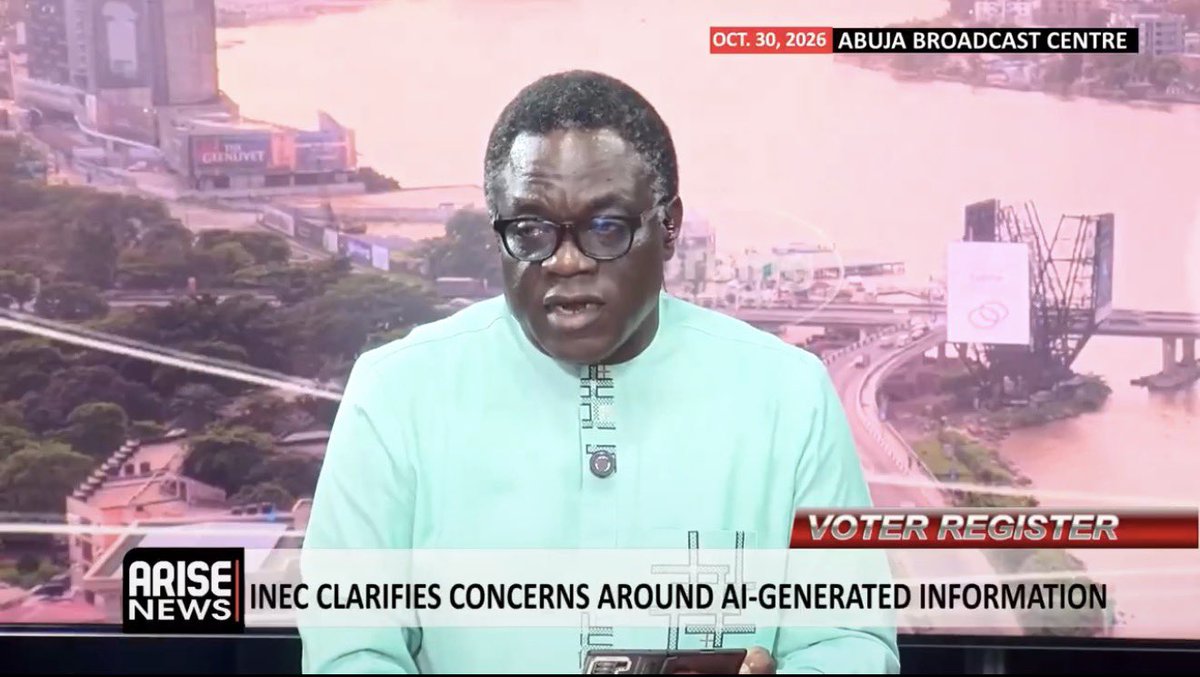
The integrity of an election begins long before election day. It starts with a credible voter register and extends to the systems, institutions and individuals managing the process. The integrity of the 2027 elections is already under threat from serious infirmities in the voter register. These AI-generated images and suspected cases of register padding raises fundamental questions about the credibility of the register. A compromised voter register is a compromised foundation for credible elections.
The infirmities in the register are not minor errors. They pose grave threats to voting rights and our democracy. Aside a comprehensive investigation, we need an independent audit to enable citizens understand the extent of the irregularities, identify those responsible and verify that the register is thoroughly cleaned before December 2026.
It was a delight to brief the African Union Commissioner for Political Affairs, Peace and Security (@AUC_PAPS ) HE @Bankole_Adeoye this evening at the AU Headquarters in Addis Ababa on the progress made by the AU Advisory Group on Artificial Intelligence in advancing the Common African Position (CAP) on AI in Peace, Security and Governance, which I am humbled to chair. I am grateful to His Excellency for his valuable insights, warm reception and continued support for this important initiative.
As the process of developing the Common African Position gets underway, we are optimistic about its potential to shape the responsible development, deployment and governance of AI across Africa, particularly in strengthening democratic institutions, safeguarding peace and security, and advancing Africa’s collective interests in global AI governance.
INDEPENDENT NATIONAL ELECTORAL COMMISSION
PRESS STATEMENT
UPDATE ON THE DISPLAY AND PUBLICATION OF THE PRELIMINARY REGISTER OF VOTERS FOR THE 2027 GENERAL ELECTION
The Independent National Electoral Commission (INEC) wishes to provide an update on the display of the Preliminary Register of Voters ahead of the 2027 General Election.
2. In accordance with Section 19 of the Electoral Act, 2026, the Commission conducted the physical display of the Register at Registration Areas nationwide from 9th to 15th October, 2026, providing registered voters the opportunity to inspect their particulars and submit claims and objections as prescribed by law.
3. The Commission has taken note of the concerns expressed by Nigerians and other stakeholders regarding the desirability of making the Register accessible through its online platform in addition to the physical display already conducted.
4. Accordingly, and in furtherance of its commitment to transparency, accessibility and public confidence in the electoral process, the Commission has decided to make available on its online platform https://t.co/cpjnvdozeV the same Preliminary Register of Voters earlier displayed at the Registration Areas.
5. This additional measure complements the physical display already undertaken and is intended to facilitate wider public access to the Register. Meanwhile, the Commission continues to process claims and objections arising from the exercise in accordance with the Electoral Act, 2026, preparatory to the certification and publication of the Final Register of Voters on 15th December 2026.
6. The Commission appreciates the continued interest and constructive engagement of Nigerians and stakeholders and reiterates its commitment to transparency, accountability and the faithful implementation of the Electoral Act, 2026 in delivering credible elections.
Mohammed Kudu Haruna
Chairman, Information and Voter Education Committee (IVEC)
26th October, 2026
“As of today, the voters register is not on INEC’s website or any official website. INEC owes Nigerians and stakeholders an official statement. This silence does not inspire confidence.”
— Samson Itodo, Executive Director, YIAGA AFRICA, on INEC’s inability to publish the voters register, stating that the voters register is not subject to INEC’s discretion.
#seunokinbaloye #politicstoday #channelstv
INEC Legally Bound To Publish Voters’ Register Online – Itodo
The Executive Director of Yiaga Africa, Samson Itodo, says the Independent National Electoral Commission (INEC) is legally required to publish the voters’ register online ahead of the 2027 general elections.
https://t.co/ECcQlBUMR3
On Whether the Media Can Announce Election Results Before Official INEC Declaration
To address this issue, it is important to understand the election results management process. Election results are first announced at the polling unit level and immediately made public through verbal declaration and the posting of result sheets. The purpose of this public announcement is to promote transparency. Once results are announced at the polling unit, they become public information.
Furthermore, the introduction of the INEC Result Viewing Portal (IReV) was designed to deepen transparency in the electoral process. The objective is to make results accessible to citizens and stakeholders, enabling them to follow the results management process while reducing opportunities for manipulation during collation. In that context, the media can report results that have already been officially announced at polling units because those results are already in the public domain.
This is particularly important given the widespread concerns and distrust surrounding the results management process. Historically, the collation stage has often been viewed as the weakest link in the electoral process and the point at which political actors may seek to compromise outcomes. Media and citizen oversight therefore serve several important purposes:
1. It protects INEC from political pressure.
There is no doubt that electoral management bodies can come under pressure from powerful political interests. When results have already been publicly announced, documented, and aggregated by independent observers and media organizations, it becomes more difficult for any attempt to alter them to succeed. Public awareness of the results strengthens INEC's ability to resist undue pressure and uphold the integrity of the process.
2. It strengthens the integrity and credibility of the electoral process.
Independent reporting, monitoring, and aggregation of officially announced polling unit results create an additional layer of transparency and accountability. This helps build public confidence in the process and discourages attempts at manipulation.
At the same time, it is important to distinguish between announcing results and declaring a winner. INEC is the constitutional authority empowered to declare election results and return a candidate as duly elected. Declaration goes beyond publishing polling unit outcomes; it is the formal legal pronouncement that a candidate has won an election and has been returned as the winner. Until INEC makes that declaration, no candidate can legally be regarded as having won the election.
However, reporting or aggregating results that have already been officially announced at polling units does not amount to declaring a winner. The media may report and analyze such publicly available results, provided this is done responsibly, accurately, and within established professional and ethical standards. That said, media organizations must remain conscious of the realities of the results management process. During collation, several factors can affect the final outcome. INEC may cancel results where there is confirmed over-voting, while adjustments may also arise from polling units where elections did not hold, were postponed, or were disrupted by violence or other incidents. These considerations are taken into account during the collation process and can ultimately influence the final results.
This is precisely why all actors, including the media, should avoid declaring winners before INEC completes the collation process and makes its official declaration. Reporting results that have already been announced by INEC at the polling unit, ward, local government, or state level is entirely different from declaring an electoral outcome. The former promotes transparency and public oversight, while the latter remains the exclusive constitutional responsibility of INEC.
Therefore, media organizations can responsibly share and aggregate officially announced results as part of their public information role, but they must be careful not to present such reporting as a final declaration of the election outcome. Until INEC officially declares and returns a winner, all reported figures should be understood as part of an ongoing results management process. Ultimately, all actors, including the media, civil society organizations, and observers, must operate in accordance with the principles of integrity, professionalism, accuracy, and ethical conduct. The publication of false, inaccurate, or misleading results can undermine public trust and attract legitimate institutional sanctions. However, where the media responsibly reports and analyzes results that have already been officially announced by INEC, such reporting enhances transparency, strengthens public oversight, and contributes to democratic accountability without encroaching on INEC's exclusive constitutional mandate to declare and return a winner.
Samson Itodo
20th October 2026
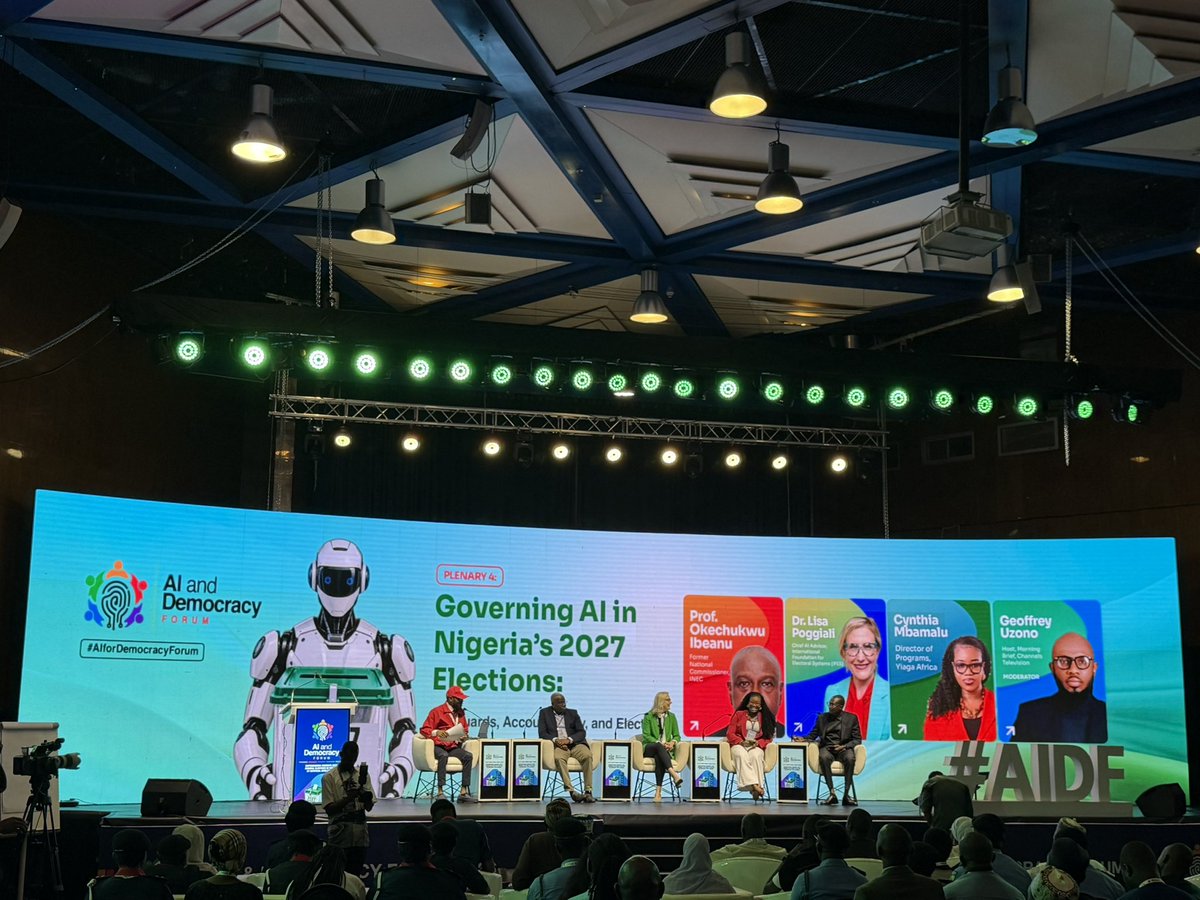
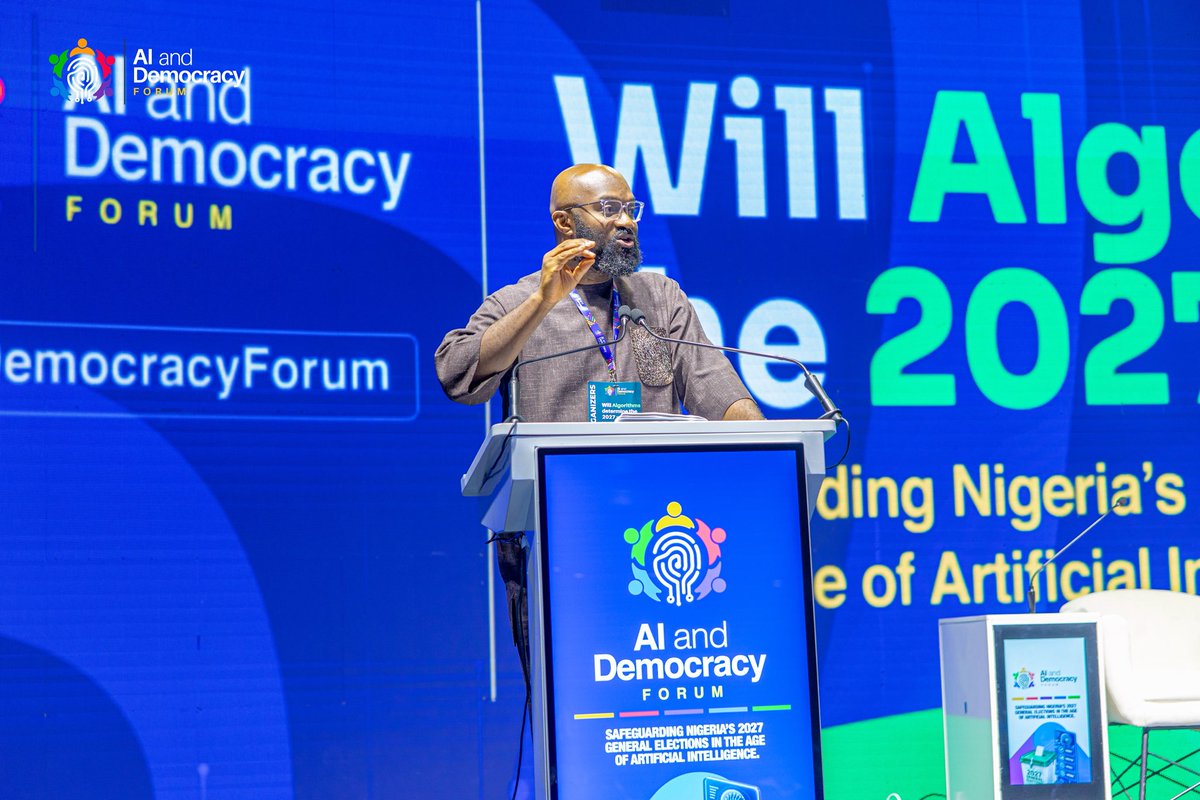
What an incredible week of advancing AI in elections and democracy!
The week began with a validation workshop for the ECOWAS Guidelines on AI in Election Administration, jointly hosted by the ECOWAS Network of Electoral Commissions and @yiaga This was followed by the major highlight of the week, three remarkable days at the #AIforDemocracyForum, focused on safeguarding Nigeria’s 2027 general elections in the age of artificial intelligence.
From 5 thought-provoking plenaries and 7 practical masterclasses to a town hall with technology companies, including Microsoft and Google, high-level cybersecurity workshops for INEC National commissioners and groundbreaking innovations at the AI in Elections Sandbox, we moved beyond conversations to exploring practical solutions for protecting electoral integrity using AI.
A special congratulations to ElectionGPT by Powervox, winner of the ₦13 million grand prize at the AI in Elections Sandbox! This is precisely the kind of homegrown innovation we must nurture and support.
I am immensely proud of the Yiaga Africa team and our partners, CJID and Dataphyte, for the extraordinary dedication, creativity and hard work that made this convening a success. My heartfelt appreciation goes to ECOWAS, Luminate, Microsoft, Google, TikTok, GIZ, our other partners and supporters, distinguished speakers, moderators and the over 350 participants who contributed their expertise, ideas and energy to these important conversations.
Thank you to everyone who made #AIDF2026 a remarkable success. We have started an important journey and there’s no going back.
#NigeriaDecides2027
From AI’s growing influence on Nigeria’s democracy to the risks it poses to electoral integrity, stakeholders explored what this means for Nigeria’s 2027 elections.
Watch some key moments from Day 1.
#AIDF2026#AIforDemocracyForum#NigeriaDecides2027
So, what will decide the 2027 vote?
It may be less about slogans, and more about performance, pocket and priorities.
54% disapprove of the President’s performance. 71% rate the economy as poor or very poor.
And when Nigerians were asked what motivates them to vote, 49% pointed to a desire for change in leadership. The economy and jobs came next at 38%, followed by security at 36%. But there is another force shaping elections: money.
Nearly 1 in 5 Nigerians (19%) say they have received money or gifts in exchange for their vote. That rises to 32% in the North-West and 24% among young people.
#NVIS3 #NigeriaDecides2027 #INEC #ElectionIntegrity #Democracy #YiagaAfrica
We reached another important milestone yesterday!
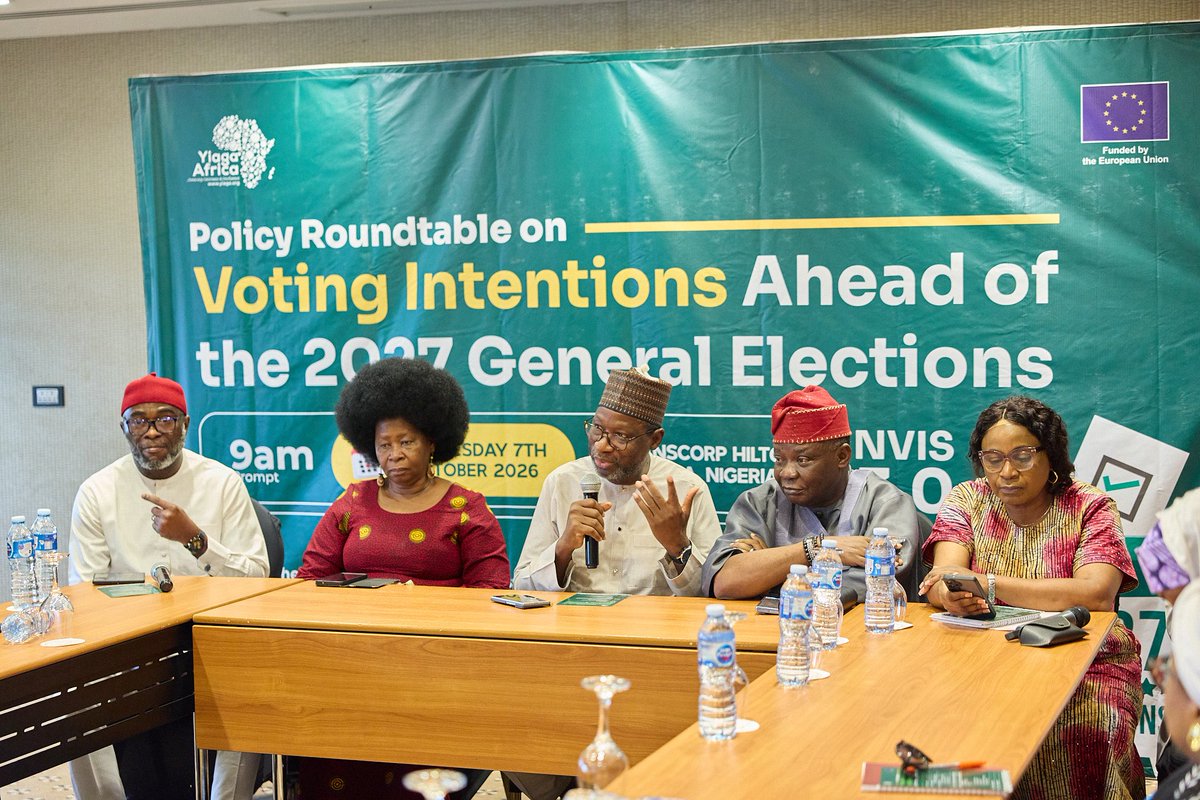
In Abuja, we launched the third edition of our National Voting Intentions Survey (NVIS) ahead of Nigeria’s 2027 general elections. The report offers compelling insights into the attitudes, perceptions and voting intentions of Nigerians, bringing to the fore emerging trends and underlying dynamics that could shape the 2027 elections. Beyond the numbers, the findings provide an important window into the expectations, concerns and aspirations of Nigerian voters.
At @YIAGA we believe that credible data and rigorous evidence are indispensable to understanding electoral behaviour, informing public discourse and strengthening democratic accountability. We consider this report another significant contribution to building an evidence-based understanding of Nigeria’s evolving electoral landscape.
We invite you to engage with the findings, interrogate the insights and join the conversation about the future of Nigeria’s democracy. Enjoy the report. We welcome your reflections, questions and feedback!
#NVIS2027 #NigeriaDecides2027 #AfricanElections
Nigerians want to vote. But do they trust the system enough to see it through?
That may be the biggest message from NVIS 3.0.
84% of Nigerians say they are likely or very likely to vote in 2027. But willingness is not the same as deep commitment. Only 47% are very likely to vote, down from 52% in NVIS 1.0, while just 41% are both likely to vote and very certain of their choice.
Then comes the bigger problem: fear.
61% say fear of violence could keep them away from the polls. And 63% have little or no confidence that the judiciary will resolve electoral disputes fairly.
But the experience of an election is not the same for everyone.
Women, who make up almost half of the electorate, face their own barriers to participation. NVIS 3.0 points to a gender gap in voting intention, reform awareness and trust in electoral technology. Women also express greater concern about electoral violence.
So the question for 2027 is not simply: “Will Nigerians vote?” It is: “What will make Nigerians feel safe enough to vote, confident enough to participate, and secure enough to accept the outcome?” Because an election is not won at the ballot box alone. It is won in the space between participation, trust and legitimacy.
#NVIS3 #NigeriaDecides2027 #ElectionIntegrity #Democracy #YiagaAfrica
Today in Abuja, we launched the third round of our National Voting Intentions Survey, NVIS 3.0, bringing together stakeholders from INEC, IPAC, NOA, civil society and the policy community to confront what the numbers are telling us.
Nigerians are willing to participate, but they are also wary. 61% say fear of violence could keep them away from the polls, while confidence in INEC has fallen to 34%. The challenge, then, is not simply getting Nigerians to want to vote. It is creating an electoral environment they can trust enough to show up for.
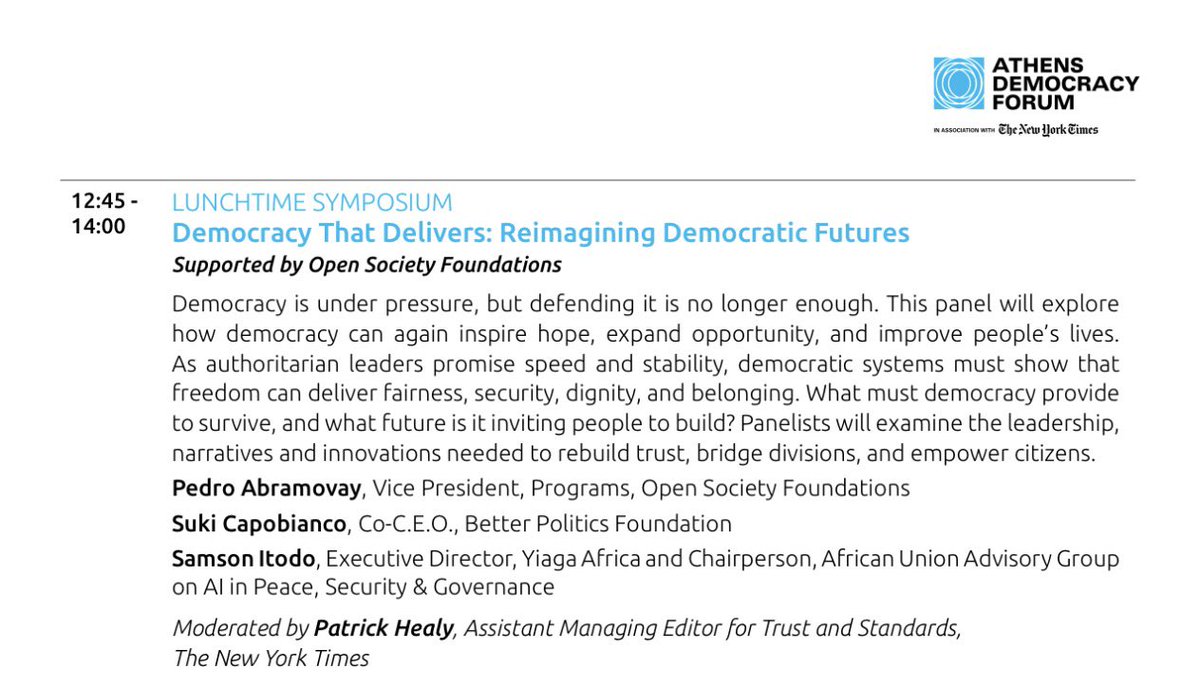
Our Executive Director @DSamsonItodo is attending the 2026 #Athens Democracy Forum in Greece. He will join global leaders and democracy practitioners like @pedroabramovay on the panel, “Democracy That Delivers: Reimagining Democratic Futures,” where he will share African perspectives on building democratic systems that deliver for citizens, strengthen public trust, and respond to the aspirations of a new generation.
#AthensDemocracyForum
In Defiance of Supreme Court Ruling, Some Primaries Not Conducted With Membership Register — Itodo
INEC is not just an election management body, it is also a regulatory institution. We are a constitutional democracy, and in a constitutional democracy you have to obey the rules, there is no absolute independence. A political party cannot be independent because they’re in a democracy and there are rules that govern the game. The laws say political parties should submit their registers and INEC is meant to monitor those primaries. But in the past, we have seen situations where primaries are not guided by registered members.
Samson Itodo
Executive Director, YIAGA Africa