European Network Remembrance and Solidarity is an international initiative to discuss the 20th-century European #history, #remembrance & #memorystudies
Do your students know what happened in 1956 across Poland, Hungary, and Romania?
The lesson ‘Year 1956 and The Thaw’ on Hi-story Lessons covers the Poznań protests, the Hungarian Revolution, and the brief cultural "thaw" that came before the crackdown.
🔗 https://t.co/Y7hxpgNAdR
🇪🇪 Today Estonia marks Victory Day (Võidupüha)!
It honours the 1919 Battle of Cēsis, where Estonia and Latvia triumphed over Soviet-Russian and Baltic-German Landeswehr forces during the War of Independence.
#OnThisDay
#OnThisDay in 1941, Nazi Germany launched Operation Barbarossa, the largest invasion in history, attacking the Soviet Union with support from its Axis allies.
The invasion opened the Eastern Front, strengthened the Allied coalition, and ultimately contributed to Germany’s defeat.
#OnThisDay we commemorate the Palmiry massacre. Between 1940 and 1941, Nazi forces executed an estimated 1,700 people in a Warsaw forest, targeting Polish intellectuals, clergy, and resistance fighters to destroy Polish national identity.
#OnThisDay in 1949, Archbishop Josef Beran of Prague was arrested by Czechoslovakia's communist regime as part of a campaign to suppress the Catholic Church. After 16 years of imprisonment, he was released and exiled to Rome, where Pope Paul VI appointed him cardinal in 1969.
Europe doesn't suffer from too little memory, it suffers from too many competing ones.
Check out impressions on the key debates from the 14th European Remembrance Symposium in Bratislava.
🔗Read the article: https://t.co/6U9gBwGzo6
🔗Watch the recordings: https://t.co/tdIAabhSFN
#OnThisDay in 1953, the East German Uprising began, a workers' strikes over rising quotas and falling wages rapidly spread into mass protests across the country. The regime responded with police, and Soviet tanks, though eventually made concessions to quell the unrest.
#OnThisDay in 1958, Imre Nagy, prime minister of Hungary's 1956 revolutionary government, was executed by the Soviets after supporting democratic reforms and independence from Soviet rule.
Exactly 31 years later, he was posthumously rehabilitated and reburied with full honours.
🏆 Journalism Competition: The End of the Cold War: 35 Years After
🌐 ENRS invites journalists worldwide to submit articles, podcasts, documentaries and video reports exploring the lasting impact of the end of the Cold War.
📅 Deadline: 15 Oct. 2026
🔗 https://t.co/RfQ3CEpSna
#OnThisDay in 1977, Spain held its first democratic elections since the Civil War - a milestone in the transition from nearly four decades of Franco's dictatorship. The elected parliament drafted the 1978 Constitution, laying the foundation for Spain's democracy. #SpanishHistory
❗️Today is a day of remembrance for Estonia, Latvia, Lithuania, and Poland.
The Baltic states commemorate the victims of Soviet mass deportations to Siberia in the 1940s.
Poland marks the first transport to the Nazi German Concentration Camp Auschwitz in 1940.
#OnThisDay
🇷🇴 #OnThisDay in 1990, students in Bucharest, Romania demanded democratic reforms and the resignation of the government. President Iliescu called in miners to violently suppress the protests - a serious setback for Romania's fragile democracy.
📣 Calling all teachers & history enthusiasts!
Subscribe to our monthly Hi-story Lessons newsletter for lesson plans, key dates, educational resources, and more!
🔗 https://t.co/ML89NZiewR
#OnThisDay in 1948, Romania's communist regime nationalized over 1000 private companies, dismantling the pre-war market economy. Owners were stripped of property without compensation, many facing persecution or imprisonment. It was a step in the Sovietization of Romanian society.
📖 Yesterday, we opened Between Life and Death at Eccles Library in Salford, in partnership with @SalfordLibrary.
🌿 Our special guest was Lady Milena Grenfell-Baines, who came to Britain on the Kindertransport.
📸 Take a look at the photo gallery:
#OnThisDay in 1988, tens of thousands of Estonians gathered in Tallinn singing patriotic songs through the night, the birth of the Singing Revolution. A non-violent movement of voice and cultural identity, it spread across the Baltic states and culminated in independence in 1991.
Do your students know how Romania became a communist state, and how some Romanians fought back?
The lesson ‘Romania 1947–1956’ on our educational platform Hi-story Lessons covers the full picture, with downloadable materials for each topic.
🔗 https://t.co/2nBNZZNt1L
📍 Our exhibition "Between Life and Death" is now open in Salford, UK!
Stories of those who risked everything to save others, told through testimonies from 15 European countries.
📅 2–30 June 2026
📌 Eccles Library, Salford
🔗 https://t.co/Cy64VM89C9
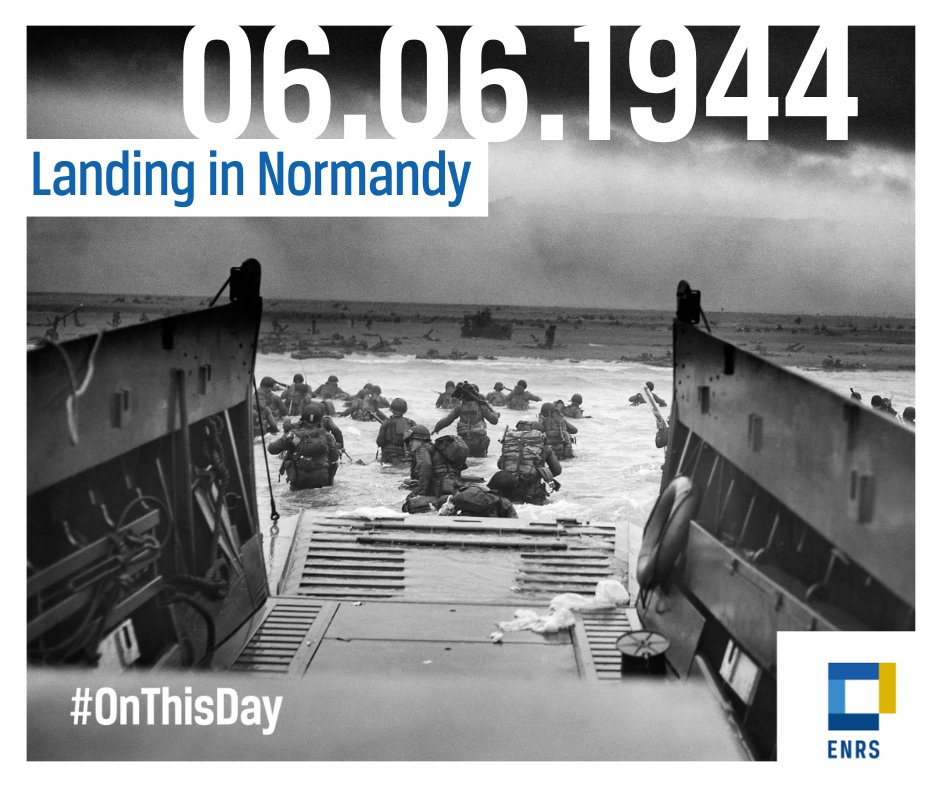
#OnThisDay in 1944, Allied forces landed on Normandy's beaches - opening a second front that forced Germany to divert troops from the East. The liberation of France followed, and ultimately Germany's defeat in 1945.
#OnThisDay in 1947, the Marshall Plan was announced - a US initiative to rebuild war-devastated Western Europe, promote stability, and foster European unity. Eastern Bloc nations were excluded at Soviet insistence, deepening the East-West divide.