By necessity, many laws that protect people from AI-driven harms (such as the ELVIS Act) put a “disproportionate burden” on AI systems.
Read more: https://t.co/LZ1CNXJQmn
.@MarshaBlackburn had previously expressed concern over the moratorium and the effect it would have on laws such as Tennessee’s ELVIS Act, which protects artists’ voices from the misuse of artificial intelligence, as well as CSAM-related laws.
However, the proposed compromise arguably still means that states could not enforce these types of laws as it exempts only laws that do not pose an “undue or disproportionate burden” on AI or “algorithmic decision systems.”
Earlier today, Senators @MarshaBlackburn & @tedcruz announced a proposed compromise on the proposed moratorium on state AI laws contained in the Senate’s reconciliation bill.
“The Senate should remove this unworkable provision from the bill rather than trying to prevent states from protecting their constituents from the AI-driven harms that Congress has failed to regulate." - Caitriona Fitzgerald
EPIC opposes the revised AI moratorium: “The multiple iterations of the AI state law moratorium demonstrate that, at the end of the day, members of Congress recognize that a sweeping ban on state-level AI regulation simply does not work,” - Caitriona Fitzgerald, Deputy Director.
There are so many ways you can support EPIC this season!
Did you know there are tax advantages to donating appreciated assets from crypto or stock?
Find more info on crypto donations to EPIC here: https://t.co/nc9ZzvKb1U
We’re in a moment where, with your support, we can win back the right to digital self-governance and force a culture shift online to one that respects the fundamental right to privacy. Join us today!
We have an exciting opportunity for you to have a huge impact on EPIC’s work to defend privacy, human rights, and democracy – generous donors have stepped up to TRIPLE your end-of-year gift! If you give $100, you're generating $300 of support for EPIC!
➡️ https://t.co/gvqc3WZ39I
Funny you mention it—guess which federal agency just proposed a rule cracking down on those data brokers selling the data of U.S. military personnel? https://t.co/BGzf3kYRGp
EPIC has long advocated that any exemptions in state privacy laws should be as narrow as possible and that GLBA institutions should not be exempted wholesale. EPIC’s model State Data Privacy Act includes only narrow, data-level exemptions.
https://t.co/KGgRm15ZC9
.@CFPB published a report that found that all of the state privacy laws exempt either the financial institutions or the data covered by the federal Gramm-Leach-Bliley Act (GLBA) and the communications covered by the federal Fair Credit Reporting Act.
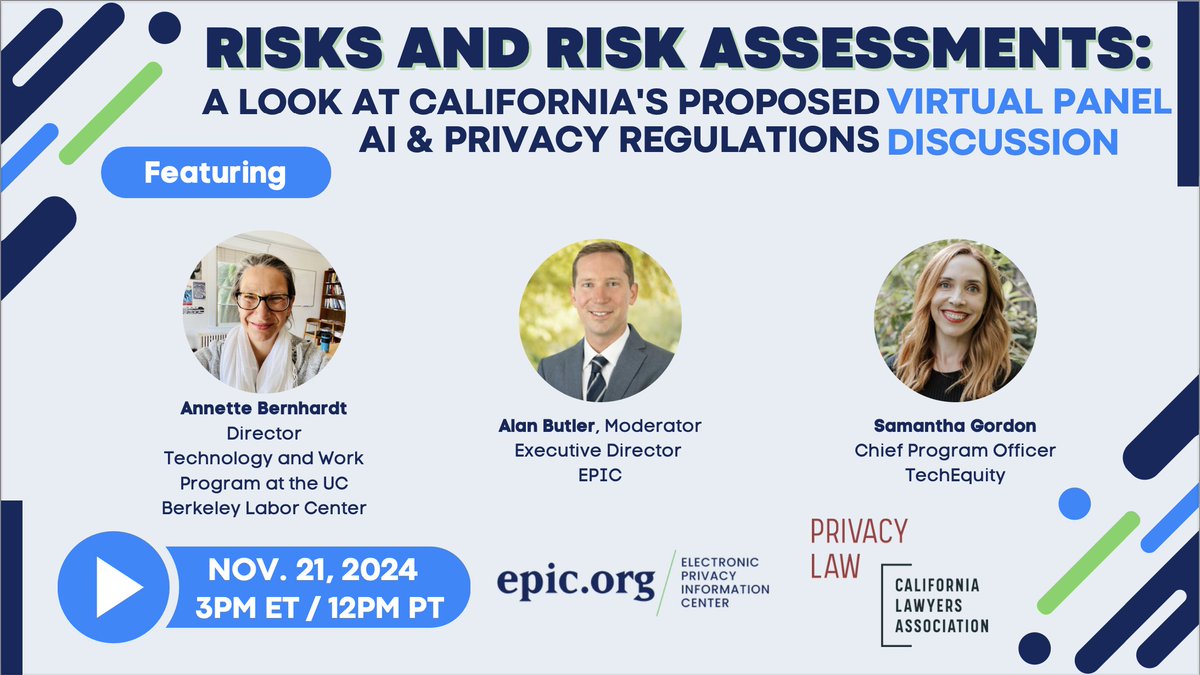
Join EPIC, @CLAPrivacyLaw, & expert panelists like Annette Bernhardt, Director of the Technology and Work Program at the UC Berkeley Labor Center, and Samantha Gordon, Chief Program Officer at @TECollab, on 11/21 to discuss @CalPrivacy's proposed AI regs.
https://t.co/hfJ23bsSIW
Are you a college or graduate student interested in translating complex legal, policy, and tech concepts into everyday language? Do you have experience in social media management? Apply for EPIC’s Communications Internship!
Visit https://t.co/NL3KMnHOMW for info on how to apply.
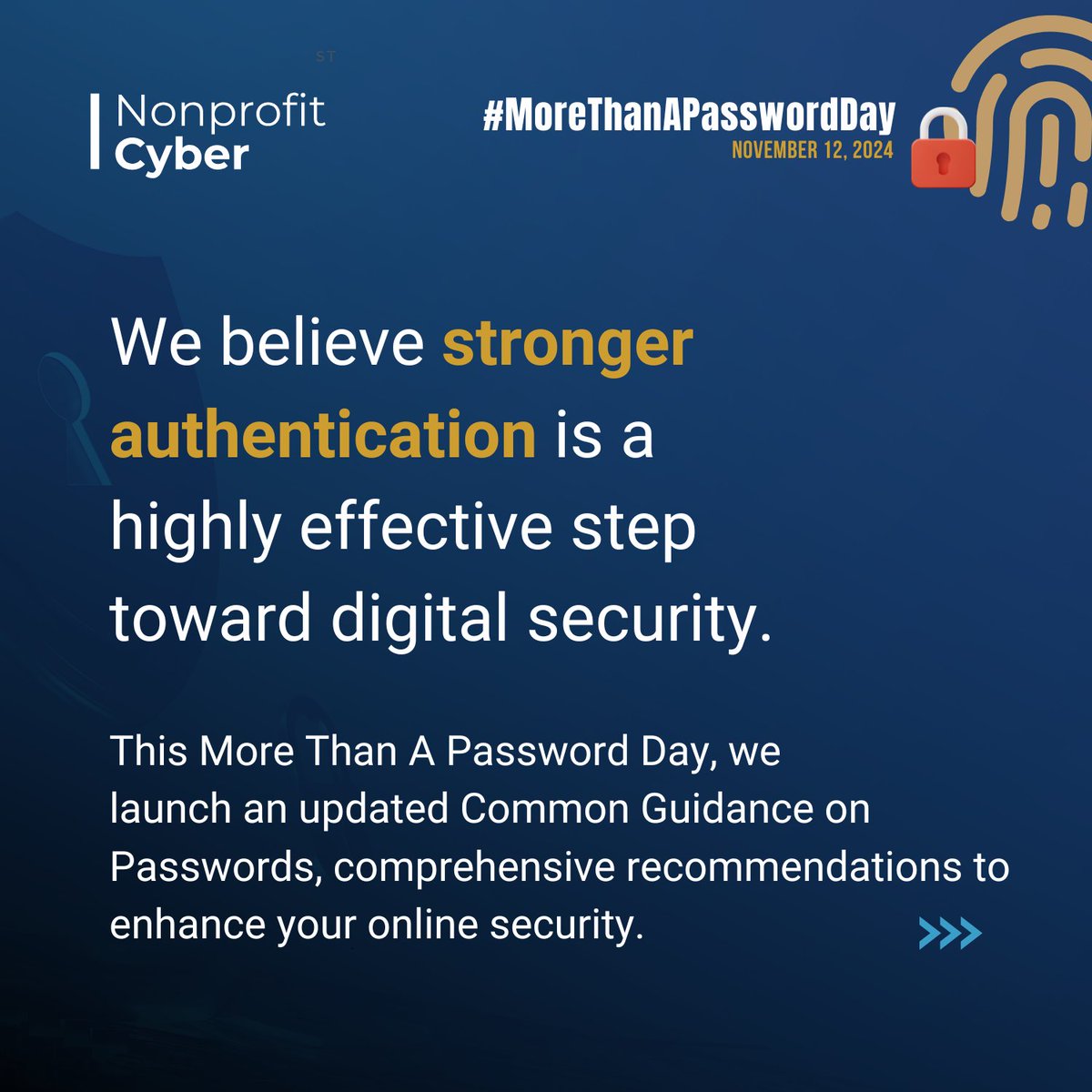
Join #MoreThanAPasswordDay and be a part of the global effort to redefine online security. Learn more about the Common Guidance on Passwords. Support #CyberCivilDefense by taking a few simple steps to be more secure. https://t.co/l4WYxB25kv
Today is the 2nd edition of #MoreThanAPasswordDay !
We release an updated version of the Common Guidance on Passwords with 132 signatories worldwide.
Visit Nonprofit Cyber’s updated guidance to get started on better protection today: https://t.co/PhMkUqqkJo
On this Election eve, a reminder that who you vote for is private! The right to a secret ballot is a core value in America’s system of self-governance. Whether you voted or not might be public record, but *who* you voted for is secret.
Later that year, MA and NY adopted the secret ballot system. Other states quickly followed, with 90 percent of the states adopting the secret ballot system by 1896. Over 125 years later, the concept of the secret ballot remains a cornerstone of our democratic process.