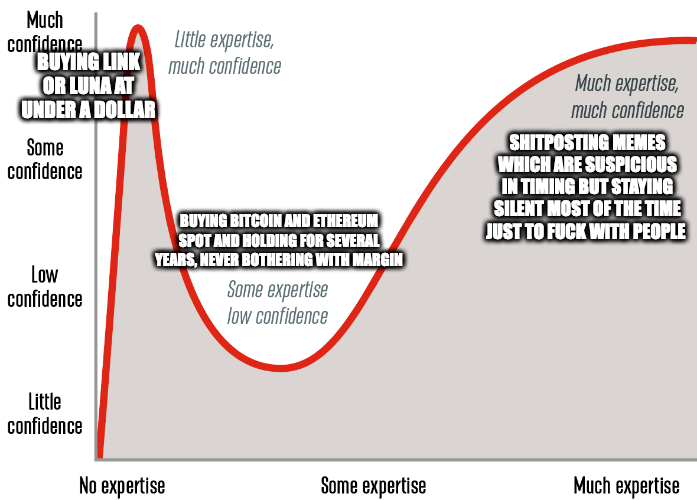
@ZynxBTC *Inoculates the market with a small sale*
*The market now has autism, starts screeching and blowing up every few hours because every retard on Earth thinks leverage is safer after a few people get liquidated*
I like Nic and generally agree with a lot of his work, but I think he's using the wrong framework here. This isn't a CCC bond. It's a distressed special situations security.
I've spent the better part of two decades in distressed credit and roughly the last 12 years buying distressed crypto. I've competed with or worked alongside many of the largest distressed investors. When I ask myself who the marginal buyer of STRC is today, it isn't a traditional high-yield fund.
It's an opportunistic credit fund. Those funds don't wake up looking for 15% returns. They generally need 30%+ IRRs before they commit capital to something this uncertain.
Today you can buy:
• Government refund claims targeting 10-15% IRRs.
• Distressed crypto claims with recoveries denominated in dollars and often substantial collateral protection for 20-25%+ IRRs.
STRC is riskier than both. You're subordinated. There are essentially no meaningful lender protections. The dividend is non-cumulative. The collateral is one volatile asset. There is negative convexity.
And unlike a traditional distressed loan, you don't control the collateral or have meaningful enforcement rights. This isn't lending against Bitcoin.
It's taking directional Bitcoin exposure through a structurally weak preferred security.
There's an important distinction people miss.
Common shareholders have a fiduciary relationship with management. Creditors don't. Management's job is to obtain the cheapest possible financing for shareholders - not to create an attractive security for creditors.
To Strategy's credit, they did exactly that. They issued extraordinarily issuer-friendly paper because the market let them. Good for them!
But once that paper leaves the hands of income-oriented crypto investors, who is the next buyer? That's the question. I think it's an opportunistic distressed investor. And that buyer isn't showing up for a 15-20% required return. They're looking for something closer to a 30%+ IRR.
At an 11.5% coupon, that implies a price of roughly $38.33 (11.5 ÷ 30%), versus about $76.67 for a 15% yield and $57.50 for a 20% yield. Maybe 30% isn't exactly the right number. Maybe it's 35%. Maybe it's 40%. But I think anchoring this off CCC spreads misses who the actual marginal buyer is.
10 months cash means nothing. Normal companies can just pay dividends into perpetuity from their actual earnings. That is what perpetual capital is...not an emergency dividend fund raised by soaking the common shareholders with dilution.
$STRC $MSTR
@parandeye_zard It's a bit underpaid vs level of effort getting there, but at least there's less volatility in actually having a job (unless you get sued for malpractice and lose your license lol)
Tech is kind of awful to try to get into now but for comparison the median salary at Meta is 379k
@thedefivillain The problem is that there are alternatives to STRC that make it look like shit.
If you’re going to tie yield to BTC price you might as well hold BITA or hold IBIT and sell covered calls on 30% of the shares.
Higher div, more upside, same/better downside. No leverage or debt.
@Croesus_BTC Why exactly would anyone buy $STRC now that $BITA has launched? Both are tied to Bitcoin’s success, but BITA has more upside, a higher dividend, and no debt obligations.
Mark's primary failure is that he believes Democrats want to solve the healthcare problem and not launder taxpayer dollars to friends and allies and receive kickbacks and insider stock activity as rewards.
@rodrimestead@WazzCrypto They have no obligation to pay, they can suspend dividends indefinitely or change it to a penny, the only repercussion is that STRC falls and they can’t raise more capital through it, no other consequences.