@UchennaEmenaha I agree, but I also worry that students don't have a perspective about scientific problems that don't have an immediate impact on their lives (e.g. smoking and cancer, fossil fuels and climate change).
A8: A bit outside the box: Consider having students make some claims that are false and then disprove the claim and 2) have the find situtations in which a model gives a wrong answer. #NSTAchat
A6 We certainly need to assess more than how well they understand model results. We need to assess whether or not students understand the process they used to arrive a scientific claim. #NSTAchat
A5 2/2 Some issues, like climate change have gone straight from no one believes in the phenomenon and politics to activism. The science has sort of gotten left behind by both viewpoints. #NSTAchat
A5. 1/2 When the concerns are societal and future oriented students have a huge role (it's their future after all). However, I don't believe societal should dominate as much as it does in science these days.
@caahayes It's important to know that one can change their mind based on new evidence, but it's much more common that we do not change our minds, and that what we actually do is refine our ideas.
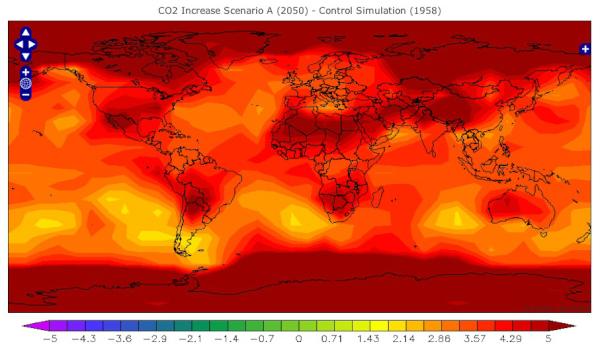
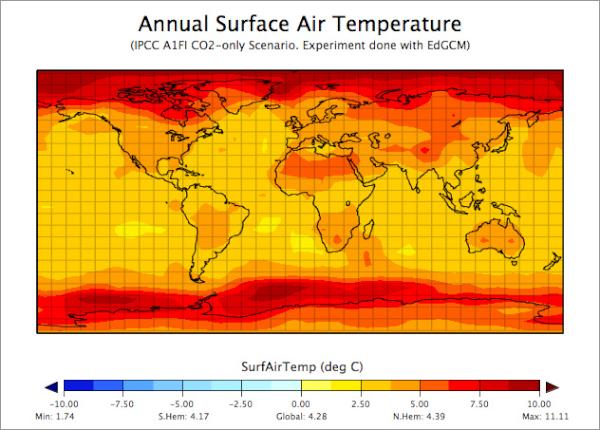
A4: GCMs in particular can be used to understand the nature of science even in no-analog or highly non-linear systems (e.g. future climate change) #NSTAchat
Some models are particularly good at examining claims over time. Global Climate Models, for example, are not statistically driven, but are based on fundamental physical laws. #NSTAchat
Models provide a simplified and idealized environment to test claims. That gives learners the opportunity to explore topics that are beyond what data can provide and they allow us to make predictions for scenarios that are out-of-bounds for available data.
#NSTAchat
Hi, I'm Mark Chandler @EdGCMProject. I'm a climate scientist at NASA and Columbia University and specialize in climate modeling (and make those models available to educatiors).
#NSTAchat