Using the latest data from the California Department of Education, a fact sheet recently released by Policy Analysis for California Education (PACE) examines trends in chronic absenteeism statewide through the 2024–25 school year. Learn more: https://t.co/4wSjMGzWbI
Districts can prioritize the elementary-to-middle school transition and provide focused supports for vulnerable subgroups to strengthen all students’ engagement, persistence, and learning outcomes. (4/4)
New PACE commentary by Yang Caroline Wang of @AnalyticsEA explores the connection between academic recovery, chronic absenteeism, and social-emotional learning. SEL are strongly linked to school attendance—now more than before the pandemic. https://t.co/GKLc2iF4RU (1/4)
Leaders should provide focused supports for vulnerable subgroups through Multi-Tiered System of Supports and start longitudinal monitoring to track whether expected developmental trajectories will rebound or diverge further. (3/4)
More than 30 percent of California’s approximately 30,000 school-aged youth in foster care regularly experience some of the highest rates of chronic absence and exclusionary discipline.
A new brief from @edpolicyinca details how changes in foster youth classification status impacted attendance and discipline rates in four of California’s CORE school districts — a group of several of the state’s larger school districts that test improvement theories at the school and district levels to provide the infrastructure for multi-district collaborations. Read more insights: https://t.co/nVOPPF98YC
Join us for a Civic Engagement Festival from 4:00 to 5:30pm, followed by the youth-led gubernatorial forum from 5:30 to 7:00pm. The event is free and open to the public; or catch the livestream on @cmactv. RSVP today to attend! https://t.co/Qw1GdRMg9z (3/3)
CA State Superintendent of Public Instruction Tony Thurmond and former LA Mayor Antonio Villaraigosa will participate as candidates—joining young leaders and community members from across the state for a dynamic evening of civic engagement, designed and led by young people. (2/3)
PACE is hiring! We’re seeking a dynamic, strategic, and collaborative research associate to support district partnerships while advancing education policy and systems change in PK–12 education across California. Learn more and apply today! https://t.co/KM0JsHZt8G @StanfordEd
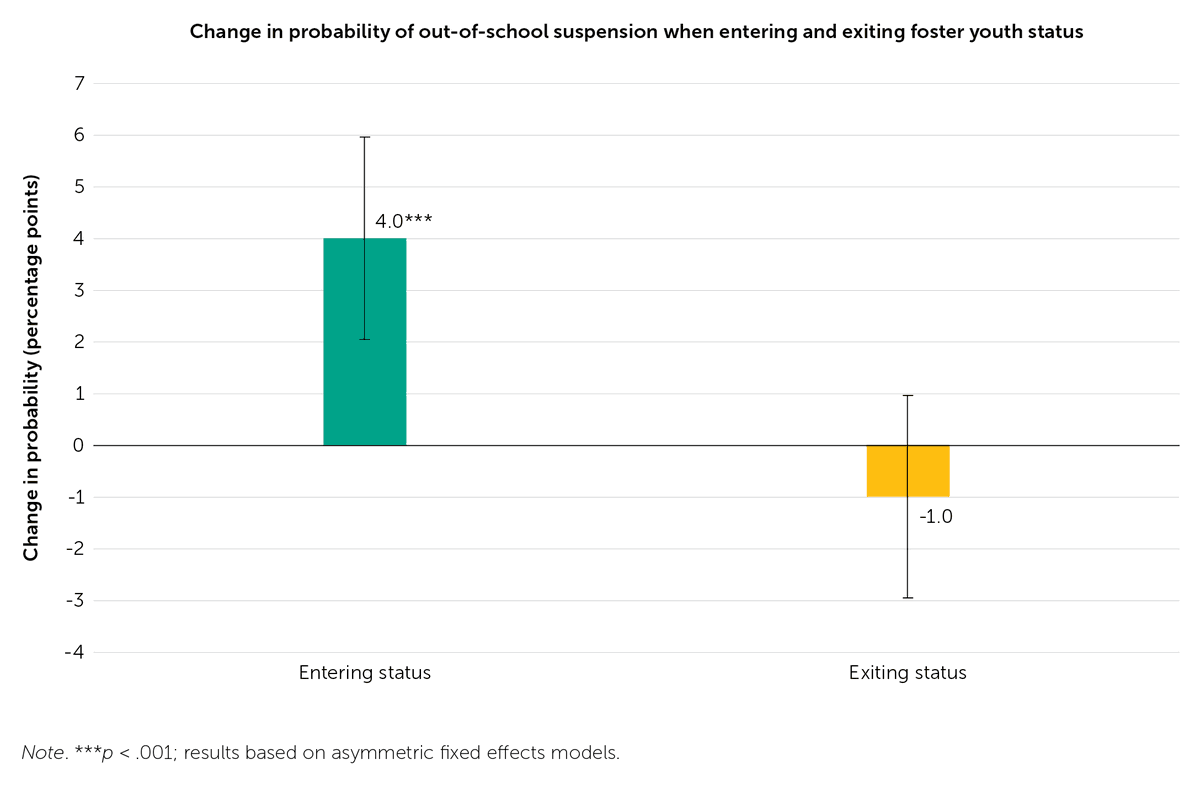
(4) This elevated disciplinary risk is consistent across subgroups (gender, race/ethnicity, grade level), indicating that it is not linked to any demographic but rather is broadly shared by all students in foster care. (5/5)
A new PACE policy brief by Kevin A. Gee, S. Colby Woods, and Michael A. Gottfried examines the effects of transitioning into and out of foster care on students’ school absences and the discipline they received in 4 California school districts. https://t.co/qItGbx8YVd (1/5)
(3) Overall, youth in foster care face increased rates of out-of-school suspension; this elevated disciplinary risk is highest when students enter foster care. (4/5)
Policy recommendations: eliminate the basic skills criterion, reform accountability systems, and reduce districts’ administrative burden by providing clearer guidance and streamlining data systems. (5/5)
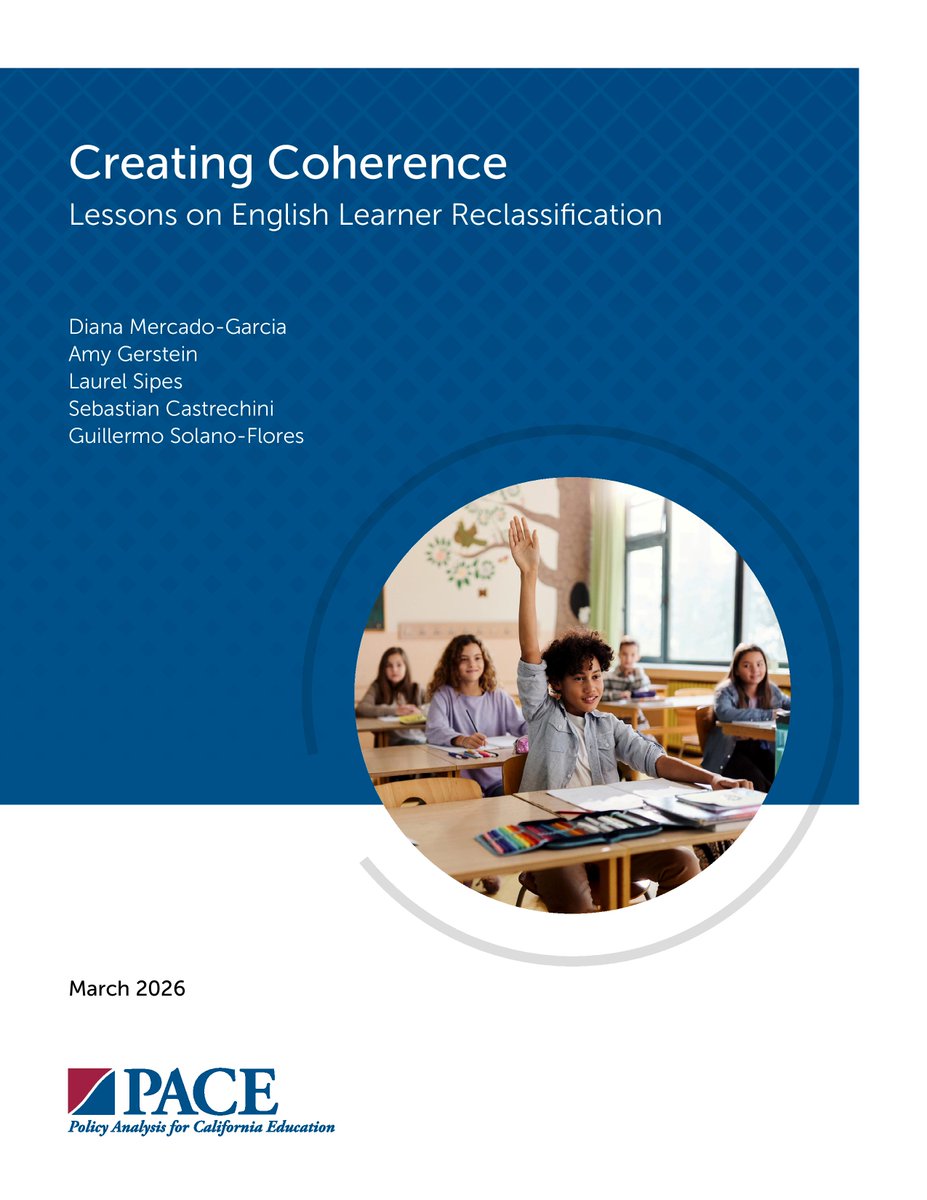
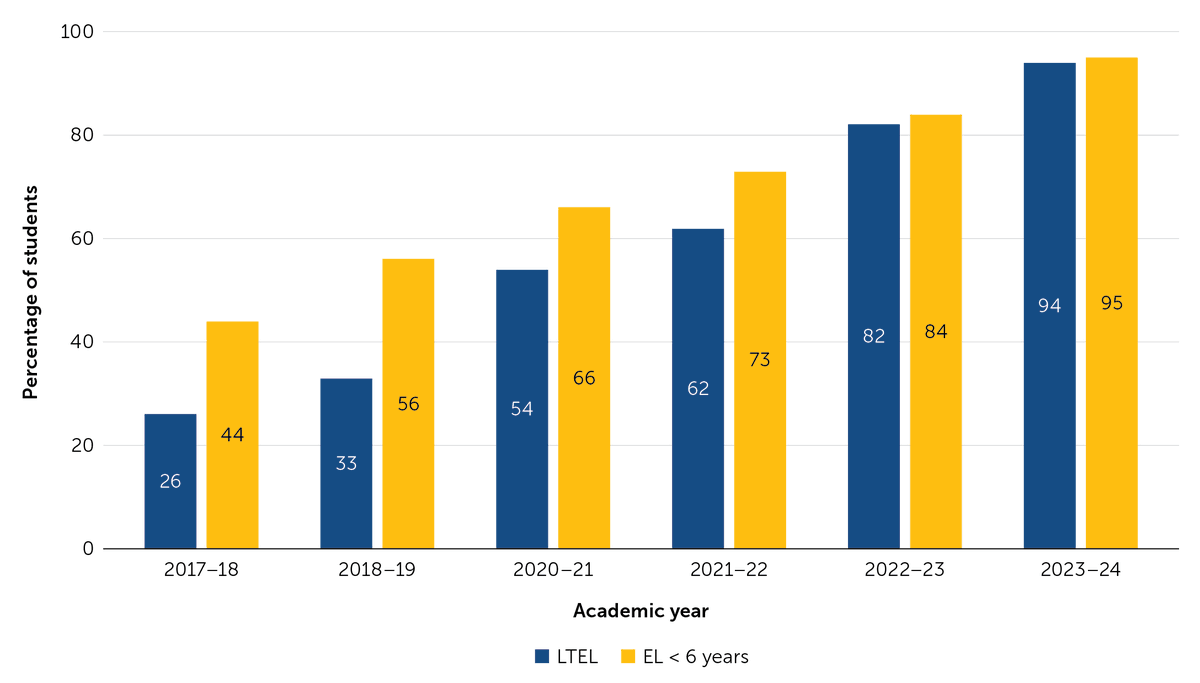
New report from PACE by Diana Mercado-Garcia, Amy Gerstein, Laurel Sipes, Sebastian Castrechini, and Guillermo Solano-Flores examines how California’s complex reclassification system creates barriers for students exiting English learner status. https://t.co/oSjzIqFRDL (1/5)
Study districts aligned leader mindsets, streamlined processes, and broadened pathways to reclassification, leading to increased reclassification rates and reduced disparities. (4/5)
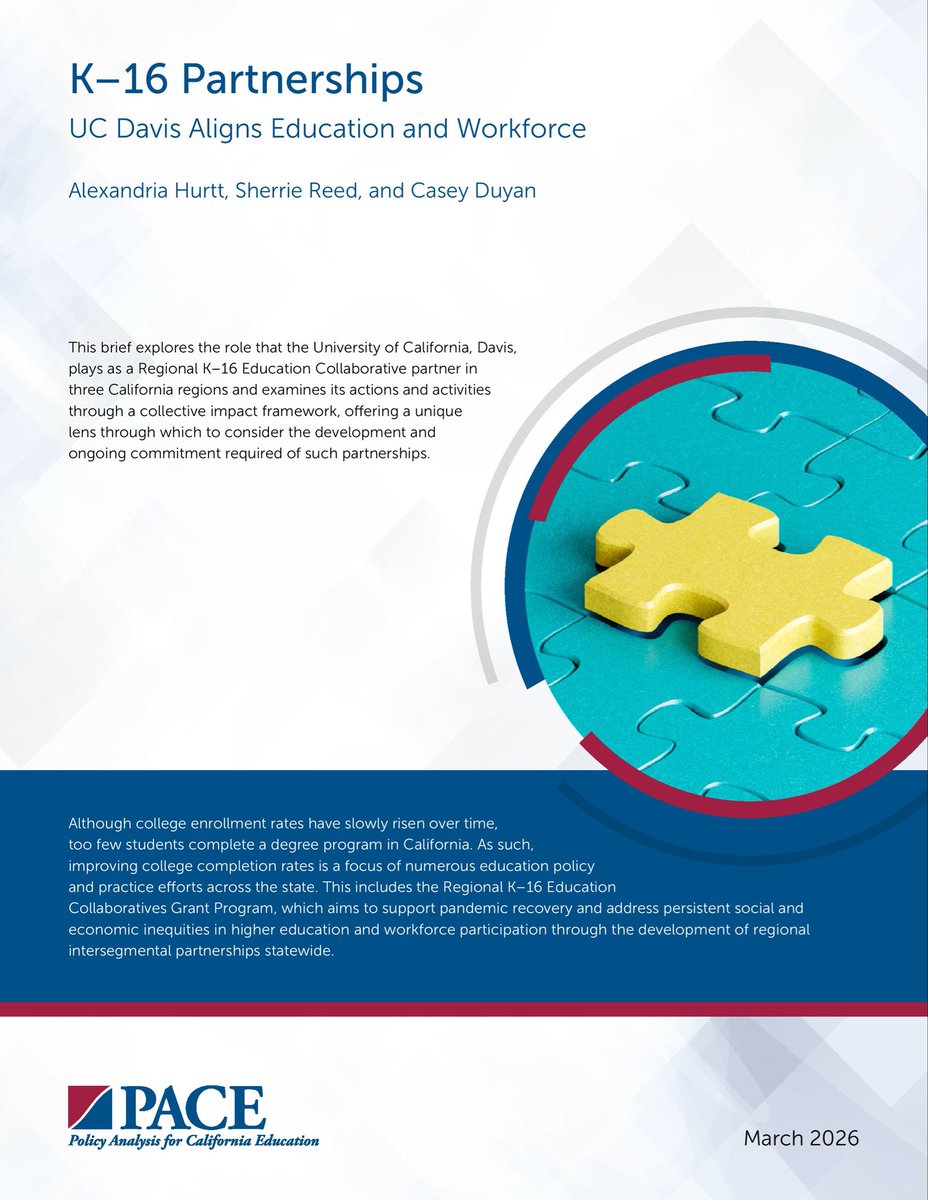
Early lessons identified in the case study for improving intersegmental partnerships include: (1) allow time for planning and support, (2) remain flexible to unexpected changes, (3) and build relationships through in-person meetings. (3/3)
New PACE brief by Alexandria Hurtt, Sherrie Reed, and Casey Duyan presents a case study of @ucdavis’s role as a Regional K–16 Education Collaborative partner in three California regions, considering critical components of intersegmental partnerships. https://t.co/AKXLizQYsi (1/3)
The authors examine UC Davis’s activities as a Collaborative partner through the lens of a collective impact framework to identify support for aligning regional goals, sharing data, coordinating activities, building relationships, and maintaining the partnership. (2/3)