Trusting and Waiting in Suffering
I jumped ahead a little in my @Logos reading plan because I wanted to talk about Romans 8:28. The assigned passage is Romans 8:16–25, and it helps us understand the promise that follows.
I’m writing this on a plane back from New York City. I had a wonderful day with pastors and church leaders who are excited about expanding Talbot Seminary’s partnership in New York City. Over the last few days, I’ve spoken at several events and met with ministry leaders.
I’m trying to resume my pre-surgery life. In many ways, I’m managing okay. But a big part of that is simply deciding to keep doing what I do, even though the pain is persistent and, at times, debilitating. (My doctor tells me that activity won’t slow my recovery.)
Seeing me travel has prompted some people to say, “You must be doing better.”
And I am doing better than I was a couple of months ago. But the neurological pain persists—and it remains significant.
People often ask, “What happened?” They understandably assume I fell or injured myself. I didn’t. I don’t have an explanation for why this happened to me.
I spent the last six years working hard to get into better shape. Then, seemingly out of nowhere, I found myself in constant pain and struggling to walk.
Today’s passage reminds me that creation is broken. I don’t believe things are ultimately random, but the brokenness of the world affects us in ways that can feel random. We don’t always get an explanation for why a particular suffering comes into our lives.
I’m trying not to waste my suffering. I’m also eager for it to end.
Based on my conversation with my doctor last week, I may be dealing with this pain until at least late spring or summer next year. He also reminded me that it might not fully go away ever. We don't know. And, we wait.
That uncertainty keeps bringing me back to this passage. I’m praying for relief, and I want to glorify God while I wait.
Paul describes creation’s condition in Romans 8:20–21:
“For the creation was subjected to futility—not willingly, but because of him who subjected it—in the hope that the creation itself will also be set free from the bondage to decay into the glorious freedom of God’s children.”
Paul places our suffering within the groaning of all creation. We groan too, even as God’s children, even with the Spirit dwelling in us. Faith does not exempt us from the ache of a broken world.
But our groaning carries hope. We are waiting for the redemption of our bodies. The Christian promise includes the very bodies in which we hurt.
That matters to me in this season of recovery. I pray for healing and welcome every sign of progress. My deepest hope rests in what Christ will ultimately make whole.
So I’m going to keep hoping and waiting, as verse 25 says:
“Now if we hope for what we do not see, we eagerly wait for it with patience.”
That brings me to Romans 8:28 and its promise that God works all things together for good for those who love him and are called according to his purpose.
What does that promise mean when the pain persists and we don’t know why?
My Talbot colleague Jason McMartin has coauthored a new book with Kelly M. Kapic and Liz Hall, _When the Journey Hurts: Finding Meaning in Suffering for Heart, Mind, and Soul_.
I asked Jason to help me see more clearly how Romans 8:28 fits into this. He shared the following, adapted from their book and their Christianity Today article, which I’ll link in the replies:
“Christians regularly misuse Romans 8:28 in the context of suffering. It can become vague, triumphalistic, individualistic, and detached from what God is doing in Christ. More problematically, it can be employed to identify a very specific interpretation to the suffering of hurting people that does not align with what God is actually doing in their lives. This verse assures us that God will redeem our suffering, that ‘all things’—including, we assume, our suffering—can be turned for our good, for God’s purposes. But this verse doesn’t occur in isolation.
“In the next verse, Paul explains what that ‘good’ is and what those purposes are: to be ‘conformed to the image of his Son’ (v. 29). And just a few verses before verse 28 we find the context in which God acts for our good: our adoption as beloved children of God (vv. 14–16). The ultimate destination is that we experience Jesus as our older brother and God as our Father (v. 29) so that ultimately nothing, absolutely nothing, will be able to separate us from God’s love (vv. 35–39).
“Romans 8, from start to finish, shows God’s grand and ultimate purposes that he accomplishes through our suffering, many of which will be completed in new heavens and new earth. More specific purposes are left unexplained. Is he building courage in us? Perhaps. Is he helping us to become more compassionate? Maybe. Is he providing opportunities for us to point our friends and neighbors to his goodness? Could be.
“If you’re suffering and searching for the lesson, give yourself permission not to know. God’s purposes may be larger than you can see, longer than your lifetime, or simply not yet revealed. Trust that not knowing the purpose doesn’t mean there isn’t one. What God has revealed is his desire to draw you closer to him—and his desire to be present in your suffering, loving you and working all things (even terrible things) toward the good of making you more like Jesus and in this way helping you experience how ‘wide and long and high and deep’ is his love in Christ (Eph. 3:18).”
So, I don’t know. But I’m trusting Jesus.
And I’m waiting.
But I’m not wasting my suffering.
Breaking: Highland Park UMC in Dallas voted to leave the United Methodist Church. According to an email sent to church members, of the 4,775 votes cast yesterday and today, 90.35% voted to leave the domination. The church has more than 16,000 members.
Cuidar de los inmigrantes es algo bueno— incluso algo cristiano.
Recordemos siempre que los inmigrantes están hechos a imagen de Dios, incluso aquellos que no conocemos, y podemos hablar de ellos como personas dignas de dignidad y respeto.
Caring for immigrants is a good thing— a Christian thing even.
Let’s always remember that immigrants are made in the image of God, even the ones we don’t know, and we can speak of them as those worthy of dignity and respect.
Stopped by Calvary Baptist Church in New York City to see their new building.
I served here as interim pastor for 18 months when we were meeting in rented space as the new building was being built.
Now it has a beautiful facility in the heart of Manhattan, just down the street from Carnegie Hall.
It was great to visit with the leaders from those churches while I was in Manhattan.
(BTW, it has 8 floors, not 6 as I said in the video.)
Second of three services at Crossroads Community Cathedral here in East Hartford, Connecticut.

Such a great Assemblies of God church, pastored by one of my former students Sean Wiles.
Pray we make much of Jesus! 
Watching online conflict entrepreneurs complain about online conflict entrepreneurs.
“I can’t believe people build a platform doing this,” they tell the platform they built doing this.
Worshipping with pastors and leaders this morning.
It’s great to be with the @ConvergeWW movement.
Pray we make much of Jesus meeting here at Black Rock Church in Fairfield, CT.

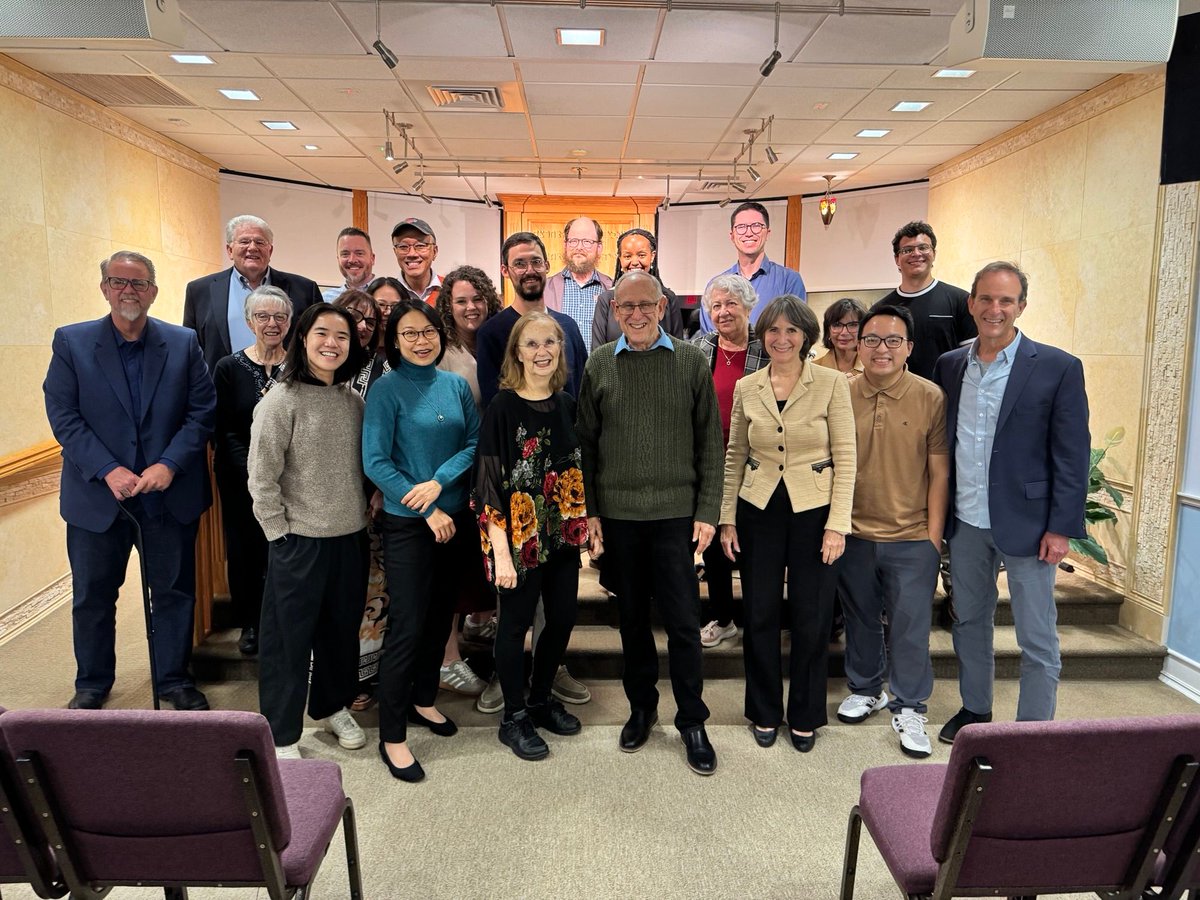
Met with our @TalbotTheology students at our NYC extension— in a predominantly Jewish neighborhood of Brooklyn.
It’s called the Feinberg Center for Jewish Messianic Studies, in partnership with Chosen People Ministries.
Worth noting, about half of the folks at dinner could not be in the picture due to future plans.
We sang songs in Hebrew, had a great meal, and prayed for one another.
Loved dropping in on a class at Talbot Seminary–Phoenix! It’s a privilege to invest in these women and men as they prepare for ministry and deepen their theological training. There’s room for you, too!
Find out more at https://t.co/1opSHY08OL
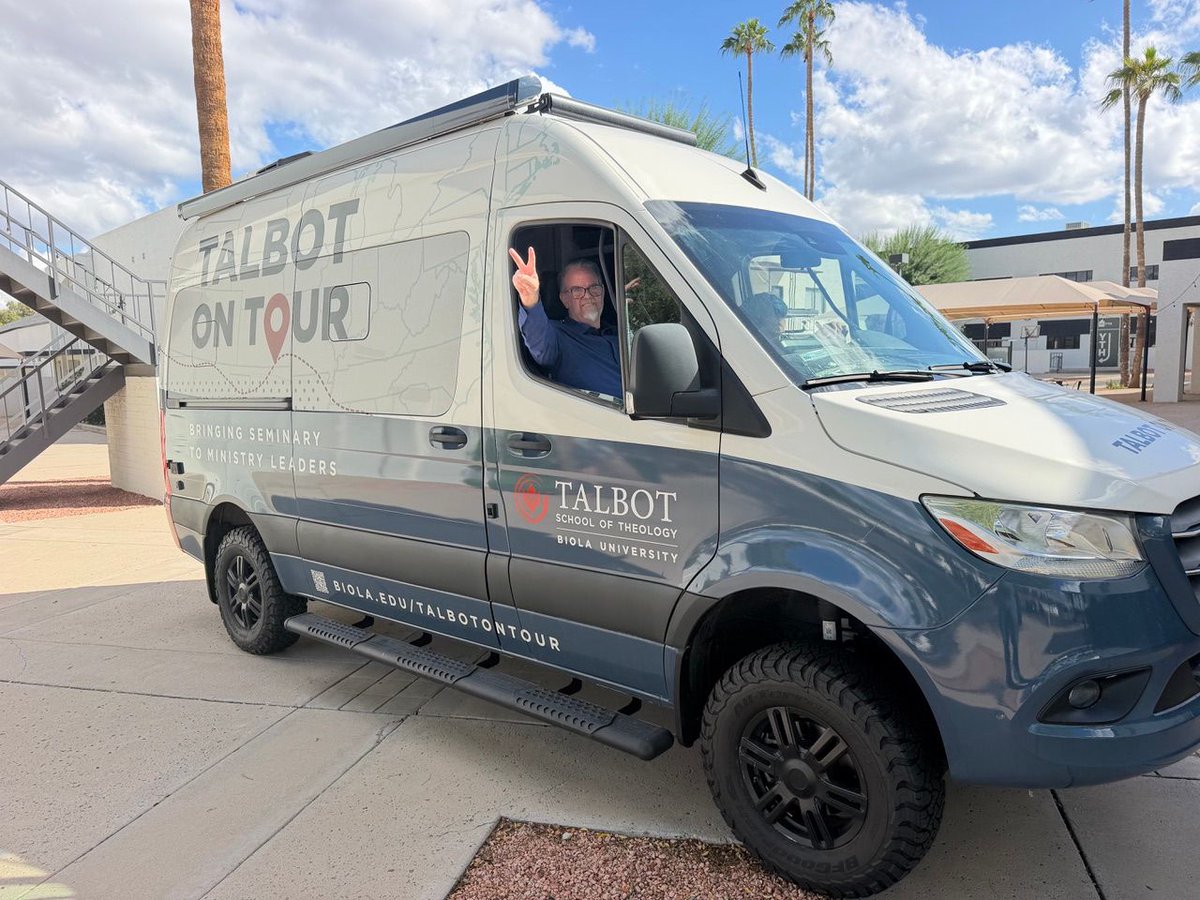
Here in Phoenix with our campus dean Matthew Bingham—and the Talbotron 3000.
Great day with pastors and leaders here.
Two more Phoenix events to go in the next few weeks as we're getting the word out about the Talbot School of Theology Phoenix campus.
Check out our Equipped Together events-- Thousand Oaks and Nashville next week!
https://www.biola[dot]edu/talbotontour (just put in the . in the right place!)
As I continue this series on suffering, today’s reading from the @Logos Bible reading plan is Isaiah 53:1–12.
It’s a passage many of us know well. We hear it at Easter. We recognize its descriptions of Jesus’ suffering. But reading it while walking through suffering yourself brings some of those words into sharper focus.
“A man of sorrows and acquainted with grief.”
Acquainted. There’s something deeply comforting about that word.
When I started this series, this was the passage I found hardest to engage. The others speak more directly to suffering in our lives. This one focuses on Jesus’ suffering.
But that’s essential: Jesus knows suffering firsthand. He experienced pain, rejection, humiliation, and grief. When we bring our suffering to him, we bring it to someone who understands.
Over these past few months, I’ve been reminded that understanding what is happening in your body and living with it are two different things. You can know the diagnosis, understand the recovery timeline, and still find yourself asking, “How long, Lord?”
I’m grateful we can bring that question to Jesus.
And I love coming back to Jesus, over and over.
Isaiah 53 takes us further, prophetically pointing to Jesus, who entered our suffering and bore our sins.
That is the heart of this passage. The innocent Servant suffers on behalf of the guilty. Our rebellion, our wandering, our iniquity—all of it is laid upon him. His suffering accomplishes our reconciliation with God.
That also means we should be careful about how we apply this passage to our own pain. My suffering does not atone for my sins. Jesus has already done that. The gospel rests on what Jesus has done.
So I don’t have to wonder whether enduring enough pain will somehow make me right with God. My hope rests in what Christ has accomplished.
And the healing promised here should never become a burden we place on someone whose body is still broken. Continuing pain is not evidence of insufficient faith. We pray for healing, pursue treatment, and trust God while we wait. Some of that waiting may last longer than we ever wanted.
For those of us walking through a long recovery, that matters. In my case, the suffering may last a year. We don’t know. Some of it could remain for the rest of my life. And for many people, suffering is a lifelong reality.
Like many of you, I’ve seen some of the most godly people endure tremendous suffering. Their faithfulness amid pain has encouraged me as we look together to Jesus.
Isaiah’s account of the Servant moves through suffering toward vindication. His sacrifice bears fruit. His suffering accomplishes God’s saving purpose.
Because of Jesus, we can look toward the day when redemption is fully realized, including the resurrection of our bodies. Until then, we may still hurt. We may still have questions. We may still need help getting through an ordinary day.
I know I do. And some of my questions remain unanswered. But I’m trusting Jesus anyway.
I’m praying for recovery. I’m praying for relief from neurological pain. And I’m learning to rest in the care of the Savior who is acquainted with grief.
He knows what suffering costs.
And he has given himself for us.
JP Pokluda told me what he thinks the enemy looks for in the church: “They're really looking for that inauthenticity. They're looking for double lives.”
Listen to the whole episode here: https://t.co/9ymYzJvhL6
John Dickson told me evangelism starts with conviction about who Christ is: "It seems to me the thing that inspires evangelistic activity and zeal is a fresh vision of Christ's majesty over all things." Join us as we talk about revival.
Listen here for more: https://t.co/9dOyxxjfA3