🤖New blog post🤖
AlphaFold 2 refines protein structures in an iterative, equivariant way. @FabianFuchsML and I wrote about the challenges of building an iterative, equivariant SE(3)-Transformer. Complete with code and a tech report!
https://t.co/L1waoO6ho8
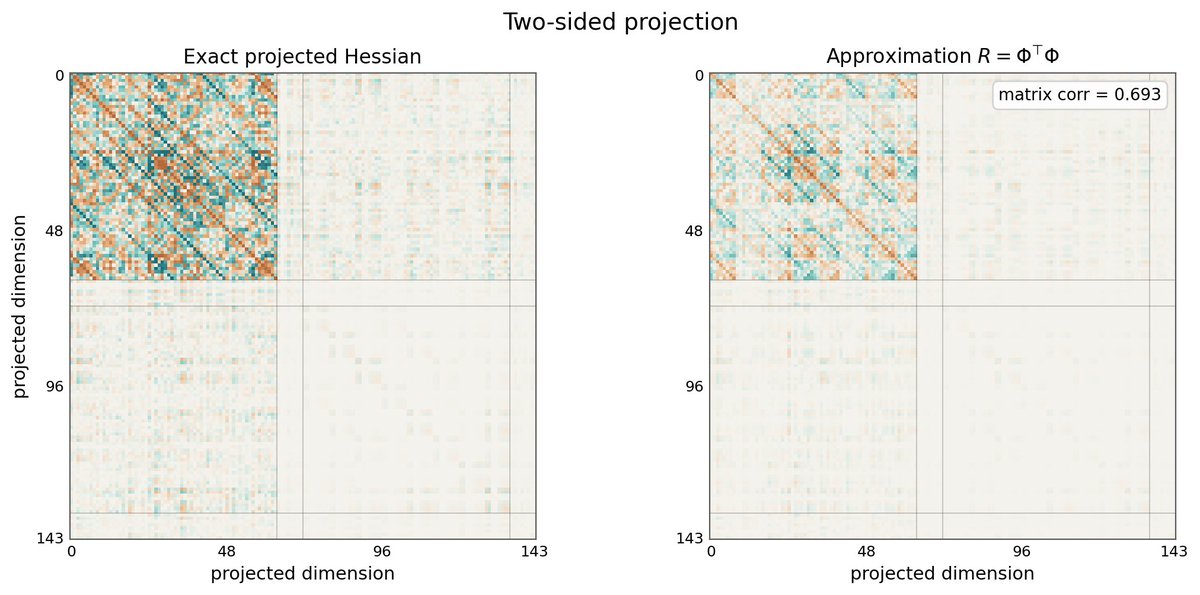
I wrote a blog post trying to understand TrackStar, a gradient-based method tracing LLM predictions to influential training examples.
Mostly: take the main equation, read it from right to left, and poke at the pieces with a small MNIST toy example. 🙂
☕️ https://t.co/JCWblqh956
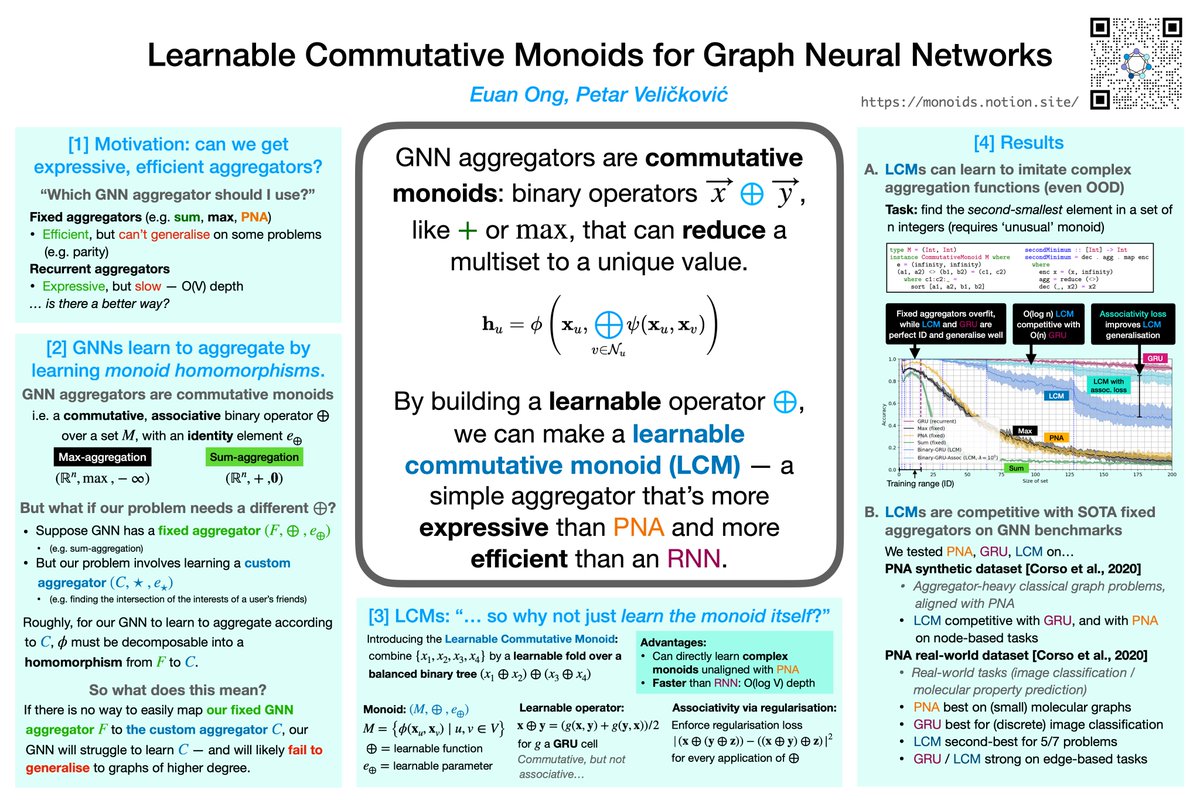
🕸️ In "Learnable Commutative Monoids for Graph Neural Networks", Euan Ong and I show how to build potent, learnable and aligned aggregators for GNNs, building on the success of PNA (@GabriCorso@dom_beaini) and set aggregation (@EdWagstaff@FabianFuchsML@martinengelcke).
BayesOpt is great for exploring the unknown, but it's hard to know when you're accurately predicting new inputs. Two big reasons it's hard --- faulty assumptions and covariate shift. Our new preprint shows conformal prediction can improve coverage!
https://t.co/kilh2hW9Jj
1/7
I've seen plenty of people flatly dismissing these sorts of concerns as "sci-fi", but no substantive arguments that they shouldn't be taken seriously. That's partly because I don't really know where to look for such arguments. Are there any?
It is w pride (and a tear in my eye) that after 6 months of competitive assessment, negotiations & legal due diligence, I can announce that @esa has awarded a €1M contract to a program I am leading in consortium with @CompSciOxford@isp_uv_es@BrockmannCon,
project #OpenSR
I'm hiring for Research Scientist and Research Engineer roles on the Alignment team at DeepMind! Come talk to me at the EA Global London career fair (4-8 pm Friday 15 April), or DM / email me and I can let you know when the job ad officially goes up.
Graph neural networks often have to globally aggregate over all nodes. How we do this can have a significant impact on performance 🎯. After we recently finished a project on this, I wrote a blog post on this topic. Let me know what you think! :)
➡️https://t.co/OGJJAF9w9C ☕️
Sign up to join discussions on some very interesting topics!
To name a couple:
- “I wish I knew … at the start of my research career”
- “Is deep learning the master algorithm?”
This event is hosted as part of the social program at #NeurIPS2021 😎😎
Suppose you want to generate a random binary byte by tossing coins. You can either toss 8 coins once, or toss one coin 8 times. Why do we expect the same distribution both times?