1️⃣The Drag Slap (Bunt)
A moving bunt. She is already out of the box, pushing or dragging the ball, usually toward the right side, and running through contact toward first. The contact itself is soft. The bat mostly stops at contact instead of swinging through, so the ball dies.
Teaching it:
➡️ Show the bunt late. An early show lets the corners crash before she moves.
➡️ Softer contact. Push, don’t chop. The bat mostly stops at contact so the ball stays dead, not driven.
➡️ Top hand guides, bottom hand controls. Contact out in front, aimed at a hole.
➡️ The play is won with the first two steps, not the bunt itself.
Why use it?
➡️ Forces the infielders to charge. A dead ball will not come to them.
➡️ Immediate pressure on the corners and the pitcher.
➡️ Takes advantage of her speed. Elite runners get the best chance to beat it out, with almost no swing risk.
Best spots:
➡️pitcher slow to field, corners playing back, a hole between first and second.
➡️Firm dirt helps it get past the mound. Soft, wet dirt can kill it in front of the plate, and then the catcher to is in the play.
Part 1 of the Types of Slaps series.
Catching Drill: JoyPlus Knee Drives
Here’s a simple catcher drill I like for teaching the pop and knee drive on a throw-down without losing posture.
The athlete starts in the squat with the aqua bag at the chest, drives the back knee, and sticks the front side. Same pattern we want behind the plate, just without the ball. A med ball stays put. The water doesn’t. Every rep the load shifts, so the trunk has to stay organized or the bag pulls her off line.
Why I Like It In The Warmup:
➡️ Core has to organize before the knee even moves.
➡️ Instant feedback if posture breaks.
➡️ Fill it light for younger catchers, heavier for older ones.
➡️ High-rep friendly. No steel ball bouncing off the shins.
Key Focus Points:
➡️ Quiet trunk, violent knee. Chest and belt buckle stay facing the target.
➡️ Don’t open early. If the hips spin with the bag, the rep is sloppy.
➡️ Don’t dump forward. A broken posture turns the drive into a lunge.
➡️ Let the water punish the leak. If it yanks her off line, she feels it immediately.
Just THREE days before our 6-year anniversary of working together, Ally hit a HUGE new PR of 58 MPH!! 🥹🔥
Freshly 13 years old and already bringing the heat! 💪🏼 Sooo incredibly proud of you baby Ally! The best is yet to come!!!
Types of Slaps!🙌
Slappers are the queens of chaos. They have more than one way to put the ball in play while they’re already exploding toward first. Drag. Soft. Chop. Punch. Power. And yes, great slappers can hit away with power too.
1️⃣ Drag: a moving bunt, pushed past the pitcher while you’re already running.
2️⃣Soft: a light slap for a slow roller or lazy bounce in front of the plate.
3️⃣Chop: an aggressive downward attack on the top of the ball for a sharp, high, erratic hop.
4️⃣ Punch: a compact, choked-up punch with almost no follow-through. Placement over pace.
5️⃣Power: body rotation through the box to drive a harder grounder or line drive.
When the slappers have these, the defense never gets to sit. They stay guessing, charging, and out of position.
Individual breakdowns on the drag, soft, chop, punch and power coming. 😍
Fielding Drill: Middle, Forehand, Backhands 💪
Here’s a warm-up variation I like for infielders. It works the fundamentals and keeps the feet moving the whole time.
Start in an athletic ready position and work a middle ball, then a forehand, then a backhand. The pattern repeats. There’s no pause to reset and no time to overthink the next ball. If the feet stop, the hands get late. If the glove path gets lazy, the ball is already gone.
That’s why I like it. It keeps the athlete on her toes and leaves very little room for error or extra thoughts. Eyes, glove, and feet have to stay connected on every rep.
Key Focus Points:
➡️ Stay low and athletic. Don’t stand up between balls.
➡️ Feet never stop. Small, quick adjustments, not a full reset.
➡️ Glove out in front. Middle, forehand, and backhand all get a clean path.
➡️ Soft hands. Field it, don’t stab it.
➡️ Eyes on the ball through the catch, then right back to ready.
finally hitting with @CoachTinaSB after a long break at @ElineSoftball . hitting 62.5 and 60.9 exit velocity, 20 and 23 launch angle, and 150 and 157 distance!
Hitting Drill: Drop Toss ⚡
Here’s a simple timing drill I like for teaching hitters to stay short and quick to the ball without losing their mechanics.
The ball is dropped from above, so it falls straight into the zone. There is almost no horizontal speed. If you’re even a little early or a little late, it’s a miss-hit. If the swing gets long, same result.
That tight window is the point. It forces a compact path, a clean decision to go, and an explosive move through the ball while the body stays connected.
Key Focus Points:
➡️ Stay short to the ball. Hands work inside, not around.
➡️ Be quick without rushing. Load, decide, then go.
➡️ Keep good mechanics. Connection, posture, and finish still matter.
➡️ Let the drop punish early, late, or long swings so the athlete feels the difference immediately.
➡️ Hit the ball out in front with a tight path, not a reach.
Progressions & Variations:
➡️ Start with a consistent drop height so the athlete can find the timing.
➡️ Mix slightly earlier or later drops once they can stay short.
➡️ Change locations (inside, middle, outside) after the path is compact.
➡️ Add a constraint if they get long, like a tee or noodle just outside the path.
➡️ Finish a set by going back to regular front toss and keeping the same short, quick feel.
This one doesn’t leave much room to cheat. Short and quick with clean mechanics gets you the good barrel. Anything else shows up right away.
This weekend we played 18U at the USSSA Fall Bling. Had a really good bracket day.
Felt really proud of the fact that over the whole weekend I had 2 people attempt to steal on me, and laid out for a wild pitch to get back to a tag at the plate
.333 BA
Fielding Drill: Pitching Machine Middle Infield Edition 💪
The pitching machine is one of the most underrated tools for fielding. Instead of only using it for hitting, I set it up so my second basemen and shortstops can work tags and transfers right around the bag.
We feed tags in the air, tags on the ground, and full tags with the throw so the athlete has to receive cleanly and turn it into a complete play. Everything stays tight and intentional.
This works on soft hands on both air and ground tags, clean footwork around the bag, quick transfers under pressure, body control when the feed isn’t perfect, and finishing the play with a strong throw.
Key Focus Points:
➡️ Stay athletic and get to the bag with purpose
➡️ Present a firm target and secure the ball cleanly
➡️ Keep your eyes on the ball through the transfer
➡️ Explode into the throw without drifting off the bag
Progressions & Variations:
➡️ Start with tags in the air for clean receives
➡️ Progress to tags on the ground
➡️ Add the full tag-and-throw so they finish the play
➡️ Mix speeds and angles so every rep forces a real adjustment
This is a simple way to get high-quality middle infield reps without needing a full diamond or extra players. Coaches can run it as a station during team practice while focusing on another group elsewhere on the field. Players get consistent, game-like work even in limited space.
Honored to be recognized by @ExtraInningSB
I’m grateful for the recognition but I know there is still so much work to do. I’m lucky to be surrounded by so many talented teammates who are just as deserving and who push me to get better every day.
Time to get after it and keep getting better!
#TheCooker #ClassOf2030 #KeepWorking #Grateful
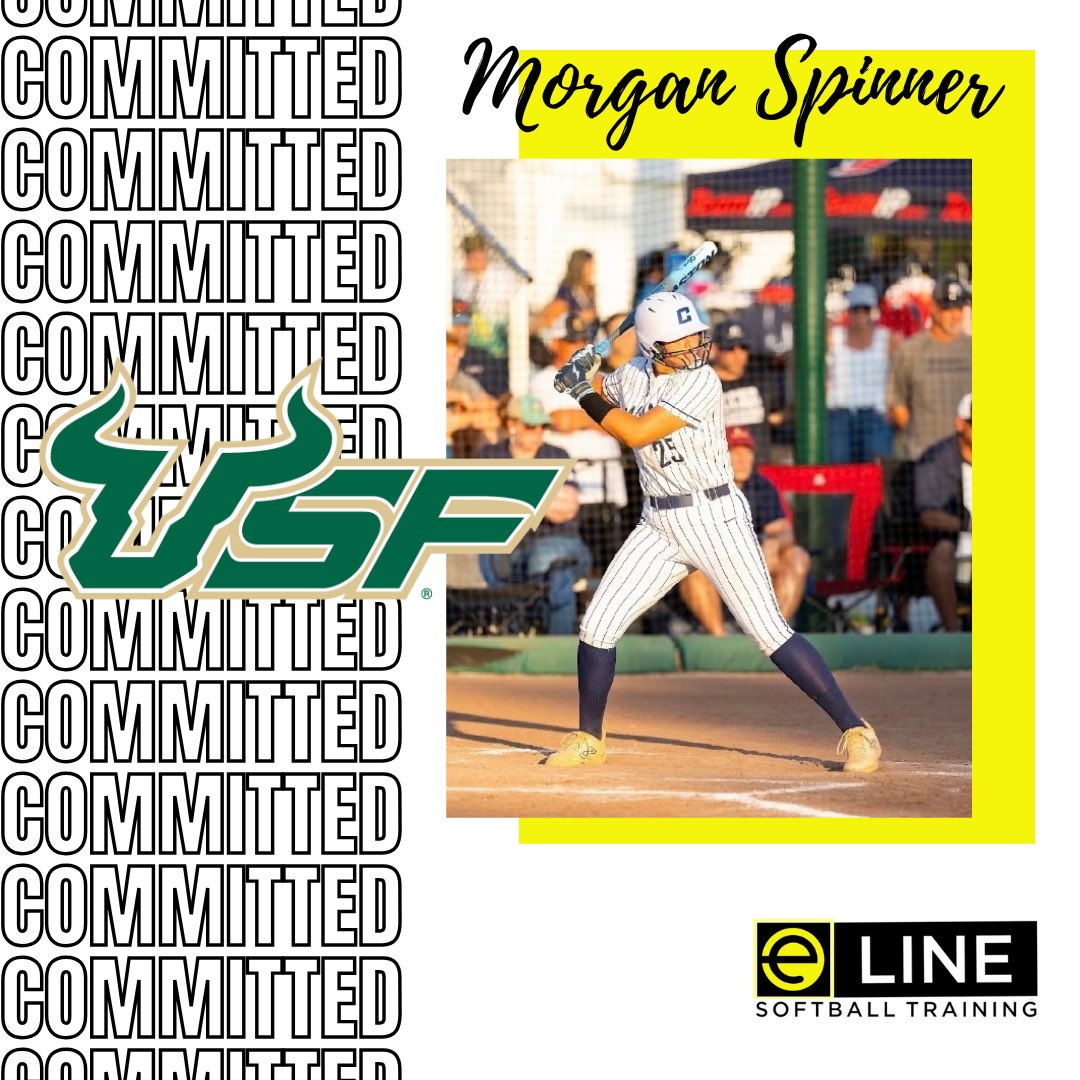
🚨 COMMITMENT ALERT 🚨
Congratulations to @Morganspinner22 on her commitment to continue her academic and softball career at the University of South Florida (USF)! 🤘
Morgan began training with E-Line when she was just 9 years old, and watching her growth over the years has been so special. We’re incredibly proud to have been a part of her journey and can’t wait to cheer her on as a Bull! 💚💛
Fielding Drill: Pitching Machine First Base Edition 💪
Here’s how I use it with my first basemen to work things that often get skipped in regular practice.
We set it up to feed tags, digs, short hops, extension plays, and wild throws. You can also dial in throws that are up and over the head so the athlete has to jump and still make the play.
This works on clean picks and soft hands on short hops, full extension to both sides without drifting off the bag, footwork and body control when the throw is offline, timing and confidence on high throws that require a jump, and staying athletic and balanced through every type of feed.
Key Focus Points:
➡️ Get to the bag early and present a strong target
➡️ Keep your eyes and glove out in front on digs and short hops
➡️ Stretch fully and keep your foot on the bag
➡️ Stay under control even on wild or high throws
Progressions & Variations:
➡️ Start with straight tags and digs
➡️ Add short hops and extension to both sides
➡️ Mix in wild throws and high balls that force a jump
➡️ Vary the speed and angle so every rep feels different
You can get a ton of quality first base work done in a small space with the machine. It’s not just for live hitting!
#TalonsRed 18U had an incredible day at the USF Team Camp today! Huge thank you to the amazing @USFSoftball coaches and staff for hosting us and dropping so much knowledge. 🤘
Catching Drill: Pitching Machine Tags Edition 💪
I’ve been getting creative with the pitching machine during lessons, and this is one of the ways I love using it for catchers that a lot of coaches overlook.
Instead of just feeding straight throws, we turn the machine into a tags station. You can work tags in the air, tags off the bounce, tags from the wrong side, extension plays, and wild throws all in a tight space.
This setup works on soft hands and glove control on different trajectories, body positioning and footwork when the ball isn’t coming straight at you, reacting to tough angles and bounces without losing balance, extending fully and recovering quickly on wild throws, and game-like decision making in a controlled, repeatable environment.
Key Focus Points:
➡️ Stay athletic and ready so you can adjust to the bounce or angle
➡️ Present a firm target and finish the tag cleanly
➡️ Keep your eyes on the ball all the way through the play
➡️ Recover fast and get back to a strong ready position
Progressions & Variations:
➡️ Start with tags in the air for clean receives
➡️ Progress to tags off the bounce and from the wrong side
➡️ Add extension plays and wild throws that force bigger movements
➡️ Mix locations so the athlete has to read and react every rep
The machine lets you get high-quality, game-like reps without needing a full field or a second thrower.🔥
Fielding Drill: Diving Progression
Diving can be a skill problem. It can also be a mental block.
I like this one for all ages because it takes the fear out first. We don’t wait for a game ball to teach kids how to leave their feet. We build it in practice so going to the ground doesn’t feel like a free fall.
Start on the knees, then add a couple steps, then go all out. Forehands and backhands the whole way. The pad is there so they can be aggressive without worrying about the landing.
Key Focus Points:
➡️ Glove first. The body follows the mitt, not the other way around.
➡️ Forehands AND backhands. Don’t only train the pretty side.
➡️ Land on your side/hip. Chin turned. Don’t dive onto your face or throwing shoulder.
➡️ Eyes stay on the ball through the catch.
➡️ If they freeze, go back a step. That’s the whole point of a progression.
Progressions:
➡️ Knees on the pad — short toss, both sides
➡️ A couple steps away — still on the pad
➡️ Longer distance — go get it
➡️ Tennis balls or softer balls first with younger athletes
➡️ Add a throw after they get comfortable landing
Do this on purpose. Don’t hope they figure it out when it matters. Shout out to @Harper_Radcliff putting in the work 😤
This isn’t just a leaderboard. It’s proof of the work happening when nobody’s watching. Proud of these E-Line athletes for putting numbers on the board over the last 3 months. Exit velo doesn’t jump by accident.
This isn’t just a leaderboard. It’s proof of the work happening when nobody’s watching. Proud of these E-Line athletes for putting numbers on the board over the last 3 months. Exit velo doesn’t jump by accident.
We have some athletes putting in work this week! Between high school fall ball starting, joining new travel teams, and staying on top of their maintenance — our girls are READY.😤💪🏼