Introducing: Prediction Market Atlas
What most people see in prediction markets is only the surface.
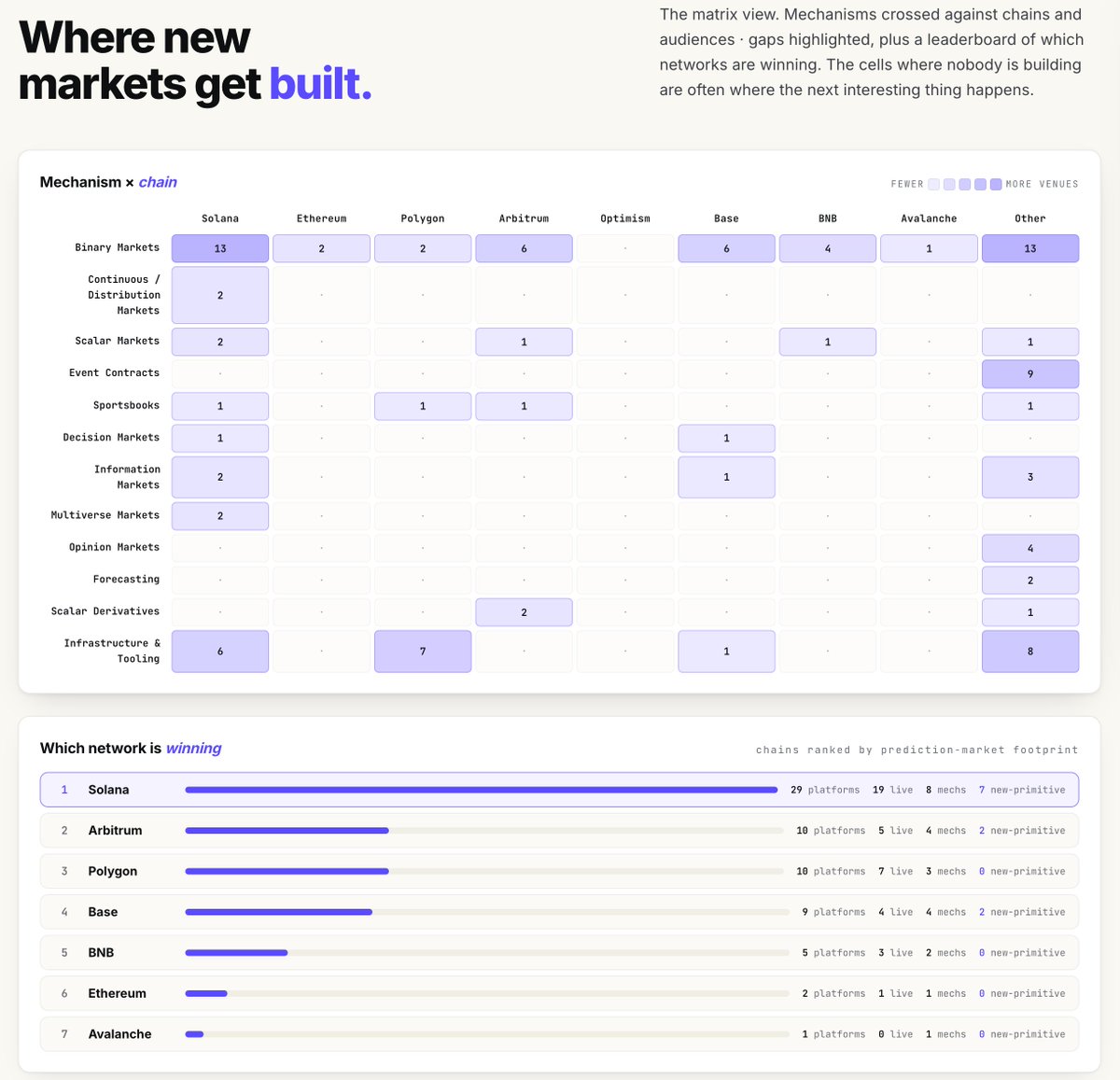
The categories now shipping include futarchy, distribution markets, multiverse markets, opinion markets, attention markets, decision markets, and info-finance.
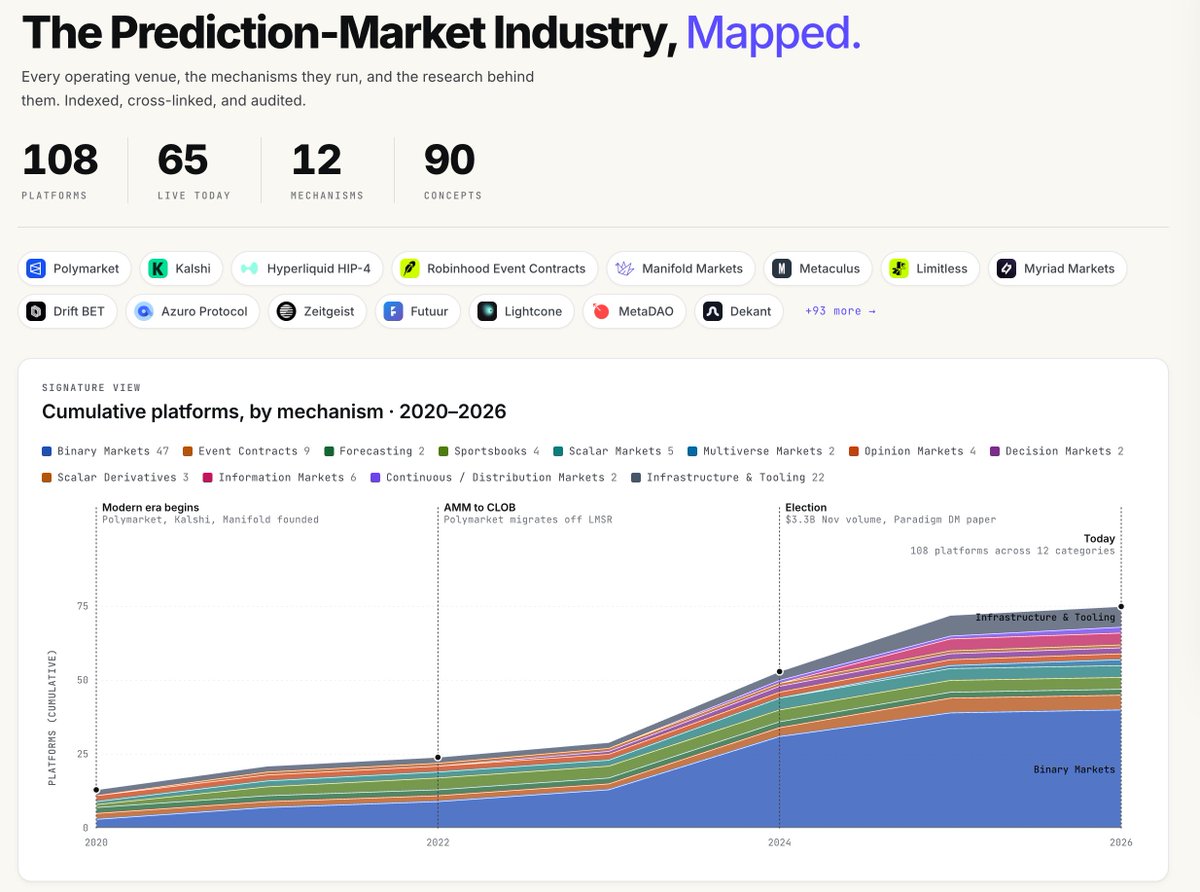
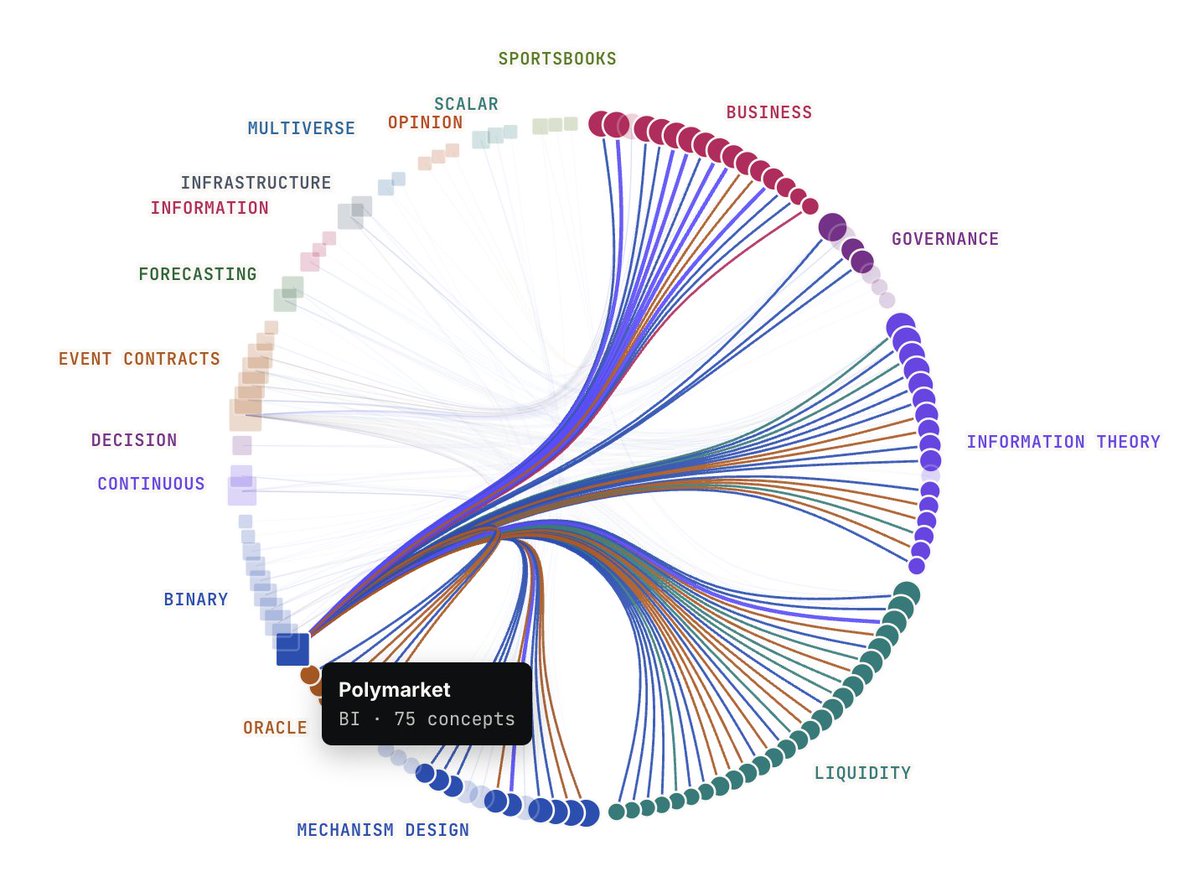
Each has its own pricing logic, regulatory lane, and audience. PM Atlas maps that landscape across 108 platforms, 12 mechanisms, and 90 concepts, from industry structure down to the actual products being built.
A way to track who is building what, how these markets differ, and where the next primitives are emerging.
https://t.co/wjx9TkbkbB
Prediction markets are no longer one mechanism, they’re becoming a design space.
over the next few weeks, I'll break down 7 prediction market primitives, one by one:
1. Binary Markets
2. Event Contracts
3. Scalar Markets
4. Decision Markets
5. Multiverse Markets
6. Information Markets
7. Continuous Markets
Each one exists because a different type of belief needs a different market structure.
Beliefs have different shapes, Markets should too!
btw yeah, I used an @arc tweet to say this.
but there’s only one place where this narrative is actually taking shape: @solana.
20+ teams already building new market primitives here.
Markets we’ve never had before
People are starting to see the bigger picture.
New market primitives aren’t just better prediction markets, they're new financial instruments.
New ways to express beliefs, price information, and build markets that couldn’t exist before.
One of the biggest narratives ahead.
That’s my bet.
@firstc0in on “trading mechanisms”, I think the PM industry is evolving toward completely new markets with UX and trading mechanisms we’ve never seen before.
Check the mechanisms section here, would love to nerd out on this with you:
https://t.co/4trUGOn7Jz
Introducing: Prediction Market Atlas
What most people see in prediction markets is only the surface.
The categories now shipping include futarchy, distribution markets, multiverse markets, opinion markets, attention markets, decision markets, and info-finance.
Each has its own pricing logic, regulatory lane, and audience. PM Atlas maps that landscape across 108 platforms, 12 mechanisms, and 90 concepts, from industry structure down to the actual products being built.
A way to track who is building what, how these markets differ, and where the next primitives are emerging.
https://t.co/wjx9TkbkbB
People are starting to see the bigger picture.
New market primitives aren’t just better prediction markets, they're new financial instruments.
New ways to express beliefs, price information, and build markets that couldn’t exist before.
One of the biggest narratives ahead.
That’s my bet.
Prediction markets become more powerful when they start functioning like real market infrastructure.
That requires predictable costs, credible settlement, multi-currency flexibility, and architecture that can support higher-trust financial and operational use cases.
Arc is built to support that evolution.
Prediction markets are no longer one mechanism, they’re becoming a design space.
over the next few weeks, I'll break down 7 prediction market primitives, one by one:
1. Binary Markets
2. Event Contracts
3. Scalar Markets
4. Decision Markets
5. Multiverse Markets
6. Information Markets
7. Continuous Markets
Each one exists because a different type of belief needs a different market structure.
Beliefs have different shapes, Markets should too!
No one predicts BTC like: “exactly $99k next month.”
You think: “maybe $90k-$110k, but most likely around $95k.”
That’s a range, a probability, and a curve.
Distribution markets turn that curve into a trade!