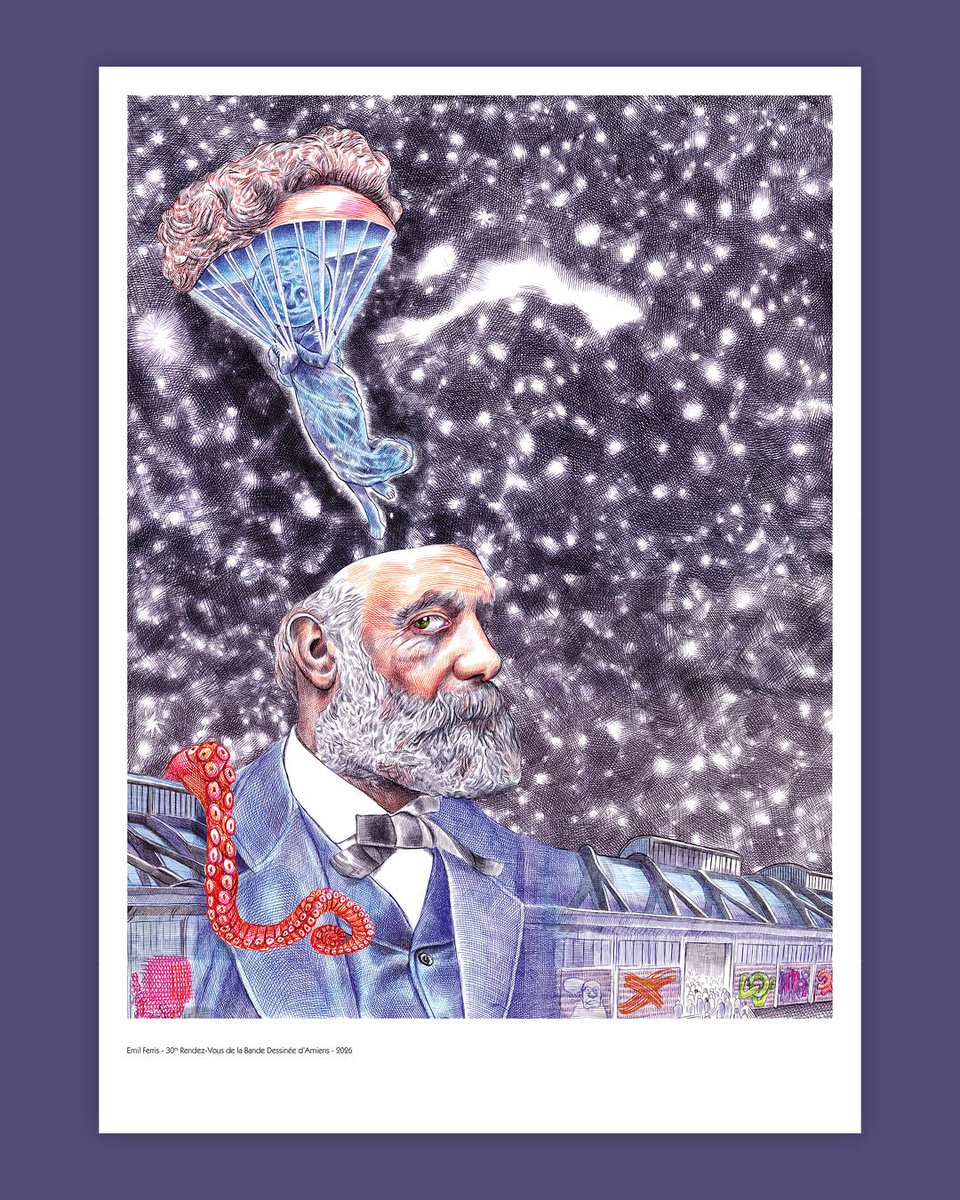
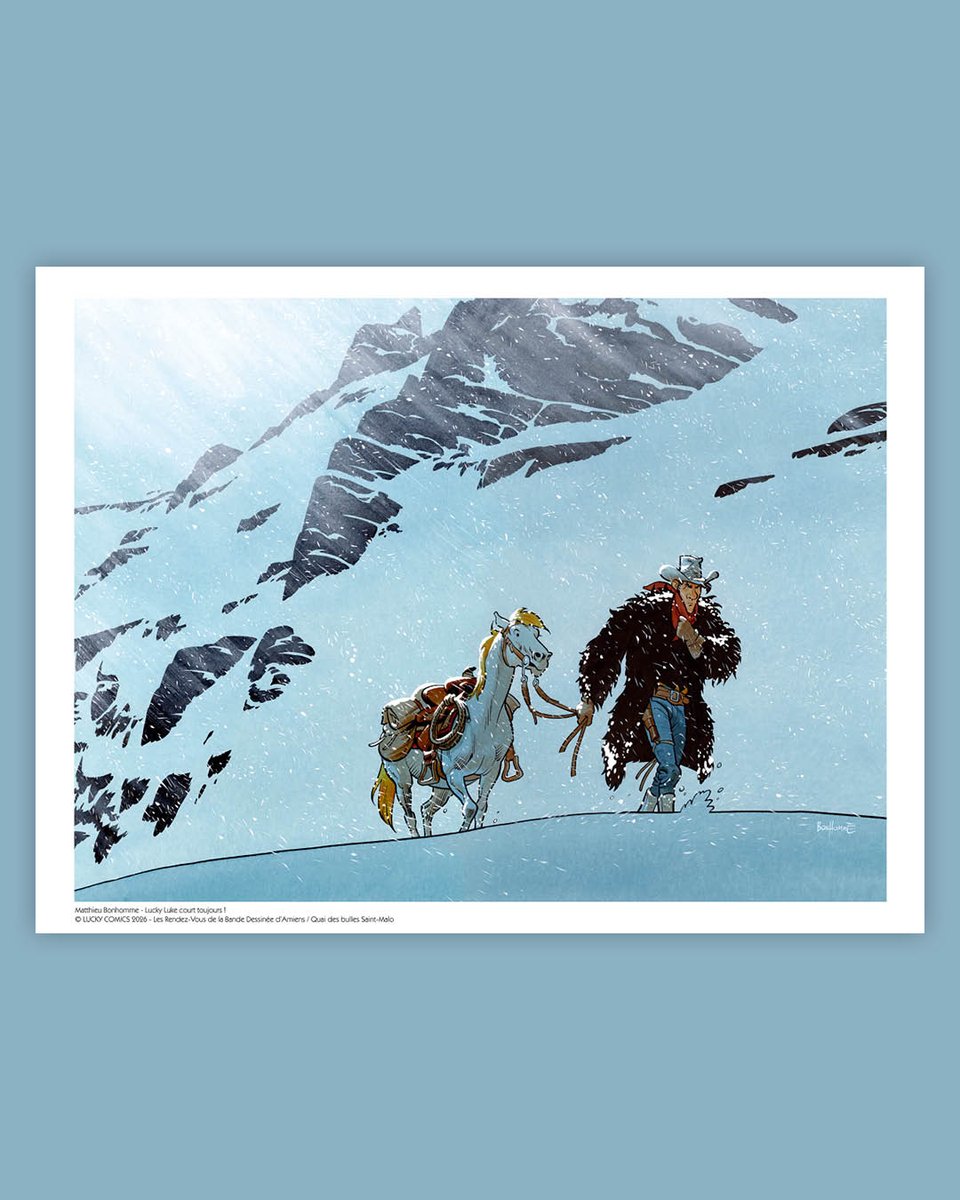
Qui dit nouvelle édition, dit nouvelles affiches luxes à retrouver en vente à l’accueil du festival !
1️⃣ Affiche des 30es RDVBD Amiens de Emil Ferris
2️⃣ Affiche de Hiro Mashima, tirée de l’univers Fairy Tail
3️⃣ Affiche de Pauline Pernette, tirée de l’univers Le Temps des Ombres
4️⃣ Affiche de Matthieu Bonhomme, tirée de l’univers Lucky Luke
@Emilferrisdraws@hiro_mashima
I just saw a Palestinian man holding the body of his 6-year-old daughter in Gaza, killed today by an Israeli strike on refugees in tents.
Without Palestinians on the ground and social media I wouldn’t have seen it, because mainstream Western media pretends it’s not happening.
BREAKING:
Israel is dropping bombs on residential buildings packed with families in Doueir, South Lebanon, in the middle of the night.
Not military bases.
Homes. Families. Civilians.
This is a massacre.
The moment Zionists massacred a team of rescue workers in a double tap.
First they killed a father and his daughter, then bombed a medical team that arrived on the scene with their ambulance
This handsome mans face reminds how beautiful are the souls of those who seek to rescue/heal others. The predator strata targets our nature of LOVE to make us see CARING as a vulnerable anomaly, but in truth it's the fabric of our being and is worthy of both grief and celebration
💢 BREAKING: A 10th paramedic was killed by Israel in Lebanon this week after an Israeli “double-tap” strike targeted first responders rushing to aid the wounded in Arabsalim on Sunday, according to Cradle Media’s reporter.
Jewish-American orthopedic surgeon Mark Perlmutter, who worked in Gaza, said Israeli soldiers took two Palestinian children, tied their hands behind their backs, and buried them alive at Nasser Hospital — their cries muffled by the dirt poured over them.
Some of you have forgotten that only three years ago you were perfectly capable of writing an essay, writing a eulogy, telling a bedtime story to a child, and it should worry you that powerful companies have convinced us we can’t do things we’ve been doing for 5,000 years.
Sorry, not sorry but there's a special 'hearing filter' that kicks in when I'm criticized for having too many books. Instead I process their words as, "you should be bland and thoughtless like me." (I make a slight concession to professional movers and friends who help me pack).
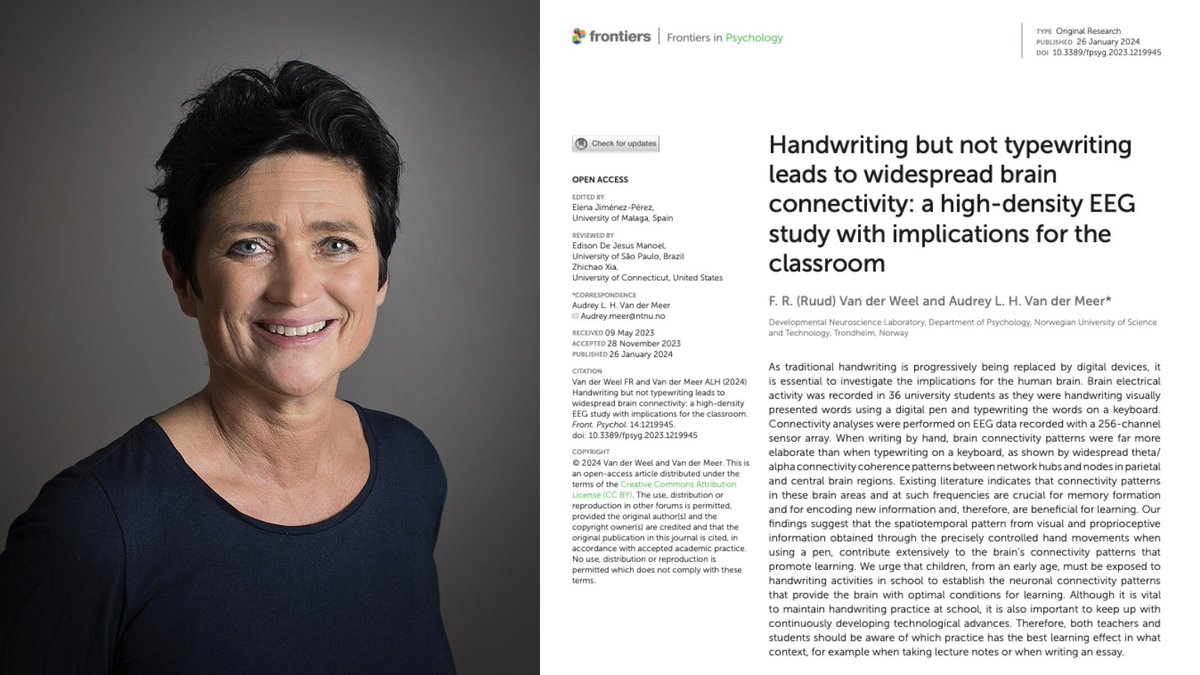
A Norwegian neuroscientist spent 20 years proving that the act of writing by hand changes the human brain in ways typing physically cannot, and almost nobody outside her field has read the paper.
Her name is Audrey van der Meer.
She runs a brain research lab in Trondheim, and the paper that closed the argument was published in 2024 in a journal called Frontiers in Psychology. The finding is brutal enough that it should have changed every classroom on Earth.
The experiment was simple. She recruited 36 university students and put each one in a cap with 256 sensors pressed against their scalp to record brain activity. Words flashed on a screen one at a time.
Sometimes the students wrote the word by hand on a touchscreen using a digital pen, and sometimes they typed the same word on a keyboard. Every neural response was recorded for the full five seconds the word stayed on screen.
Then her team looked at the part of the data most researchers had ignored for years, which is how different parts of the brain were communicating with each other during the task.
When the students wrote by hand, the brain lit up everywhere at once.
The regions responsible for memory, sensory integration, and the encoding of new information were all firing together in a coordinated pattern that spread across the entire cortex. The whole network was awake and connected.
When the same students typed the same word, that pattern collapsed almost completely.
Most of the brain went quiet, and the connections between regions that had been alive seconds earlier were nowhere to be found on the EEG.
Same word, same brain, same person, and two completely different neurological events.
The reason turned out to be something nobody had really paid attention to before her work. Writing by hand is not one motion but a sequence of thousands of tiny micro-movements coordinated with your eyes in real time, where each letter is a different shape that requires the brain to solve a slightly different spatial problem.
Your fingers, wrist, vision, and the parts of your brain that track position in space are all working together to produce one letter, then the next, then the next.
Typing throws all of that away. Every key on a keyboard requires the exact same finger motion regardless of which letter you are pressing, which means the brain has almost nothing to integrate and almost no problem to solve.
Van der Meer said it plainly in her interviews.
Pressing the same key with the same finger over and over does not stimulate the brain in any meaningful way, and she pointed out something that should scare every parent who handed their kid an iPad.
Children who learn to read and write on tablets often cannot tell letters like b and d apart, because they have never physically felt with their bodies what it takes to actually produce those letters on a page.
A decade before her, two researchers at Princeton ran the same fight using a completely different method and ended up at the same answer. Pam Mueller and Daniel Oppenheimer tested 327 students across three experiments, where half took notes on laptops with the internet disabled and half took notes by hand, before testing everyone on what they actually understood from the lectures they had watched.
The handwriting group won by a wide margin on every question that required real understanding rather than surface recall.
The reason was hiding in the transcripts of what the two groups had actually written down.
The laptop students typed almost word for word, capturing more total content but processing almost none of it as they went, while the handwriting students physically could not write fast enough to transcribe a lecture in real time, which forced them to listen carefully, decide what actually mattered, and put it in their own words on the page.
That single act of choosing what to keep was the learning itself, and the keyboard had quietly skipped the choosing and skipped the learning along with it.
Two studies. Two countries. Same answer.
Handwriting makes the brain work. Typing lets it coast.
Every note you have ever typed instead of written went into your brain through a thinner pipe. Every meeting, every book highlight, every idea you captured on your phone instead of on paper was processed at half depth.
You did not forget those things because your memory is bad. You forgot them because typing never woke the part of the brain that would have made them stick.
The fix is the thing your grandmother already knew.
Pick up a pen. Write the thing down. The slower road is the faster one.
💢 New: Five Palestinians Killed in Israeli Strikes Across Gaza
Five Palestinians were killed and others wounded Sunday in Israeli strikes across the Gaza Strip, according to Palestine Online, as Israeli forces continued the 220th consecutive day of ceasefire violations.
▪️Three were killed in an Israeli drone strike near Al-Aqsa Martyrs Hospital in Deir al-Balah in central Gaza: Ahmed Salem Abu Asad, Abdul Rahman Ahmed Muheisen, and Ibrahim Rayyan.
▪️In Khan Younis, a drone struck a group of Palestinians near the Rafah garage, killing Abdullah Ahmed Abu Mustafa and wounding several others.
▪️Israeli forces also shelled eastern and southern Khan Younis, the eastern areas of Al-Bureij camp in central Gaza, and fired heavily east of the Al-Tuffah neighborhood in northeast Gaza City.
▪️Israeli naval vessels fired toward the Gaza City coastline with no injuries reported.
Since the October 11 ceasefire took effect, 870 Palestinians have been killed and 2,543 wounded, according to Gaza’s Health Ministry, including three killed on Saturday.
Do you recognize this painting? Blue Monday is one of the most iconic works in Black American art, portraying a Black woman who is exhausted yet rises each Monday to return to work. Painted by Annie Lee, an artist who didn't start to pursue art until her 40s, the piece was inspired by her own all too familiar morning struggle.