New episode of #ModelsnMolecules is live!
Talip Uçar, founding member of Boltz, joins us to discuss the real competitive advantages in drug discovery: data, compute, and culture.
A smaller, more diverse dataset can outperform a billion data points on a single thing.
Talip Uçar on the data strategy behind Boltz, Ep 6 of Models & Molecules: https://t.co/XT44Sk7dcV
#ModelsnMolecules#MachineLearning
More compute means more experiments, faster iteration, and ultimately better models. For smaller, tech-first teams in drug discovery, it's becoming one of the ways to compete with larger, more established organizations.
🎙️ https://t.co/obSFNgXtG0
#ModelsnMolecules#AIinpharma
You can tell if an AI image is good in seconds. In drug discovery, that same feedback takes years, scattered across data, models & experiments.
In Episode 6 of #ModelsnMolecules we discuss why a unified data fabric remains the field's missing layer.
🎙️ https://t.co/nOADXrNydf
New episode of #ModelsnMolecules is live!
Talip Uçar, founding member of Boltz, joins us to discuss the real competitive advantages in drug discovery: data, compute, and culture.
It's tempting to judge AI in drug discovery by the molecules it produces: affinity, developability, humanness... But for R&D leaders, some of the most valuable questions come earlier: is the biology right? Can we generate tool molecules fast enough to find out?
#AIinpharma
Manual data processing annotation is slow, inconsistent, and shows up as quality problems once data hits an ML model.
Automating that layer improves data quality and lets scientists focus on what they do best: interpreting results, making decisions, driving discovery forward.
New modalities are showing up in every pipeline, but how good are these complex molecules actually going to be, and can we predict it?
In episode 5 of #ModelsnMolecules we discuss where AI is moving the needle in antibody discovery and the gaps holding the field back.
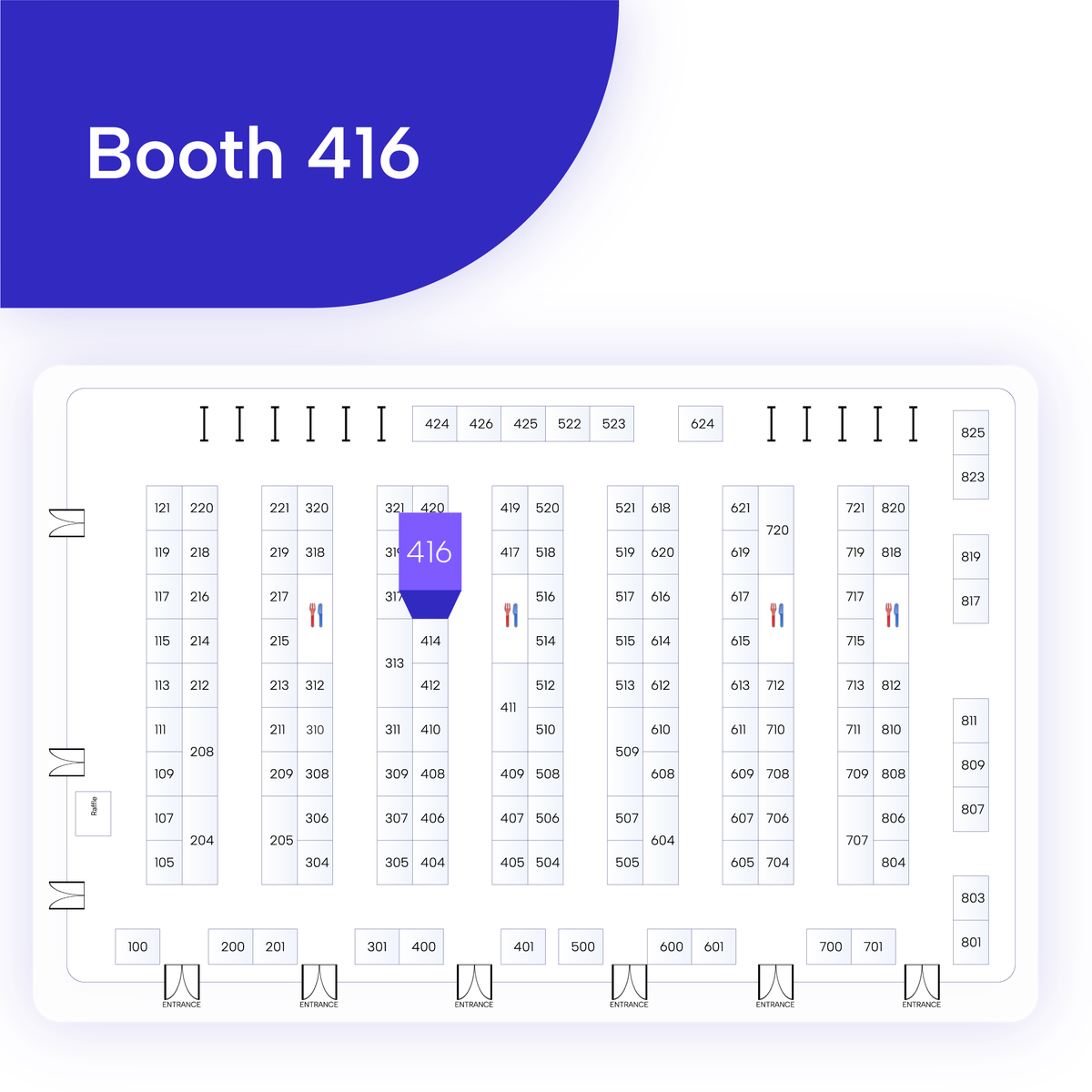
We're excited to be exhibiting at #BioITExpo this week.
📆 May 19 - 21 | 📍 Booth 416
Come chat with us about biologics discovery pipelines that connect your data, automate your workflows, and bring in the AI tools your team needs.
See you there!
Are bigger models really the answer for therapeutics, or are we missing the point?
Do Soon Kim challenges the prevailing belief that we can simply scale our way to better drugs, just as the tech world did with LLMs: https://t.co/cG3Lqnjczs #ModelsnMolecules#MachineLearning
To unlock AI's full potential in #drugdiscovery, the industry needs huge databases on failures.
In the race to develop life-saving therapeutics, pharma companies generate vast amounts of experimental data. But there is a critical blind spot: negative data https://t.co/RKAqIZuba4
Boston, we're on our way! ✈️ENPICOM is heading to #PEGSummit next week.
Stop by Booth 310 to meet our experts, see live demos of our platform, and chat about what it takes to operationalize AI in #biologics discovery: from custom analysis pipelines to agentic use cases.
Where will AI have the biggest impact on #biologics discovery over the next decade?
Nicola spoke with Cerlin Roberts about adoption, automation, and what's next for AI in biologics discovery.
Full conversation here: https://t.co/regGNWCG9n
📄 White paper | Agent-guided de novo design of nanobody binders against a novel cancer target: https://t.co/N2m8YIGAdY
🎙️ Models & Molecules ft. Jiwon Kim (AWS Life Sciences): https://t.co/j8Vrm9gXSo
AWS Life Sciences just published a white paper on agent-guided de novo design of nanobody binders against a novel cancer target.
This is a topic we explored with Jiwon Kim on Models & Molecules 🔗👇
Generative AI models can propose antibody sequences from antigen structure alone, but unless they deeply understand the predictive nature of the system, how far does that get you?
In Episode 5 of #ModelsnMolecules, we discuss why generative and predictive can't be separated.