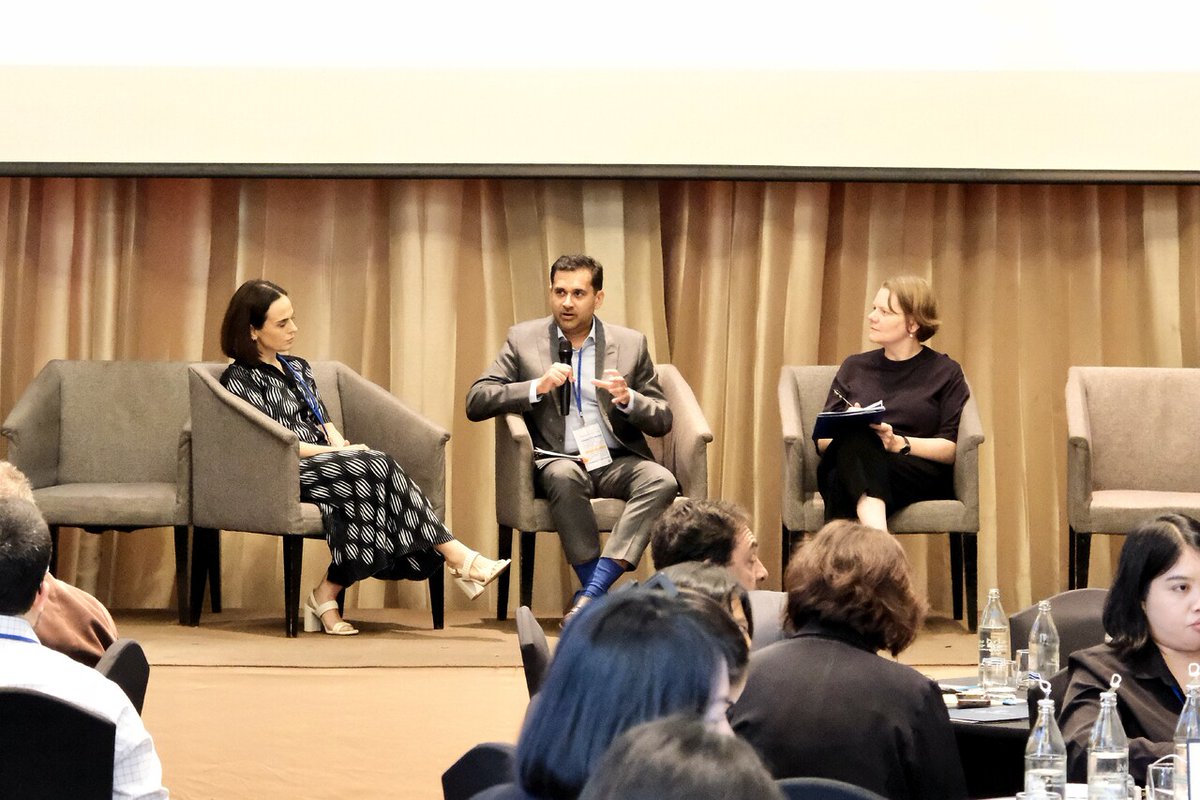
Equidem CEO Mustafa Qadri Calls for Worker-Centred Approach to Irregular Migration at Bali Process Workshop
At a Bali Process workshop on 'Addressing Irregular Migration: Perspectives and Lessons Learned from Regularisation Programmes’, Equidem Founder and CEO Mustafa Qadri spoke about why irregular migration cannot be understood or addressed only through an enforcement lens.
Drawing on Equidem’s work with migrant workers across major migration corridors, Mustafa highlighted three critical issues:
🔴 Irregularity is often produced by the migration and labour system itself.
Workers may set out to migrate through regular channels, but recruitment abuse, excessive fees or barriers to changing employers can push them into undocumented situations.
🔴 Irregular status can create conditions in which exploitation thrives.
Fear of detention, deportation or losing a livelihood can make it much harder for workers to challenge wage theft, unsafe conditions and other abuses.
🔴 Enforcement alone does not address the demand for migrant labour.
Many industries continue to depend heavily on migrant workers, while enforcement-focused responses can leave the underlying labour demand and exploitative practices untouched.
As Mustafa stressed, migrant workers should not be seen as peripheral to our economies — they sustain essential services and industries across countries.
What is needed is a more effective and humane approach that protects their rights and asks a more fundamental question: how do we shift power away from systems that profit from worker vulnerability and towards workers themselves?
What happens when private actors exercise powers once associated primarily with states?
On 2 October, Equidem Director Mustafa Qadri will speak at the London Conference on International Law 2026, joining the panel “Non-State Actors and International Law: Accounting for Plural Power.”
As corporations and digital labour platforms increasingly shape access to work, pay and working conditions across borders, often through contracts, data and algorithms, important questions arise about how international law responds to these forms of private power.
Drawing on Equidem’s work with workers across global supply chains and the platform economy, Mustafa will explore what this means for worker rights, collective agency, accountability and the enforcement of rights across borders and how international law can better respond to new forms of corporate power while protecting workers’ ability to organise and act collectively.
The discussion will bring together perspectives from international law, business, human rights and governance to ask a fundamental question: how should international law adapt when power is no longer exercised by states alone?
📍 QEII Centre, London
📅 Friday, 2 October 2026
🕑 14:15–15:45
Learn more and register: https://t.co/82zWJxilb5
#InternationalLaw #HumanRights #LabourRights #PlatformWork #WorkerRights #BusinessAndHumanRights #Equidem
On 26 August, a catastrophic flash flood triggered by a glacier collapse near the Nepal–Tibet border claimed hundreds of lives, left thousands missing, and devastated homes, livelihoods and essential infrastructure.
The floods have had an especially severe impact on communities already facing significant economic insecurity. Many of the communities Equidem works with have lost their homes, household possessions and essential assets, from beds and cooking utensils to the basic items on which everyday life depends.
Most are low-wage informal workers and families of Gulf migrant workers who were already struggling with debt, precarious employment and limited access to social protection when this disaster struck.
Equidem is raising funds to support affected workers and their families. We will provide direct financial assistance, as well as food and other essential items, to communities who are now facing an acute crisis.
We are asking our friends, partners and wider community to contribute where they can.
We will also share updates on how the funds raised are being distributed and the communities they are supporting.
If you are able to support this effort, please contribute here: https://t.co/weizJgEUSa
We would also be grateful if you could share this appeal through your networks.
⚽ As the World Cup moves through its most watched and high-stakes matchdays, global attention is fixed on the pitch -- on the goals, results, rivalries and moments that define the tournament.
But every matchday also depends on a vast workforce operating behind the spectacle.
From stadium operations, transport and security to cleaning, hospitality, logistics and venue maintenance, workers keep the World Cup moving. Many are exposed to long hours, outdoor work, intense physical labour and rising heat risks. ��️
Two weeks ago, Equidem launched the FIFA 2026 Heat Risk Observatory, developed in collaboration with students from the Tata Institute of Social Sciences, Mumbai.
The interactive dashboard maps heat stress risks across World Cup-linked venues in the United States, Canada and Mexico, helping make visible a serious and foreseeable occupational safety risk for the workers who make the tournament possible.
Public discussion on heat and football often focuses on players, fans and match schedules. Yet the labour behind the tournament remains far less visible.
As the world follows the drama of the World Cup, FIFA, host governments, contractors and sponsors must act to protect the people working behind the scenes.
Extreme heat is not only a climate issue. It is a labour rights issue, a health and safety issue, and an accountability issue. ✊🏾
So keep cheering for your favourite teams but also call on FIFA to stand with the workers whose labour makes every match possible. Workers deserve protection, remedy and dignity, on and off the pitch.
Explore the dashboard: https://t.co/FCR6FDRKmP
#FIFAWorldCup2026 #HeatStress #WorkerRights #LabourRights #ClimateJustice #OccupationalSafety #HumanRights #MigrantWorkers #FIFA #TISS #Equidem
⚖️ Rights are only meaningful when workers can access justice.
Last week, Equidem’s Kenya team, Martha Waithira and Geoffrey Stephen joined partners from government, civil society, legal practice, academia, survivor support services and labour migration organisations at the Pathways to Justice Workshop in Nairobi.
Convened by Global Justice Kenya, with support from the International Labour Organization, the workshop focused on strengthening practical tools to help Kenyan migrant workers access justice and remedies when their rights are violated.
Over two days, participants discussed:
✅ Access to justice and accountability
✅ Strategic litigation and documentation
✅ Gendered labour exploitation
✅ Survivor-centred support and reintegration
✅ Stronger coordination across institutions
✅ Building a Labour Migration Community of Practice
A central takeaway was : legal protections for migrant workers are meaningful only when they are matched by accessible, survivor-centred, and effective pathways to remedy.
This requires sustained coordination between state institutions, civil society, legal practitioners, trade unions, researchers, and survivor support organisations. It also calls for approaches that move beyond individual case responses toward corporate accountability and systemic reform.
Equidem congratulates Global Justice Kenya, the ILO and all participating institutions for creating this important platform for dialogue, learning and collective action.
#LabourMigration #AccessToJustice #MigrantWorkers #RightToRemedy #HumanRights #LabourRights #GenderJustice #DecentWork #MigrationGovernance #ILO #GlobalJusticeKenya #Kenya #Equidem
🚨 HAPPENING TODAY 🚨
The FIFA World Cup 2026 has already been marked by serious human rights concerns. But one of the biggest communities at risk is often the least visible: the people working to make the tournament possible.
Equidem’s new report, 'Playing Workers’ Lives', examines heat stress risks and wider labour rights concerns linked to World Cup stadium construction across the United States, Canada and Mexico.
Accompanied by an interactive dashboard developed in collaboration with students from the Tata Institute of Social Sciences, Mumbai, the report maps heat exposure risks across World Cup stadium sites.
JOIN US TODAY for the launch discussion on what FIFA, host governments, contractors, sponsors and other stakeholders must do NOW to protect workers. ⚽✊🏽
📅 23 June 2026
🕘 9 AM EST / 2 PM BST / 7:30 PM IST
📍 Zoom: https://t.co/PIX2QmJHOq
This Tuesday June 23rd at 9am US EST / 2pm UK time / 11pm Australian EST, join @EquidemOrg for the launch of a major new report on human rights risks facing workers linked to FIFA World Cup 2026 across the United States, Canada and Mexico. https://t.co/1ufcThDpt8
📍 Day 1 of the International Labour Conference discussion on platform work is complete.
We are on the ground in Geneva and sharing key reflections for those following the negotiations from around the world.
✅ There is clear appetite among many governments for an international standard that protects workers in the platform economy.
⚠️ At the same time, several governments stressed that worker protections should not come at the cost of “innovation” and “flexibility”, a reminder that the terms of this debate are still being contested.
🌍 We heard very few governments speak explicitly about migrant workers, even though migrant workers are deeply embedded in the platform economy across countries.
🔗 The role of intermediaries also received limited attention, despite being central to how many workers experience platform-mediated work in practice.
✊ We are encouraged to stand with the Workers’ Group, which has been clear: when we speak about platform workers, we must mean all workers.
As discussions continue, we hope to see more governments engage with the realities of platform work in all their complexity.
Any future standard must reflect the realities of migration, subcontracting, intermediaries, and cross-border accountability, so that all workers, wherever they are, are meaningfully protected.
On to Day 2. 🚲📱
#ILC2026 #PlatformWork #DecentWork #WorkersRights #PlatformWorkers #gigworkers #FutureOfWork #labour #labourrights #WorkerVoice #ILO #gigworkersrising
🗣️ “The 2026 ITUC Global Rights Index reveals a deepening global crisis for workers' rights. This is not accidental — it’s the billionaire coup against democracy to strip away rights, silence workers, and rig economies for the powerful few. The fight for workers’ rights is the #FightForDemocracy, for dignity at work, and for a fair future.” @luc_triangle ITUC General Secretary
🔗 Learn more about #RightsIndex26: https://t.co/QzxGdqxDdR
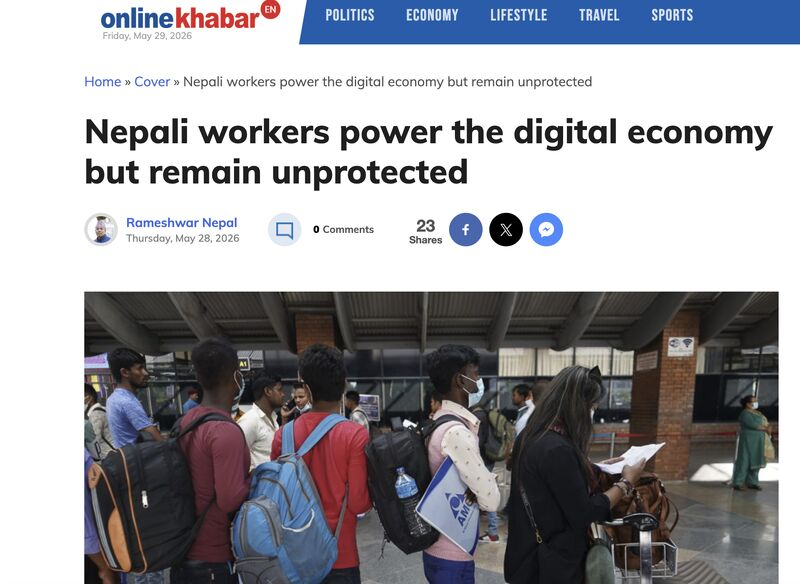
As the International Labour Conference prepares to begin negotiations this week on a proposed international labour standard on platform work, @EquidemOrg's @r_nepal writes on why the voices of migrant workers must be at the centre of the debate. Read here: https://t.co/stC9yyc2oN
As the International Labour Conference prepares to begin negotiations next week on a proposed international labour standard on platform work, Rameshwar Nepal from Equidem writes on why the voices of migrant workers must be at the centre of the debate.
Across South Asia, millions of workers migrate for work, including to the Gulf, where they are increasingly part of the digital and platform economy.
But their working conditions are often shaped not only by platforms, but also by:
🔹 recruitment agents
🔹 subcontractors
🔹 migration systems
🔹 weak cross-border accountability for employers
This is why governments in South Asia, as countries of origin, have an important role to play in the ILC negotiations, he argues. They must help ensure that any future standard on platform work addresses the realities of migrant workers, including third-party control, recruitment debt, and the cross-border accountability of platform companies.
The platform economy cannot be allowed to deepen the invisibility of migrant workers. The ILC negotiations are an important opportunity to ensure that migrant workers’ rights are not left behind.
Read Rameshwar’s piece here: https://t.co/EYshUMzLFA
#PlatformWork #ILC2026 #MigrantWorkers #DecentWork #LabourRights #DigitalEconomy #Equidem
Extreme heat is no longer a future risk for workers. It is already shaping the everyday reality of work.
This @guardian story captures what millions of workers across Asia are experiencing: long hours in dangerous temperatures, exhaustion, lost wages, poor sleep, and the inability to recover before the next workday begins.
For delivery riders, street vendors, construction workers, garment workers, and other informal and low-wage workers, heat is not just a climate issue. It is an occupational safety and health crisis, an income crisis, and a crisis created by the lack of corporate accountability.
Heat does not become dangerous on its own. It becomes dangerous because of the conditions in which workers are forced to work.
Governments, companies, and employers across sectors must address this urgently. There is no more time to wait. We need immediate protections for workers already facing dangerous heat, and long-term solutions that put worker health, income, and dignity at the centre of climate response and just transition.
To read Equidem’s recommendations on addressing the climate crisis in workplaces and protecting workers from extreme heat, read here: https://t.co/rOTEoLg2cS
https://t.co/NJsf8YVLiQ
A recent article published by MRRORS raises deeply concerning allegations of arbitrary detention, religious profiling, torture, and deportation of Pakistani migrant workers in UAE amid escalating regional tensions.
It is deeply disturbing to see low-wage migrant workers — many of whom have spent years building homes, businesses, and entire cities in the Gulf — being deported in such a discriminatory and dehumanising manner, without recognition of their dignity, humanity, or their immense contributions to the region’s economies and societies.
At a time of growing geopolitical instability, migrant workers must not become targets of collective punishment, surveillance, or discrimination based on religious identity, migrant status, or nationality.
The allegations outlined in this investigation demand immediate attention. Governments, international institutions, and human rights bodies must urgently ensure that migrant workers are protected from arbitrary detention, abuse, and discriminatory deportation practices, and that due process and fundamental human rights are upheld for all.
https://t.co/8mSnd9cqT7
📢 This new report from @hrw “Algorithms of Exploitation,” documents the experiences of platform workers across India, Kenya, Kuwait, Lebanon, Mexico, Pakistan, Saudi Arabia, the UAE, and the United Kingdom.
The report once again highlights deeply concerning patterns emerging across platform economies: low and unpredictable pay, opaque algorithmic management, unpaid waiting time, unsafe working conditions, arbitrary suspensions and deactivations, and limited access to social protection.
As governments, employers, and worker representatives prepare to negotiate international standards on platform work at the International Labour Organization (ILO) this June, this research is yet another important reminder of the urgent need for stronger protections and greater corporate accountability in the platform economy.
📄 Don’t miss this important report
https://t.co/SqIREcTB2a
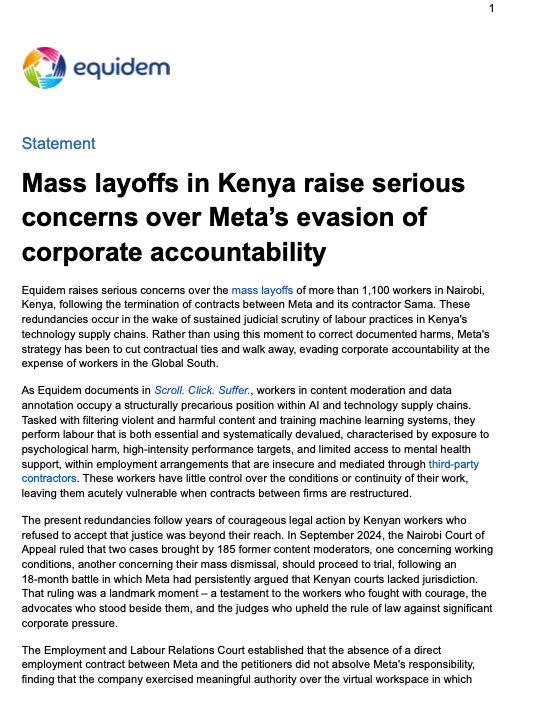
Equidem raises serious concerns over Meta’s evasion of corporate accountability in Kenya
Over 1,100 workers in Nairobi have been laid off following Meta’s decision to cut ties with its contractor, Sama, raising serious concerns about corporate accountability in global AI supply chains.
These layoffs come at a critical moment, after Kenyan courts ruled that cases brought by content moderators against Meta could proceed to trial — a landmark step toward justice. Instead of engaging with these findings, Meta has exited, leaving workers to bear the cost.
We’ve seen this pattern repeatedly: when workers in the Global South organise against Global North–based multinationals, companies restructure, exit, or shift jurisdictions to avoid accountability. The speed and scale of Meta’s response, combined with the growing structural power of AI companies, makes this moment particularly significant.
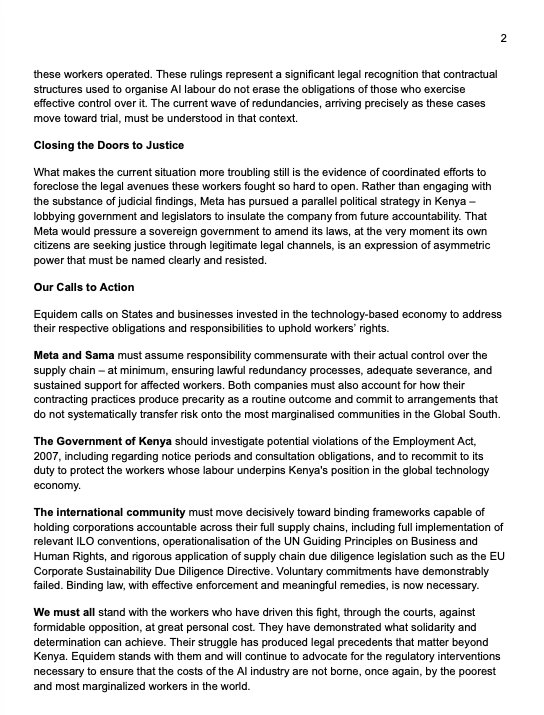
Equidem calls on:
🔴 Meta and Sama to ensure that all redundancies are carried out in full compliance with Kenyan labour law, including proper notice, consultation, and adequate severance. Both companies must also take responsibility for the working conditions and harms experienced by content moderators, and commit to supply chain arrangements that do not systematically transfer risk onto workers.
🔴 The Government of Kenya to urgently investigate potential violations and to uphold its duty to protect workers whose labour underpins the country’s role in the global technology economy.
🔴 The international community to stand with these workers and their advocates who have fought alongside them against immense odds at this critical moment, and to move toward binding frameworks that ensure corporate accountability for lead firms across global supply chains.
The workers who brought these cases have shown extraordinary courage.
Our solidarity is with them.
Read full statement : https://t.co/ONHHzpb9VU
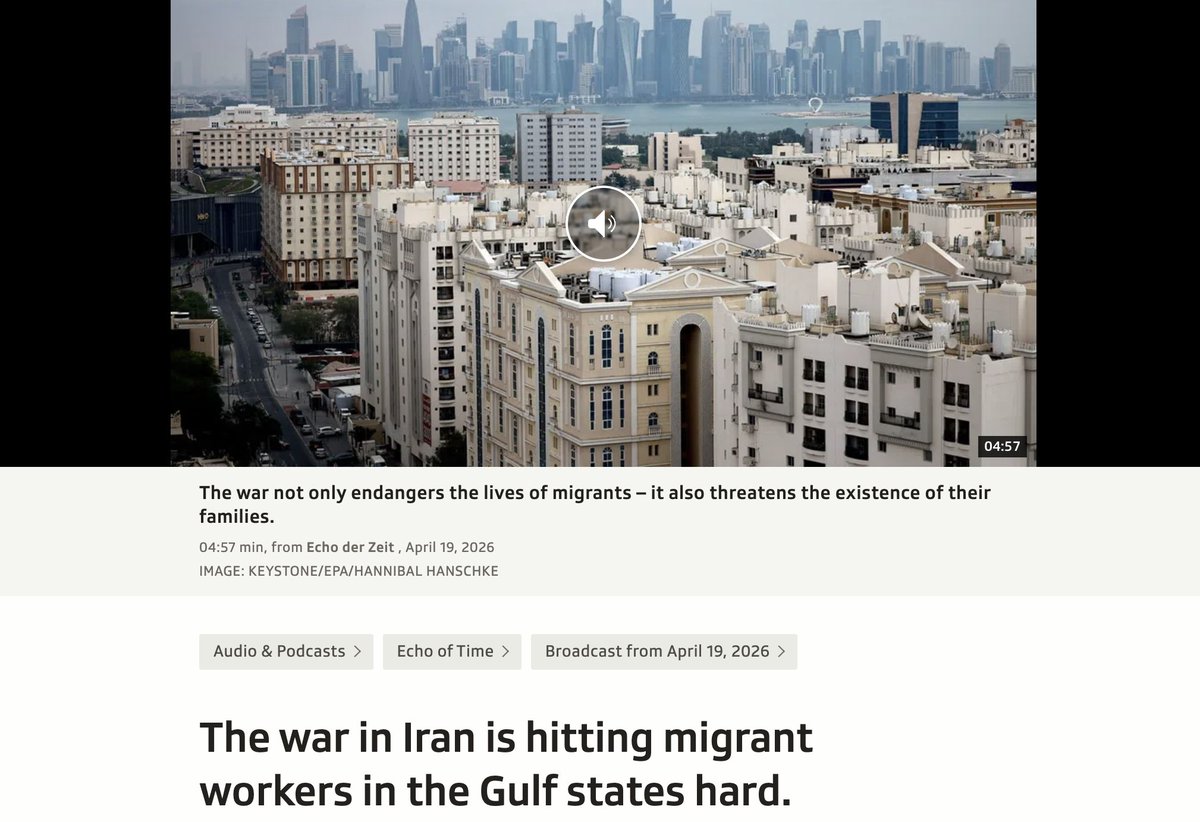
In a recent interview with SRF - Schweizer Radio und Fernsehen, Deepika Thapaliya from Equidem discusses the impact of the Middle East conflict on migrant workers in the region.
She underscores a critical point: the crisis has, in significant ways, intensified and made more visible pre-existing structural inequalities embedded within labour migration systems in the Gulf — including restrictive frameworks such as the kafala system, poor implementation of labour rights, and the absence of effective trade union protections for migrant workers.
🎧 Listen to the podcast:
https://t.co/y5KAWa0k2z
Equidem has also issued a statement on protecting migrant workers in the context of this conflict, based on rapid investigation findings from conversations with 44 migrant workers across six Gulf countries — Saudi Arabia, the United Arab Emirates, Qatar, Oman, Bahrain, and Kuwait.
The statement sets out urgent, coordinated actions required from employers, governments, and embassies to safeguard workers during the crisis, alongside longer-term reforms needed to address root causes and prevent the recurrence of such harms.
🔗 Read the statement:
https://t.co/edbHMP0uSY
#MigrantWorkers #MiddleEast #LabourRights #HumanRights
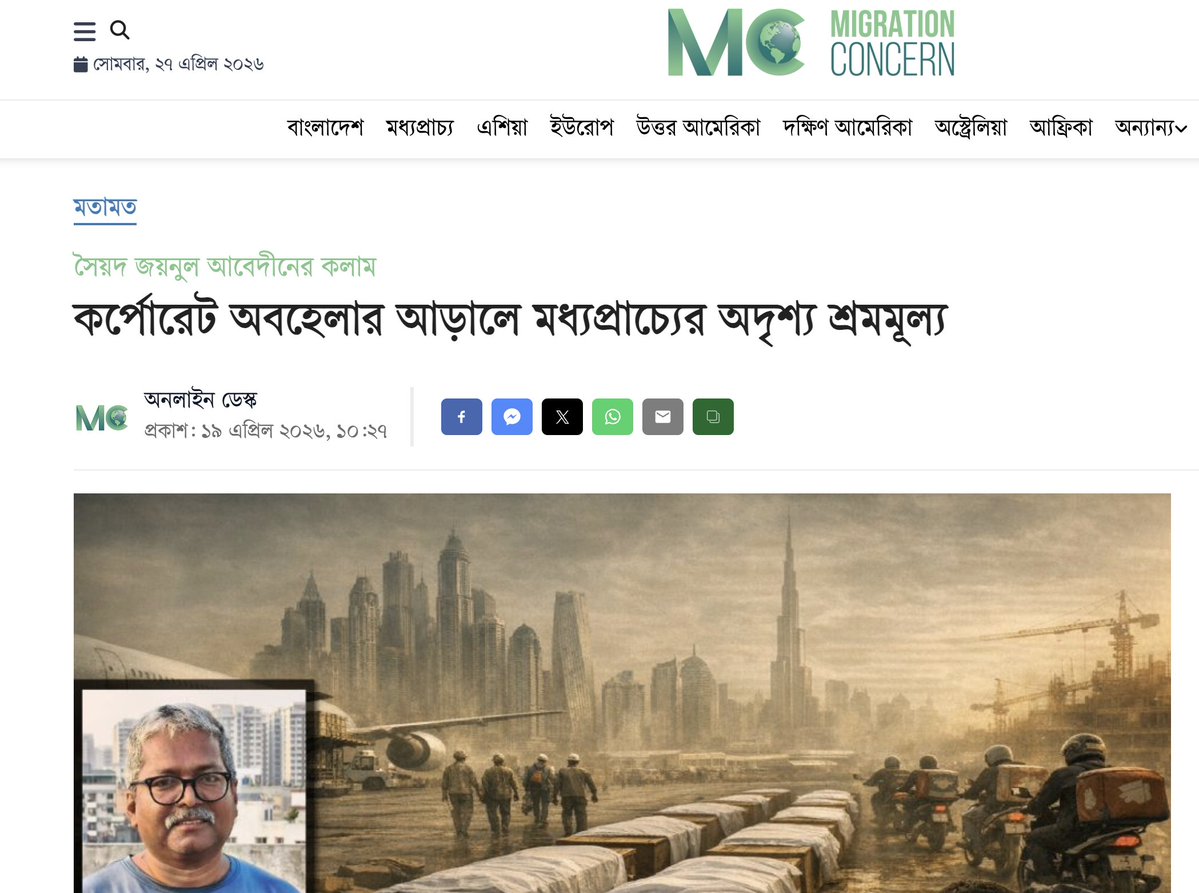
In a new op-ed, Eiffel Abedin from Equidem writes for Migration Concern on the realities faced by South Asian migrant workers in the Gulf, working as delivery riders.
Drawing on our report, 'Free to Be Exploited', he highlights how these workers are often forced to take on debt just to access jobs in the Gulf — only to then face wage theft, punishing delivery targets, and conditions that, in many cases, mirror indicators of forced labour.
As we approach the International Labour Conference, it is critical that the voices and experiences of migrant platform workers are heard and that they shape the protections and agreements being developed.
🔗 Read the article: https://t.co/4HofWsNB1z
🔗 Read our report Free to Be Exploited: https://t.co/fzCxRrspPE