Happy new year! ✨
As of 2026, we are no longer active on X.
If you'd like to receive updates from the network
➡️Register to our newsletter: https://t.co/JJtrxDKm6H
➡️Follow us on: https://t.co/tmDPlYgp7r
See you very soon.
The EuroMeSCo team 😉
(2/2) To explore how transparency gaps undermine waste governance and how the Open Waste Data Index (OWDI) offers a practical, low-cost path toward better services and a just circular transition, read the full 📗 Policy Brief: https://t.co/Up5rxAhufk
@IEMed_@AECID_es
(1/2) Waste services across MENA suffer from chronic data gaps: from opaque contracts to missing performance indicators.
Discover a snapshot of Elias El Hayek’s new Policy Brief on how open waste data can improve services, accountability, and trust.
👉https://t.co/UL5UmGXx5O
🎥 Agnieszka Maj (@CASE_research) highlight a key message from EuroMeSCo / @IEMed_ Policy Study 37: Disasters cross borders, affect communities differently, and demand shared, inclusive responses.
📘Explore her full insights: https://t.co/vA9d895am1
📰 The new EuroMeSCo newsletter is out!
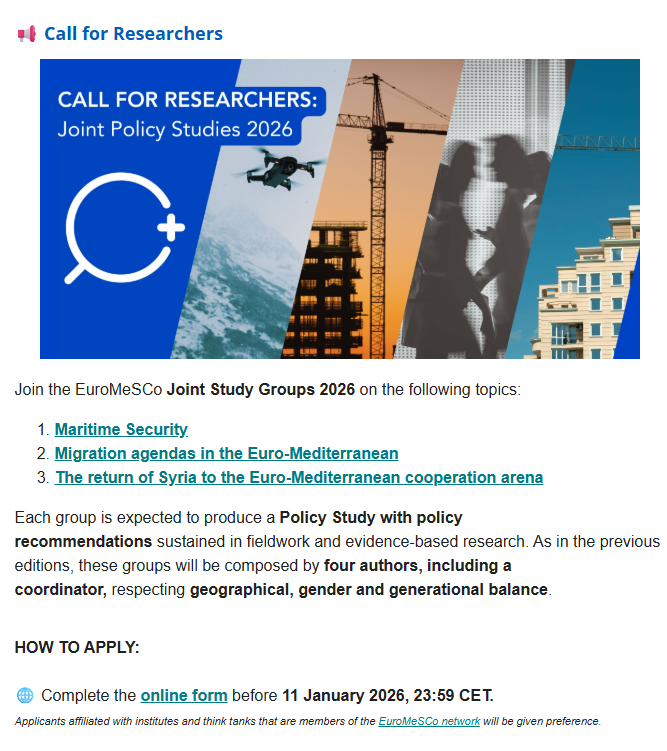
📢 Call for researchers for the 2026 Joint Policy Study groups
🌐 & the latest EuroMeSCo insights, publications & network updates shaping Euro-Mediterranean cooperation.
🔗 Read it here: https://t.co/0W0piPo51w
(2/2) To explore how AI affects credibility assessments, data protection, and the right to an effective remedy in asylum procedures... and what safeguards are needed under the EU AI Act, read the full 📕 Policy Brief:
https://t.co/0skuneDG85
@AECID_es@IEMed_
(1/2) AI is increasingly used in EU asylum procedures.
Discover a visual snapshot of Konstantina Liontou’s new Policy Brief on the risks this poses for fairness, transparency, and fundamental rights.
👉 https://t.co/jY3Lam6d1z
🎙️ “A more resilient Mediterranean will look like a space in which partners are able to contribute (...) on equal footing.”
🎥 Watch Sonia Chabane’s insight from @UfMSecretariat event on @euromesco / @IEMed_ 's new Joint Policy Study: https://t.co/uFHz5x0Kpr @AECID_es
(2/2) Amir Magdy Kamel explains why trade tools cannot stabilise an economy shaped by militias, dual institutions, and geopolitical competition, and what a conflict-sensitive approach would require.
📘 Full study: https://t.co/YXVdPg30wO
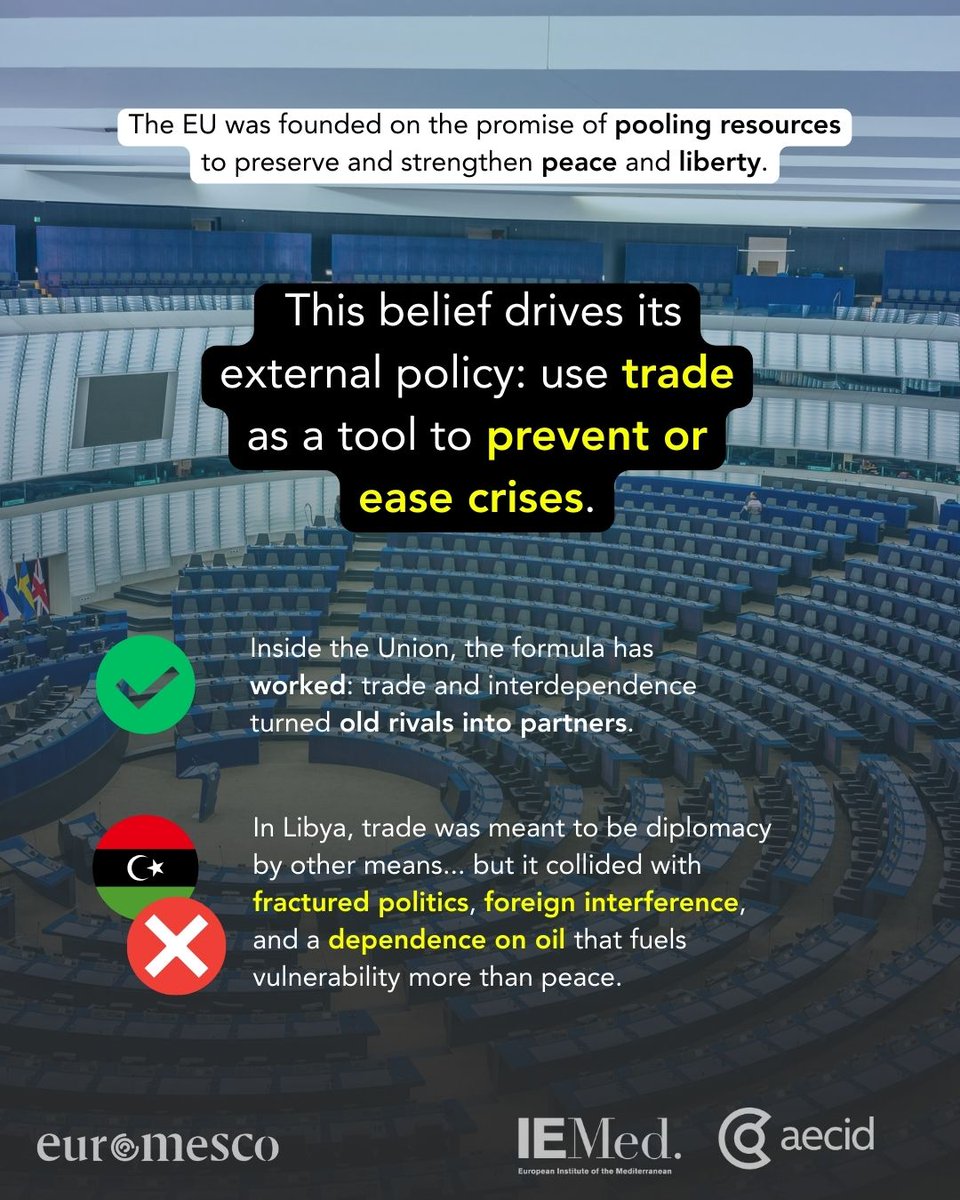
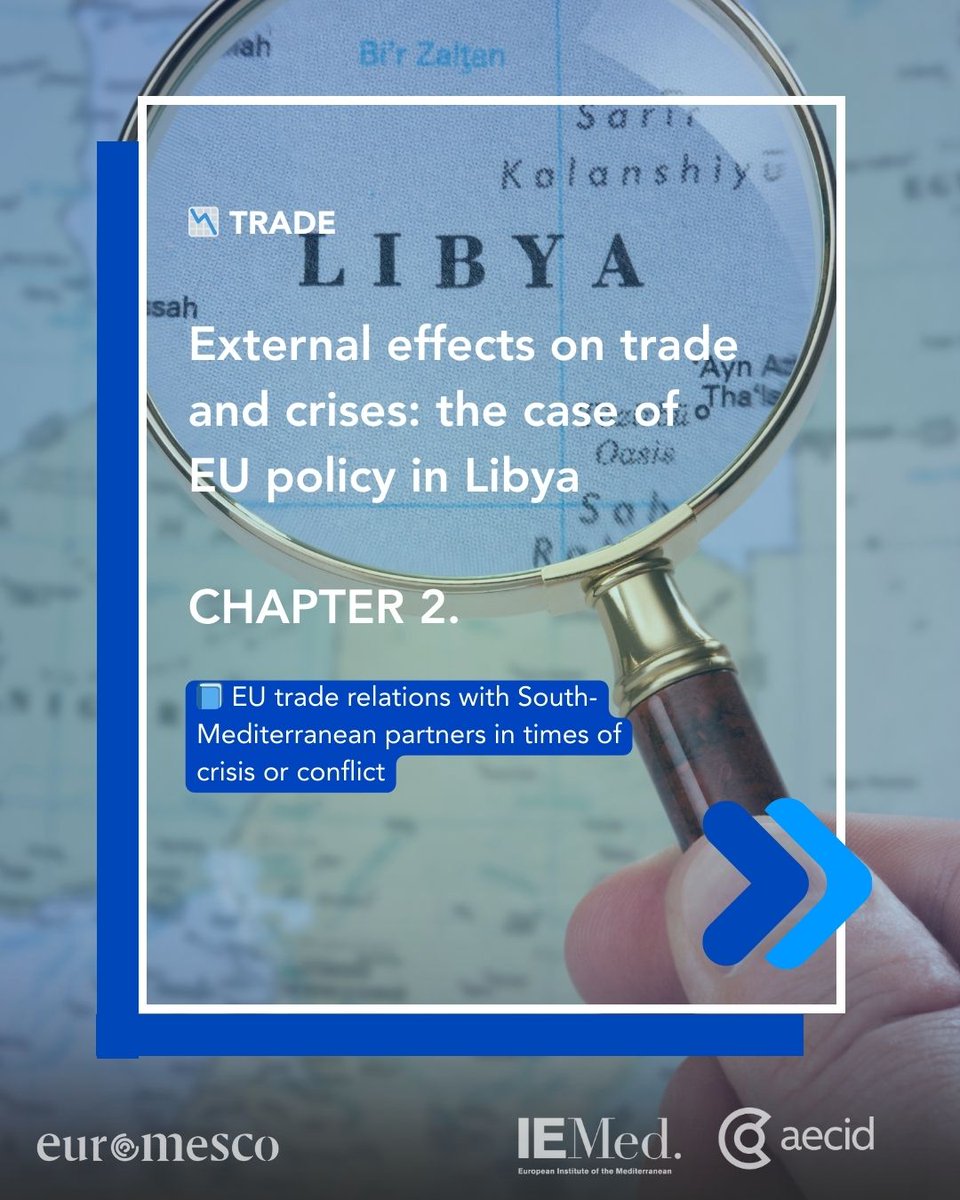
(1/2) 🇱🇾 The Libyan case shows where Europe’s “trade for peace” model hits its limits.
Chapter 2 visuals reveal how fragmentation, foreign influence, and long-running conflict keep turning EU–Libya trade into crisis management instead of partnership.
👀https://t.co/p4CLlaq2zP
🎙️“The main challenge for the Mediterranean is to build a regional system (…) to share common preparedness.”
🎥Watch @LaurentAlfonso's insight from last week's event at @UfMSecretariat where he introduced our new EuroMeSCo/@IEMed_ Joint Policy Study: https://t.co/z4HyooA03n
(2/2) In this chapter, Nancy Ezzeddine shows how global disruptions turn trade policy into crisis management and why resilience will require diversification, fairer partnerships, and stronger regional coordination.
📘 Full study: https://t.co/5weRuF0lXl
(1/2) 📉 When crises hit, Europe’s “trade for stability” model shows its limits.
Chapter 1 visuals unpack how decades of EU–Southern Mediterranean trade integration still leave partners highly exposed to shocks.
👀https://t.co/fIMcsY1E4C @AECID_es@IEMed_
📢 New Joint Policy Study!
📘 “EU trade relations with Southern Mediterranean partners in times of crisis or conflict”
How can EU–SMC trade agreements evolve to build resilience, support structural transformation & better respond to regional shocks?
🌐 https://t.co/YXVdPg2sHg
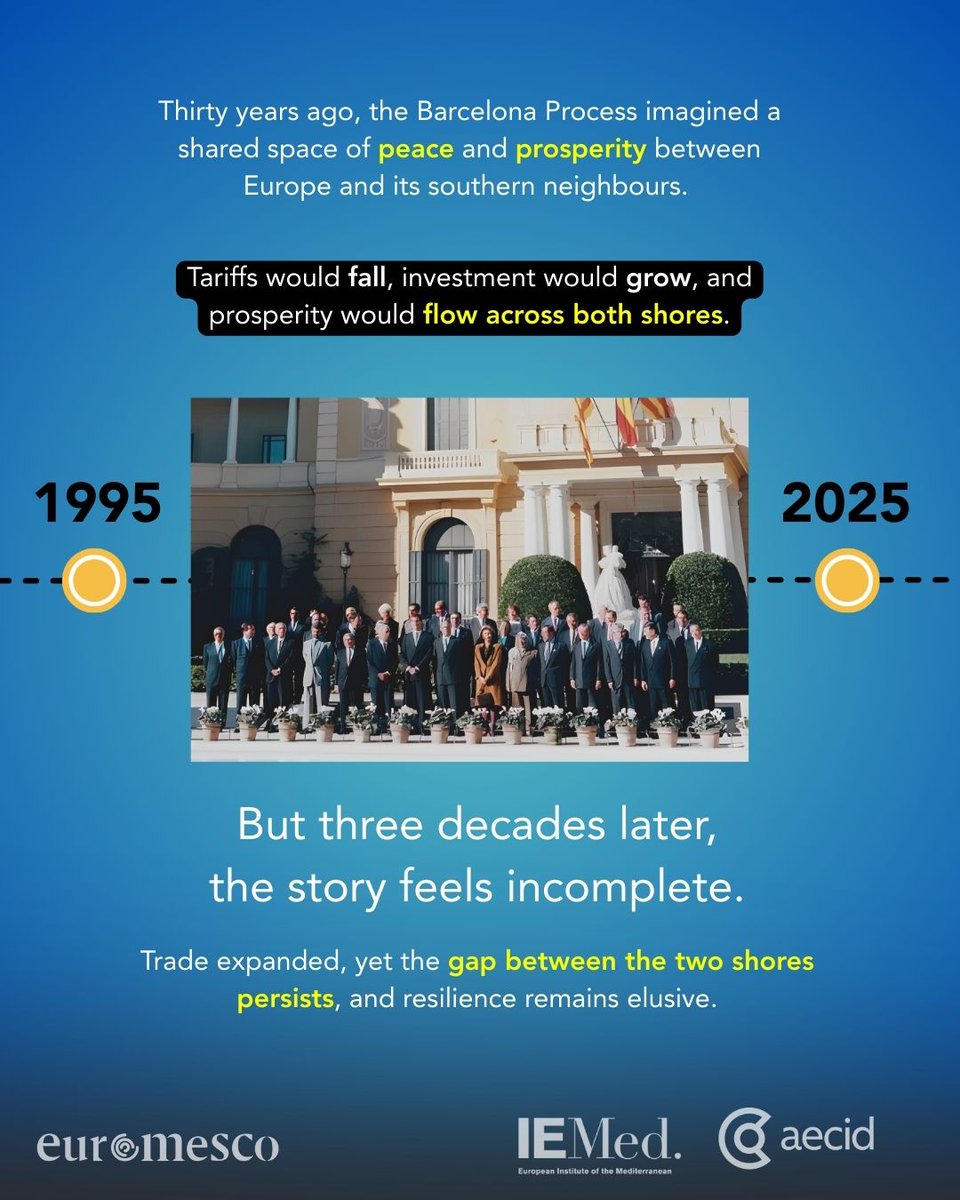
The Pact was launched this week on the 30th anniversary of the Barcelona Process, a partnership promoting cooperation and stability between the EU and Mediterranean countries.
This is another major step toward a more stable, secure, and prosperous Common Mediterranean Space.
https://t.co/kD58FiSR9Q
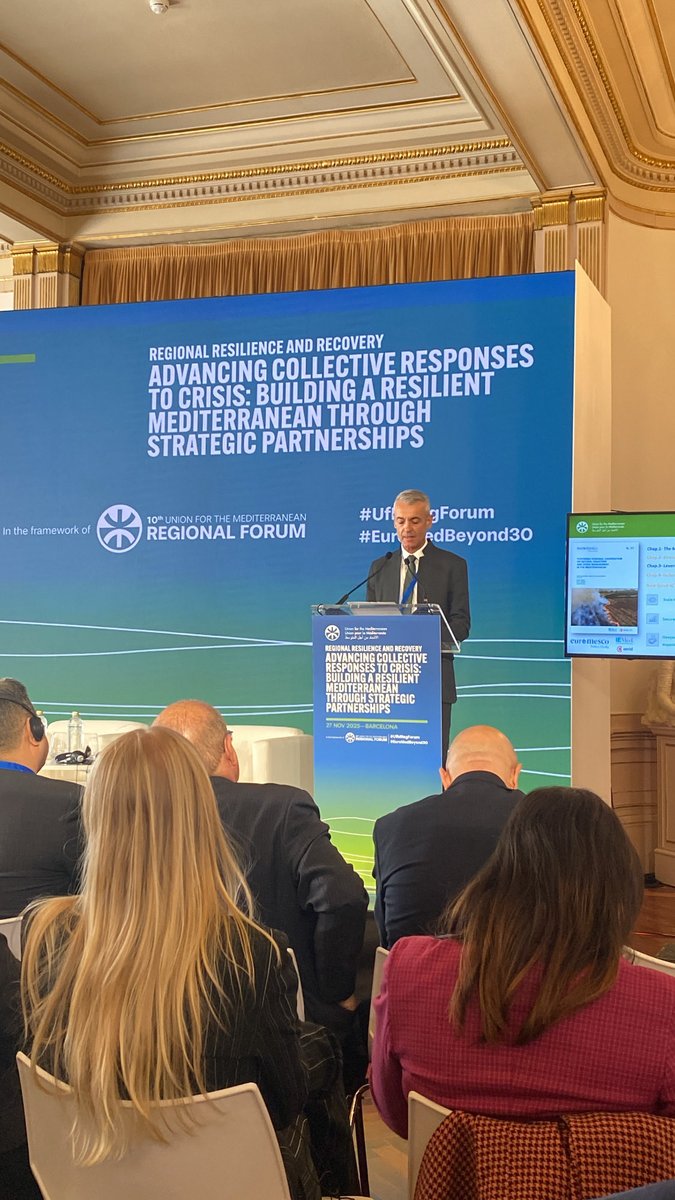
📘 @LaurentAlfonso has just introduced our new EuroMeSCo/@IEMed_ Joint Policy Study on natural disasters and crisis management.
A key moment to spotlight how stronger coordination, data sharing and partnerships can boost resilience across the Med.
🔵 https://t.co/F7eykaHbOX
We’ll be presenting tomorrow in the @UfMSecretariat event, our new Joint Policy Study on natural disasters & crisis management.
📘 Full Joint Policy Study: https://t.co/vA9d895am1
🔗 Livestream available: https://t.co/I1C0P6gCr4
#UfMRegForum
Collective resilience in focus next Thursday in Barcelona: At “Regional resilience and recovery: advancing collective responses to crisis”, the Union for the Mediterranean and partners will look at how to better prevent, adapt and respond to shocks across our region, strengthening cooperation with key actors from the Gulf.
Livestream available 🔗 https://t.co/m7Ob2kpUqV
#UfMRegForum
(2/2) To dive deeper into how technology-facilitated violence affects migrant women across the Euro-Mediterranean, and what the EU can do to secure digital borders, read the full📕 Policy Brief: https://t.co/SH9uZahs9n @AECID_es@IEMed_
(1/2) On the International Day for the elimination of violence against women 💜, we share a visual snapshot of Martina Canesi’s new Policy Brief on how digital tools are being weaponised against migrant women and why stronger EU protection is needed.
👉 https://t.co/mQ2CQiKlVo
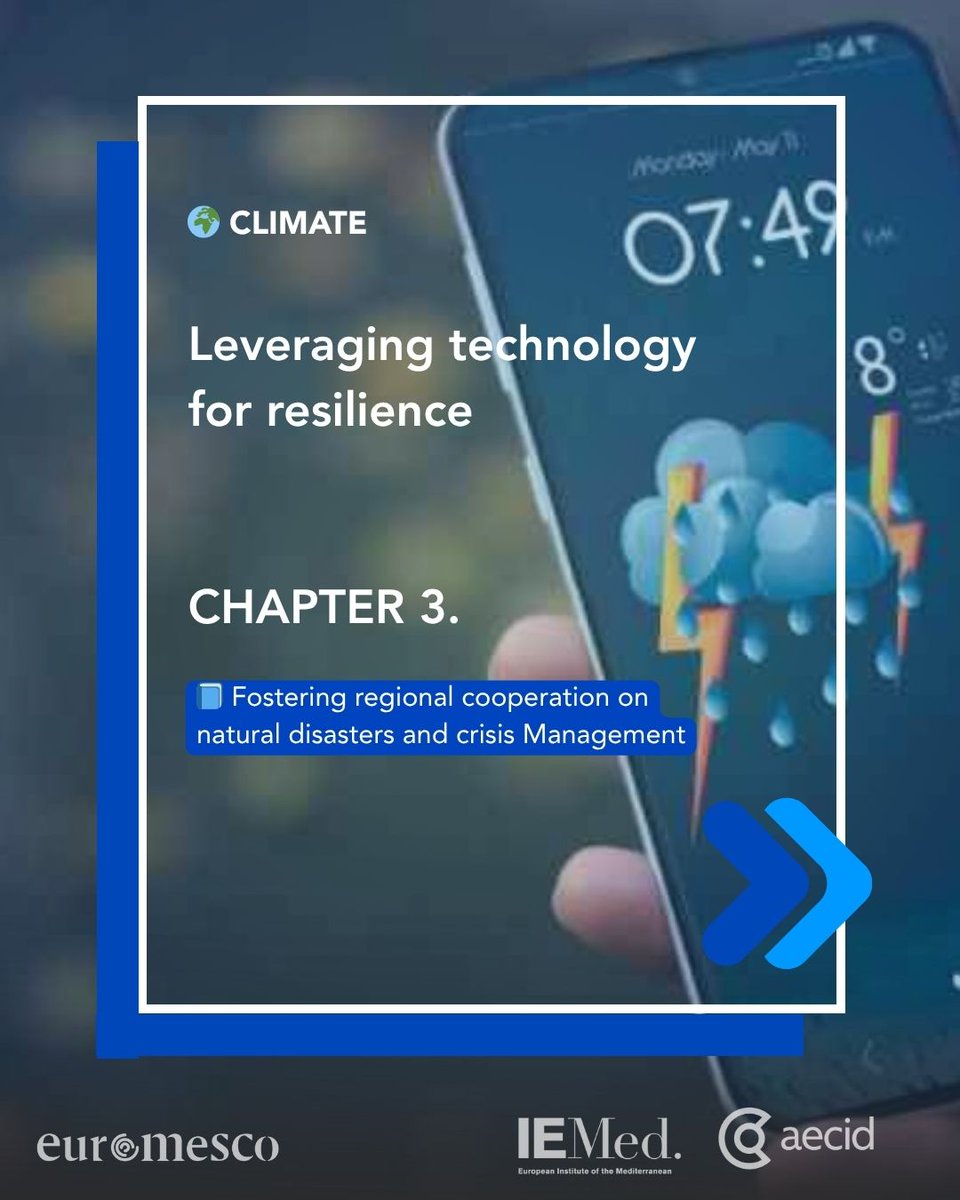
(2/2) In this chapter, Laurent Alfonso and Talal Soud Deifallah Alghrair look at smarter forecasting, shared data, and faster alerts; and the risks when tech evolves faster than governance.
📘 Full study: https://t.co/AfoyTxGsLW
(1/2) 💻 From Artificial Intelligence to Geographic Information Systems, technology is transforming how the Mediterranean anticipates and responds to disasters.
Check out Chapter 3 visuals exploring where gaps still leave communities exposed.
👀https://t.co/Z3bUlA84l9