This @FEPSYAN policy study discusses further steps that #CoFoE should take towards bridging the gap between EU and national politics and citizens’ involvement in shaping EU future through a broader process of EU deliberative democracy. https://t.co/cwr8mmE2VX
🔸The Western Balkans summit (05/06) was about accelerating EU enlargement
🔸Montenegro 🇲🇪 is most advanced with negotiating chapters. They have been part of eurozone & NATO for ages
🔸🇭🇺Hungary’s recent elections bring new dynamics into enlargement
https://t.co/dXY5jALVB5
In a new essay for #ResilienceResistance, 2025 CFK Global Fellow Gábor @gScheiring unveils three pitfalls to look out for as Hungary works to revive its democracy https://t.co/aOPkrAp7Z3
🇪🇺 #Enlargement is a peace project. To stay strong, it must be credible, transparent & tangible for all the EU & candidate countries' citizens
🗞️In the 🆕ProgPage, @kvanbrempt reflects on the future of accession ahead of the EU-WB summit in #Montenegro🇲🇪
https://t.co/KxlutiGwWA
The Labour Party can no longer pretend that orthodox policies can break the United Kingdom's doom loop of collapsing living standards, political instability, and rising borrowing costs.
https://t.co/BHPBA4Os3V
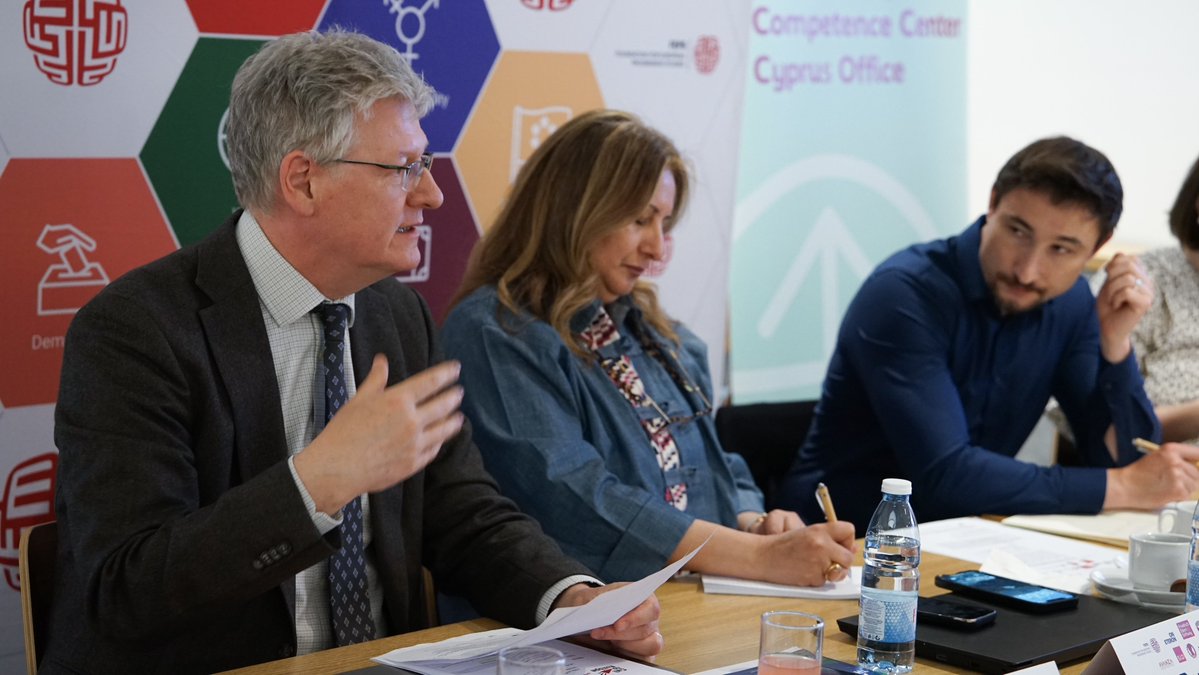
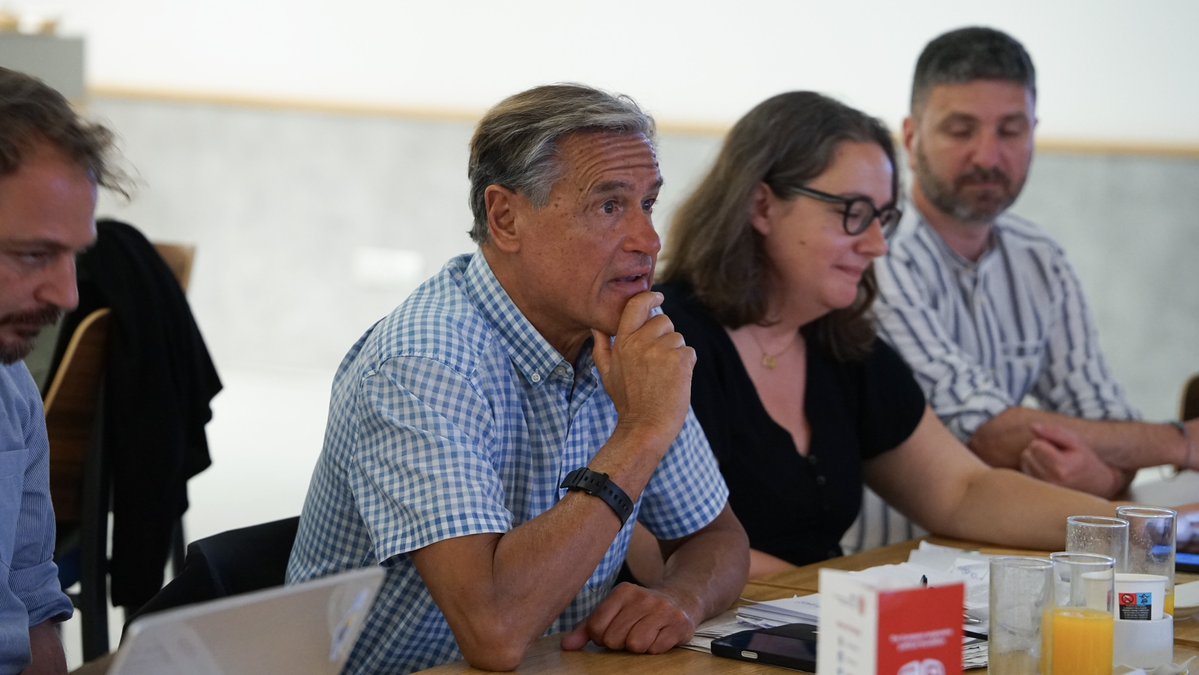
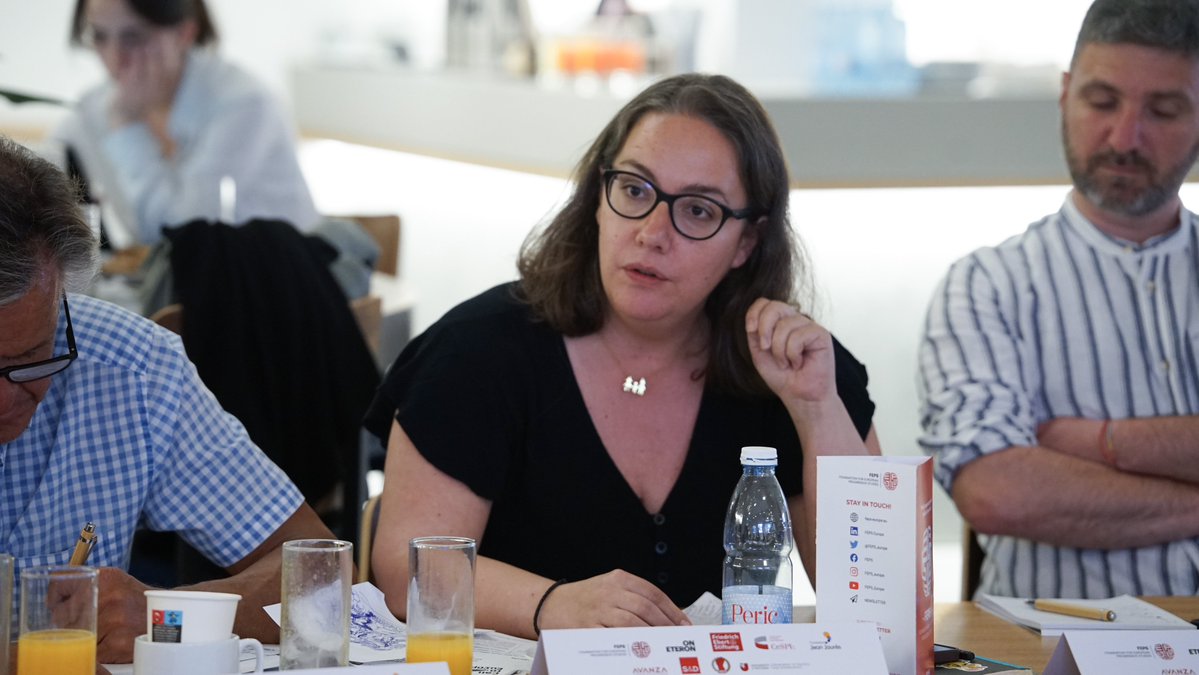
🇨🇾At "A progressive strategy for peace and cooperation in the Mediterranean", the latest edition of FEPS' annual flagship event #CallToEurope taking place in Cyprus, the 3rd expert panel asks:
https://t.co/pHoR90vS41
👉 How can we ensure that the Mediterranean stops being the graveyard for the thousand migrants that cross it to reach Europe, as well as for their rights, to turn into a place of accountability, connection and justice?
👉How can we shift the focus to the creation of legal pathways that put people at the centre?
With:
🔸Eléonore Thenot, International expert specialised in migration and forced displacement, gender, children, and youth, CEPRA
🔸Eleni Takou, Former Chief of Staff for the Greek Minister of Migration; Member, Mediterranean Migration and Asylum Policy Hub (MedMA)
🔸Juan Fernando López Aguilar, MEP, S&D Group
🔸@LaszloAndorEU, Secretary-General, FEPS
🤝By FEPS, organised in cooperation with the
@TheProgressives, Friedrich Ebert Stiftung Cyprus, @EteronorgEn, @AvanzaLab, @CeSPI_Roma, @j_jaures, the Movement for Social Democracy @edek1969 Socialist Party and the Is Department of Government and Politics.
EU enlargement moves back to the center of Brussels politics, with Montenegro leading the race while the bloc debates reforms for future members.
https://t.co/bmO3dHenjw
Excellent piece in The Guardian today by @AlemannoEU on the self-defeating deregulation fever being imposed right now by EU leaders (particularly #Merzoni, implemented unquestioningly by 🇪🇺President @VonDerLeyen).
The problem with the EU is not in Brussels. It is in the national capitals who block completion of the EU single market because of self interest and short term thinking.
'Brussels bureaucracy' becomes the easiest scapegoat for such spineless leaders who don't want to take the tough decisions that would solve the fragmentation problems that are actually to blame for Europe's relative economic struggles.
https://t.co/9jlNtJ58El
An excellent book (by Frirz Bartel)
Western money and Eastern promises
How the oil shock revived capitalism and ended communism
https://t.co/AJEotRFSsr
Sigmund Freud's nephew wrote a 168-page book in 1928 that taught American corporations how to manufacture desire, and almost every advertising campaign and political messaging strategy you have ever seen still runs on the playbook he wrote a century ago.
His name was Edward Bernays. The book is called Propaganda. And the strangest thing about it is that he was completely open about what he was doing.
He opened with one of the most chilling sentences ever published in a non-fiction book: “The conscious and intelligent manipulation of the organized habits and opinions of the masses is an important element in democratic society. Those who manipulate this unseen mechanism of society constitute an invisible government which is the true ruling power of our country.”
He was not warning you about this. He was advertising his services.
Bernays had figured something out that nobody else in the early 20th century had put into words.
The old model of selling things to people was broken. You could not just describe a product and expect people to buy it. Humans do not make decisions based on information. They make decisions based on emotion, identity, and social pressure, then construct a rational story afterward to explain what they already wanted to do.
His uncle Sigmund Freud had spent decades documenting this in clinical psychology. Bernays took that work and pointed it at consumer markets and political campaigns.
The case study that made him famous is the one almost nobody knows the full story of.
In 1929, the American Tobacco Company hired him because women were not buying cigarettes. Smoking in public was considered scandalous for women at the time. The market was cut in half by social taboo and the company could not figure out how to break through.
Bernays did not run an ad campaign. He hired a psychoanalyst to figure out what cigarettes symbolically meant to women. The answer that came back was that cigarettes represented male power, and the taboo against women smoking was a symbol of male dominance over female freedom.
So he staged an event. He recruited a group of fashionable young women to march in the 1929 New York Easter Parade and light cigarettes in public at a coordinated moment. He tipped off the press in advance and told them to expect a feminist demonstration. He named the cigarettes "torches of freedom."
The photographs ran on the front page of newspapers across the country. Within a few years, female smoking rates had jumped. He had not sold cigarettes. He had sold liberation, and the cigarette came along for the ride.
The mechanism underneath every move he ever made is the part you should not forget.
He never sold the product. He sold the identity the product represented. He never argued with the audience. He restructured the environment until the conclusion he wanted felt like the audience's own idea. He never appealed to reason. He appealed to the unconscious associations people already had and quietly attached his client's product to those associations.
Every influencer marketing campaign, every political ad, every Super Bowl commercial that makes you feel something without telling you why, every news segment that frames a story before you have time to think about it, is running a version of his original system.
He died in 1995 at the age of 103. He gave interviews in his final years admitting that he had helped overthrow a democratically elected government in Guatemala in 1954 by manipulating American public opinion against it. He said it without regret. He was proud of the work.
The book is 168 pages. It is in the public domain. You can read it in one evening.
Almost nobody who is being manipulated by his methods has ever opened it.
🔸”European Order of Merit” became largely an EPP affair 🔸4 laureates (20%) come from countries which are not EU members 🔸 Trichet & Merkel are connected with austerity legacy 🔸Schüssel was first to bring far right into coalition with EPP (2000) https://t.co/tQDzojy6cX
Essay on Euro-American Decline: Part 1
The first instalment deals with a debate that recently re-emerged on but which in my view is still a bit confused.
Which growth and productivity series can we use for what purposes? How do cross-country price ratios, national accounts methodologies and the PPP construction distort long-run comparisons?
The stakes are quite real: depending on which data you use you can determine the direction of reform. If the European productivity frontier is declining relative to the US, then we need to become more like the US.
Fortunately, the ‘relative decline’ narrative is a myth. The core claim of the Draghi report is a statistical artefact.
Link below.
Interesting post by @brankomilan, plugging a gap in the debate on the anticipated impact of AI on the economy: a Marxist perspective, (discussed alongside a neoclassical one).
And whaddaya know—they lead to rather similar conclusions:
https://t.co/luhppD96dk
“Progressives need to offer reforms that treat citizens less as passive recipients of welfare, and more as producers who deserve a voice in the decisions that shape their lives,” writes @sunraysunray.
https://t.co/WKhAp45PF1
“Who Paid the Pipers of Western Marxism?” is an inversion of a right-wing conspiracy, in which the prominence of the Frankfurt School is explained as the result of a plot to destroy truly revolutionary Marxism.
https://t.co/5GHAr1U9h5
Spanish PM Pedro Sánchez:
In just a few months, the same country that has cut around 18 billion in global health and development aid has spent more than 29 billion on a war.
@katmanportal 'da bu ay kalkınma finansmanı mimarisinde Çin ve BRICS'e odaklandım. ABD devletinin küresel kalkınma finansmanından çekildiği bir dönemde, de-dolarizasyon altında şekillenen yeni düzende henüz “alternatif bir uzlaşı” yok. İlginize... https://t.co/GjvRdeYpU8
🔸Trump’s state visit to China took place after 9️⃣years interval
🔸US-China relations are often framed in "Thucydides Trap" 🔀
🔸US🇺🇸 trade deficit vis a vis China🇨🇳 has shrunk (but increased with ASEAN)
🔸EU🇪🇺 is very far from turning the G2 into G3
https://t.co/veaJEMddEb