H.E. Cláudia Pinto, Senior Government Advisor for Sustainability and Founder and CEO of Empowering Women Middle East, believes organizations must acknowledge where their strategies haven’t delivered the intended results. That transparency matters most when businesses face pressure to show progress in AI adoption.
The next phase of competition will depend on who can show that the technology leads to better decisions, real results, and accountability when things go wrong.
Read more: https://t.co/HF5mgxwRxD
Across the Middle East, governments are backing AI-led growth, and companies are introducing the tech into financial services, logistics, and other operations. As spending rises, executives face two questions: where AI creates measurable value, and which decisions still need human oversight.
Salah Rifai, CEO of Mantika, believes human judgment remains essential when decisions carry significant consequences. “I don’t think AI is here to disrupt human beings. It’s here to disrupt our processes,” he says.
AI may eliminate repetitive tasks, but businesses still need people who can interpret unexpected results, question automated recommendations, and take responsibility when mistakes occur.
In logistics, automated decisions can have clear real-world effects. Tobias Maier, CEO Middle East and Africa at @dhl_forwarding, highlights the importance of combining experienced logistics professionals with younger AI specialists.
The opportunity lies in bringing technological capabilities into an industry where physical infrastructure, regulatory requirements, and unpredictable disruptions continue to influence decisions.
David Paulson, CEO and founder of @AIAOrbis, is developing a humanoid AI project in the UAE. He believes increasingly sophisticated machines could transform how people interact with AI.
At the @DubaiAIFest, Paulson showcased AIA, a 3.5-meter-tall AI-powered humanoid, developed in the UAE. AIA is designed to demonstrate how AI could move beyond screens and interact with humans in physical form.
Taste of Innovation brings together founders, investors, policymakers, and members of the region’s innovation community.
The event is meant to go beyond food, giving guests a place to share ideas, explore new possibilities, and discuss the questions shaping the future of business and society.
The experience is being created with Chef Kelvin Cheung, a MasterChef Asia judge, and chef and partner at Jun's Dubai. Cheung will create the four-course menu, with each course offering a different interpretation of an idea about the future.
Dubai AI Festival has attracted broad international participation, bringing together more than 20,000 attendees from over 100 countries, including policymakers, tech leaders and entrepreneurs, alongside more than 150 speakers, 500 investors and 200 exhibitors.
Discussions spanned AI governance, ethics, the future of work, immersive technologies, infrastructure and investment, reflecting the range of issues shaping AI development and deployment.
@DubaiAIFest@NadinHssn
.@PublicisGroupe Middle East is launching a Middle East healthcare division, combining medical, creative and data expertise to improve patient engagement and encourage healthier behaviors.
“@PublicisHealth Middle East marks an important step for the Groupe in the healthcare sector, reflecting both the scale of opportunity across the region and our continued investment in specialized capabilities,” said Bassel Kakish, CEO of Publicis Groupe Middle East and Turkey.
The expansion will be led by Ramzi Sleiman, CEO of Saatchi & Saatchi Gulf and Publicis Health Middle East, alongside Noyala Rajakumar, Head of Publicis Health Middle East, and Karen Kamel, business lead.
Read more: https://t.co/eNLlHXyxRH
This points to a more practical standard for responsible AI: design systems that reveal uncertainty, prompt users to verify high-stakes recommendations, and make escalation to a qualified human easy.
Read more: https://t.co/uoZw8etxvH
Recent research suggests that using AI too much can harm our ability to think and judge for ourselves, leading to “epistemic de-skilling” and weaker critical thinking.
“AI can sound authoritative and empathetic without possessing clinical judgment, genuine understanding, or professional accountability. In mental health, plausible-sounding advice is not necessarily safe advice. AI may offer a useful starting point, but it should never be mistaken for a substitute for qualified professional assessment and care,” says Samira Cutts, Cognitive Neuroscientist and Head of Brain Health at Prime Performance Labs.
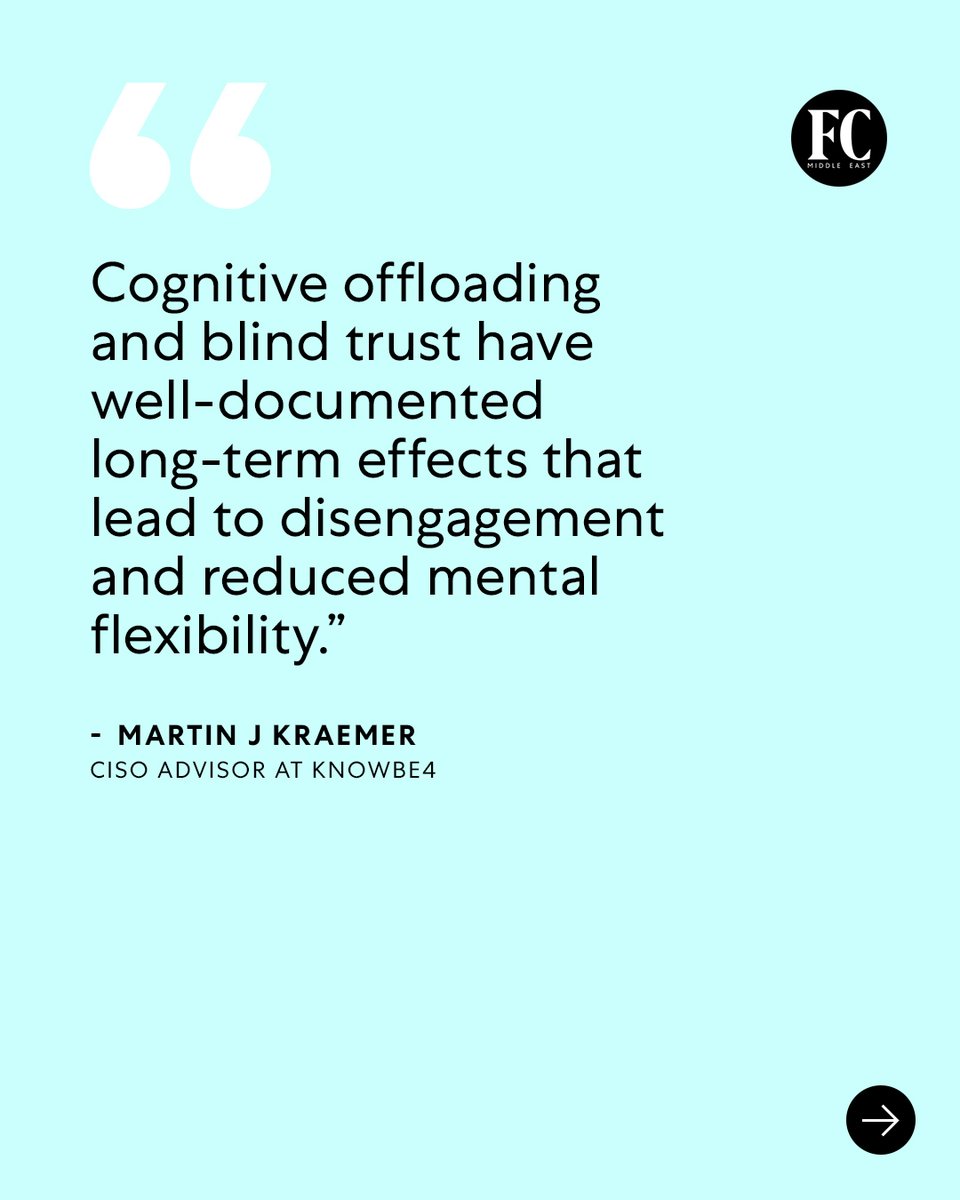
“Identifying and protecting the core skills and competencies that we, individually and as a society, desperately need to thrive is one of the most important challenges of our time,” says Martin J Kraemer (@markraemer), CISO Advisor at @KnowBe4.
“While it may be too late to control whether people use AI, it is not too late to establish safeguards governing its use and which aim to protect consumers from the most significant harm,” shares Kellie Blyth, Data and Technology Partner at @AGinsight.
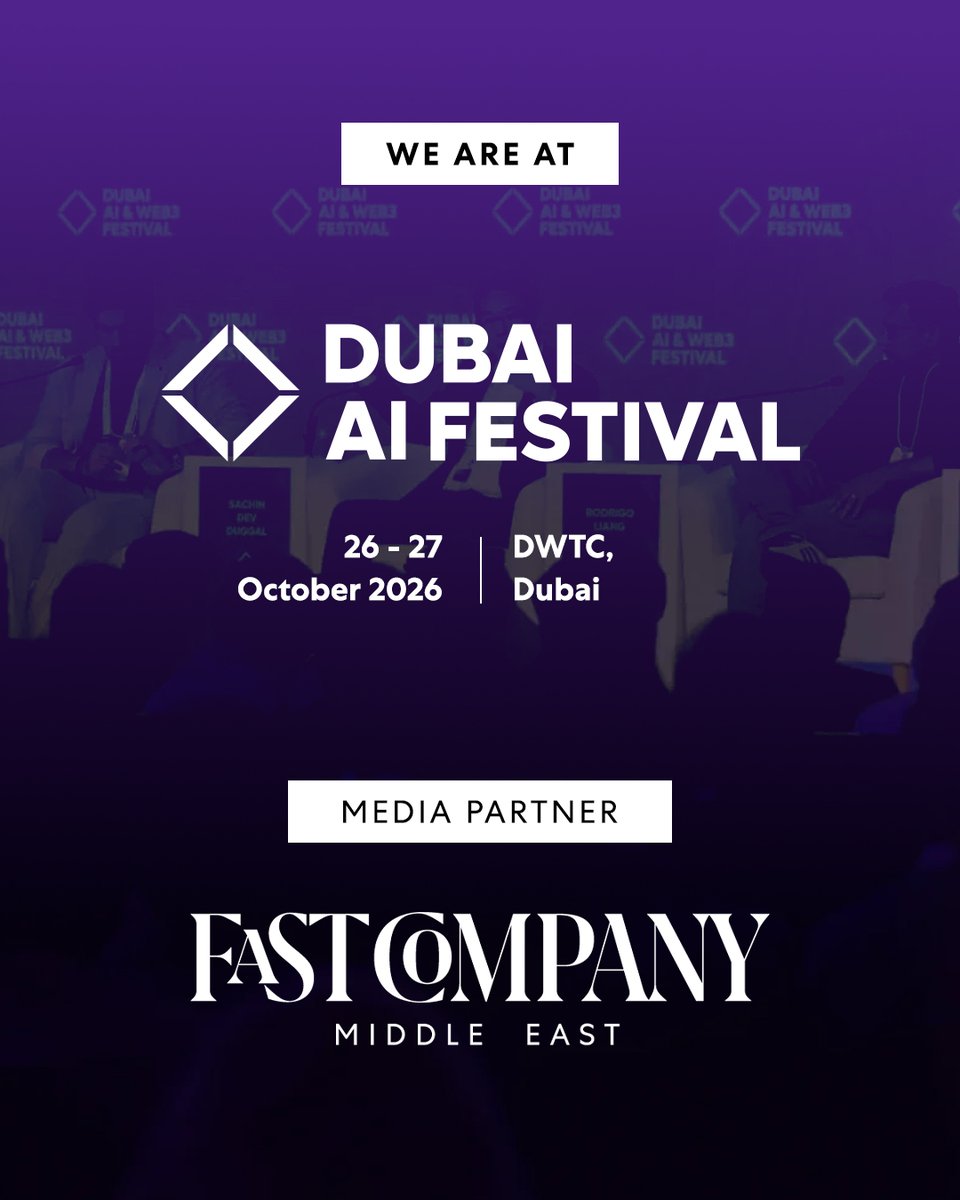
Dubai AI Festival is where the world’s top minds in AI converge. More than just an event, it is actively shaping and driving the future of AI, bringing together businesses, governments, and thought leaders from the region.
“Our priority is to position Dubai at the forefront of adopting advanced technologies by providing state-of-the-art infrastructure, a flexible regulatory environment and access to the world's best talent and expertise. This will enable companies and innovators to develop AI technologies and translate their potential into sustainable economic value,” shared HH Sheikh Hamdan Bin Mohammed Bin Rashid Al Maktoum, Crown Prince of Dubai, Deputy Prime Minister and Minister of Defense of the UAE, at the opening of the third edition of the @DubaiAIFest, being held at the @DWTCOfficial until 27 October 2026.
Stay tuned for the highlights.
Ultimately, the dividing line is not whether the job changed. It is whether the change leaves an employee with more skill, judgment and agency, or simply more work.
Read more: https://t.co/M3fTjzBA5T
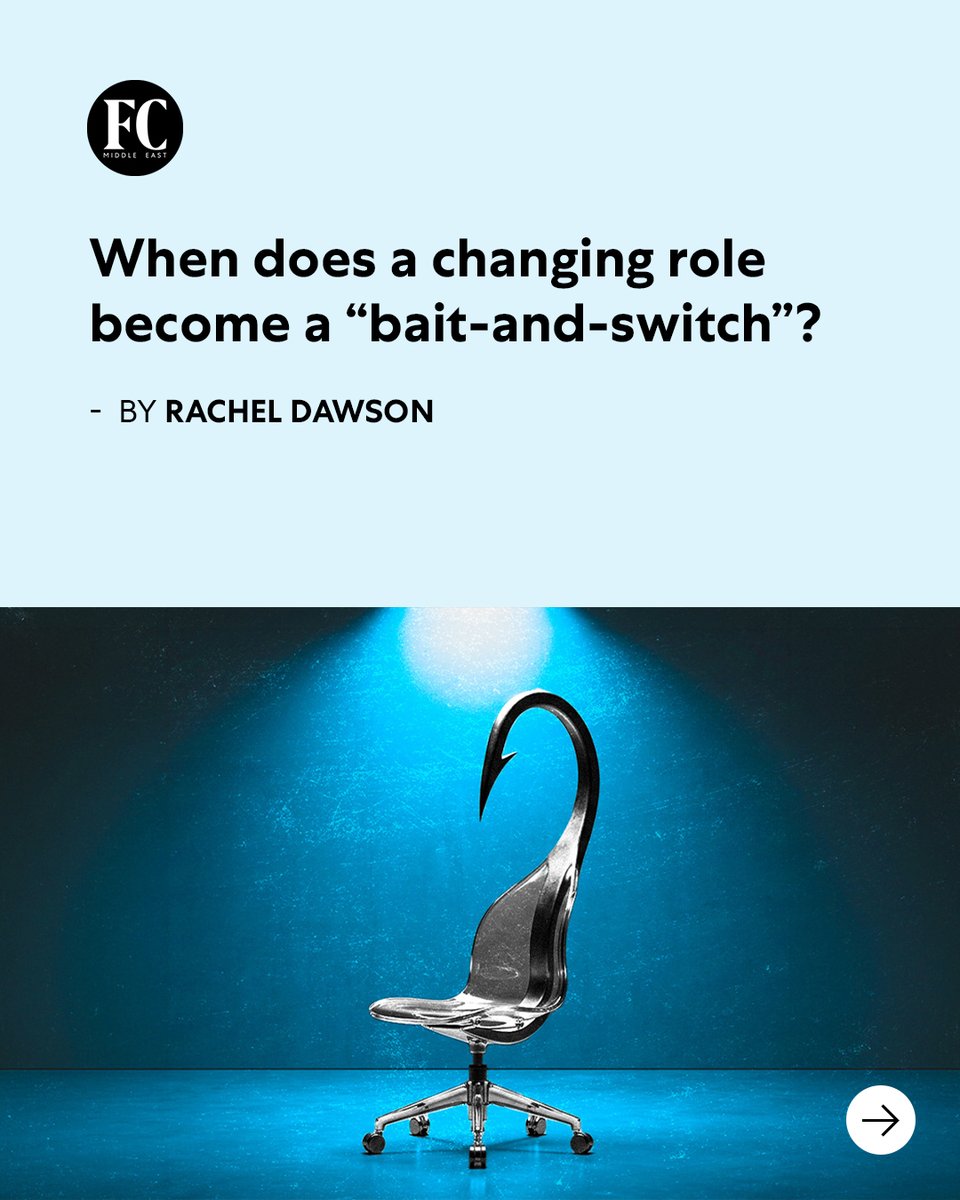
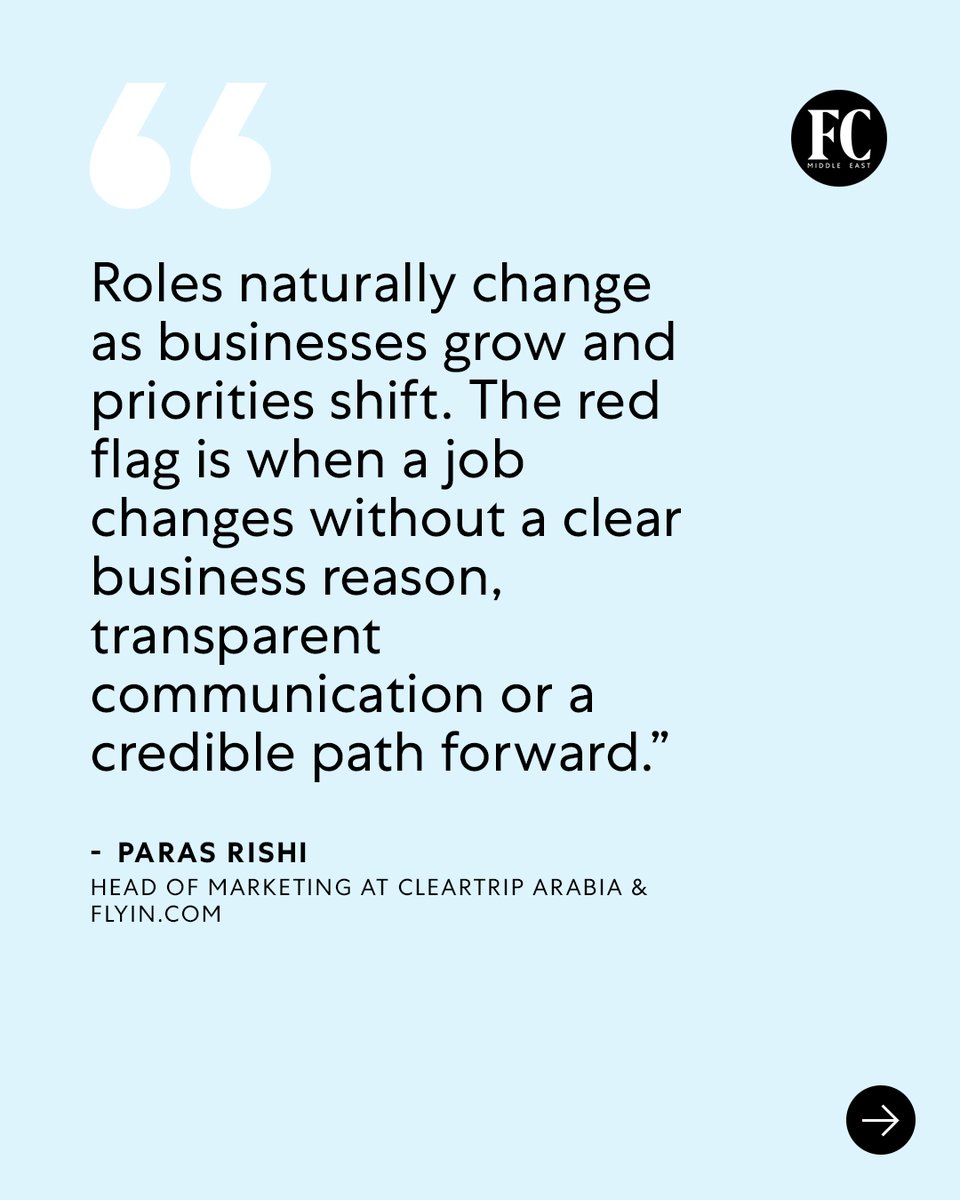
Businesses restructure, priorities shift, and AI can change a job before HR changes its description. But when does normal evolution become an employer asking someone to do a materially different job without resetting what success, support, or progression should look like?
Experts say the answer isn’t simply whether the job looks different from the one someone accepted. It is what happens to the employee’s expectations, support and career prospects as that role evolves.
“AI moves work away from execution and towards judgment: defining the problem, checking the output and deciding what is good enough,” says Andreas Hassellöf, CEO of @ombori. “That is real growth when the person is trusted with those decisions.”
“But if someone is simply expected to produce more because AI made tasks faster, with no new skills, authority or route to progress, the benefit flows to the organization,” @hassellof says.
“Growth should involve support, learning, recognition and some degree of employee voice,” says Dr Lucy Bolton (@Lubol22), Associate Professor at @HWUDubai. “Simply being capable of taking on more does not mean that everything added to a role is developmental.”
Paras Rishi, Head of Marketing at @CleartripAE & @flyincom recommends a simple test: “What does success look like in this role after 12 months?”
The answer can reveal more than a list of responsibilities because it forces the employer to explain what the role is ultimately expected to accomplish. “Candidates should understand not only what they will do, but why the role matters,” Rishi says.
Fast Company Middle East will bring Taste of Innovation, an established Fast Company event series, to Dubai and the region for the first time, as part of Dubai Future Week.
Dubai Future Week, organized by @DubaiFuture from 18–21 November 2026, is expected to bring together more than 10,000 people across Emirates Towers and the @MOTF to explore how we will live, think, innovate, feel and do business in the decades ahead, all under the theme “For the Human of the Future”.
Rather than discussing the future only on stage, Taste of Innovation invites guests to encounter it through taste, conversation, and experimentation.
Register for priority ticket access: https://t.co/iGdBFg5aWX
#TasteOfInnovation
The six scientists honored this year by L'Oréal-UNESCO For Women in Science are working on interesting areas of research. They are looking at how we can combat respiratory viruses, image the human body, build medicine around individual biology, harvest water from the air, and extract value from industrial waste.
They are based in Qatar, Saudi Arabia, the UAE, Oman, and Syria, and what unites them is not a single field of science but a belief that science developed in the context of this region, to meet the needs of this region, can have a very significant impact beyond the region itself.
“I went from asking ‘how does the virus affect us?’ to asking ‘how can we be better prepared to stop it?'” shares Hadeel Zedan, a biomedical researcher at @QatarUniversity.
“Watching an emerging virus impact my own community really cemented my desire to understand how science could be used to better prepare societies for the next outbreak,” shared Dr. Aljawharah Alrubayyi, Saudi infectious disease scientist at @KAUST_News.
Alaa Mansour Almushaikeh, a Saudi applied physicist at KAUST, was intrigued by a different problem altogether: the inherent compromise in X-ray imaging. “I saw an opportunity to look at the material itself,” she says, “not just at the way we image but at what we image with.”
“I’m not actually treating patients, I’m working on technologies that could ultimately provide clinicians with tools to help them understand disease and make treatment decisions,” shared Jawaher Alhammadi, an Emirati medical engineer at KAUST.
“I don’t see research as just a means to get papers or build a career,” she says Marieh Al Handawi, a Syrian scientist at @NYUAbuDhabi. “For me, it’s a way of using the opportunities I’ve had to work on issues that matter to people and to future generations.”
The idea that something normally discarded could be a feedstock for a renewable fuel was the seed of it all, and it became the bedrock of her career. Sara H. Alaraimi, an Omani biotechnologist at the University of Technology and Applied Sciences, says, “I don’t want my research to just be about describing an environmental problem. I want it to be about solving that problem and, if possible, recovering value at the same time.”
Read more: https://t.co/xKOARfpSa2
Through its Terroirs du Liban brand, Fair Trade Lebanon works with over 50 cooperatives representing roughly 1,500 producers—two-thirds of whom are women, exporting artisanal goods like za’atar, kishk, grape molasses, and extra virgin olive oil to Europe, Canada, and the United States.
“What we see now is women taking on the business functions that used to sit with intermediaries: managing quality certifications, product development, costing and pricing, packaging, and negotiating with exporters,” says Laurent-Marc Gharzani, director of projects and coordination at @FairTradeLeb.
As rural women transition from invisible farmhands to primary breadwinners, traditional village structures are adapting to a new equilibrium.
Read more: https://t.co/kxP1MFQF7w
Official data point to a persistent gap in women’s labor-force participation across the Levant. For generations, much of that labor has been unpaid family work or seasonal work without reliable social protection.
Now, agritourism platforms, food cooperatives and direct-export projects are helping some women retain a greater share of the value they create.
Since 2015, Bookagri has trained and rehabilitated over 300 women across Jordan’s governorates, designing more than 50 hands-on agricultural experiences. Travelers pay around $35 per person for a one-to-two-hour immersive visit, learning to harvest produce, bake traditional breads, or prepare regional dishes.
“Bookagri’s community of rural women and households had so much debt on their shoulders, and they did not have any bank accounts,” says Rudaina Haddad, founder and CEO of BookAgri. “They now have bank accounts and no debt at all… they paid for their kids’ education and rents and expanded their agriculture.”
In the Jordan Valley, Reeman Dweik, destination narrative strategist at Project Narrate, led ORANJ—a project in Deir Alla under the UNDP’s Food Systems Resilience program.
“A woman paid a daily wage to pick oranges has nothing of her own to turn into a brand. Instead of selling the orange, we built an experience around it: orange pickle, candied orange peel, tree planting, and a farm stay. We gave it a name, packaging, and a story that belongs to the place,” says Dweik.