Note the wall on the left during the opening of the Twilight Zone episode “A World of Difference.” Ask yourself how they pulled off this single-camera shot in 1960, with no special effects.
Zoe of Rome was a noblewoman married to a Roman court official at the time of the GREAT PERSECUTION OF CHRISTIANS by Emperor Diocletian . For 6 years she suffered from a condition that left her unable to speak.
When she met St. Sebastian, she fell at his feet so that he would heal her. Sebastian made the Sign of the Cross over her and from that moment, her speech miraculously returned.
She had a vision of an angel standing next to Sebastian holding a book in which was written everything that the Saint had preached. Her first words gave thanks and praise to God, and many witnesses of the miracle were brought to faith in Christ.
Zoe and her husband then received baptism, along with many others who had come to believe in Christ, through Sebastian’s work.
Zoe became greatly devoted to St. Peter the Apostle, and was arrested while praying at his tomb. She was martyred by being hung from a tree by her hair, with a fire lit under her feet. After her death, her body was thrown into the Tiber River in the year 286.
She appeared in a vision to St. Sebastian, who was in prison awaiting his execution, to tell him of her martyrdom and subsequent glory.
Her feast day is today, July 5.
For God’s Glory.
MAJOR BREAKING NEWS: There has been a rollback of some of Cardinal Cupich's TC restrictions in Chicago. The Canons Regular had previously could only do the Ordinary Form on the first Sunday of the month. Hopefully this signals more TC rollback, including for the ICKSP.
The same standards must be applied to all dissenters, not only so-called ‘Catholic traditionalists’. The Catholic Church’s requirement of communion rests on acceptance of the deposit of faith as proposed by the living Magisterium, including the authority of ecumenical councils and the legitimacy of liturgical rites promulgated by the Supreme Pontiff. This norm must be applied universally—whichever the circumstance—or risk the charge of hypocrisy and causing further alienation.
In 1951, Rose Totino walked into a Minneapolis bank asking for $1,500 to build her frozen pizza empire. The manager said no.
He didn't just reject the application. He didn't know what she was selling. She called it "pizza." He had never heard the word. It was a regional food, mostly confined to East Coast Italian immigrant neighborhoods. In the Midwest, it was alien. Rose had a high school education and a recipe from her mother. The bank had strict lending rules for women. The answer was a flat denial.
Instead of leaving, she asked the manager if he had an oven at home. He did. She told him not to eat lunch the next day.
The next morning, she stood in the small kitchen she shared with her husband, Jim. They were barely scraping by. Rose spent the hours before dawn kneading dough, simmering tomatoes, and slicing cheese.
The raw pie went into a square box. She carried it back to the bank. Bypassing the tellers, she walked straight into the manager's office. She handed him the box and gave him baking instructions. He took it home.
At the time, the banking industry relied heavily on character loans, but character was defined by collateral and male guarantors. The commercial lending guidelines of the early 1950s made no provision for culinary demonstration. Women could rarely secure business capital without a husband's signature, let alone for a product the loan officer couldn't pronounce.
The manager baked it. He ate it.
He called her the next morning. He approved the $1,500.
They opened a takeout shop. It was so small they had to store fifty-pound bags of extra flour in the backseat of their family car. But the city had tasted it. Lines formed around the block. They paid off the loan. Then they bought a factory.
Rose realized that if she froze the dough, she could ship it across the country. Nobody had successfully mass-produced the item before. She figured out how to keep the crust from turning to cardboard. She patented the process.
They shipped them in refrigerated trucks. The food the bank manager couldn't pronounce was now in freezers from California to Maine. By 1970, Totino’s was the top-selling brand in the United States. Pillsbury bought the company in 1975 for nearly $20 million.
She didn't argue with the rejection. She just gave the manager baking instructions.
She became the first female vice president in Pillsbury’s history. She sat in boardrooms with men who had Ivy League degrees. She still tasted the test batches herself.
The original takeout shop closed years ago. The brand she started now sells hundreds of millions of units a year. The recipe has changed. The boxes look different. The freezer aisle in every grocery store in America is built on a $1,500 gamble by a man who didn't know what he was eating.
Rose Totino: the woman who taught America how to eat pizza.
One woman’s vision created a culinary shift in America
Did you know this?
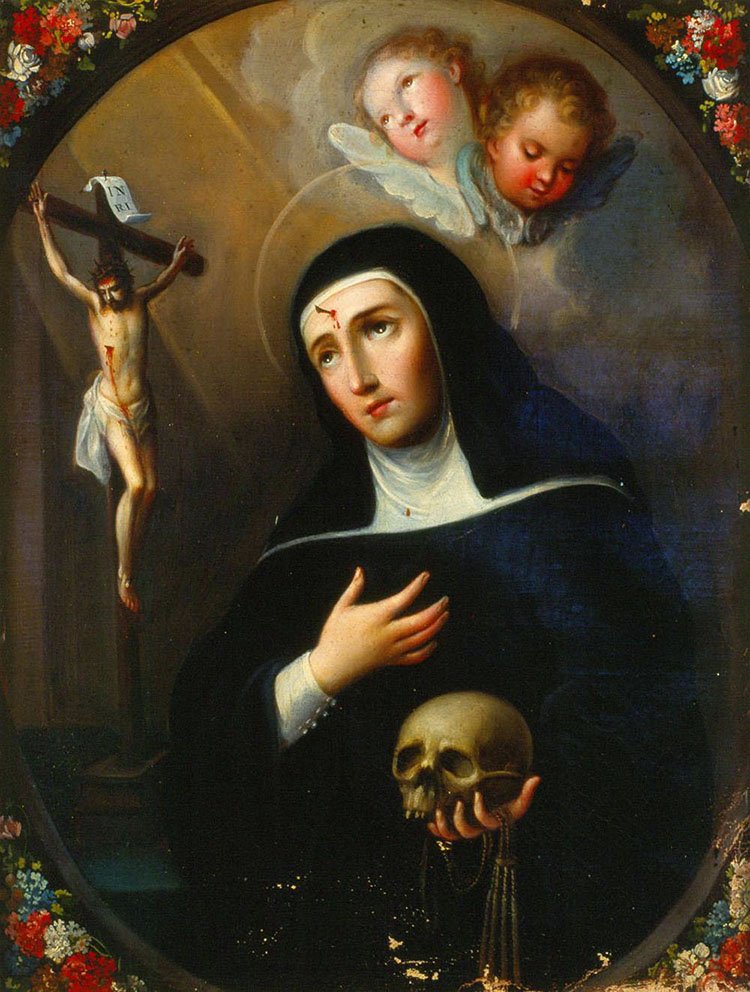
I find it utterly fascinating that the future of the SSPX seemingly lies in the hands of this most holy Saint.
St. Rita, intercede for us, that God's will be done through your most powerful prayers!
De brand in de Notre-Dame in Parijs leidde tot een bijzondere archeologische ontdekking: meer dan 1,000 fragmenten van middeleeuwse sculpturen werden ontdekt tijdens de restauratie, waaronder levensgrote beelden van het oorspronkelijke oksaal uit de 13e eeuw.
I’m old enough to remember when you could actually watch cable TV and find intelligent conversations. Once upon a time, Fulton Sheen sat with William F. Buckley on his Firing Line television program.
Even though it’s been more than 50 years since he said this, I think the quote is not only prophetic but the key to understanding what is wrong with our age today. Sheen warned that compassion shown more for the mugger than for the mugged was dangerous and he noticed it was becoming more and more common.
It was commentary back then, but now it looks more like prophecy.
I’ll never understand why people have more compassion for the criminal than the victim.
I’ve been thinking a lot about this quote as we approach the one-year anniversary of Iryna Zarutska’s death.
Blessed Fulton J. Sheen, you were right. Pray for us.
I love knowing that we can open a Mass Missal from the 1200s and one from Now (Latin Mass) and it’s the same.
Attending the same Mass as the saints, hearing the exact words they heard is Catholicity.
Catholic Fun Fact: John Wayne was a lifelong Presbyterian who officially converted to the Catholic Church just two days before his death in 1979. Raised in a Protestant household, he affectionately referred to himself as a "cardiac Catholic"—meaning he always intended to officially join the faith before he passed away. His journey to the Church was shaped by decades of surrounding himself with Catholic family and friends: All three of his wives and all seven of his children were Catholic. His first wife, Josephine Saenz, prayed faithfully for his conversion. As he battled stomach cancer in 1979, he was formally baptized and received the last rites by Archbishop Marcos McGrath. He expressed regret for not joining the Church earlier, often blaming his "busy life". Today, one of his grandsons, Father Matthew Muñoz, serves as a Catholic priest.
Detroit's Archbishop Weisenburger claims to be interested in "vibrant parishes," but he banned the Latin Mass at 13 locations, which is known to draw many young people and large families.
https://t.co/BsvQ8OcsPj