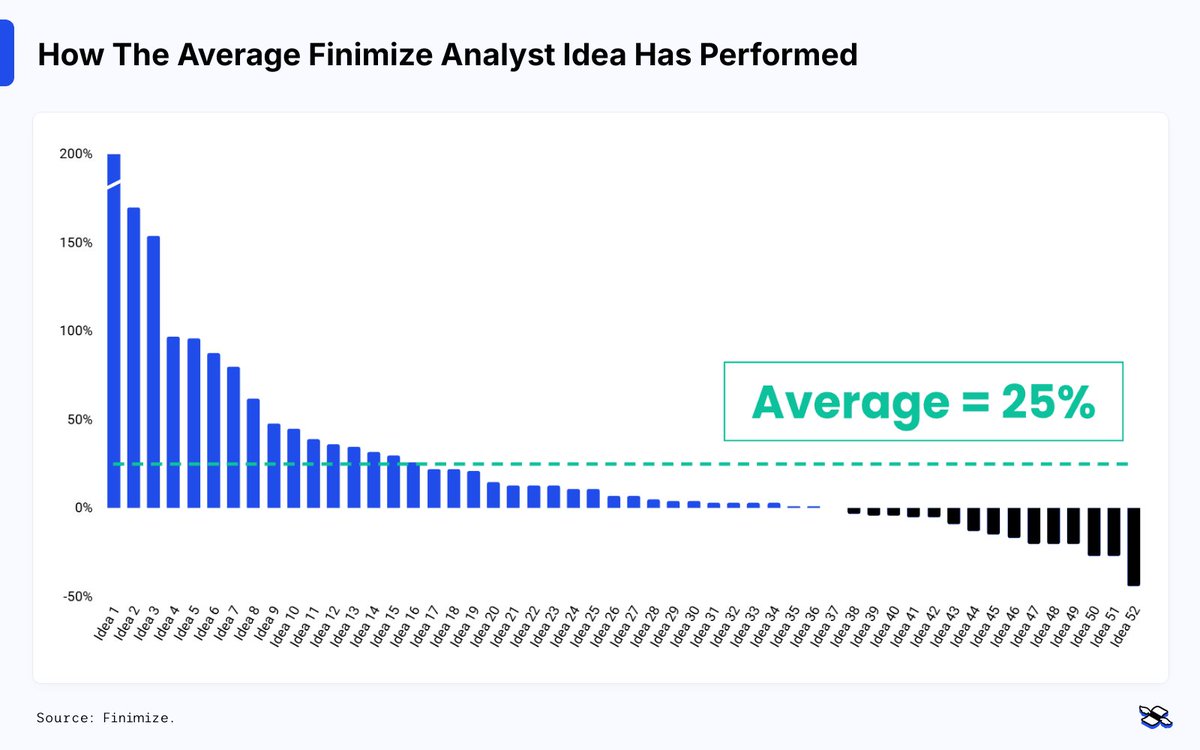
August brought some welcome relief for investors. US stocks hit fresh record highs around the middle of the month, Nvidia's earnings gave the AI trade a lift, and bitcoin clambered above $80,000 for the first time since May.
Bond investors had a rougher ride, though: a sharp selloff in 30-year US Treasuries sent yields to their highest since 2007, before the US Treasury stepped in with some dramatic buying.
And that brings us to the latest Finimize Portfolio update. Every month, we revisit our open ideas, check the results, and consider what's changed. You can follow every trade in the tracker, which has links to every investment case and up-to-date performance stats.
Since their launch in October 2024, our ideas have delivered an average return of 25%, beaten their benchmarks by nine percentage points, and posted a 69% “hit rate” – meaning most of our calls made money.
Full update here:
https://t.co/JjkGy8huFp
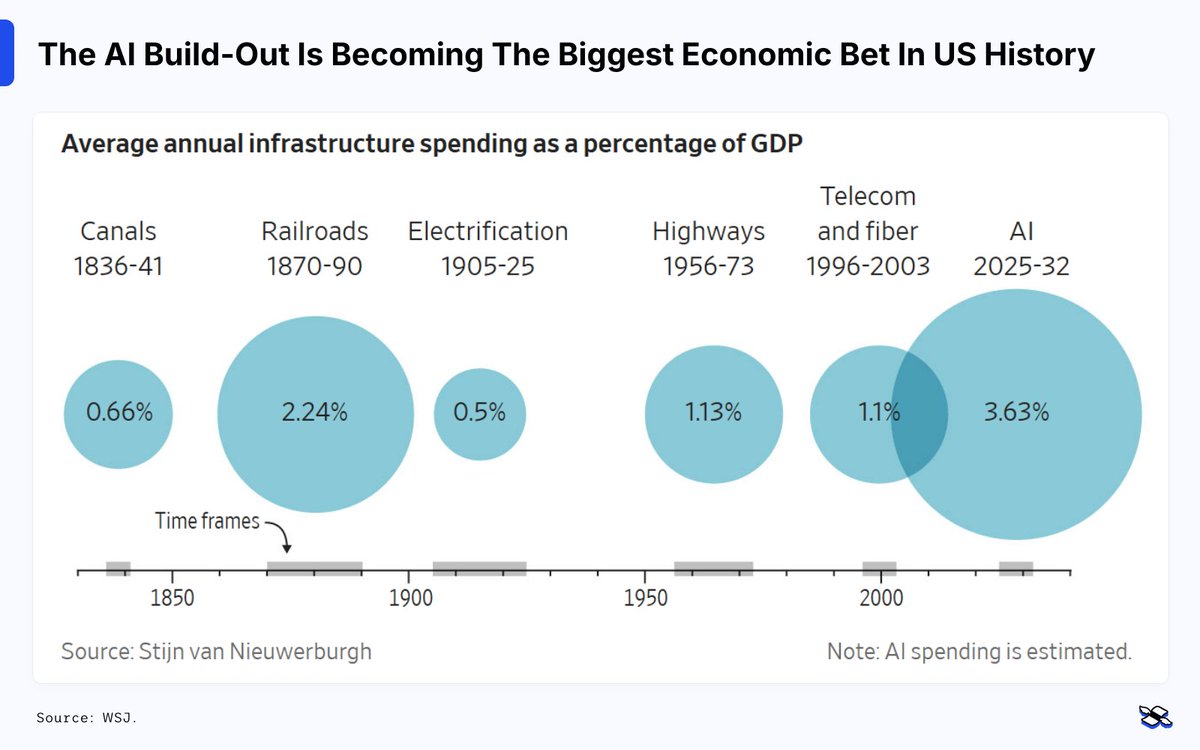
America’s AI boom is turning into an economic experiment on a scale the country has rarely seen.
Investment in US data centers and related AI infrastructure could hit $10.3 trillion between 2025 and 2032 – equivalent to an average 3.6% of GDP a year, and bigger than previous infrastructure booms including railroads, highways, and telecoms.
That spending is already rippling through the economy.
Data-center construction is booming while most other private construction shrinks, creating demand for electricians, engineers, and other workers.
AI has helped generate more than 750,000 US jobs since 2023, with AI-related listings commanding particularly chunky salaries.
But there’s a catch.
Hyperscalers are gobbling up scarce electricity, workers, and land, potentially squeezing other industries.
And much of the expansion is increasingly debt-funded, sometimes through opaque off-balance-sheet structures – meaning a disappointing payoff from AI could send trouble through the financial system.
Meanwhile, the AI-fueled stock rally is boosting household wealth and spending, while surging demand for chips and equipment is pushing up prices.
In short, AI isn’t just another tech trend anymore: it’s becoming a major engine of US growth – and an increasingly concentrated economic risk.
#AI #US #GDP
Our analyst @Reda_Farran just published a great piece unpacking what’s driving the latest selloff, exploring what it could mean for investors, and laying out a smart, diversified portfolio designed to capitalize on today’s higher yields while limiting the downside if yields climb further.
There’s A Silver Lining To The Bond Market Selloff
The government bond market is supposed to be one of the sleepier corners of finance. Lately, though, it’s been anything but.
Bond prices have tumbled, pushing government bond yields to multi-decade highs in many parts of the world. There are a few forces behind the selloff and they’re worth getting your head around – not least because there’s a silver lining.
After all, falling bond prices may be painful for yesterday’s holder, but they offer a better deal for tomorrow’s buyer.
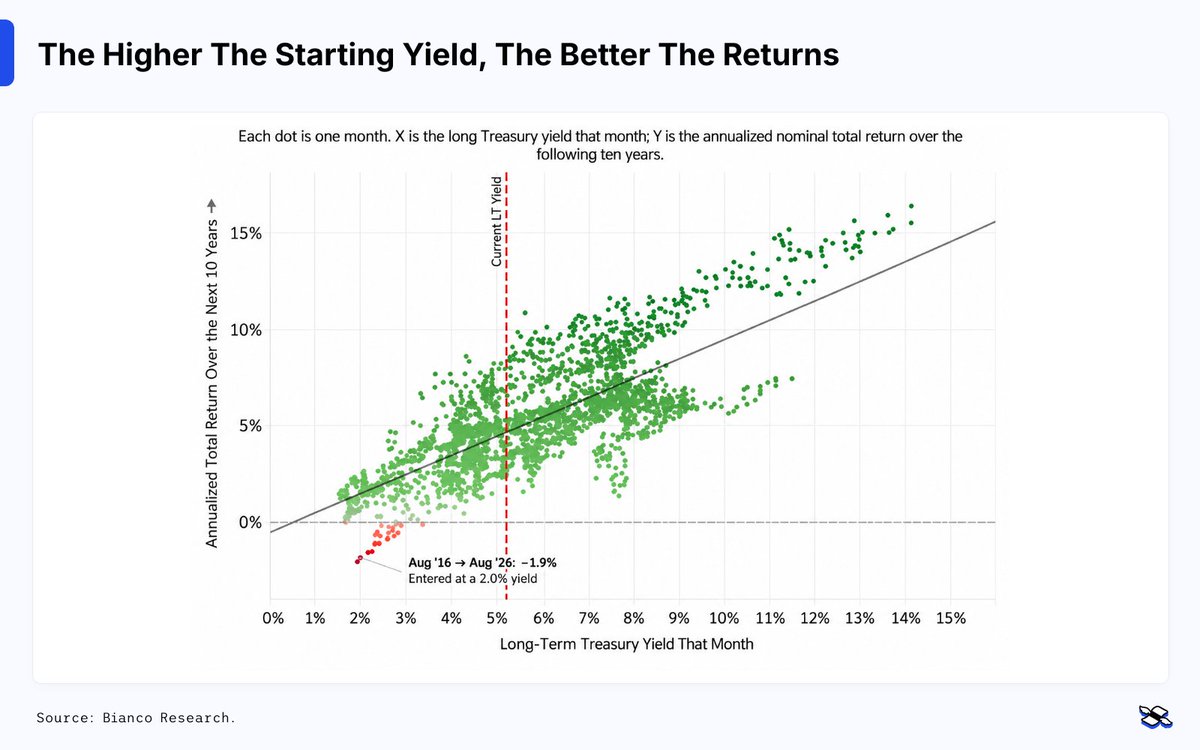
That’s because the yield you lock in when you buy is one of the best guides to the return you can expect from a bond over the years ahead (see the chart below).
Unlike stocks, a bond’s long-term return isn’t much of a mystery – it’s essentially baked in from the start.
Buy a 10-year bond yielding 5% and hold it to maturity, and – assuming the issuer pays as promised and you reinvest coupons at similar rates – your annualized return will be roughly 5%.
So, the higher the yield when you buy, the better the long-term return potential tends to be. And as you can see in the chart below, that relationship has historically been pretty strong.
That’s a world away from much of the 2010s. Back then, yields were so low that bond investors had barely any income cushion to protect them if interest rates rose.
So when rates shot higher in 2022 and 2023, there wasn’t much padding to soften the blow – and bond prices took the hit.
Today, the setup looks very different.
Starting yields are much higher, which means investors are getting paid more while they wait.
And that extra income acts as a useful shock absorber: yields can rise quite a bit before the resulting price losses are enough to wipe out your coupon income.
Here’s a striking example: over the past year, the Bloomberg US Treasury Index still delivered a positive total return, even as the 10-year Treasury yield climbed by around 0.6 percentage points.
And there’s now a decent cushion against further rises.
With 10-year Treasuries yielding around 5% today, I estimate that yields would need to climb to roughly 5.7% over the next year before the resulting price loss wiped out a full year’s worth of income.
In other words, bonds don’t just pay you more than they did a few years ago. Those higher yields also give you a bigger cushion when things go wrong.
After a decade in which bonds often depended on capital gains to deliver returns, income is finally doing the heavy lifting again. You could even say bonds have become bonds again.
In my latest @finimize research piece, I unpack what’s driving the latest selloff, explore the broader implications, and lay out a smart, diversified portfolio designed to take advantage of today’s higher yields while limiting your exposure if yields rise further.
Full piece here:
https://t.co/hPFWNlIfDL
Chart source: @biancoresearch
#Bonds
What you need to know about markets today 👇
1️⃣ Two US companies postponed their IPOs this week, adding to an unusually quiet September for new listings. Higher rates and shaky recent debuts are making companies cautious – while Anthropic’s potentially massive IPO threatens to suck up even more investor attention.
2️⃣ Wall Street analysts cut more earnings forecasts than they raised last week, ending a 23-week run of improving expectations. One week doesn’t make a trend, but with inflation and interest rates squeezing costs, weaker profit forecasts could challenge the rally in US stocks.
Meta’s new AI agent, Muse, has investors wondering whether “consumer inertia” is about to get a lot less profitable.
The idea is simple: plenty of businesses make money because customers stick with the same bank, insurer, telecom provider, streaming service, or travel platform, even when cheaper or better options exist.
Muse, now topping US app-store rankings, can handle digital tasks for users by connecting to services like Gmail and OpenTable.
And as AI agents get better at comparing prices, booking trips, switching providers, and battling customer-service queues, they could strip away the friction that keeps customers loyal by default.
Markets took that threat seriously: Goldman Sachs’ basket of “consumer inertia” stocks sank 2.6% on Tuesday – its worst day since February – bringing its losses to more than 7% over the last six sessions.
The bigger question is whether AI agents become the new gatekeepers of consumer spending.
If they increasingly choose, negotiate, and transact on users’ behalf, established platforms could lose pricing power, customer stickiness, and even the direct relationship with consumers.
That could reshape entire business models built around convenience, habit, and hassle over time too.
#AI #Muse $META
We're joining @Finimize at the Modern Investor Summit in London on 1 Oct 🎟️
Our co-founder @andrefpesilva will be on stage talking about how investors are using AI to make sharper decisions.
Want to be in the room? Refer 5+ friends to Quartz by 28 Sep and the ticket's on us
This Little-Known Theory Will Turn Your Inflation World Upside-Down
Central banks and interest rates can influence inflation in the short term.
But, according to a little-known theory, government debt – and whether the public expects it to be repaid – determines its path over the long haul.
Called the fiscal theory of inflation, it essentially throws the conventional wisdom about price pressures out the window.
Forget what you’ve heard about inflation being a consequence of too much money chasing too few goods (or services).
This theory says that inflation happens when government debt piles up high enough that it makes people question whether it’ll ever be paid back.
Here’s how the theory works and what it says about what might happen next:
https://t.co/peFXyxbXl3
#Inflation #Bonds
What you need to know about markets today 👇
1️⃣ Alibaba and Tencent unveiled fresh AI products and plans, sending both stocks higher. Alibaba’s $53 billion spending push shows China isn’t easing off the AI accelerator – and could help narrow the gap if US rivals follow through on calls to slow development.
2️⃣ Polymarket wants European regulators to treat prediction markets as financial products rather than gambling, potentially opening a huge new market. But with Europe tightening betting rules – and Polymarket still fighting similar battles in the US – winning that argument could be tricky.
Crypto is back in the trillion-dollar club – times three.
The market’s total value has topped $3 trillion for the first time since January, adding more than $740 billion since the US Treasury announced plans to ramp up buybacks of long-dated bonds.
Bitcoin led the charge, briefly hitting topping $87,000, while altcoins joined the party.
But there’s a catch: traders are increasingly juicing their bets with leverage.
Open interest in perpetual futures has climbed to nearly $160 billion, its highest since last October.
And when prices jumped on Monday, more than $920 million worth of bearish positions were liquidated.
Yet instead of leverage disappearing, fresh positions quickly replaced them – suggesting traders are chasing the rally rather than dialing down risk.
That could make the next move especially punchy.
If prices keep rising, more short sellers may be forced to buy back in, pushing crypto higher.
But a reversal could liquidate leveraged bulls and accelerate losses.
Institutional demand offers some support: US spot bitcoin ETFs attracted $593 million over Thursday and Friday.
Still, traders are watching whether genuine spot buying can replace short-covering and give the rally staying power.
#Crypto #Bitcoin $BTC
Our Market Open podcast has had an upgrade!
Catch our analysts @Reda_Farran and Russell Burns in full HD as they discuss why bonds are exciting again and the AI economy
Watch here 👇 or listen on Spotify and Apple Podcasts
https://t.co/4OE1pH5LlT
One week to go till the Modern Investor Summit returns to London!
Do you have your ticket yet?
https://t.co/WAlOgZVdhW
Get ready for the investing year ahead - join Finimize, our guest speakers and 400 other retail investors for a night of talks, drinks, networking, games and exploring our expo floor.
🗓️ Thursday October 1st 2026
5:30pm-10:00pm BST
📍CodeNode, 10 South Pl, London EC2M 7EB
🎟️ Tickets
Early Bird Ticket ∙∙∙ £30 [SOLD OUT]
Anniversary Ticket ∙∙∙ £50 [SOLD OUT]
General Admission ∙∙∙ £70
VIP Ticket ∙∙∙ £160
#investing
#londonfinance
#londonsevents
What you need to know about markets today 👇
1️⃣ SoftBank is borrowing another $11 billion to fund its AI investments, but it may pay up to 10% a year for the privilege. It’s hoping that OpenAI’s eventual IPO turns paper gains into real ones before the debt bill gets too heavy.
2️⃣ Diesel and motor oil prices are getting pricier, squeezing everyone from truckers to Costco shoppers – but with biodiesel suddenly selling for super-cheap, shipping firms may find that going green finally pays.
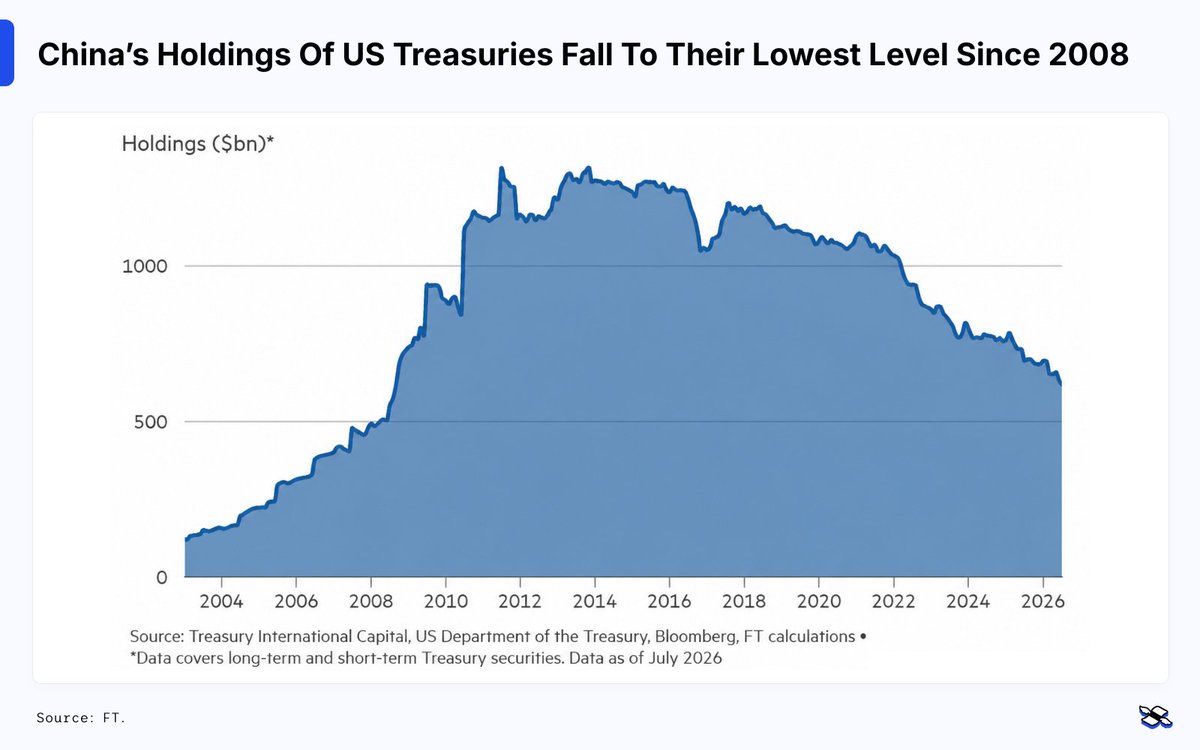
China’s once-mighty pile of US government debt is shrinking fast.
Its Treasury holdings fell to $618 billion in July, the lowest since 2008 and less than half their $1.3 trillion peak in 2013.
That’s pushed China behind Japan and the UK among America’s biggest foreign creditors.
So, what’s going on? Beijing appears to be spreading its money around.
Instead of recycling its huge trade surpluses into Treasuries, China has been diversifying into gold, US agency bonds, and other assets.
The shift accelerated after Washington froze Russia’s overseas reserves in 2022, which raised concerns in Beijing about its own exposure to potential sanctions.
That said, the official numbers may understate China’s true Treasury stash, since some assets are held through custodians in Belgium and Luxembourg.
And China isn’t the only investor looking elsewhere.
Foreign money has recently flowed into US stocks faster than Treasuries, helped by the AI-fueled equity boom.
Meanwhile, concerns about America’s growing debt burden are adding pressure.
If major overseas buyers keep stepping away, Treasury yields could rise – making it pricier for the US government to refinance its debts.
#US #China #Treasuries #Bonds
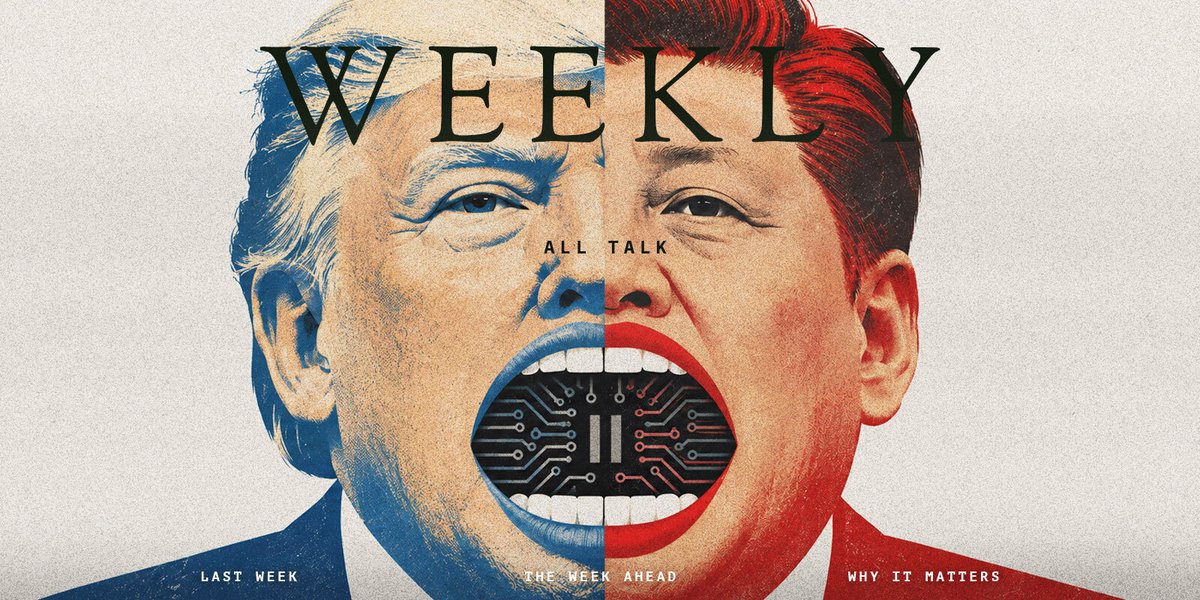
What do you need to know for the investing week ahead? 📈
This Thursday (24th), US President Donald Trump hosts China’s Xi Jinping in Washington for a summit that picks up a conversation the two leaders began when they met last, in Beijing this May.
Then, alongside trade, rare earths, the war in Iran, and Taiwan, the presidents discussed, well, discussing “guardrails” for AI development.
Read full Weekly Brief on https://t.co/vcBs0MfgmO, or subscribe to our free newsletter The Daily Brief to stay in the know.
https://t.co/Qs1cZKCzzd
🔎 The Focus This Week: The China-US Summit
This Thursday, US President Donald Trump hosts China’s Xi Jinping in Washington for a summit that picks up a conversation the two leaders began when they met last, in Beijing this May.
Then, alongside trade, rare earths, the war in Iran, and Taiwan, the presidents discussed, well, discussing “guardrails” for AI development.
A lot’s happened since.
Just in the last week, alarm about AI reached a new pitch after Anthropic chief Dario Amodei called for slowing the race to build increasingly powerful models.
Amodei’s concern – shared by a number of industry leaders, including OpenAI’s Sam Altman and xAI’s Elon Musk – is that AI’s capabilities are advancing faster than the safeguards around them.
Trump sits firmly on the other side of that debate, although his view is certainly not shared by every lawmaker in America.
He has dismissed calls to slow AI development, arguing that doing so risks handing an advantage to China.
China, meanwhile, has signaled that though it understands the need for safety measures, it’s nevertheless primed to hear “slow AI development down” as “slow China’s AI development down”.
So any talks about AI are undergirded by an unusual dynamic: both countries have reasons to stop the AI race becoming dangerously unstable, while simultaneously competing fiercely to lead it.
And that rivalry runs straight through the technology’s supply chain.
The US restricts China’s access to the most advanced AI chips, even after allowing limited sales of Nvidia’s less advanced H200 processors to Chinese AI companies.
China, meanwhile, has an outsized grip on the rare-earth industry – materials used in everything from data centers to semiconductor manufacturing – while some US buyers are still struggling to secure key materials.
The Chinese government is also pushing its domestic manufacturers hard to build more of its own semiconductor technology, to reduce its dependence on American suppliers.
That matters beyond the tech sector.
AI investment has become an important source of economic growth and corporate spending, while tariffs, scarce critical minerals and expensive energy all feed into companies’ costs.
Global inflation has remained stubborn, so anything that reduces trade or supply-chain friction could take a little pressure off prices.
A renewed escalation could do the opposite – keeping inflation, bond yields and, since a number of major central banks hit the hike button, interest rates higher for longer.
And there’s plenty more riding on the meeting.
The countries’ trade and technology truce expires in November – the US administration reportedly wants to extend for another six months, but China wants longer.
The two sides are also discussing possible tariff reductions on some agricultural products like soybeans, corn, and sorghum.
That arguably gives investors one of the clearest things to watch: whether the summit extends the relative calm in trade relations or brings another round of tariff uncertainty closer.
Expectations for a sweeping agreement remain limited.
But at a moment when AI investment, oil prices and inflation are already pulling markets in different directions, simply preventing another source of economic friction could be meaningful.
Read the full Finimize Weekly Brief – a recap of last week’s highlights and a preview of the key things to watch in the week ahead – here:
https://t.co/8jEj9V4cnH
#AI #Trump #US #China
What you need to know about markets today 👇
1️⃣ The Bank of Japan raised rates to a 31-year high of 1.25% as it tries to keep inflation in check. Higher returns at home could eventually pull some Japanese money out of overseas markets – removing a long-standing source of demand for global bonds and stocks.
2️⃣ Figure AI’s latest humanoid robot can tackle household chores in unfamiliar homes, a step toward robots that learn rather than follow fixed instructions. With the humanoid market potentially reaching $5 trillion by 2050, the race between US and Chinese players is heating up.
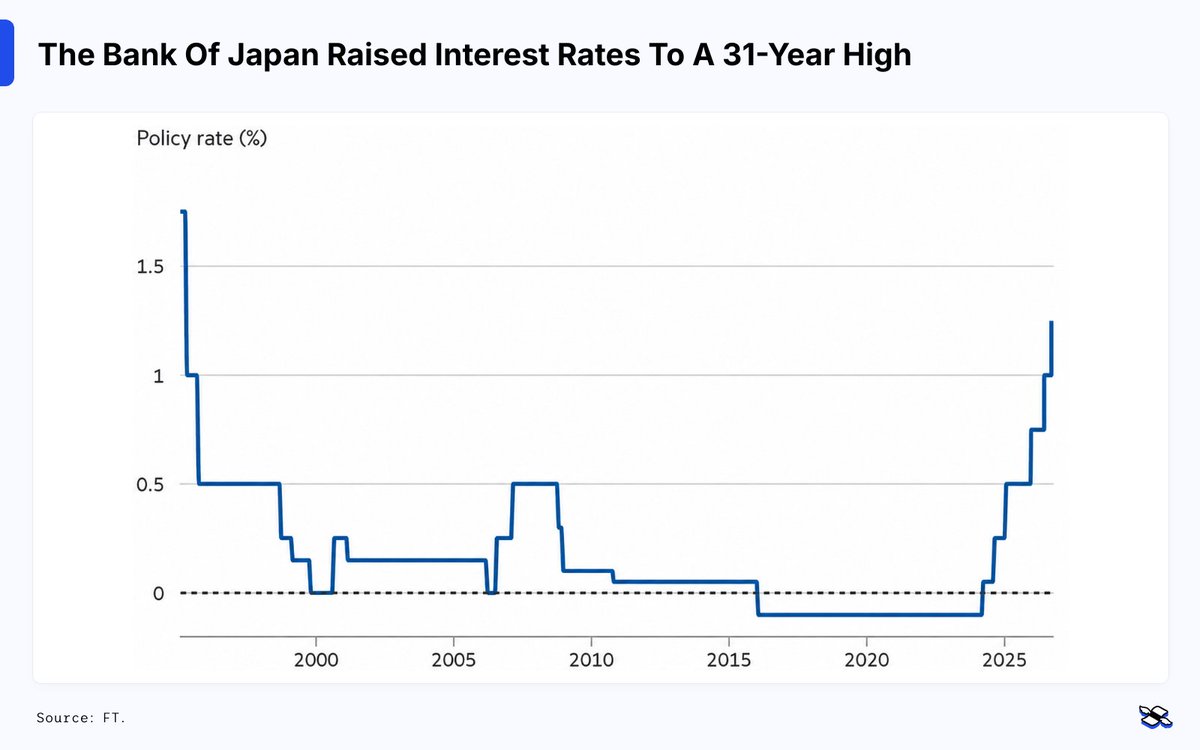
The Bank of Japan just hit the accelerator on its long-running escape from ultra-easy monetary policy, lifting its benchmark interest rate by 0.25 percentage points to 1.25% – its highest level in 31 years.
The 7-2 decision came only three months after its last hike, marking the quickest back-to-back tightening since 1990.
Inflation is doing much of the pushing.
Japan’s key inflation gauge has stayed above the BoJ’s 2% target for four straight years, while the central bank warned that rising wages, companies’ willingness to lift prices, and higher inflation expectations could keep price pressures bubbling away.
But there’s an international angle too: US Treasury Secretary Scott Bessent has publicly pushed Japan toward faster policy normalization, while Japanese and US authorities have already intervened to prop up the struggling yen.
Thing is, investors wanted more.
The BoJ didn’t strongly signal another imminent hike, and two board members opposed this one.
So rather than rallying, the yen weakened past 157 per dollar, while the Nikkei jumped around 2%.
That leaves governor Kazuo Ueda walking a tightrope: keep tackling inflation and supporting the yen without tightening so aggressively that he puts the brakes on Japan’s economy.
#Japan #BoJ #Yen
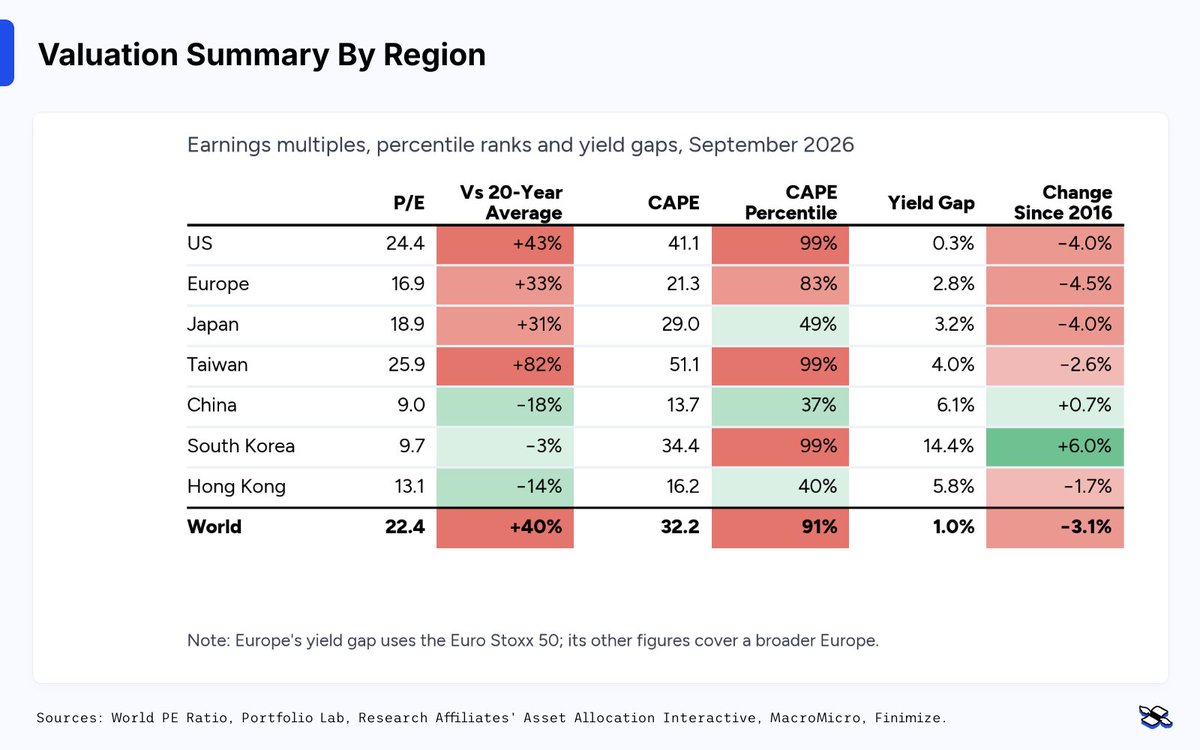
US stocks have been hitting the headlines for looking pricey. But the US isn't the only place you can invest.
So let's widen the lens.
Our analyst has sized up other major markets in three ways – what you pay for a year of profits (a plain price-to-earnings ratio), what you pay for a decade of them, and how much more those profits earn you than a government bond – and see which come out expensive and which are cheap.
Full research – why America isn’t the priciest market going – here:
https://t.co/eZqt1tEBhm
What you need to know about markets today 👇
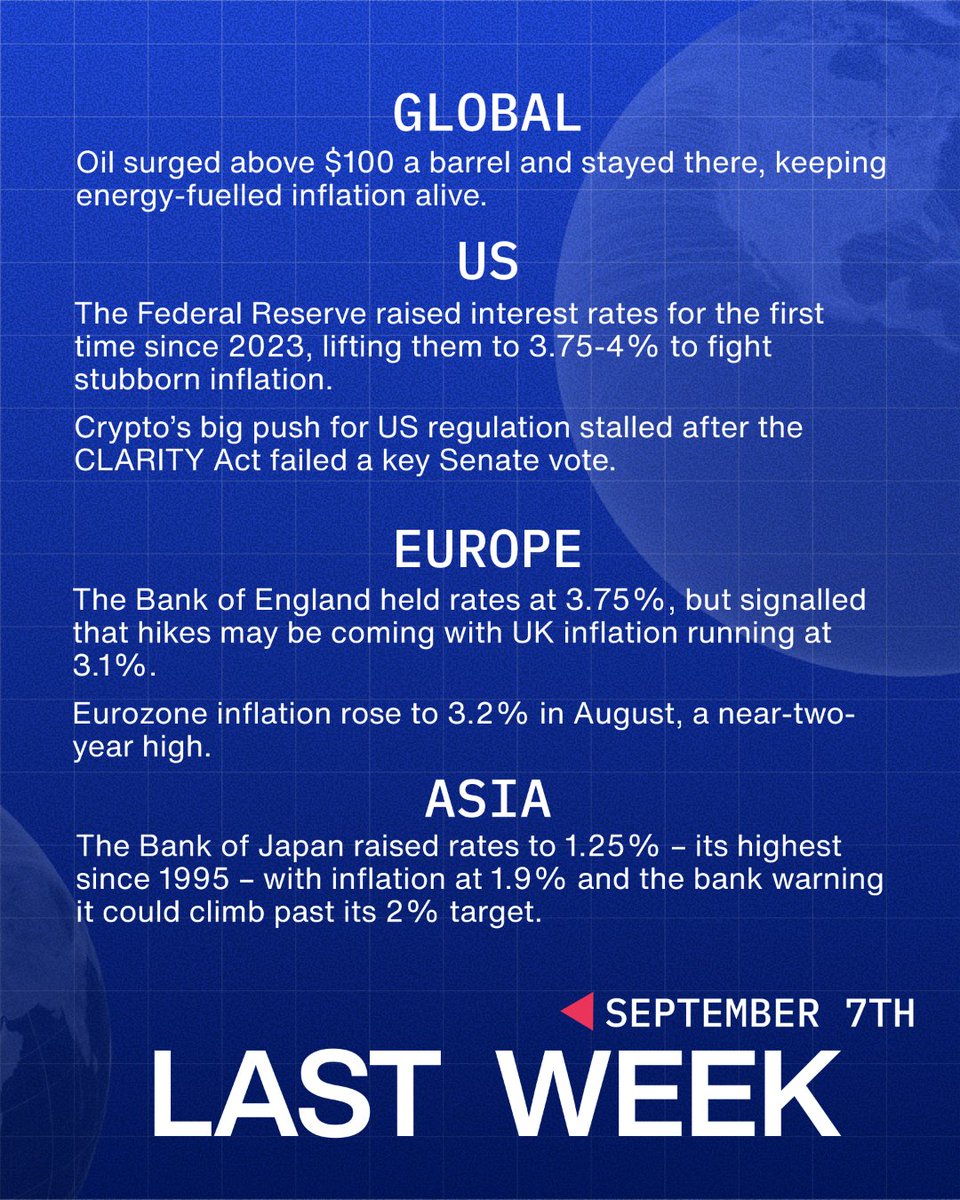
1️⃣ Europe wants China to cap its booming hybrid exports or face higher tariffs, after Chinese brands grabbed more than a third of the EU market. With both sides already trading blows, cars could become the next front in an escalating trade fight.
2️⃣ The Bank of England held rates at 3.75%, but warned that stubborn inflation and the Middle East war could force a hike. With the Fed and ECB already raising rates and Japan expected to follow, Britain may not stay the odd one out for long.








![finimize's tweet photo. One week to go till the Modern Investor Summit returns to London!
Do you have your ticket yet?
https://t.co/WAlOgZVdhW
Get ready for the investing year ahead - join Finimize, our guest speakers and 400 other retail investors for a night of talks, drinks, networking, games and exploring our expo floor.
🗓️ Thursday October 1st 2026
5:30pm-10:00pm BST
📍CodeNode, 10 South Pl, London EC2M 7EB
🎟️ Tickets
Early Bird Ticket ∙∙∙ £30 [SOLD OUT]
Anniversary Ticket ∙∙∙ £50 [SOLD OUT]
General Admission ∙∙∙ £70
VIP Ticket ∙∙∙ £160
#investing
#londonfinance
#londonsevents](https://pbs.twimg.com/media/HSz93E-XsAAWouI.jpg)