"Job's bottomless and senseless suffering did more than strip him of every joy and achievement of his life. It swept from beneath him the very theological rug upon which he had reclined so contentedly for decades. The bond between action and consequence, between piety and prosperity, lay suddenly in ruins.”
In the latest issue of The Jew from Nowhere, First Things’ newsletter on Jewish thought and culture, J.J. Kimche revisits the Book of Job through the figure of Job’s wife, arguing that her brief and unsettling intervention exposes one of the book’s deepest theological tensions.
Read and subscribe for free at https://t.co/a4MFiPHo18
"Job's wife is neither peripheral nor irrelevant. On the contrary, her terrible little sentence may represent the single most coherent theological position in the entire book."
In the latest issue of The Jew from Nowhere, First Things’ newsletter on Jewish thought and culture, J.J. Kimche revisits the Book of Job through the figure of Job’s wife, arguing that her brief and unsettling intervention exposes one of the book’s deepest theological tensions.
Read and subscribe for free at https://t.co/a4MFiPHo18
In the latest issue of The Jew from Nowhere, First Things’ newsletter on Jewish thought and culture, J.J. Kimche revisits the Book of Job through the figure of Job’s wife, arguing that her brief and unsettling intervention exposes one of the book’s deepest theological tensions.
Read and subscribe for free at https://t.co/a4MFiPHo18
“The sexual constitution of the body is central to who we are, such that behavior involving such—whether criminal, consensual, or consequential—carries unique significance.”
Pelvic Theology, Pelvic Justice
Carl R. Trueman on “pelvic theology,” sexual ethics, and why sex remains central to what it means to be human.
Full piece available at https://t.co/RKQBRXa26s
Pelvic Theology, Pelvic Justice
Carl R. Trueman on “pelvic theology,” sexual ethics, and why sex remains central to what it means to be human.
Full piece available at https://t.co/RKQBRXa26s
Pelvic Theology, Pelvic Justice
Carl R. Trueman on “pelvic theology,” sexual ethics, and why sex remains central to what it means to be human.
Full piece available at https://t.co/RKQBRXa26s
In the latest podcast episode, Sam Zeno Conedera joins R. R. Reno on The Editor's Desk to talk about his recent essay, “Ratzinger in the Whirlwind” from the May 2026 issue of the magazine.
Listen at https://t.co/yqVbrYhp0Y
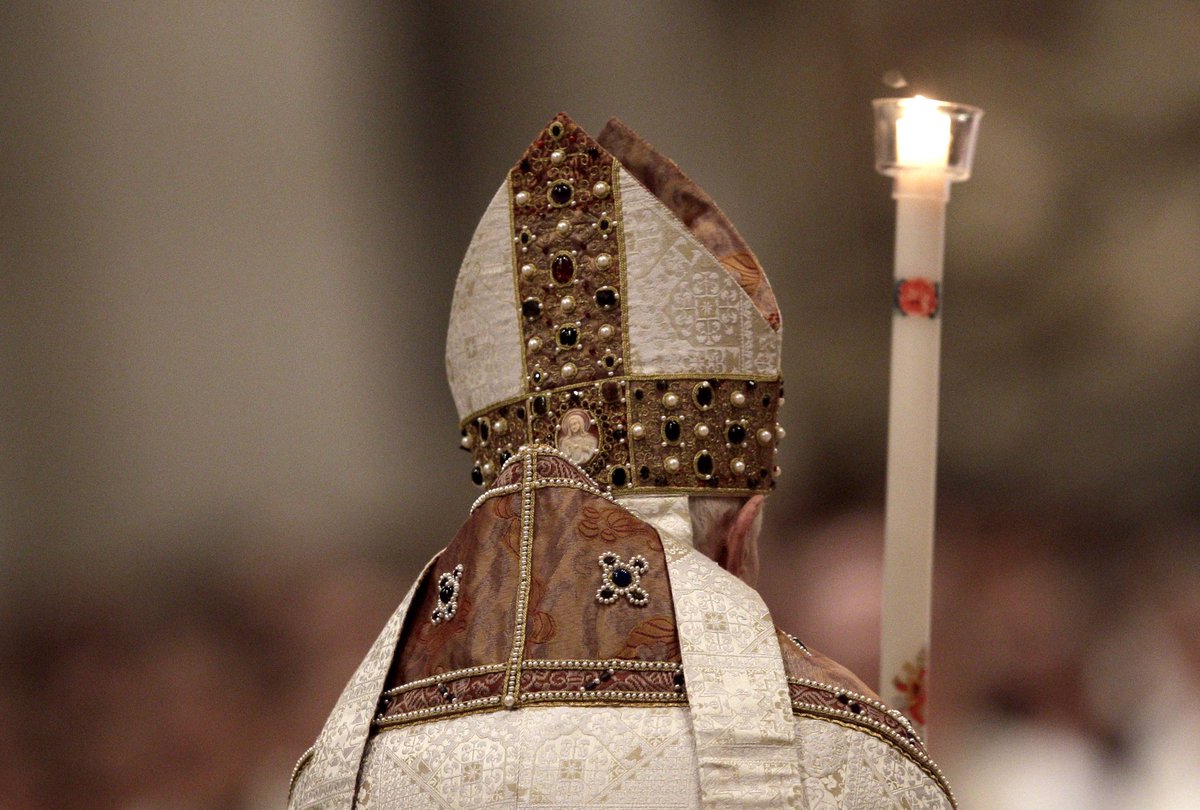
“In short, while the new pope wasn’t hostile to the Church in the U.S., neither did he see it, in 1978, as one possible template for the Catholic future. That would change dramatically over the next quarter-century, in part because of the renewal that John Paul II helped ignite in American Catholicism and in part because of his growing understanding that the United States, while deeply rooted in Europe, was not simply Europe transplanted.”
“O Felix Culpa, O fortunate fall? Adam’s fall redeemed the world but what of mine?” My latest for @firstthingsmag
Can These Bones Live? https://t.co/eUEe4JfZub
The Pope Speaks—Catholics Fight
James Keating
Love it or hate it, the reaction to Magnifica Humanitas shows the Church's relevance.
Available at https://t.co/uXIZnKKt50
In this latest issue of The Fourth Watch newsletter, James Keating reflects on Magnifica Humanitas and the debate it has sparked among Catholics, arguing that such reactions are themselves evidence of the Church’s enduring relevance.
The Pope Speaks—Catholics Fight
James Keating
Love it or hate it, the reaction to Magnifica Humanitas shows the Church's relevance.
Available at https://t.co/uXIZnKKt50
In this latest issue of The Fourth Watch newsletter, James Keating reflects on Magnifica Humanitas and the debate it has sparked among Catholics, arguing that such reactions are themselves evidence of the Church’s enduring relevance.
The Pope Speaks—Catholics Fight
James Keating
Love it or hate it, the reaction to Magnifica Humanitas shows the Church's relevance.
Available at https://t.co/uXIZnKKt50
In this latest issue of The Fourth Watch newsletter, James Keating reflects on Magnifica Humanitas and the debate it has sparked among Catholics, arguing that such reactions are themselves evidence of the Church’s enduring relevance.
“Cultural Christianity is a deeply ambivalent reality. When it is divorced from the Church and drifts away, when it pretends to be the fullness of Christianity, it is not worth saving.”
“Cultural Christians are strong allies in preventing the destruction of what remains. For rebuilding and evangelizing, however, they can lack the orientation, motivation, and perseverance that only a living faith can supply.”