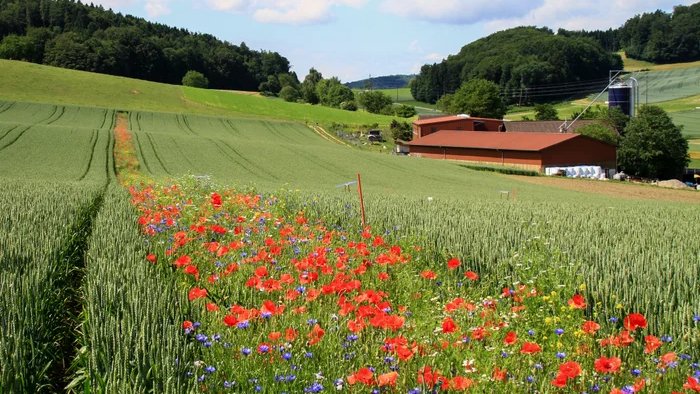
Farmers have figured out that the cheapest pesticide is a strip of flowers.
When you plant wildflowers through a crop field, not just around the edge but in strips running through the middle, you get ladybugs, lacewings, hoverflies, and parasitic wasps living in the field instead of visiting it.
They eat the aphids, the caterpillars, and the mites for free, all summer long.
In controlled trials, fields with tailored flower strips had leaf-beetle numbers 40 to 50% lower and crop damage cut by around 60%, enough to drop below the threshold where spraying was even considered worth it.
The flowers attract a standing army to our fields.
We spent decades engineering chemicals to kill the insects eating the crop, when the insects that eat those insects would have worked for the price of seed.
A 10-year French experiment just showed that farming without pesticides is actually possible.
INRAE (France’s national agriculture research institute) ran nine different pesticide-free cropping systems across real farms — mixing long rotations, cover crops, biodiversity, and smart soil management. The results? In many cases, yields were close to (or even matched) conventional systems, and some were economically viable with the right marketing and crop diversity.
It wasn’t perfect — weeds were a challenge in some spots — but it proves pesticide-free isn’t just a dream. It’s technically and economically doable under the right conditions.
This is encouraging. We keep hearing that we have to choose between food production and protecting the environment, but studies like this show there might be smarter paths forward.
If we can grow food with far fewer chemicals while keeping farms profitable, it could be a game-changer for soil health, biodiversity, water quality, and long-term food security.
What do you think — could we realistically move toward much lower-pesticide farming at scale, or are there too many obstacles?
Le libre-échange est un fanatisme marchand qui sert les multinationales contre les peuples. Aucun pays ne s'est enrichi grâce au libre-échange & tous ceux qui l'ont appliqué se sont ruinés.
Source: "Soirée Constituante sur la Souveraineté alimentaire"
@newstart_2024 Il y a quelques décennies, les femmes, principalement elles, restaient au foyer pour s'occuper des enfants et de la maison. Mais, elles dépendaient totalement du bon vouloir de leur mari pour s'acheter des vêtements, des produits d'hygiène, faire une activité culturelle, etc...
Oh putain !
Champagne !
C’est une des meilleures nouvelles de l’année.
Et j’espère qu’avant de ranger leurs crayons, ces raclures auront la décence de présenter leurs excuses à tous les médecins qu’ils ont suspendu sur la base de RIEN…
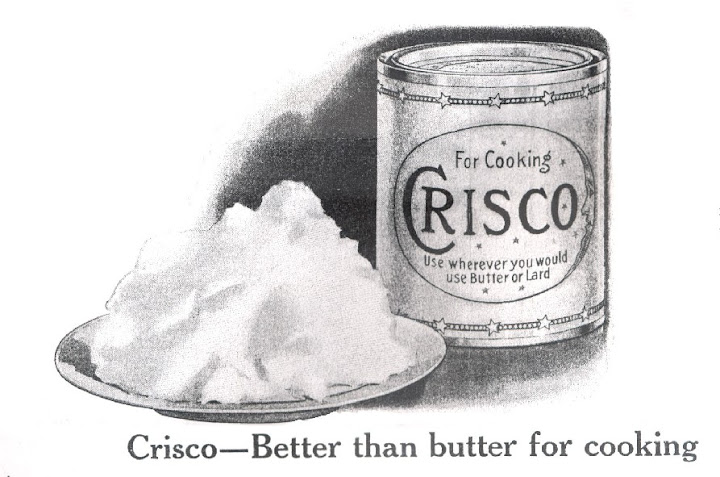
In 1907 a German chemist called Edwin Kayser walked into the offices of Procter & Gamble in Cincinnati with a patent and a proposition.
The patent described a process for taking liquid cottonseed oil, bubbling hydrogen through it under pressure in the presence of a nickel catalyst, and producing a solid white substance with a long shelf life and no particular flavour.
Procter & Gamble bought it immediately. They were not a food company. They were a soap company. Their interest in hardened cottonseed oil was that it could be turned into soap more cheaply than tallow, and tallow prices were rising.
The hardened cottonseed oil made excellent soap.
It also, the chemists noted, looked exactly like lard.
It is worth pausing to remember what cottonseed oil actually was. For most of the nineteenth century, cotton seeds were industrial waste. The oil pressed from them was dark, foul, and used primarily in the manufacture of explosives, dyes, and roofing tar. Improvements in bleaching in the 1880s made it palatable enough to use as an adulterant in olive oil. Its chief virtue was that it was nearly tasteless and very, very cheap.
Procter & Gamble looked at the hardened cottonseed oil sitting in their soap factory, looked at the lard market, and made a decision.
They needed a name. They tried Krispo. Trademark conflict. They tried Cryst. Someone in management noted, delicately, the religious connotations. They settled on Crisco, derived from CRYStallised Cottonseed Oil, and launched it in June 1911 with one of the first modern advertising campaigns in American history.
The campaign did not mention cottonseed. It mentioned purity. It mentioned modernity. It mentioned the marvel of factory production over the messy, old-fashioned business of rendering animal fat at home. It distributed free cookbooks containing six hundred and fifteen recipes, every single one of which called for Crisco. It paid railways to use Crisco in their dining cars. It targeted Jewish households on the basis that Crisco was kosher in a way lard could never be.
By 1916, Americans were buying sixty million cans of Crisco a year. Three cans for every family in the country. Within one generation, lard had gone from the standard cooking fat in nearly every American kitchen to an old-fashioned ingredient your grandmother used.
There was no health data driving this. There was an advertising budget and a soap company that had accidentally invented a food.
The trans fats produced by partial hydrogenation, eventually banned in 2018 after killing an unknowable number of people, would not be flagged as a problem for another seventy years.
The cottonseed oil itself, now joined on the shelf by soy and corn and canola and sunflower, is still the dominant cooking fat in the developed world. It is in your salad dressing. It is in the fryer at every restaurant you have ever eaten in that did not specifically advertise otherwise. It is the default.
It started as soap.
Then it was looking for something to do.
Now it's the most-consumed fat in the Western diet, and the lard that built the American kitchen for two hundred years before it is the thing people are nervous about putting in their pastry.
The marketing worked.
It has not stopped working.
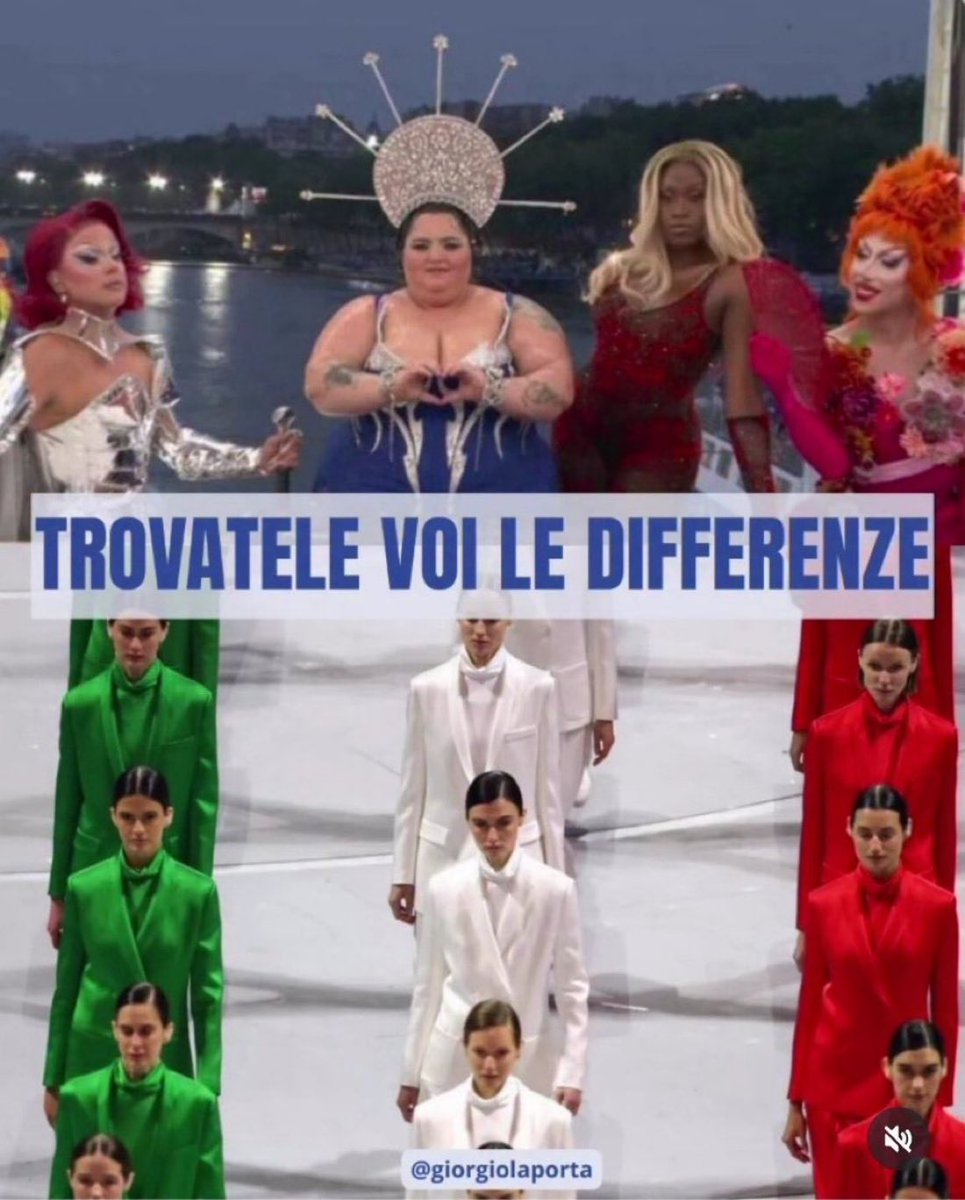
@LeonhardHahn Agli italini non piace questa interpretazione dell'inno nazionale, ma se paragonate con la ceremonia di apertura degli olimpiadi di Parigi, non c'è nulla da dire
Vous l'avez maintenant ?
All I wanna say is that they don't really care about us
All I wanna say is that they don't really care about us
Beat me, hate me, you could never break me
Will me, thrill me, you can never kill me
J- me, sue me, everybody, do me
Kick me, kike me, don't you black or white me
All I wanna say is that they don't really care about us
All I wanna say is that they don't really care about us
Tout ce que j'ai à dire c'est qu'ils se foutent pas mal de nous
Tout ce que j'ai à dire c'est qu'ils se foutent pas mal de nous
Battez moi, détestez moi
Vous ne pourrez jamais me détruire
Désirez moi, excitez moi
Vous ne pourrez jamais me tuer
Bradez moi, envoyez moi au tribunal
Allez-y vous tous sur moi
Donnez moi des coups de pied, envoyez moi au ghetto
Vous n'avez pas à m'appeler blanc ou noir
Tout ce que j'ai à dire c'est qu'ils se foutent pas mal de nous
Tout ce que j'ai à dire c'est qu'ils se foutent pas mal de nous
Ces fichiers sont une BOMBE.
Grâce à @JudiciaryGOP, nous avons maintenant la preuve que l’UE a activement censuré du contenu légal allant à l’encontre de son agenda — et qu’elle a interféré dans au moins 8 élections européennes, y compris les élections néerlandaises de 2023 et 2025, en rencontrant des plateformes de médias sociaux pour les inciter à censurer les discours politiques dans les jours précédant le vote.
À l’approche des élections néerlandaises de 2023, la Commission européenne a même désigné le ministère néerlandais de l’Intérieur de l’époque @hugodejonge comme « signalement de confiance » habilité à formuler des demandes prioritaires de censure en vertu du DSA.
Quel type de discours politique voulaient-ils censurer, demandez-vous ?
- « Rhétorique populiste »
- « Contenu anti-gouvernemental/anti-UE »
- « Contenu anti-élite »
- « Satire politique »
- « Contenu anti-migrants et islamophobe »
- « Contenu anti-réfugiés/ressentiment anti-immigrés »
- « Contenu anti-LGBTQI »
- « Sous-culture des mèmes »
En d’autres termes, tout ce qui va à l’encontre de leur agenda, tout ce qui est vaguement de droite ou conservateur, et tout ce qui concerne la situation migratoire désastreuse que nous connaissons ici en Europe.
Et devinez quelle a été la seule plateforme à ne pas coopérer ? @X, bien sûr. La même plateforme que l’UE amende de 120 millions d’euros en vertu du DSA et la même plateforme dont les bureaux sont actuellement perquisitionnés en France.
C’est le genre de choses pour lesquelles les gouvernements devraient démissionner et des institutions comme l’UE devraient s’effondrer. La démocratie est morte.
Abolissons l’UE ! Maintenant !