@SystematicPeter I've built something similar and my conclusion is quite the same, a ton of time saved that can be invested in what trading really is: idea exploration and validation
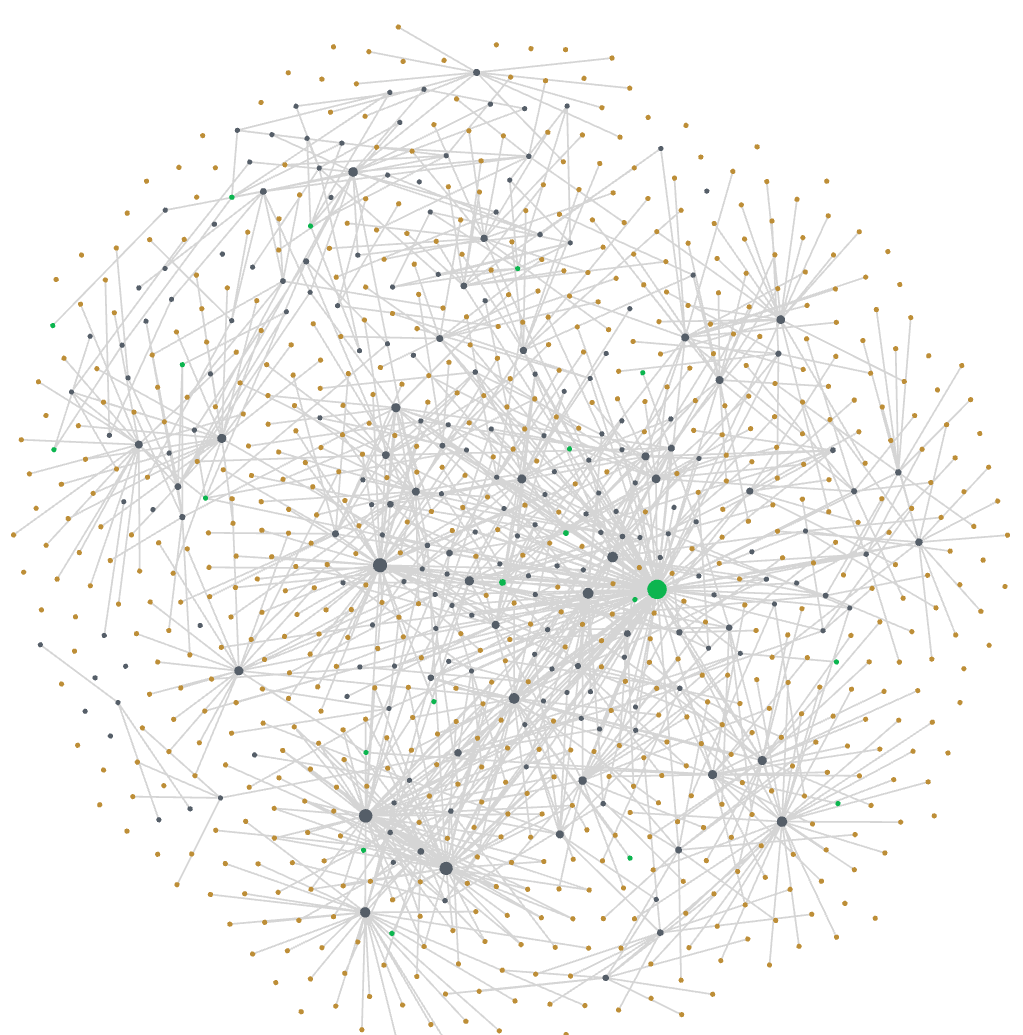
Edge in systematic trading is rarely born on the first research pass - it shows up after dozens of iterations and dead ends. My trick is boring but potent: document everything and interlink it. The graph you see is my Obsidian second brain - every dot a reusable principle, idea or note.
How I take notes that actually create edges:
- One principle per note - keep it atomic and actionable
- Heavy interlinking
- Capture tiny notes immediately - even a single sentence when something interesting pops up
- Template fields
- Test backups - store settings, versions, parameters, datasets and dates
Why it works:
- Resurfaces ideas that would be lost otherwise
- Forces systematic work with information instead of memory
- Recombines ideas across markets, timeframes and styles
- Exposes blind spots in the research
Start simple:
- Read about the Zettelkasten method
- Start using Obsidian (free) - cannot recommend it enough
Build the second brain and edges will emerge when you least expect them.
#systematictrading #obsidian #secondbrain #zettelkasten
Did you know the Bloomberg Terminal has 15,000 functions…
of which the average client only uses only 29?
In this thread I’ll be breaking down some of my favorite ones👇
🧵
The way you think about the exponential function is wrong.
Don't think so? I'll convince you. Did you realize that multiplying e by itself π times doesn't make sense?
Here is what's really behind the most important function of all time:
"Foundations of Computer Science"
by Alfred Aho & Jeffrey Ullman Chapter PDFs available at: https://t.co/WsNr7nNo3F
1. The Mechanization of Abstraction
2. Iteration, Induction, and Recursion
3. The Running Time of Programs
4. Combinatorics and Probability
5. The Tree Data Model
6. The List Data Model
7. The Set Data Model
8. The Relational Data Model
9. The Graph Data Model
10. Patterns, Automata, and Regular Expressions
11. Recursive Description of Patterns
12. Propositional Logic
13. Using Logic to Design Computer Components
14. Predicate Logic
Bloomberg Terminal: $24,000/year
Professional research: $10,000/year
Gemini 2.5 Pro: Free
Same quality analysis. 100x cheaper.
The financial analysis hack.
Here’s an exact mega prompt we use for stock research and investments:
Something is seriously wrong here:
For the first time in history, a NEW home in the US costs $33,500 LESS than an EXISTING home, per Reventure.
Not even June 2005 saw such a large gap, right before the 2008 Financial Crisis.
What is happening? Let us explain.
(a thread)
Lumber is one of the most sensitive barometers of future demand because it ties directly into housing, construction, and credit. When it rolls over this hard, it often means something deeper: builders pulling back, financing tightening, and consumers hesitating on big-ticket commitments.
We’ve seen this before. In 2006–07, lumber collapsed long before the housing bust became obvious. In 2021–22, lumber’s spike and crash captured the whiplash of pandemic stimulus meeting Fed tightening. Today’s drop, back under $600, is telling us not just about oversupply but about fading demand in an economy where mortgage costs remain restrictive and liquidity is being drained.
There’s also a market structure angle. Commodities like lumber usually run ahead of official data: the PMI slowdown, weakening credit surveys, and leveraged ETF outflows are all now echoing the same caution. Lower lumber prices might look like disinflation on paper, but if the driver is demand destruction, that’s recessionary, not bullish.
This is the kind of signal markets often ignore until it’s too late: a quiet commodity screaming that growth is slowing, leverage is retreating, and the cushion of speculative appetite is gone. When builders stop buying wood, it’s about the whole cycle losing momentum.
Moving Averages don't do well when data changes abruptly.
We can do better by solving a 100000-dimensional Second Order Cone Program.
Let's talk about Total variation denoising:
This might be the most underrated AI skill of 2025:
JSON prompting.
It turns your LLMs like ChatGPT, Gemini, and Claude into consistent, structured agents no hallucinations, no mess.
Here’s how it works (with copy-paste templates):
Most traders ignore post-earnings moves… but they seem to be a goldmine when traded systematically.
Just saw this verified Kinfo trader:
https://t.co/s4YY4BbvDP
— likely trading long/short equities right after earnings, holding for just one day.
No CAGR or Sharpe shown, but the equity curve speaks for itself.
Anyone in my network running a post-earnings systematic strategy?
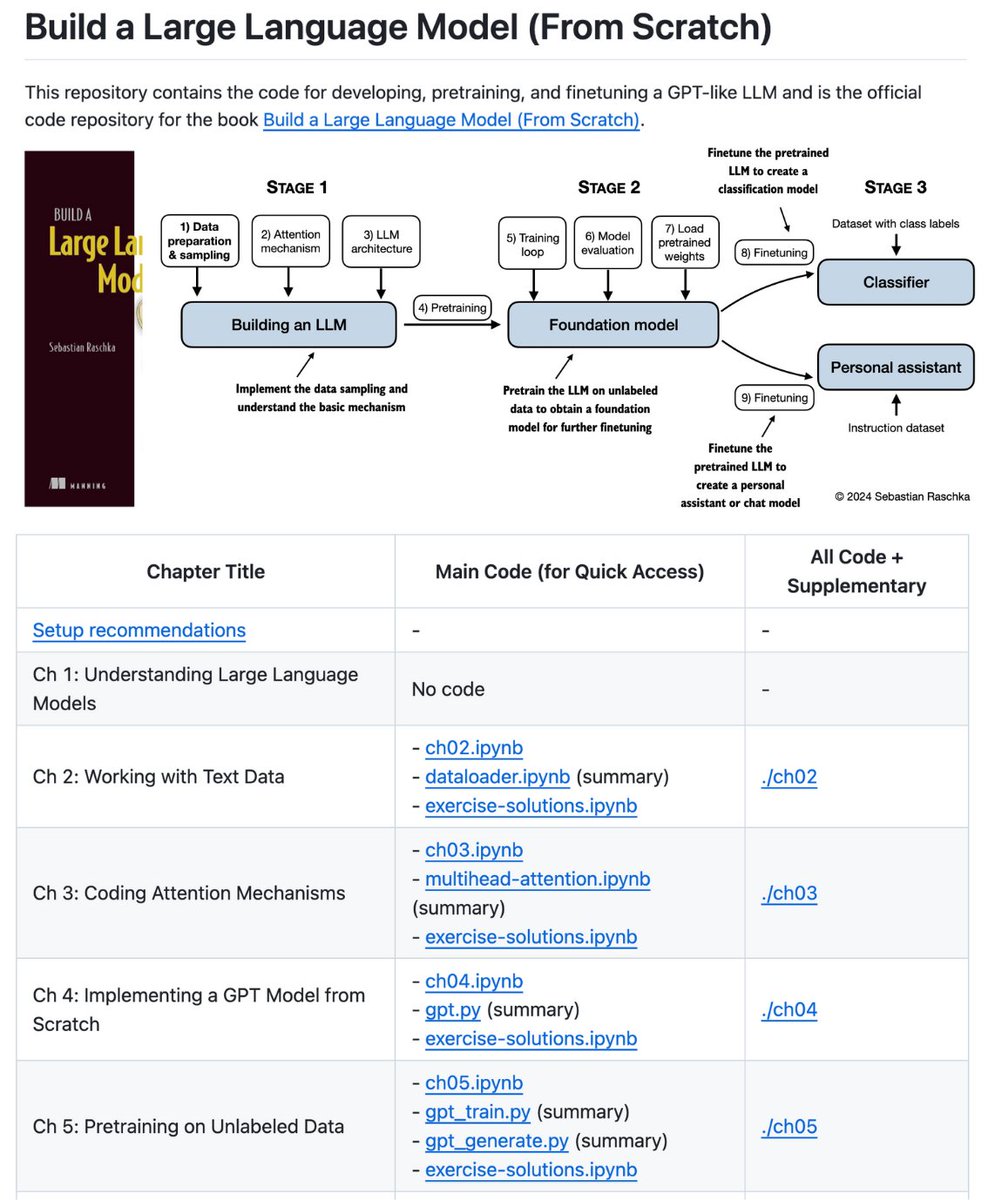
learn how to build an LLM from scratch, honestly.
@rasbt's repo is really a gem. it has notebooks with diagrams and explanations that will teach you 100% of:
> attention mechanism
> implementing a GPT model
> pretraining and fine-tuning
my top recommendation for studying LLMs.