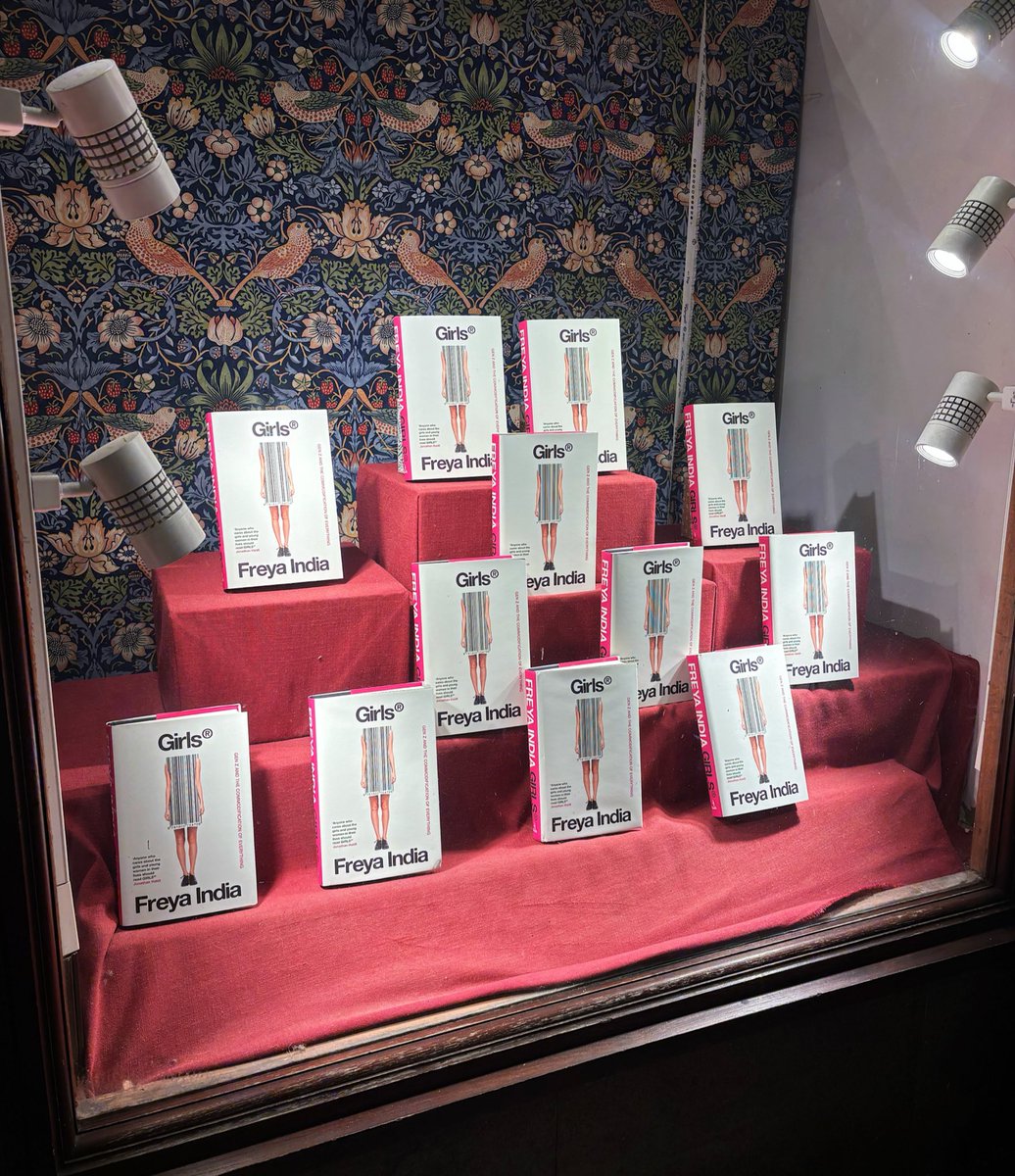
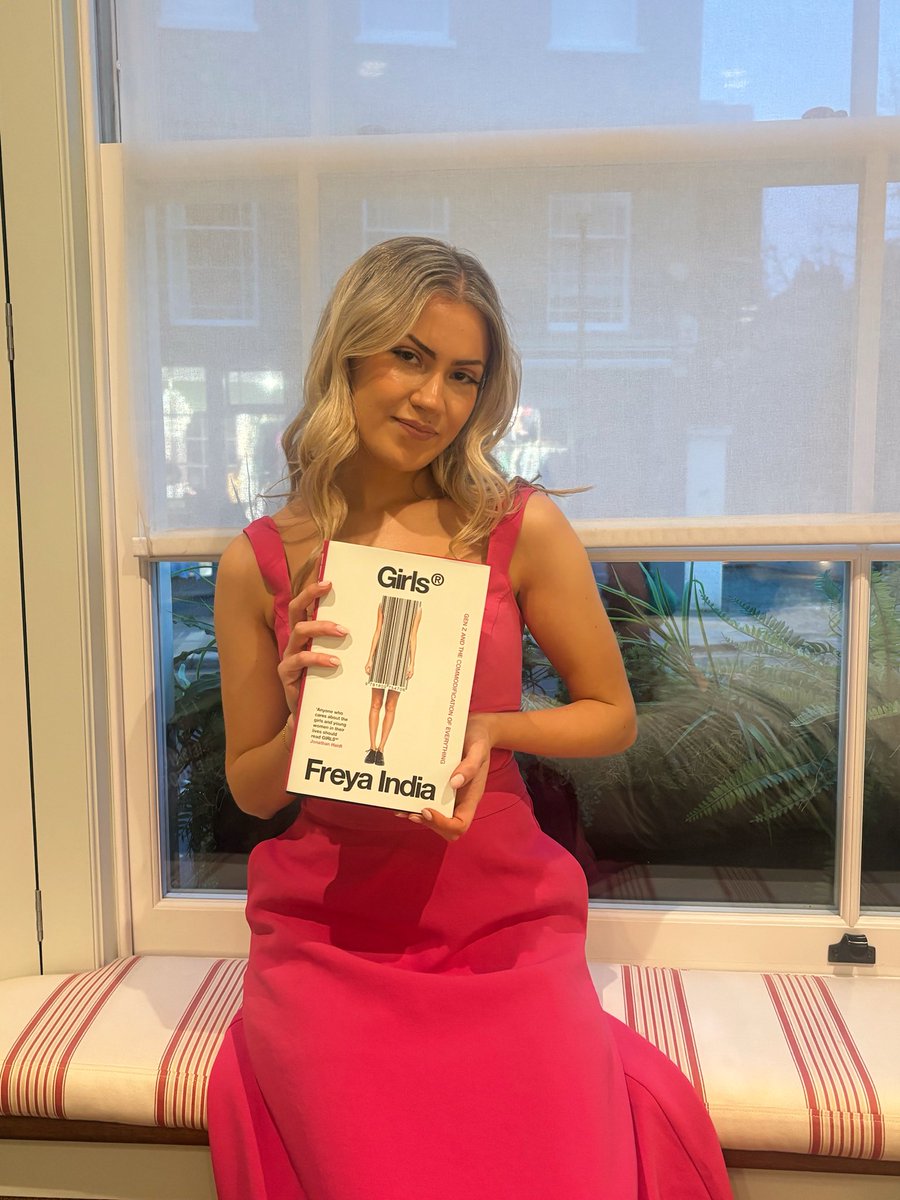
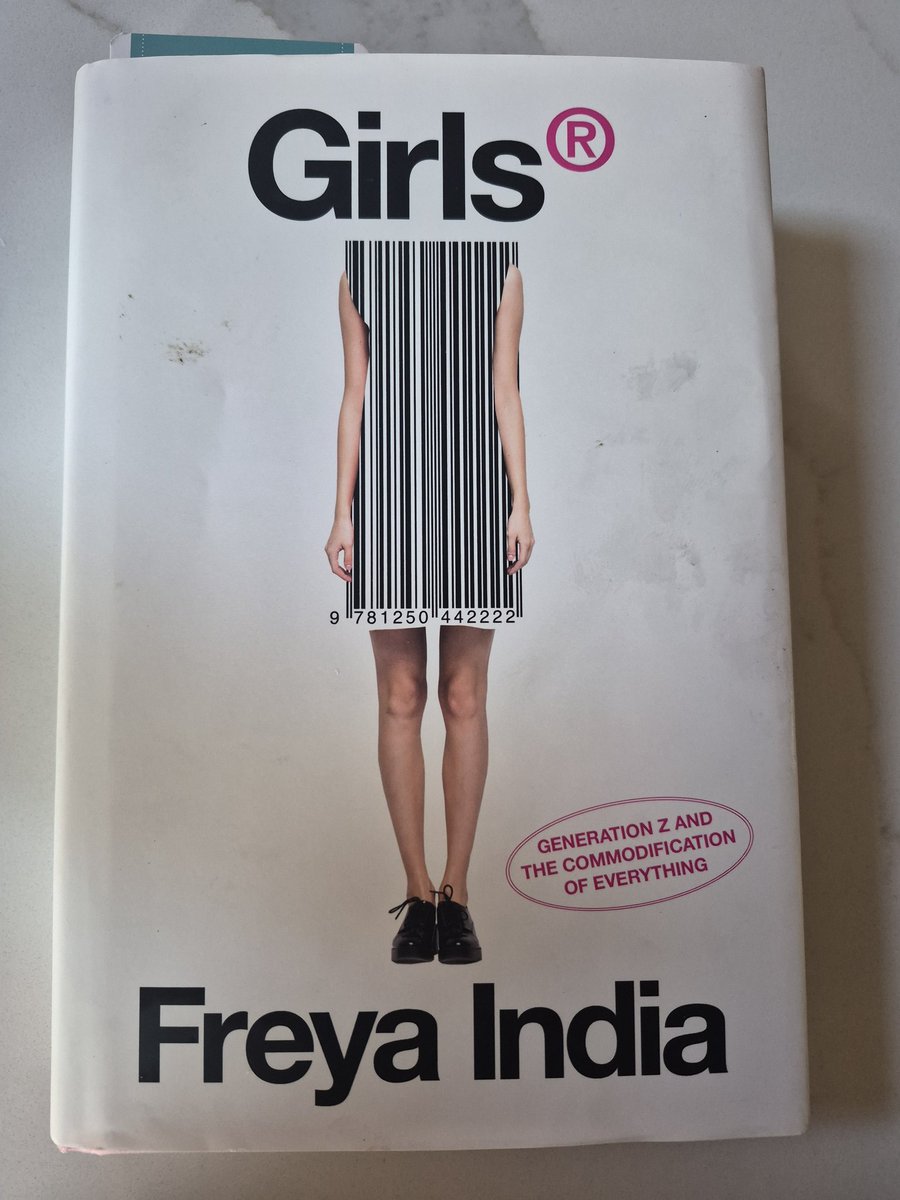
"God made girls, too. They are his image bearers, and we need to give them the same care, attention, and discipleship as anyone else in his church. Girls® makes it clear what happens if we don’t."
— @agirlnamedMary
https://t.co/bJyJ8XZCFz
I recently interviewed @freyaindiaa about her excellent book "GIRLS®: Generation Z and the Commodification of Everything." You can watch our discussion here: https://t.co/aNXQZlTLxT
"Self-love and the feminism and this language of feeling confident about yourself was all used to sell basically products and procedures...
...it's the same with social media companies, where they sold us connection and belonging, and instead, we were on apps that were so addictive we ignore the person that sat right next to us."
In her book 'Girls', @freyaindiaa writes about the paradox of being sold one message, but feeling the opposite.
A generation who grew up watching online p*rn are somehow expected to file that away, to fall in love in the real world, to be tender and gentle and loyal, to know how.
We pretend it has always been this way, because it is too painful to accept that it hasn’t.
P–nography is becoming many children’s first exposure to sex, warping their view of relationships before they’ve even had one.
Freya India is sounding the alarm on this disturbing trend.
“They have no clue what it would be like to have a relationship before watching p–n.”
“A lot of it is accidental.”
“It came up on Instagram.”
“It came up on Snapchat.”
“That’s their first view of men and their first view of intimacy.”
“It’s so warped.”
“Often they can be looking at p–n for a decade before they’ve even had a first relationship.”
“I'm really trying to get older generations to realize that social media is not just a bad habit.”
“It’s quite literally forming their view of the world.”
“Before they’ve even entered the world and had proper experiences.”
@freyaindiaa
I spoke to the @EpochTimes about how addicted young women are to social media. We no longer view ourselves as human beings but as products competing in a marketplace of likes and followers.
“Since the rise of social media, girls have really seen themselves as nothing but objects in a marketplace.”
“The aim of their life is to sell themselves online and to become the perfect product,” says Freya India, author of ““Girls: Generation Z and the Commodification of Everything."
“People initially thought that social media would be a supplement” to human community.
“That wasn't the case.”
“It was our first encounter of intimacy, or relationships, or community.”
“I'm really trying to get older generations to realize that social media is not just a bad habit that young people have, it's quite literally forming their view of the world.”
@freyaindiaa
Gen Z has bees “gaslit about p*rn, especially young women.”
Here’s why, says Freya India, author of “Girls: Generation Z and the Commodification of Everything.”
“When I was growing up, I always felt that if you objected to porn, if you didn't want to have a partner who was addicted to it, you were the problem.”
“On Instagram, you can see what everyone's liking.
So you can see maybe your first crush, your first partner, he's liking these really sexual, almost porn star influencers.
And if you're a 14 or 15 year old girl, that all gets internalized in your most vulnerable years.”
Freya says that this led to many young women thinking that “I have to be this perfect sex object, otherwise I won't be loved.”
@freyaindiaa
In this episode of @themimsshow, @KateAndrs sits down with @freyaindiaa, author of “Girls: Generation Z and the Commodification of Everything,” to discuss the challenges of coming of age in a chronically online era: https://t.co/jxfZoehCEt
As a teacher I've seen it but never fully grasped the totality of it all. My heart breaks.
Her closing she reminds the next gen: you do not have to accept this script. Share it with your own girls, your own friends. Highly recommend.
https://t.co/SaSGjqM0ut
I read @freyaindiaa's excellent book "Girls®" and it is a war journal of the first order.
Chapter titles lay out what has happened to and by and with girls: Filtered, Diagnosed, Documented, Disconnected, and lastly "Empowered."
Note the scare quotes on that last one
Social media has transformed young women. We won't understand falling marriage rates, birth rates, or the divide between the sexes until we understand that. We are not just documenting our lives on these platforms but living our lives for them.
“Young women have become something more like products rather than people.”
At ARC 2026, @freyaindiaa , @TimSamuels , @gerardgholland and @robkhenderson explored the crisis facing young men and women, arguing that as family, faith and community have weakened, many young people have been left searching for identity, purpose and belonging in all the wrong places.
Watch the full panel from ARC 2026:
“Young women have become something more like products rather than people.”
At ARC 2026, @freyaindiaa , @TimSamuels , @gerardgholland and @robkhenderson explored the crisis facing young men and women, arguing that as family, faith and community have weakened, many young people have been left searching for identity, purpose and belonging in all the wrong places.
Watch the full panel from ARC 2026:
One of my favorite days every production cycle: galleys! The summer issue is jam-packed with amazing stories—Heather Mac Donald on teen takeovers, Martin Gurri on conspiracy thinking, Zineb Riboua on Mamdani and Third-Worldism, Ralf Mangual on Memphis’s Trump-aided crime turnaround, Freya India rethinking “leaning in”—and lots more, on everything from New York budgets to the prophetic vision of Walker Percy. Plus: Judge Glock on Andy Warhol (actually on loft conversions, but Warhol shows up, including in a great photo). Coming soon!!
"Just a person who's lived it, who's escaped it, and who's trying to pull other girls off the conveyor belt leading them gently and quietly to destruction."
Grateful to @alex_e_davis for her generous review of GIRLS®:
https://t.co/Z9qZqFwov9