We aspire to put people first and integrate information and communications technology into our lives to solve the challenges our customers and society face.
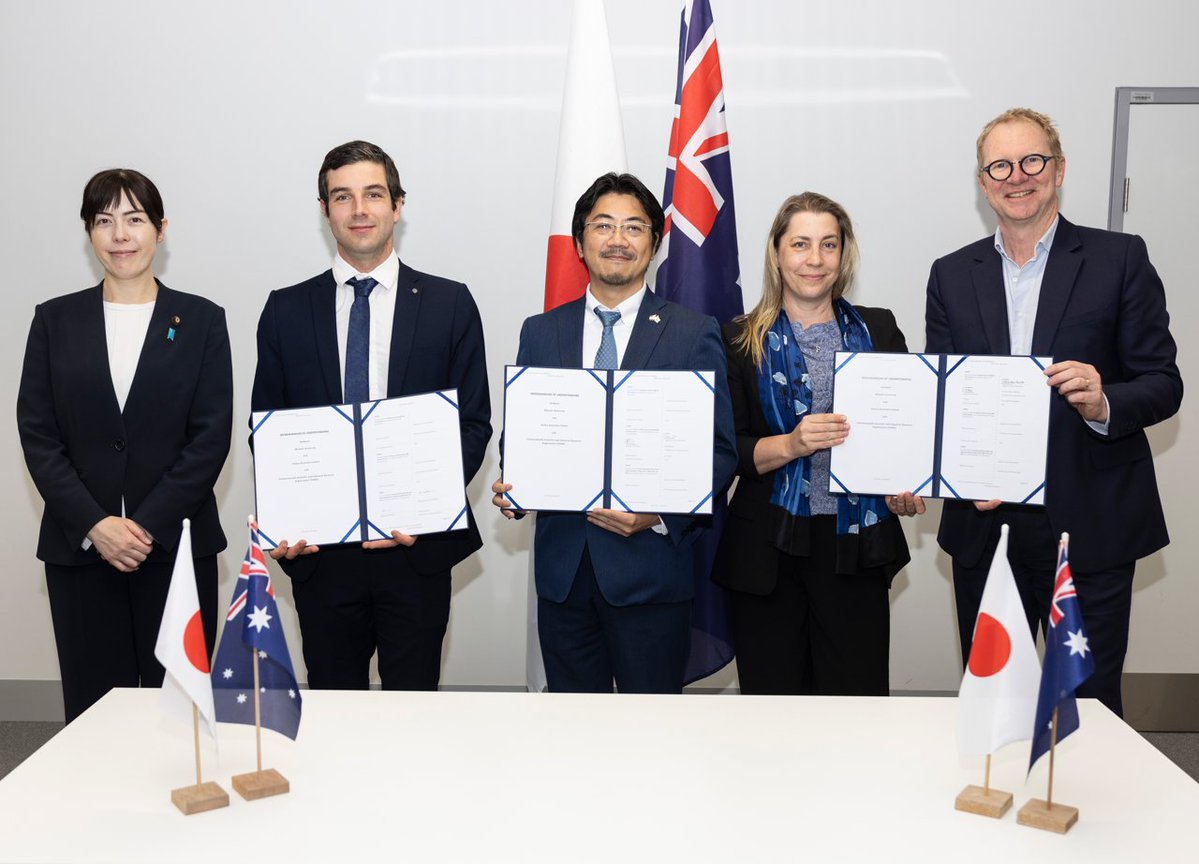
Fujitsu x CSIRO (@CSIRO ) x Monash University (@MonashUni ): Accelerating quantum innovation in Australia.
Australian researchers and students will gain access to our advanced quantum computing technology and systems in Japan, following the signing of a strategic Memorandum of Understanding between the three organisations.
This collaboration aims to turn quantum research into future jobs, strengthen Australia’s sovereign capability, and help solve some of the world's most complex challenges.
It also supports the newly inked Memorandum of Cooperation between Australia and Japan on quantum science, technology and innovation, reflecting the growing strategic importance of quantum technologies to both countries.
This initiative will focus on:
・Developing real-world quantum applications in areas like healthcare, decarbonization, and cyber security.
・Building Australia's future quantum workforce through hands-on research and industry projects.
・Exploring a shared research and education facility at Monash University as a national hub for quantum innovation.
Want to learn more about this strategic collaboration? Explore the full story here 👉 https://t.co/c5yqG3XKWl
#QuantumComputing #Innovation #Fujitsu
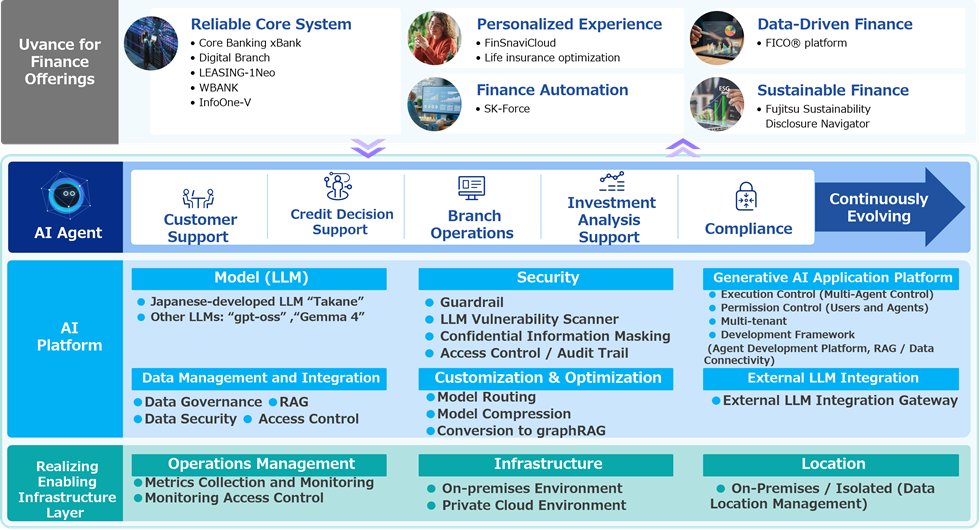
Fujitsu has initiated the development of proprietary AI platform for financial institutions, leveraging the "Takane" large language model and AI agents to promote AI adoption securely and streamline operations within financial institutions.
https://t.co/W4zH9NkYX2
A First Step Toward Faster Quantum Networks Using Light! Successful Coherent Coupling Between SnV Centers in Diamond and Optical Cavities
Among the advanced applications of quantum technology in IT, quantum network technology—which enables the direct transmission of qubit information—has been attracting attention. Photons are commonly used as carriers of information because they can directly encode quantum information and are less constrained by transmission distance. The efficiency with which photons can be generated and transmitted is therefore a crucial factor that directly impacts information processing speed.
In this Tech Blog, we present the latest results in diamond spin quantum technology from a joint research project between Delft University of Technology (@tudelft ), QuTech (@QuTech_news), and Fujitsu (@FujitsuOfficial). SnV (tin-vacancy) centers, an emerging diamond spin material candidate for qubits, are combined with diamond optical cavities. As a result, the optical properties of the SnV centers are successfully enhanced. In short, the team showed that diamond-based quantum devices can interact with useful light more efficiently, which could help speed up connections between quantum devices.
Read the full Tech Blog:
English: https://t.co/bHmAA3D8Uo
Japanese: https://t.co/z4M8EQNUI9
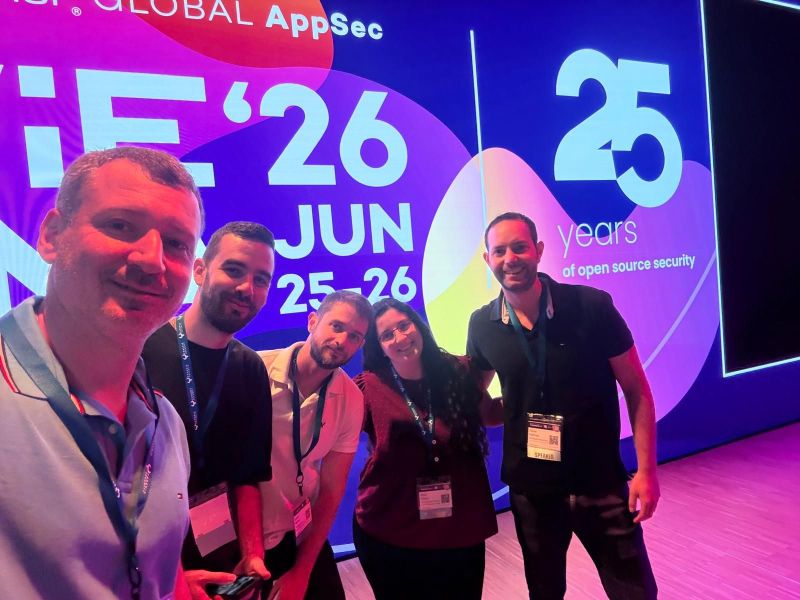
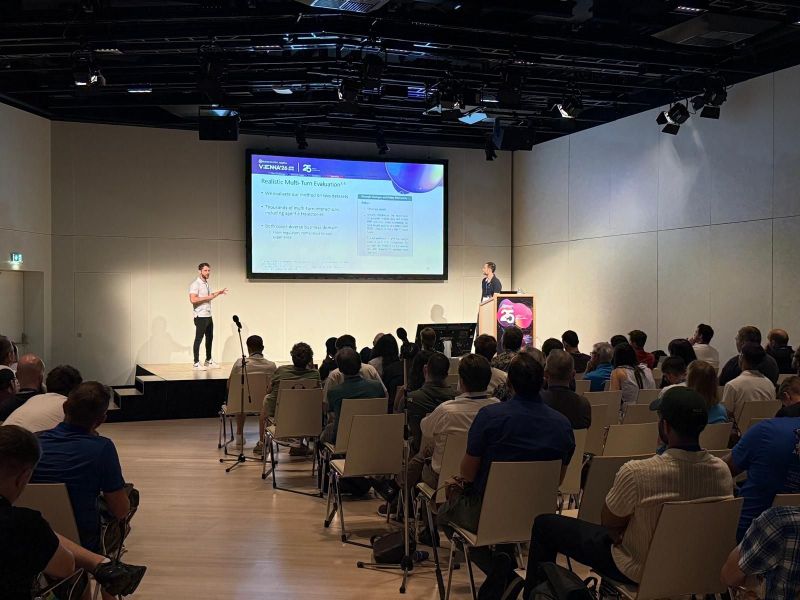
Securing next Gen AI Systems – Fujitsu Research of Europe presents at OWASP Global AppSec EU 2026 (@owasp )
📣 Researchers from Fujitsu Research of Europe (Roman Vainshtein, Amit Giloni, Oren Rachmil, Roy Betser, and Omer Hofman) recently presented two technical sessions at OWASP Global AppSec EU 2026 in Vienna, one of the leading international conferences for application security professionals.
This research output forms part of Fujitsu’s ongoing focus on developing practical technologies that help organizations evaluate, secure, and govern AI systems throughout their lifecycle. The presentations addressed two complementary challenges in securing the next generation of AI systems: how to systematically evaluate agentic AI security and how to enforce organizational policies in LLMs and AI agents.
🔍 Scanning Agentic AI Systems: Beyond Traditional LLM Red Teaming
As AI applications evolve into autonomous, tool-using agents, traditional LLM red-teaming is no longer sufficient. We presented new approaches for evaluating the security of complete agentic systems, enabling broader assessment of attack surfaces, interactions, and emerging risks that extend beyond standalone language models.
🛡️ From Safety to Policy: Enforcing Organizational Rules in LLMs and AI Agents
Safety mechanisms alone cannot guarantee compliance with organization-specific requirements. We set out practical approaches for translating enterprise policies and regulatory requirements into enforceable controls for AI systems, enabling organizations to move from generic safety toward measurable AI governance.
#OWASP #AISecurity #AgenticAI #LLMSecurity #AIGovernance #ResponsibleAI
📃Attended ISC High Performance 2026 ~Focusing on Quantum Computing × HPC Sessions
In this Tech Blog, we share highlights from the ISC High Performance 2026 (ISC 2026), focusing on platform-related sessions concerning the integration of quantum computers into HPC environments.
We also highlight a poster presentation by Shun Gokita from our Quantum Laboratory: "A Quantum-HPC Hybrid Computing Infrastructure based on Open-source Quantum Computer Operations Software." This work is a joint collaboration between Fujitsu, the National Institute of Advanced Industrial Science and Technology (@AIST_EN), and the Center for Quantum Information and Quantum Biology at The University of Osaka (@UOsaka_en).
Building on ABCI-Q, a Quantum–Classical Hybrid Computing Infrastructure designed to accelerate quantum application development, we are advancing OQTOPUS (Open-source Full-stack Quantum Computer Operations Software)—an initiative to develop a practical infrastructure that seamlessly connects HPC, quantum, and classical resources.
Read the full Tech Blog to learn more about the key trends from ISC 2026:
https://t.co/uKb9P9zTk9 (English)
https://t.co/DMiFyqciyr (Japanese)
For more details on Fujitsu's presentations at ISC 2026, visit:
https://t.co/yevI7xjqZL
#ISC2026
Fujitsu to explore physical AI development and implementation across industries with FANUC, Yaskawa Electric, and Kawasaki Heavy Industries integrating NVIDIA technology. Learn more: https://t.co/j5RGLxrdDo
A huge thank you to everyone who stopped by the Fujitsu Research booth at the 2026 Japan-U.S. Innovation Awards, and to @JapanSociety_SF for hosting an amazing event!
We loved sharing how our Amalgamation AI and Causal AI are pushing the boundaries of what's possible. Let's continue the conversation! Explore more details on our webiste and contact us for free trial.
👉 Amalgamation AI for Vision: https://t.co/eBhHb0sE8g
👉 Causal AI for causality: https://t.co/gLoE3edeUH
📩 Contact us: [email protected].
#AmalgamationAI #CausalAI #JapanUSInnovation
Fujitsu has launched the Fujitsu AI-driven Modernization Service, designed to support the sustainable growth of businesses and organizations, and combines Fujitsu's practical modernization expertise cultivated through decades of system integration with generative AI. By leveraging multiple AI models and the expertise of specialized engineers, the service automates and optimizes modernization initiatives centered on rewrite and rehost approaches.
The service supports customers’modernization efforts rapidly and efficiently, and can shorten migration periods by approximately 40%. It also combines Fujitsu's proprietary AI platform Fujitsu Kozuchi and the Takane large language model, with cutting-edge AI technologies such as Anthropic (@AnthropicAI) PBC's Claude and OpenAI's GPT (@OpenAI). Read the full press release: https://t.co/xieaApKkd7
Fujitsu Begins Early Validation of Fujitsu Kozuchi Multi AI Agent Framework Incorporating Self-Evolving Multi-AI Agent Technology - From AI Agents That Are "Built and Finished" to AI Agents That Continue Evolving With Business Operations
Fujitsu has developed the Fujitsu Kozuchi Multi AI Agent Framework (MAAF), a platform for developing and operating multi-agent systems (MAS) specialized for enterprise business operations. MAAF incorporates self-evolving multi-AI agent technology as a core component, enabling multiple AI agents to collaborate as a team to execute business tasks while continuously and safely learning autonomously. It automatically configures teams of AI agents from business knowledge, and improves MAS based on execution results and human feedback. This enables companies to continuously improve AI agents optimized for each business operation while expanding the insights gained from those operations to other use cases, thereby advancing AI utilization across the enterprise.
Learn more: https://t.co/Eo3Xa4iejF
\富士通、自己進化マルチAIエージェント技術を組み込んだFujitsu Kozuchi Multi AI Agent Frameworkの先行検証を開始~AIエージェントを「作って終わり」から「業務とともに進化し続ける」存在へ/
富士通は、企業の業務に特化したマルチAIエージェントシステム(以下、MAS)を開発・運用するための基盤である「Fujitsu Kozuchi Multi AI Agent Framework(以下、MAAF)」を開発しました。MAAFは、複数のAIエージェントがチームとして業務を遂行し、継続的かつ安全に自律して学習する自己進化マルチAIエージェント技術自己進化マルチAIエージェント技術を主要コンポーネントとして組み込んでいます。業務知識からAIエージェント群を自動構成し、実行結果や人のフィードバックをもとにMASを継続的に改善します。これにより、業務ごとに最適なAIエージェントを継続的に改善するとともに、そこで得られた知見を他のユースケースへ展開することで、企業全体のAI活用を発展させます。
詳細はこちら:https://t.co/aHwIPsV0X8
Quantum Autoencoders (QAE) are excellent at compressing quantum states, but what if we could also make them generate entirely new quantum states?
In recent work, our research team proposes the Quantum Generative Adversarial Autoencoder (QGAA), a model that does exactly this by training a Quantum Generative Adversarial Network (QGAN) on the compressed latent space of a trained QAE. We validated this on entangled state generation and molecular ground state energy profiling for H2 and LiH, achieving energy errors as low as 0.02 Ha.
In this Tech Blog, we walk through the core idea, the key results, and what this means for practical quantum machine learning.
🔗Read the full Tech Blog: https://t.co/NqDb4o9yQM
🔗For more details, check out the paper: https://t.co/Y0V51GgtoQ