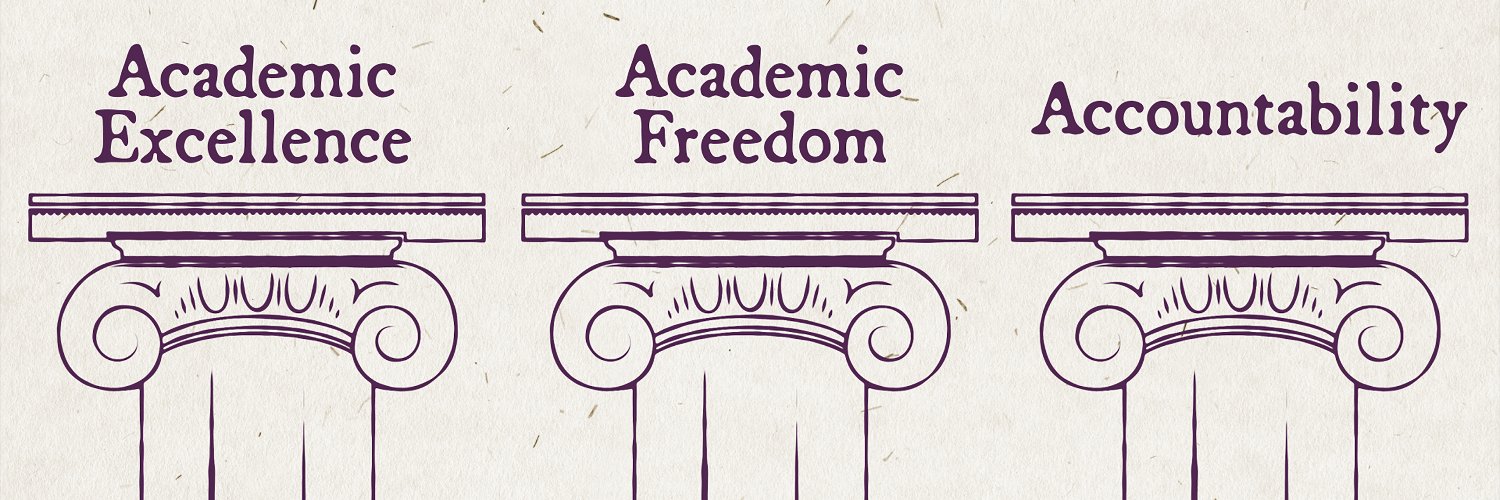
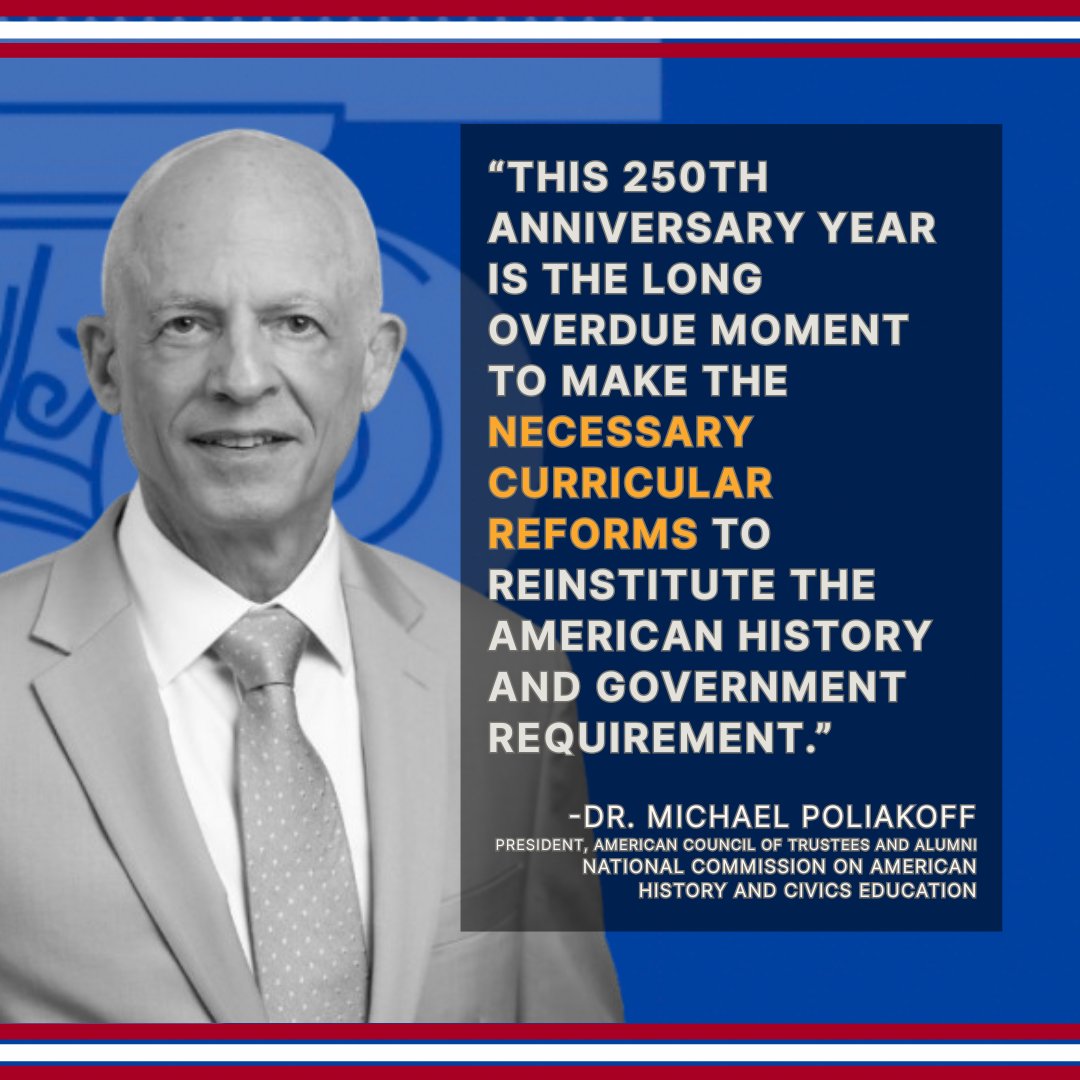
"A Broadside for the Nation", assembled by ACTA’s National Commission on American History and Civic Education, makes the case for higher ed to restore a required course in US history and government in order to graduate - as well as how to make this vision a reality.
"Sometimes it's just a matter of, 'y'know, we learned that's actually a bad idea, and we really need to not allow these.'"
Keith Whittington explains why most universities failed to act quickly and decisively during the height of anti-Israel encampments.
While the Education Department's proposed revisions to accreditation are overall a step in the right direction, it's not enough.
Congress must reauthorize the Higher Education Act if we want accreditation that truly promotes student achievement and institutional outcomes.
A 3-out-of-20 score is the second-lowest grade ACTA has ever awarded for our Gold Standard for Freedom of Expression.
A dubious honor. @UNM has a lot of work to do to build a culture of free speech on campus.
ACTA stands ready to assist higher education leaders who answer Secretary McMahon's call to restore higher education as a pillar of American prosperity.
"The AAUP is defending the cartelization of higher education, even as professors have no greater claim to expertise in the management of an educational system than boards of regents or other elected officials."
✍️@tal_fortgang
📰@PrincetoniansFS
📹On a special video episode of Higher Ed Now, Notre Dame political science professor Vincent Muñoz explains how the presumption that past people were morally and intellectually inferior to the present is "fatal" to the study of history.
"You need somebody to come home to at the end of the day and say, 'you won't believe what these idiots want from me today.'"
Legendary president emeritus of GW Stephen Trachtenberg on the lonely and difficult work of leading a university:
VIDEO PODCAST: Dr. Steve McGuire explains the real purpose of censoring campus speakers and events; to make their viewpoint the "official" position on campus and to silence all dissent.
To be sure, folding origami requires patience and practice. But does it really teach concepts from comp-sci and chemistry?
The University of Delaware seems to think so, which is why learning origami counts towards their Math, Natural Sciences, and Technology gen-ed requirement.
Lists of "best universities" are changing. While they were once defined by prestige, they now are determined by which schools provide the best value.
ACTA's Armand Alacbay explains why to USA Today:
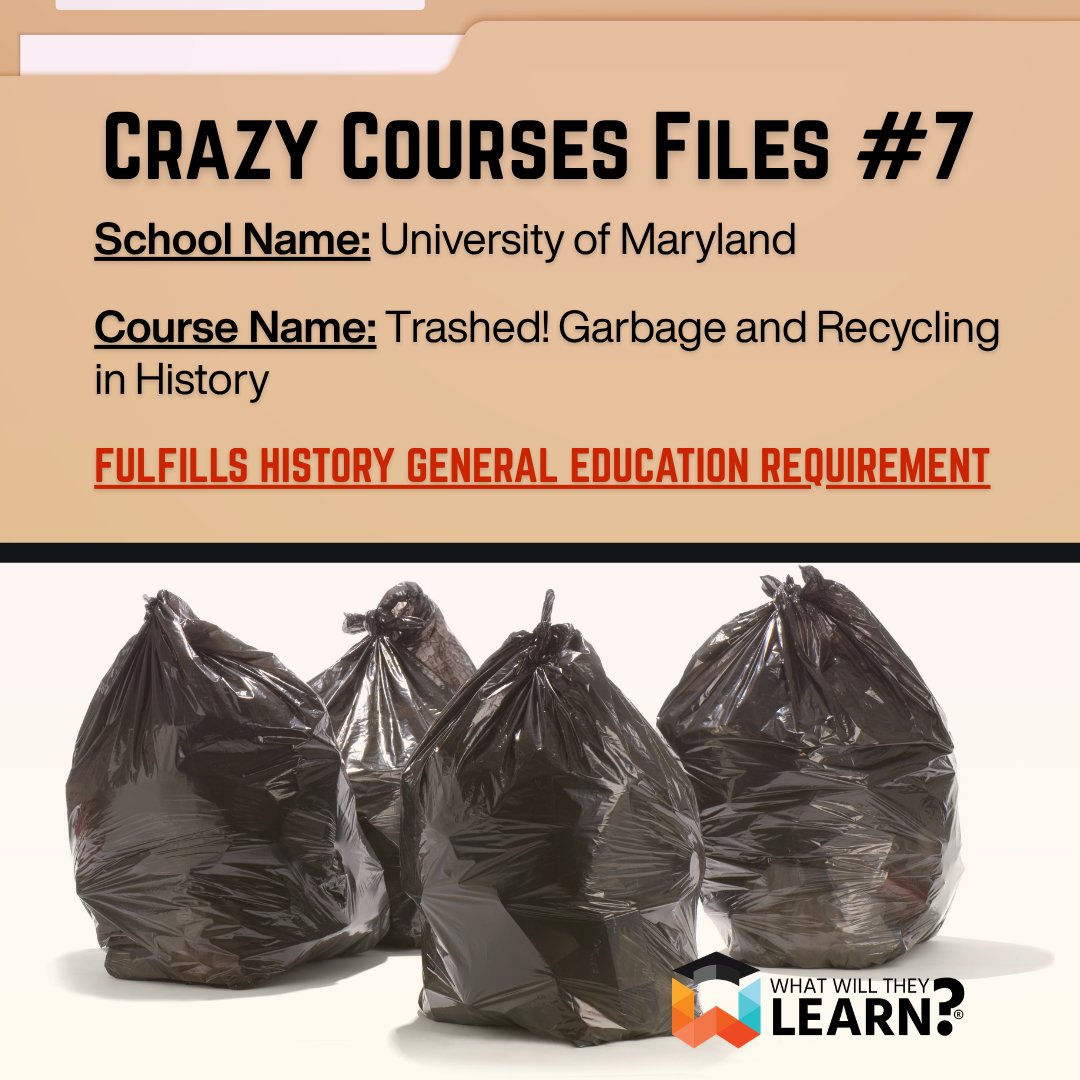
This history course at UMD is garbage.
No, really; it's a history of trash and recycling in the 19th and 20th centuries.
As an elective? Could be very interesting.
But for gen-ed credits? Toss it in the bin.
Everyone should read @Tyler_A_Harper’s extraordinary Atlantic cover story, “Confessions of a Token Black Professor.”
It is one of the best accounts yet of how bad American campuses became between roughly 2015 and 2025, peaking from 2020 to 2023. It was a disaster for academic freedom, free speech, and higher education’s credibility. It also helped destroy trust in shared facts, because people stopped believing that our supposed referees would scrutinize claims that fit their own ideology as aggressively as claims from the other side.
Now there is a concerted effort to pretend either that none of this happened, or that it was merely a strange youthful indiscretion we can laugh off, much as people tried to do with the first great age of political correctness.
We must not let them wish it away.
If you experienced the quasi-religious groupthink that overtook institutions supposedly devoted to inquiry, write about it. Record what happened, what people were afraid to say, and why. Otherwise, this period will be rewritten by many of the same people who defended the status quo while casting themselves as brave underdogs. Looking at you, @rottenindenmark, among others. Doing PR work for a $1 trillion industry is not exactly fighting for social justice.
I also have always seen this through a class lens. Elite higher education is a gigantic industry that disproportionately benefits people who are already well-off. Yes, people like me can get through it and have our lives transformed. But we are a small part of the story.
There is an older intellectual history here. Thinkers such as Herbert Marcuse confronted a frustrating problem: the working class often failed to behave as intellectuals expected and an awful lot of working people hated intellectuals. Ordinary Americans liked their country, distrusted elites, and seemed perfectly capable of living without philosopher-kings directing them.
The solution was an newideology that allowed highly educated elites to regard working-class people with contempt while still seeing themselves as champions of the oppressed.
That became academia’s problem when universities built departments, bureaucracies, hiring systems, and professional cultures that treated deeply contestable political doctrines as moral dogma.
You can see the results throughout Tyler’s story: classism, utter contempt for locals, exaggerated self-importance, ordinary disputes transformed into battles of good and evil, and politicized administrators remarkably skilled at weaponizing elite ideology against their own institutions.
Tyler’s piece is both testimony and warning. There are excellent university presidents trying to right the ship, but too many faculty organizations and professional associations still seem to believe the ideology was never the problem—it simply wasn’t imposed consistently enough.
We need to document what happened and build institutions less vulnerable to another episode like it.
Because this was never some weird, isolated campus disaster. It spread into journalism, science, philanthropy, corporations, K–12 education, government, and politics. It damaged the credibility of the institutions we depend on to tell us what is true.
A society that loses faith in its knowledge-producing institutions eventually loses something more important than the reputation of its universities: its ability to see the world as it is.
📹 "INCREDIBLY unprofessional."
On Radio Free Campus, ACTA's Justin Garrison explains how academic freedom is a privilege with a corresponding duty - and how American Anthropological Association president Carolyn Rouse's meltdown broke that duty.