Our latest edition of Dignity Diary is here — https://t.co/AG36u3l6vE
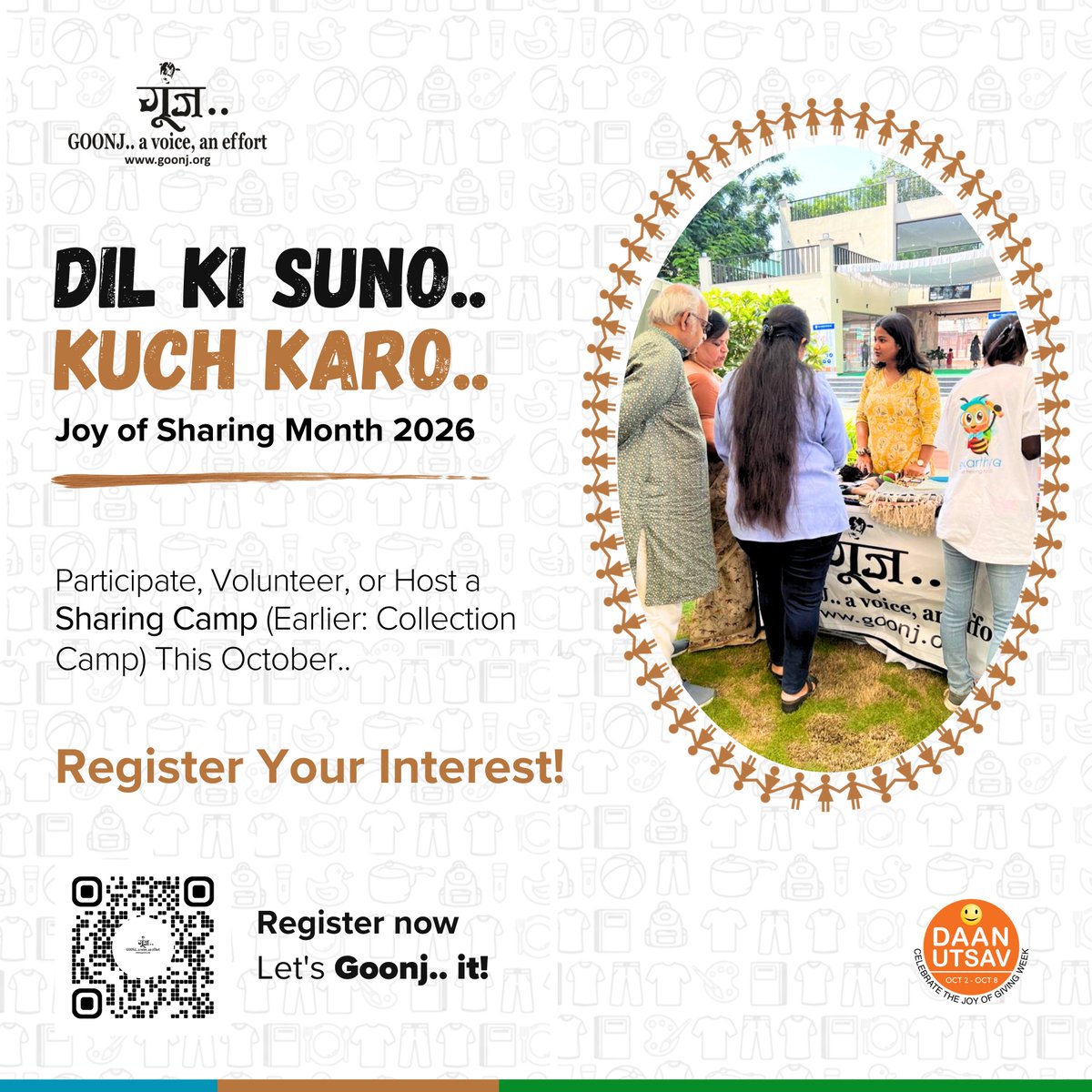
Just a few more days until our beloved Joy of Sharing Month begins (coinciding with Daan Utsav week).. Find ways to share your time, skills, resources, and more..And while we look forward to a month of sharing, our work continues on the ground in flood-affected regions. As the situation evolves, so does the need for essential materials. In this issue, we bring you stories of hope, resilience, and the spirit of rebuilding.
Thinking about what you could share?
Maybe it’s something you have.
Maybe it’s something you know.
Maybe it’s your time, your skills, or simply your space..
The thought of sharing is a good place to start too..
There’s more than one way to be part of Joy of Sharing Month (all of October).
Tell us your city and how you’d like to be part of Joy of Sharing Month 2026.
Register your interest and we’ll take it from there- https://t.co/cylv8jVWF6
Let’s Goonj.. it!
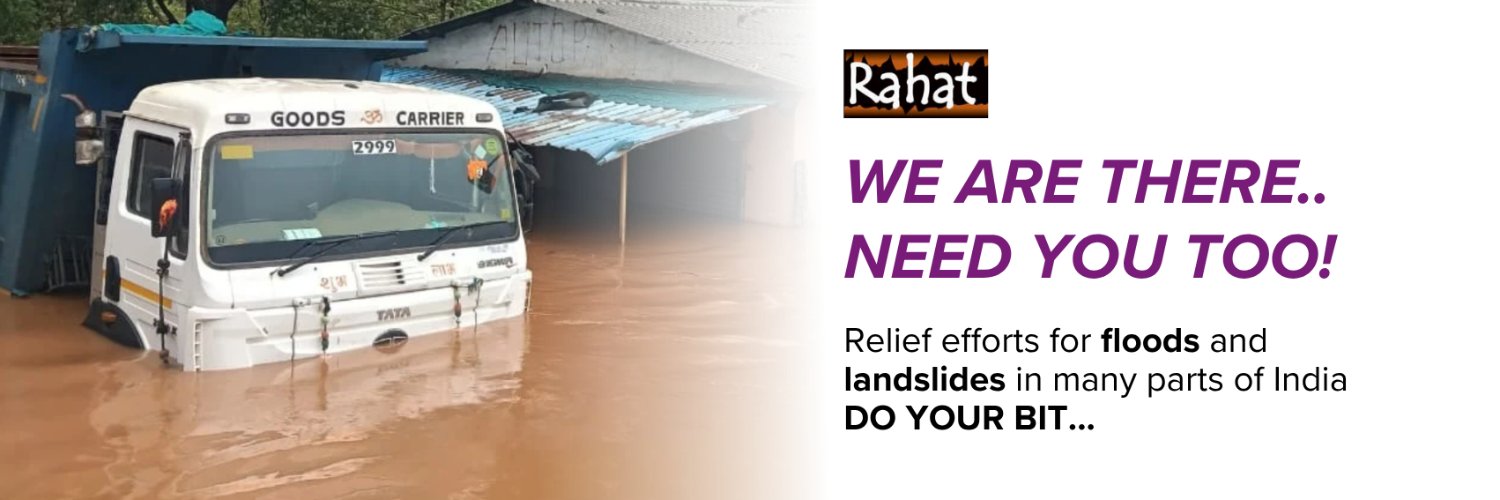
We value everyone who has come forward to contribute to the ongoing Rahat efforts. As the situation continues to evolve, the need for timely assistance remains critical. The Goonj team is standing with communities in Assam, Bihar, Odisha and other affected states.
-With Material, Money Matters for urgent aspects like transport and urgent relief supplies: https://t.co/hkt0fIEm0z
-Drop relief material at a Goonj collection centre near you: https://t.co/wJqpnYL6Cv
For any other details: [email protected]
We are there. Need you too!
Rahat Floods Field Notes - Assam
“You know, Dada, the key to our steel almirah you see on the roadside is lost in the flood and the glass is completely shattered. We finally managed to take it out from the mud-filled house of mine after 10 days, but now we have to call a technician to break the lock. I don’t even know what we will find inside or what condition our belongings will be in. Every step seems to bring another expense. Should we clean our house, dry it, repair it - or simply figure out where to begin? Sometimes I feel like laughing, sometimes I feel like crying. I honestly don’t know what to do anymore. But in the middle of all this uncertainty, thank you, Dada, and Team Goonj, for standing beside us and bringing us the relief materials when we needed them most.”
- Sonu*, Sivasagar district, Assam (*Name changed to protect privacy)
Editorial reflection
Myth: Things go back to normal in a few weeks.
Reality - When the floodwaters recede, it may look like the worst is over. Unfortunately, the reality is different. Recovery is a slow, painstaking process that often takes months or even years. When people get back they are left grappling with material loss, homes, livelihoods, and loved ones.Each small step towards getting life back on track can bring a new expense. Cleaning and repairing a home, salvaging what remains, replacing essentials and finding ways to resume work are all part of a recovery that often goes unseen.
Soon after the fury of the monsoon floods, survivors face a second crisis: the winter. Without adequate shelter, clothing, or food, families endure harsh conditions long after the floodwaters recede. We need to continue to provide essentials like dry rations and woollens to the most vulnerable communities on their long road to recovery, while also preparing for recurrence of such events, accelerated by climate change
The monsoon has triggered floods and landslides across the country, displacing communities, damaging infrastructure and disrupting essential services. The Goonj team is responding alongside communities in Assam, Bihar, Odisha and other affected states. Rahat, Goonj’s disaster response and resilience initiative, builds on over two decades of disaster response in India. It goes beyond relief to enable recovery and long-term resilience through timely, need-based action. Anchored in Goonj’s SARRD (Societal Alliance for Resilience and Response to Disasters) framework, Rahat unites civic participation, surplus resources, and local wisdom to address immediate survival needs while empowering the most impacted communities to rebuild their own infrastructure and livelihoods.
Act Now: https://t.co/ZtBSXENEE3
We are there.. Need you too!
Some things are worth waiting for :)
And Joy of Sharing Month is one of them.
A month when sharing feels a little more joyful,
And happiness feels a little more in the air..
This year, we have a little more planned for you.
More ways to listen to your heart and share..
More reasons to come together..
More ways to Goonj.. It!
Coming soon..
When the Village Took Charge in the Flood
(A ground-level initiative by Jitendra Chaudhary from Siswa Mangalpur Khap Tola in West Champaran district, Bihar)
Recently, several villages in the Siswa Mangalpur Khap Tola Panchayat of West Champaran district, Bihar, were affected by floods due to a sudden rise in the water level of the Gandak River. When the floodwaters suddenly entered the village, people had very little time to respond. The first priority was to move children, women, and the elderly to safer places.
During a flood, people are faced with the worry of where to keep their children safe, how to arrange food and drinking water, where to keep their livestock, and how to save essential belongings kept at home. Many families were unable to take out even their clothes and other basic necessities. Because their clothes were soaked in the floodwater, some people did not even have a second set of clothes to wear for several days.
In such a difficult situation, local resident Jitendra Chaudhary began looking closely at what was happening around him. When Goonj's team reached the flood-affected area, Jitendra Chaudhary himself boarded a boat and went into the floodwaters with the team. He showed the team the way to reach the tolas, homes, and temporary shelters that were surrounded or submerged by water. Based on this shared understanding of the situation, Goonj's team was able to take relief material to the families most severely affected in the surrounding areas.
With the local people like Jitendra Chaudhary, it became possible to reach families who were trapped in the inner areas surrounded by floodwater. Along with food, dry clothes, mats, and everyday essentials became a significant source of support for the families there. These provided them some relief from the cold, infections, and other difficulties.
Throughout this process, the needs and dignity of the affected families were both kept in mind, with the efforts of local people coming together with support from outside.
Our Ground-Level Learning
Local people understand the routes and their own needs better than anyone else. An assessment carried out together with them helps ensure that relief material reaches the right families.
In difficult days, when someone stands shoulder to shoulder with local people, it gives affected families the reassurance that they are not alone in this struggle.
Amid the flood situation in Bihar, Goonj's local team continues to reach affected families, understand their needs, and make efforts to provide them with the necessary support.
Act Now: https://t.co/ZtBSXEN6Ov
We are there... We need you too!
Field notes from our Assam team member, Nilu, on the frontline of Goonj’s relief work in the region-
We saw a woman standing quietly at a particular spot. We stopped to greet her and introduced ourselves. We asked her where her home was.
She simply replied, “My home is here.”
I asked her again, unable to understand what she meant.
“Here? Which one is your house?”
She then pointed towards the space behind her.
There was no house.
Only piles of debris that had been cleared and gathered to one side. The ground appeared slightly raised compared to the surrounding area.
She pointed towards it and said:
“That was my house. I have cleared away the debris and kept the place clean. The ground looks a little raised, doesn’t it? That is where my house used to be.”
Her words stopped me… She went on to tell us that it had been one month since her five-member family had lost their home. Since then, they had been living in a rented place elsewhere.
The previous day, an earth mover had cleared the remains of the site.
And now, she had been standing there for a long time…. She was waiting.
Not for relief materials…. Not for money.
She was waiting for someone who could help build a house for families whose homes had been destroyed.
“They are building houses for people whose homes have been destroyed. I have been waiting here for a long time today, hoping that I might meet someone who is involved in building these houses. If I can find the people who are building the houses, perhaps they can build ours too. Then we can return to our own home.”
After hearing this, I did not know what to say. I wanted to ask her more questions, but somehow, I no longer had the courage. For a moment, I forgot even how I should say goodbye.
Finally, I simply told her, “Baidew, I will leave for today. I hope we meet again.”
Before leaving, I asked if I could take her photograph….. She smiled.
And then she said something that has stayed with me.
“I have been standing here for so long that I was getting bored. Then you came and spoke to me. It felt really good. This is how we are living now. What else can we do? The flood has taken everything away.”
That smile has remained with me….
Since that day, I have found myself thinking repeatedly about Shardha Baidew.
How much pain can a person carry and still find the strength to smile?
How strong must someone be to remain calm when everything they knew has been taken away?
And how strong must a woman be to face such an unimaginable situation and still continue to hope for a way back home?
Shardha Baidew’s smile did not come from a life without suffering….. It came despite the suffering.
Behind that smile was a destroyed home, a family living in rented accommodation, and a woman standing for hours at the place where her house once stood…waiting for the possibility of rebuilding her life.
Act Now- https://t.co/ZtBSXENEE3
We are there.. Need you too!
Nilu has been with Goonj since 2019. She is from Bhebeli village in Dhemaji district, Assam, and has been closely working with communities on local development issues in the region.
Kelte, a village in Maharashtra’s Ratnagiri district, has seen significant rural-to-urban migration. Many villagers have moved to cities in search of better earnings and opportunities. But those who stayed wanted to work towards reviving their village and its resources.
One of the pressing challenges they faced was a deteriorated road connecting Kelte to a neighboring village. The road's poor condition disrupted daily travel and connectivity. During a community meeting organised under Goonj’s "Cloth for Work" initiative, villagers came together to discuss their concerns and found a way forward.
Read the full story here- https://t.co/BP2pjrY71b
If this story touched you and you would like to read more such grassroots stories, please visit- https://t.co/PQYnmbPwCx
#Goonj #ClothForWork
Field notes from our Assam team member, Romen Ningthoujam, on the frontline of Goonj’s relief work in the region-
Beyond Relief: Rebuilding Resilience in Flood-Affected Upper Assam
The current floods in Upper Assam bring back memories of the devastation caused by Cyclone Amphan in West Bengal in 2020 — a disaster I witnessed closely during my six years of posting in West Bengal with communities across the Sundarbans.
The floods across Upper Assam, particularly in Sivasagar, Jorhat, Charaideo and parts of Golaghat, have been devastating. The speed and scale of the flooding have left many communities with little time to prepare. People have been forced to move to higher ground, climb trees, seek shelter along embankments and protect their families with whatever resources they have available. Homes have been submerged, agricultural land has disappeared under the floodwaters, livestock have been lost, and livelihoods have been severely disrupted.
The impact on agriculture is particularly painful. Paddy cultivation was already underway when the floodwaters suddenly submerged vast stretches of farmland, destroying crops that families depend on for both food and income.
This is perhaps one of the most important stories emerging from the floods: the first responder of every disaster is always local communities. At the same time, the emotional response to the disaster has made traffic jam. Roads leading to several flood-affected areas are becoming congested not only because of relief operations but also because people want to reach affected communities, witness the situation themselves and offer whatever support they can. Their presence reflects a collective emotional connection with those suffering.
But solidarity now needs to translate into sustained recovery.
As the water recedes, the focus needs to gradually move from emergency relief to rehabilitation. Cleaning homes, restoring agricultural land, repairing roads and embankments, reviving livelihoods, addressing the loss of livestock and helping families recover household assets require sustained efforts. Farmers whose paddy fields are buried under sand need support to restore cultivation. Communities need to examine how their villages can become more resilient to future floods.
The immediate crisis may recede with the water. The real test, however, is what we do afterwards.
Can we help communities rebuild not just what they lose, but rebuild in a way that makes them stronger for the next disaster?
“Floods may have washed away their homes, possessions and livelihoods, but they cannot wash away humanity.”
Pratik Konthoujam (Team Goonj, Assam)
This edition of Dignity Diary brings updates from the relief work, field notes from our team, and pictures from our Founder, Anshu Gupta’s recent visit to the region.
Read here- https://t.co/hClamOpVko
We are there.. Need you too!
With Material, Money Matters for urgent aspects like transport and urgent relief supplies: https://t.co/hkt0fIEm0z
Drop relief material at a Goonj collection centre near you: https://t.co/wJqpnYL6Cv
Field notes from our Assam team member, Pratik Konthoujam, on the frontline of Goonj's relief work in the region-
"Some of the most meaningful moments in disaster response are not captured in reports or numbers. They are found in small acts of kindness.
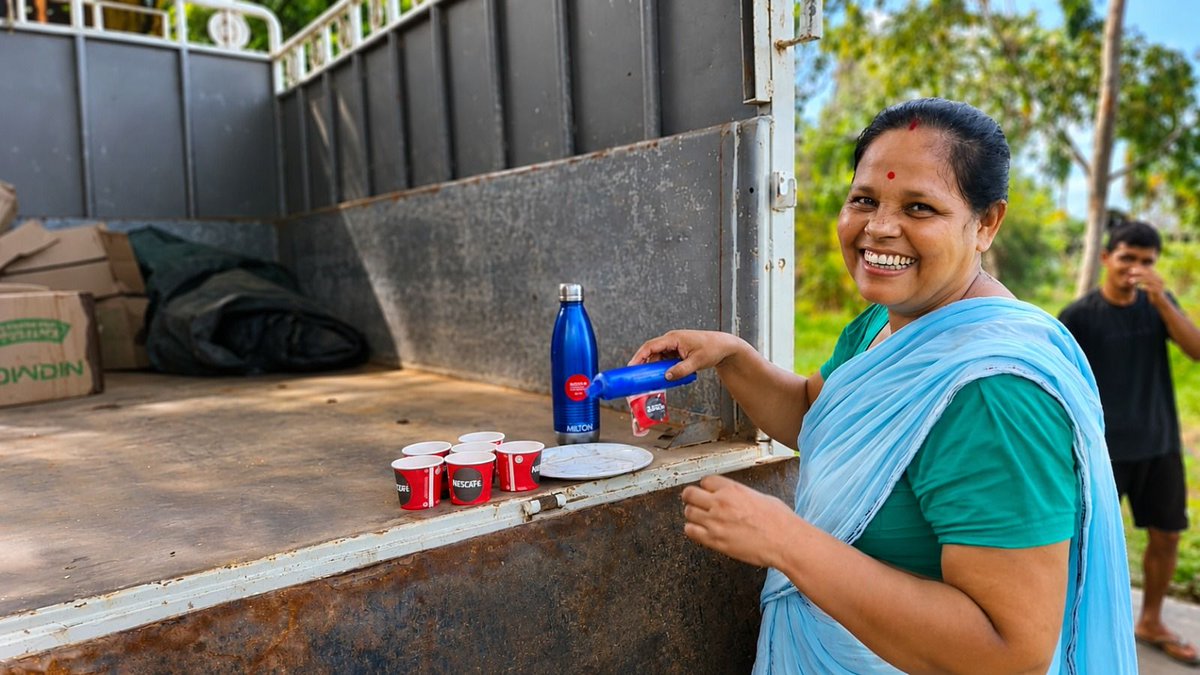
While our team was distributing relief materials in Ailamukh Habi Village, Gourisagar Block, Sivasagar district, we met Mrs. Dipti Dutta (Dipti Baidew), one of the flood-affected community members who had come to receive relief.
After receiving the relief kit, she walked up to me with a smile and said, "I have brought tea and biscuits for your team. You have come from so far to help us. Please have some tea."
It was a truly humbling moment.
Despite being affected by the floods herself, her first instinct was to care for others. Before and during she served us, I asked if I could take her photograph. Her smile grew even brighter and she said "theek ase".
As disaster responders, we often talk about the resilience of communities. But sometimes, resilience is not just about rebuilding homes - it is about choosing kindness and generosity even in the face of loss.
Thank you, Dipti Baidew, for reminding us why we do what we do. Your kindness gave our team the strength to keep going.
Sometimes, the people we set out to help end up inspiring us the most."
This makes us think about the people who stand with communities working in difficult conditions and channelising essential resources. Their physical and emotional toil often remains unseen. They too need care and strength to keep showing up. And sometimes, that comes from the very communities they are standing with. Because in times of crisis, care cannot be one-way. Kindness strengthens our shared humanity.
Contribute to Rahat-
https://t.co/ZtBSXENEE3
We are there.. Need you too! See less
The latest update of the Rahat Ground Report is out- https://t.co/6tAp2rum1O
Goonj's team is on the ground. Many states, including Assam, Arunachal Pradesh, Bihar, Himachal Pradesh, Jammu and Kashmir, Karnataka, and Maharashtra, are in deep crisis, and we must ACT NOW!
1. Contribute funds for transport and urgent relief supplies: https://t.co/hkt0fIEm0z
2. Drop relief material at a Goonj collection centre near you: https://t.co/wJqpnYL6Cv
There is an urgent need for essential items such as dry ration, ready-to-eat food, utensils, sanitary pads, solar lights, blankets, clothes (Including New Undergarments), basic medicines, chlorine tablets, bleaching powder, mosquito nets, raincoats, umbrella, tarpaulins, toiletries and school materials.
We are there.. Need you too!
Floods have destroyed homes across many districts of Assam. Let's stand with the affected people and ACT NOW!
1. Contribute funds for transport and urgent relief supplies: https://t.co/hkt0fIEm0z
2. Drop relief material at a Goonj collection centre near you: https://t.co/wJqpnYL6Cv
There is an urgent need for essential items such as dry ration, ready-to-eat food, utensils, sanitary pads, solar lights, blankets, clothes (Including New Undergarments), basic medicines, chlorine tablets, bleaching powder, mosquito nets, raincoats, umbrella, tarpaulins, toiletries and school materials.
We are there.. Need you too!
The monsoon has affected many parts of the country, triggering floods and landslides. This is the time to act with urgency. There is an urgent need for essential items such as dry ration, ready-to-eat food, utensils, sanitary pads, solar lights, blankets, clothes (Including New Undergarments), basic medicines, chlorine tablets, bleaching powder, mosquito nets, raincoats, umbrella, tarpaulins, toiletries and school materials.
1. Contribute funds for transport and urgent relief supplies: https://t.co/hkt0fIEm0z
2. Drop relief material at a Goonj collection centre near you: https://t.co/wJqpnYL6Cv
The latest edition of Dignity Diary is here: https://t.co/49g7kYkROo
The fury of this year's monsoon has triggered floods and landslides, affecting people in many parts of the country. This DD brings ground updates, urgently needed material and ways to contribute to ongoing relief efforts.
When an issue touches nearly half of humanity, it opens up questions that concern all of society.
You are invited to Menstruation Dialogue 2026- an annual dialogue that explores menstruation as a deeply human issue, shaped by our bodies, relationships, communities, systems, and everyday realities.
Registration link:
https://t.co/RHT19D7tLJ