Here are a few of the more interesting Slack messages exchanged privately by authors of the "Proximal Origin" paper -- one of the COVID pandemic's most influential scientific papers -- that were released today by @SenRandPaul...🧵
"glyphosate may act upon pathways leading to preterm birth and spontaneous preterm birth. Our study highlights pregnancy as a vulnerable period to glyphosate exposure."
Via Environmental Pollution
https://t.co/6r3ure5z0a
"Tobacco companies remain embedded in influential U.S. business groups worldwide, giving the industry a discreet and powerful channel to weaken regulation and undermine public health..."
Via @USRightToKnow
https://t.co/lugfftxWMn
Really small potatoes:
Trump Issues Order to Reduce Pesticides in Food as Kennedy Allies Fume. The order, which calls for studying the health risks of pesticides in the food supply, does not involve new federal funding, and does not call for regulations or legislation.
https://t.co/yPKvttKF0Z
U.S. Supreme Court delivers a massive favor to Monsanto/Bayer.
Supreme Court sides with Monsanto in case over cancer risks from weedkiller Roundup
https://t.co/e5hMV8uSkP
The EPA "has known for nearly a decade that an influential 2013 scientific paper that concluded glyphosate is safe was actually ghostwritten by developer Monsanto. But the agency never informed the public and continued to rely on it..."
Via @MotherJones
https://t.co/zXGlkncMBu
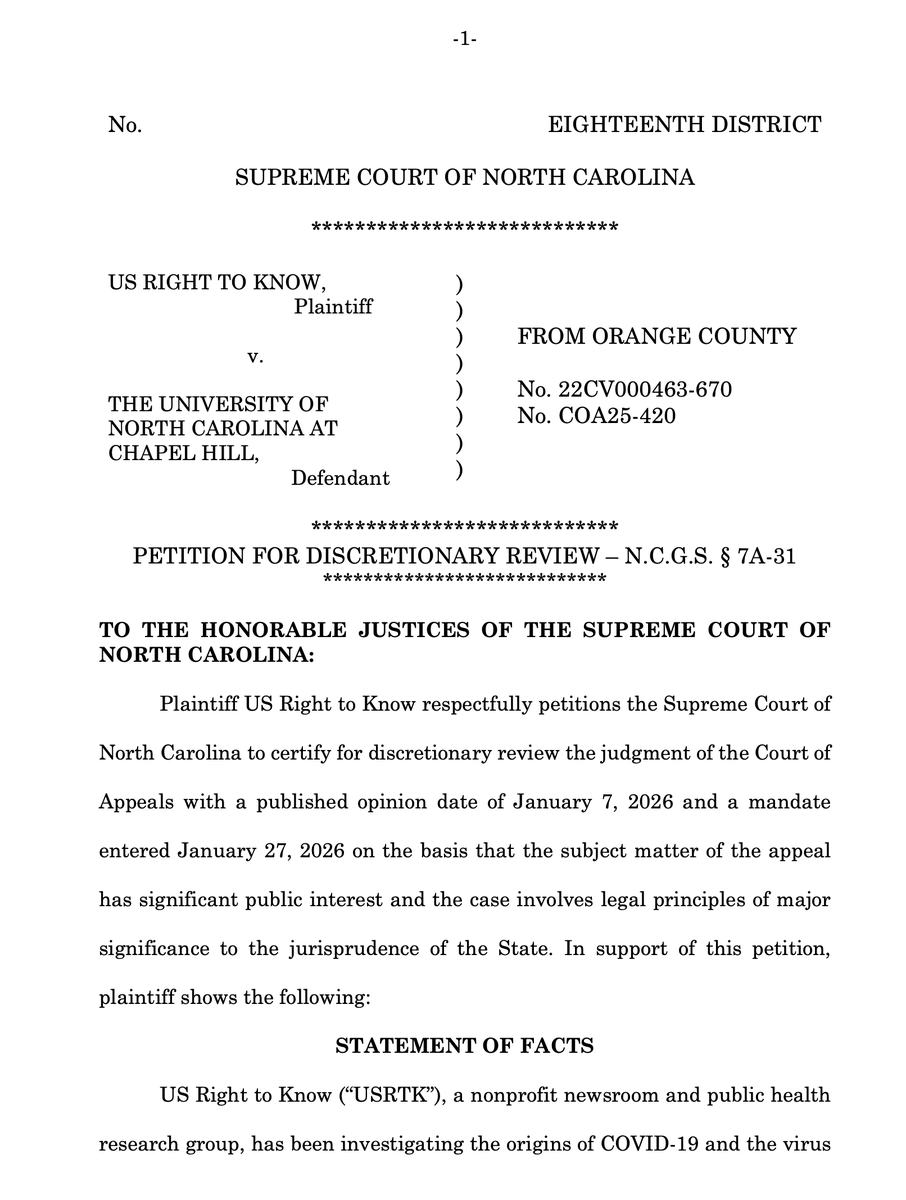
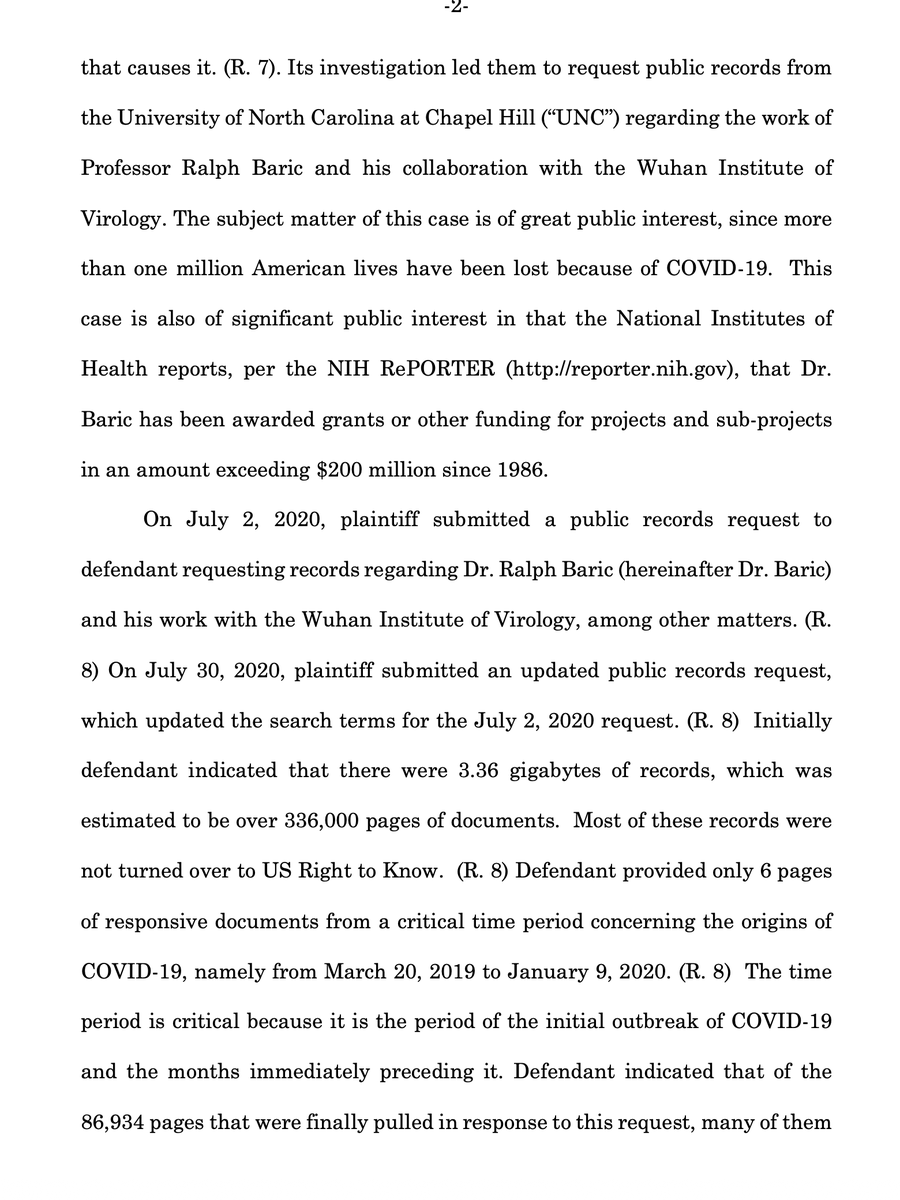
Today, the North Carolina Supreme Court denied our petition to compel the University of North Carolina to release about 50,000 pages of documents, mostly related to Ralph Baric, that may contain clues about the origin of the COVID-19 pandemic.
We are disappointed by this result. We believe that North Carolina, our country and the world deserve better. And that it is not the proper role of the University of North Carolina -- an institution of higher learning -- to hide or bury what it may know about the origins of the pandemic.
Today we appealed to the North Carolina Supreme Court to compel the University of North Carolina to release about 50,000 pages of documents, mostly related to Prof. Ralph Baric and his collaboration with the Wuhan Institute of Virology, which may contain clues about the origin of the COVID-19 pandemic.
For more than five years, we have been trying with the North Carolina Public Records Act to obtain these documents. We don’t really understand why the University of North Carolina has been so unwilling to provide documents about Prof. Baric’s work in the months immediately preceding the pandemic.
We believe the public has a right to know where the pandemic may have come from. We are trying to understand the origin of the COVID-19 pandemic in an effort to prevent the next pandemic.
Here is our petition for discretionary review.
https://t.co/fNwTybc77K
Newly Declassified 2020 Intelligence Assessment Found Wuhan Lab’s Conditions Were Ripe For Potential Coronavirus Release
Via @lewiskamb@USRightToKnow
https://t.co/jDSoJKGf00
Here’s how the Department of Energy drags its feet in producing its latest assessment of the origins of the COVID-19 pandemic. Our report to federal court. #FOIA
https://t.co/iGBANMbUjr
@Rebecca21951651 Unclear. There will be a status hearing with the DIA and us before Judge McFadden on June 22. Judge McFadden ordered the DIA’s general counsel to attend the hearing (if they do not produce the documents by then, which seems likely). After the hearing, we may know more.
Update: Judge Trevor McFadden just denied the Defense Intelligence Agency’s motion for extension of time to complete processing of documents (about Covid origins). Hooray for small victories. #FOIA
Delay after delay, here’s how the Defense Intelligence Agency is stonewalling our #FOIA litigation to pry loose documents about the origins of COVID-19.
https://t.co/2jM9nrlXHT
Delay after delay, here’s how the Defense Intelligence Agency is stonewalling our #FOIA litigation to pry loose documents about the origins of COVID-19.
https://t.co/2jM9nrlXHT
Pesticide use around homes and farms is linked to childhood leukemia and brain tumors. Forty years of studies find higher cancer risks among children exposed during pregnancy and early life to pesticides used on farms, lawns and pets. Via
@USRightToKnow
https://t.co/GLFOWRbFcE
Nearly 300 studies link the common pesticide chlorpyrifos to multi-organ damage, DNA disruption, and chronic disease
Via @USRightToKnow
https://t.co/NMctkUKErT