A historic milestone for #CervicalCancerEliminationDay ✨
ZERO women aged 20-24 died from cervical cancer in England between 2020 and 2024, according to a study published in The Lancet.
This generation was the first to be offered the HPV vaccine at ages 12 and 13. The data proves what we’ve known all along: vaccines save lives, and public health initiatives work: https://t.co/kxTwXSLbzI
We are proud to introduce the women leaders driving the Coalition to Eliminate Cervical Cancer. Together, they are championing bold action to make cervical cancer a disease of the past within a generation.
#CervicalCancerElimination#WomenInGlobalHealth
“The HPV vaccine is a real opportunity to save lives and protect the health of our daughters” - many thanks to Burundi’s Minister of Health Dr. Fidèle Nkezabahizi for this important reminder this #CervicalCancerEliminationDay! We welcome Burundi’s commitment to protect generations of girls against the leading cause of cervical cancer with Gavi support. @FideleDr@msp_burundi
A recent Swedish study followed nearly a million women for 18 years after HPV vaccination and found zero signs of protection fading. Combined with US data showing cervical cancer rates falling fastest where vaccination is highest, the evidence is now hard to argue with: the HPV vaccine doesn't just work, it keeps working: https://t.co/MDze4xhb9F #CervicalCancerEliminationDay
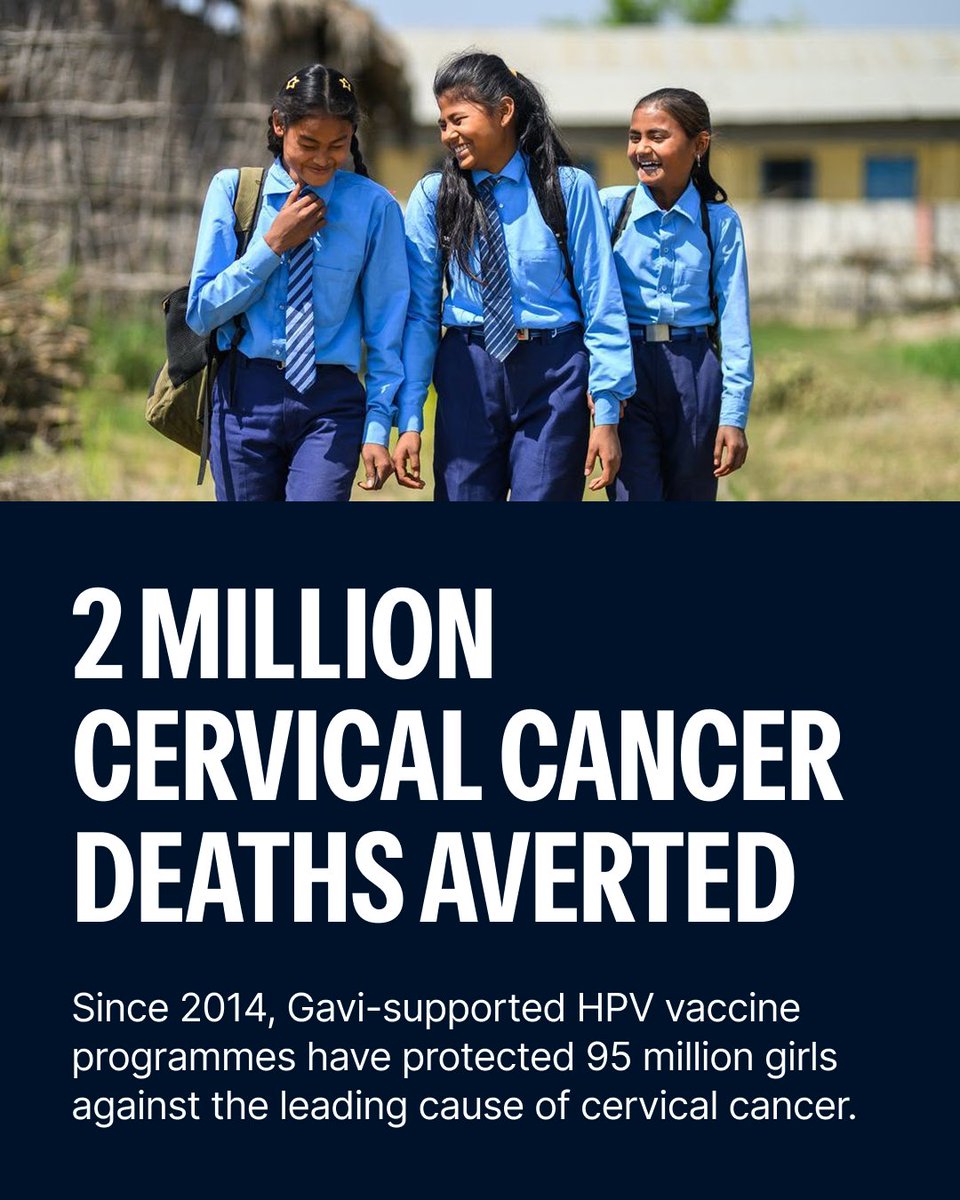
.@Gavi has protected over 95 million girls against #cervicalcancer, preventing over 2 million deaths since 2014. Every dose of the HPV vaccine brings us one step closer to making this the first cancer to ever be eliminated. #CervicalCancerEliminationDay
Since launching HPV vaccines in 2014, South Africa is reporting an 80% drop in infections with the HPV types responsible for most cervical cancers. Here’s how school-based HPV vaccination programmes are driving success in a country with one of the world’s highest burdens of #cervicalcancer: https://t.co/JyQF7Hisjn #CervicalCancerEliminationDay
Future doctors. Scientists. Fashion designers. And a whole lot of dreams still taking shape.
We asked a group of girls in Kibera, Kenya what they want to be when they grow up. Their answers are as varied as their ambitions, and the future is full of possibilities. That's exactly how it should be.
On #WorldCervicalCancerEliminationDay, we're celebrating those possibilities, and the importance of ensuring every girl has the chance to grow up healthy, pursue her ambitions and decide what her future looks like.
Cervical cancer is one of the few cancers we have the tools to eliminate. Through HPV vaccination, screening and treatment, we can prevent countless cases of cervical cancer, help more girls live long, healthy lives and see where their dreams take them.
Trust in health services is rarely built, or lost, in a single encounter.
In Guissa Delemdi, Chad, mothers described feeling disconnected from health services after being overlooked during previous health interventions, like bed net distribution.
That sense of exclusion also shaped how some families responded to vaccination efforts. Some would even temporarily leave the village when health teams arrived.
Here’s how one preventable tragedy broke through the distrust and galvanised a community: https://t.co/u7XLrRYfQ6
A women’s economic empowerment project in Kaduna State, Nigeria, is turning local health entrepreneurs into vaccine champions. Here’s how Nigeria's health entrepreneurs are closing immunisation gaps: https://t.co/4phHCNXI0s
How can vaccines and other essential health services reach communities that aren’t accessible by roads?
In southern Nigeria, ten ambulance boats are carrying health workers and vaccines across Bayelsa’s waterways, bringing routine immunisation closer to tens of thousands of previously unimmunised children.
Read more: https://t.co/3Vn4ZknDBs
Some of the most important innovations in global health are also the easiest to overlook.
Our first VaccinesWork Photo Story takes a closer look at one of those innovations, and the impact it’s had on the people who rely on it every day. See the story told in photos on #VaccinesWork: https://t.co/9hBC56QItr
For some mothers in eastern Chad, getting a child vaccinated can mean more than four hours of walking, or travelling long distances by donkey. So health workers are helping improve access by bringing the clinic to them.
Here’s how a mobile clinic is reaching even the most remote communities with essential vaccines: https://t.co/bCvKChmUIJ
Twenty-five percent of children in Mozambique have never had a single vaccine. A new AI-driven data platform is helping to close these gaps: https://t.co/V1gVVEGYXi
Malaria is stealing children’s education, futures and earning power.
A new @MalariaNoMoreUK report reveals that children born between 2000-2045 face an 8% drop in lifetime earnings.
End malaria to invest in learning, earning, and economies: https://t.co/cob60zQoi1 #ZeroMalaria
Introducing Photo Stories, a new storytelling format on Gavi’s VaccinesWork platform 📸
Through compelling photography and firsthand accounts, our new series take a closer look at the people, places and innovations shaping global health.
Our first photo story spotlights the 30-year history of vaccine vial monitors. They’re the tiny, heat-sensitive labels that help health workers determine whether vaccines have been exposed to too much heat, keeping people safe and preventing unnecessary waste.
From Uganda to Indonesia, see how this simple technology has helped transform vaccine delivery: https://t.co/9hBC56QItr
Ever heard the term “Vaccinodrome?” In Mali, these temporary vaccination sites are set up when and where the need suddenly arises.
Here’s how it’s making a big difference in helping zero-dose and under-immunised children: https://t.co/mBFFTGui0y
Schools already have the trust of families. Now, new research suggests that may make them one of the strongest places to start when trying to increase HPV vaccination. Read more: https://t.co/AgtCu26c9n
Can new vaccines change the course of an outbreak while it’s still unfolding?
Two vaccines specifically targeting Bundibugyo virus are set to join an ongoing trial in the DRC, as researchers urgently work to establish whether they can safely and effectively protect people against this form of Ebola.
The results could help shape the current response and how future Bundibugyo outbreaks are stopped.
Read more: https://t.co/fIBqJpoc1U
Fungal infections kill millions every year, yet few health systems monitor them. Testing sewage could reveal where drug-resistant fungi are spreading. Read more: https://t.co/iRZvIGvVQk via @ConversationUK
1️⃣ 2️⃣ 3️⃣
🎤 Last week, Tanya caught up with @gavi CEO, Dr Sania Nishtar to discuss how we reform global health architecture, and to ask forn her three recommendations to the new Foreign Secretary, Ed Miliband.
Here's what she had to say!