Our Co-founder and CEO, @jakeloosy, joined @FoxBusiness to discuss Gecko's $300m contract with the U.S. Navy.
Speaking with @RiggsReport, Jake outlined the importance of this technology to ensure America's ships stay at sea for longer, instead of stuck in drydock.
Gecko can save the Navy up to $8m in repair costs alone per ship, and carry out inspections in a matter of days instead of months. The initial $71m contract was more than quadrupled in the space of six months to $300m following these results.
Today, we're announcing that our contract with the U.S. Navy has quadrupled to $300 million to improve fleet readiness.
Gecko’s AI and robotic technology is able to save up to $8 million in repair costs alone per ship, while also identifying structural issues up to 50 times faster than traditional methods.
By reducing inspection times from months to days we are able to get ships back to sea quicker.
This fourfold expansion will accommodate rapid robotic deployment across the Navy and is one of the strongest public endorsements yet of operational AI and robotics in defense.
Five readings per hull plate leave a lot of steel unmeasured.
For one allied navy, Gecko is replacing scattered spot readings with millions of measurements across the hull. In Cantilever, maintenance teams can pinpoint damage, plan repairs, and track the ship’s condition over time.
Better evidence. More precise repairs. Helping ships return to sea safely, on time, and ready to deploy.
We’re partnering with @anduriltech and deploying our AI and robotics for the new Arsenal-2 shipyard to accelerate submarine production.
Gecko's technology has already reduced inspection timelines for forged components in the manufacturing process by up to 90%.
This partnership is a direct response to America's maritime production challenge, helping rebuild the industrial capacity required to deliver the next generation of submarines, ships, and autonomous maritime systems.
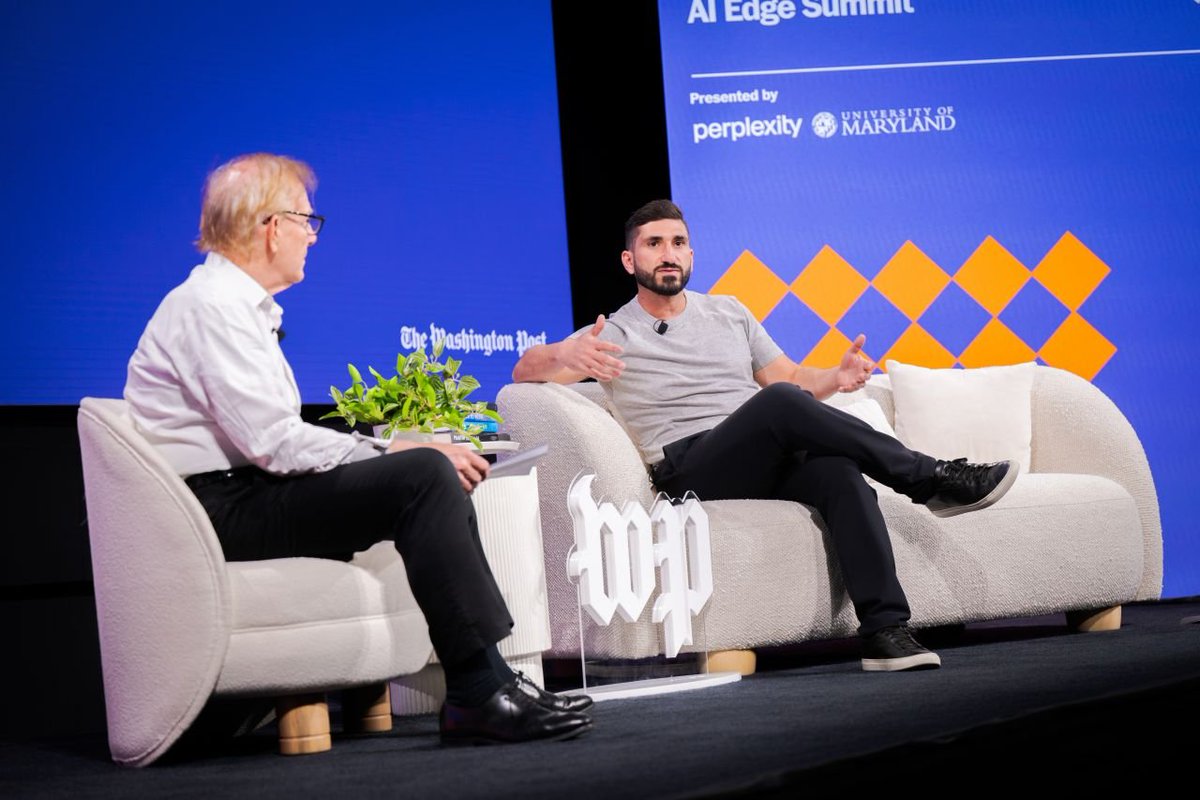
As AI and robotics transform American industry, @washingtonpost spoke to Gecko's CEO about being at the heart of this change.
@jakeloosy joined @IgnatiusPost at the recent AI Edge Summit in DC to discuss American manufacturing, military readiness, jobs, and national security - and how Gecko's technology is helping to meet this moment.
📸: Abby Greenawalt / for The Washington Post
Watch @jakeloosy speak to the world's media on how Gecko is working with @nvidia to prevent AI going beyond human control.
Gecko has tested and is building with NVIDIA OpenShell software, part of the NVIDIA Open Agent Safety Platform, to ensure autonomy can be deployed responsibly across the robotics industry.
AI agents are taking on more critical work.
The security behind them needs stronger boundaries.
We’re building the NVIDIA Open Agent Safety Platform with partners across the industry to help people put agents to work with greater confidence.
Hear from @JensenHuang:
We’re partnering with @nvidia to deploy OpenShell so AI agents can operate responsibly in the physical world.
Steel-toed boots and hard hats protect us when we work in industrial environments. As we introduce AI agents into those environments, we need to equip them with safeguards of their own: enforced operating boundaries that protect the people and equipment around them.
We've partnered with @nvidia on their new NVIDIA Open Agent Safety Platform to prevent AI from going beyond human control.
It follows recent security incidents where agents have circumvented application-level controls.
NVIDIA, through tests with Gecko, are acting before that risk becomes a real-world crisis, and we are building with OpenShell software to create enforceable boundaries that keep AI-powered robots operating within human-defined permissions.
These are the safeguards that the wider industry needs to deploy greater autonomy responsibly.
Every physical system has a history. Most organizations can only see fragments of it.
Evidence created during manufacturing becomes separated from what is learned in operation. Maintenance decisions become disconnected from the work that follows. At each handoff, context is lost and rebuilt - when it exists at all.
Physical evidence should form a continuous thread—from how infrastructure was built to how it has changed, the decisions made about it, and what happened next.
That’s what Gecko is building.
Finding a defect is only the beginning.
On a complex component, that finding must be precisely located, repaired, and inspected again—sometimes across many cycles and multiple teams.
Gecko’s visual inspection platform for evidence and reconstruction (VIPER) captures high-resolution images and dense 3D data, creating a shared history of what was found, where work occurred, and how the part changed.
Better evidence for every repair. Less starting over.