2012. 2013. 2023. OCR keeps resolving the same complaint: consent goes out in English, no process to check which families need translation.
https://t.co/K5d6yB1nOf
SB 12 made club participation opt-in. Per student, per club. A district with several hundred clubs now needs an active consent on file before a student walks into a meeting. Most districts handled health services first. Clubs are quieter, and the volume is bigger.
COPPA 2026 turned into an inventory test. The vendor inbox wave is flagging which vendors do things school consent never covered. Districts without a current vendor list can't read the answer.
https://t.co/y4il49GdmM
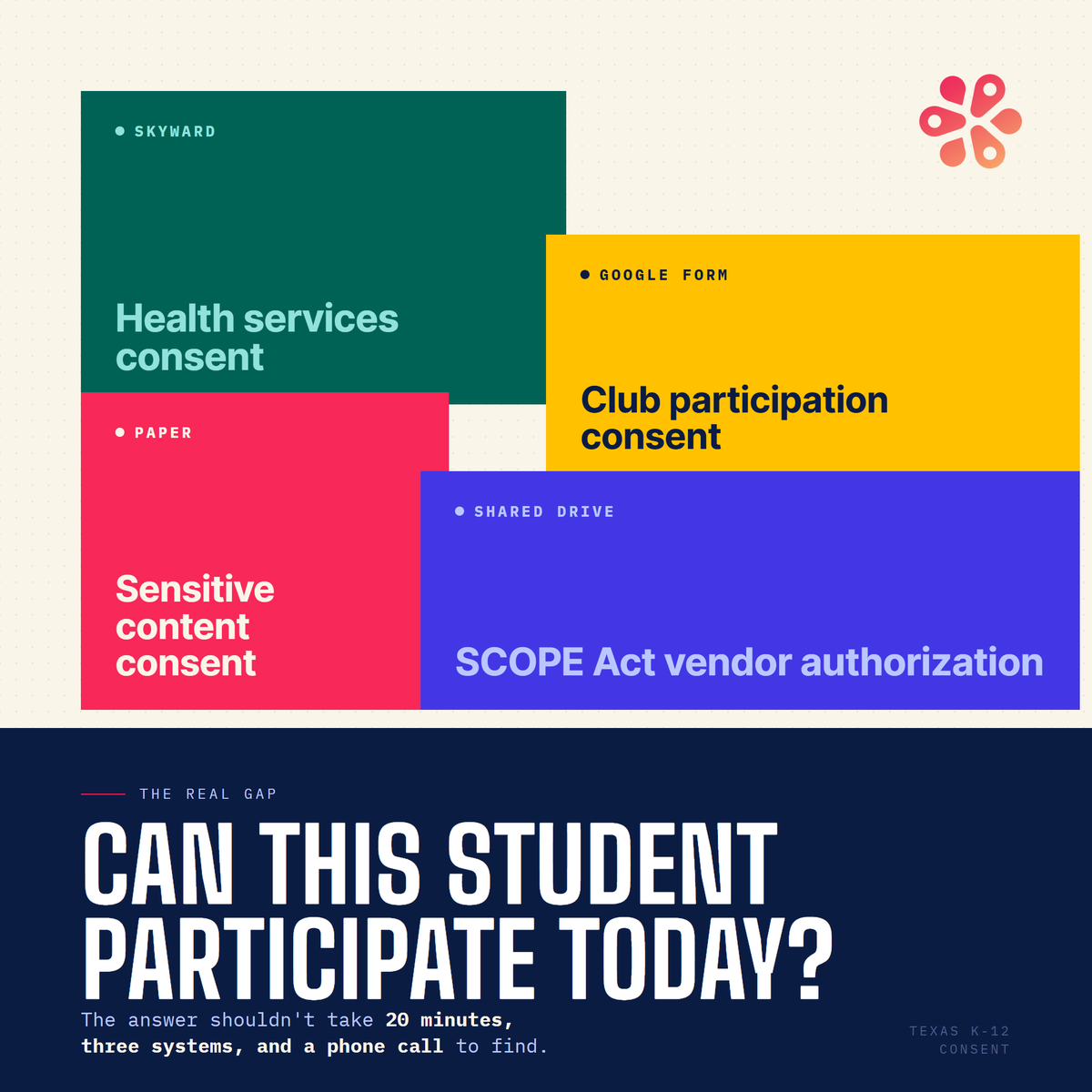
Health consent in Skyward. Club consent on a Google Form. Sensitive content on paper. SCOPE Act vendor authorizations in a shared drive.
"Can this student participate today?" shouldn't take 20 minutes and three systems to answer.
https://t.co/ZbCDilYxey
Teens with major depression got treatment 9 points less often in states requiring parental consent (37%) than in states without (46%).
Refusal is rare. The gap is workflow: paths longer than the window to ask for help.
JAMA Pediatrics, Dec 2024.
https://t.co/ZbCDilYxey
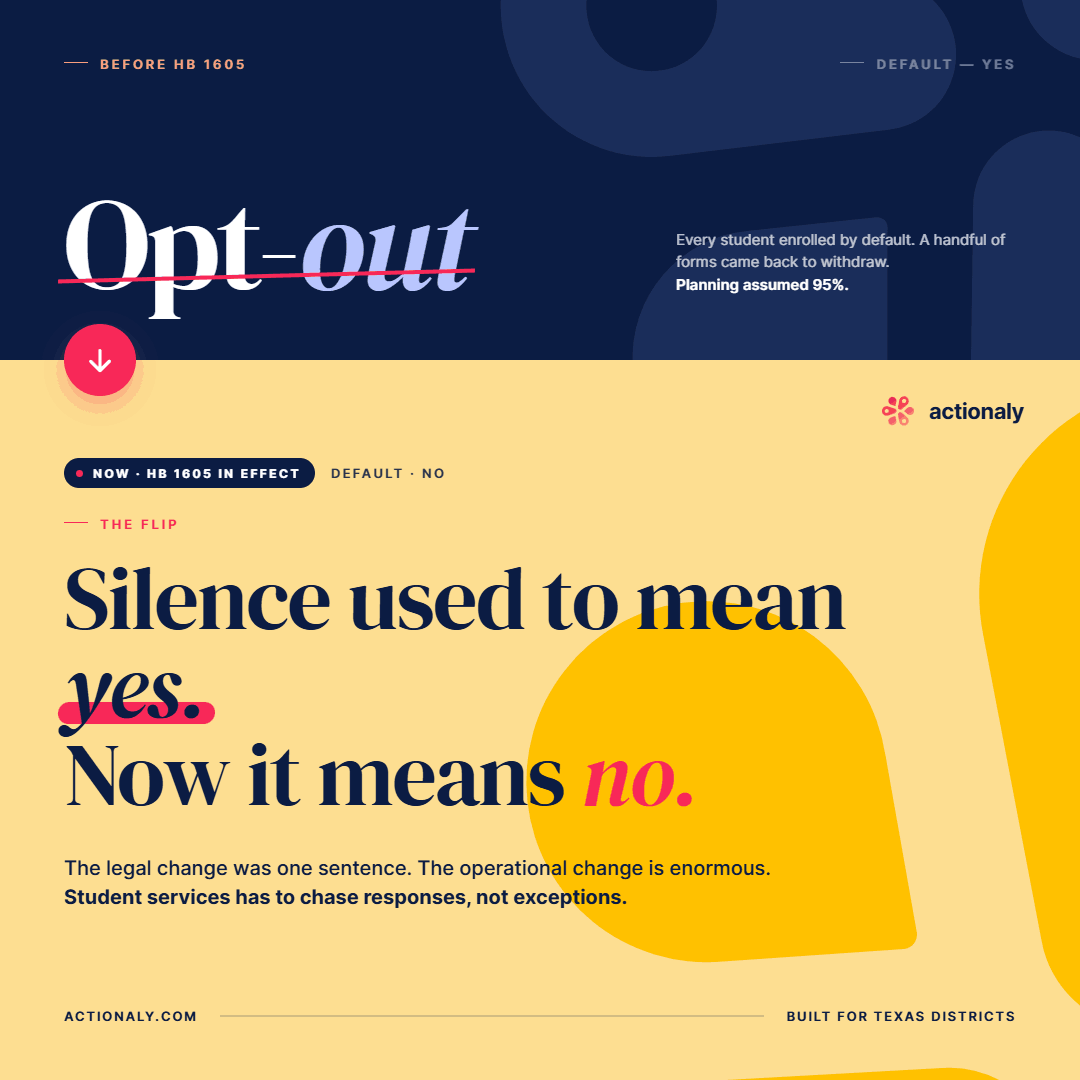
HB 1605 flipped Texas sex ed consent from opt-out to opt-in.
Before: track the 15 families who said no.
After: chase consent from hundreds. Every grade. Every year.
Same staff, same families. The default changed everything.
https://t.co/ZbCDilYxey
First full school year under SB 12 is wrapping up.
If asked for a complete record of every consent decision this year, how long would it take?
Districts with dedicated tracking: minutes. Spreadsheets and SIS fields: days.
Year-end is when gaps surface.
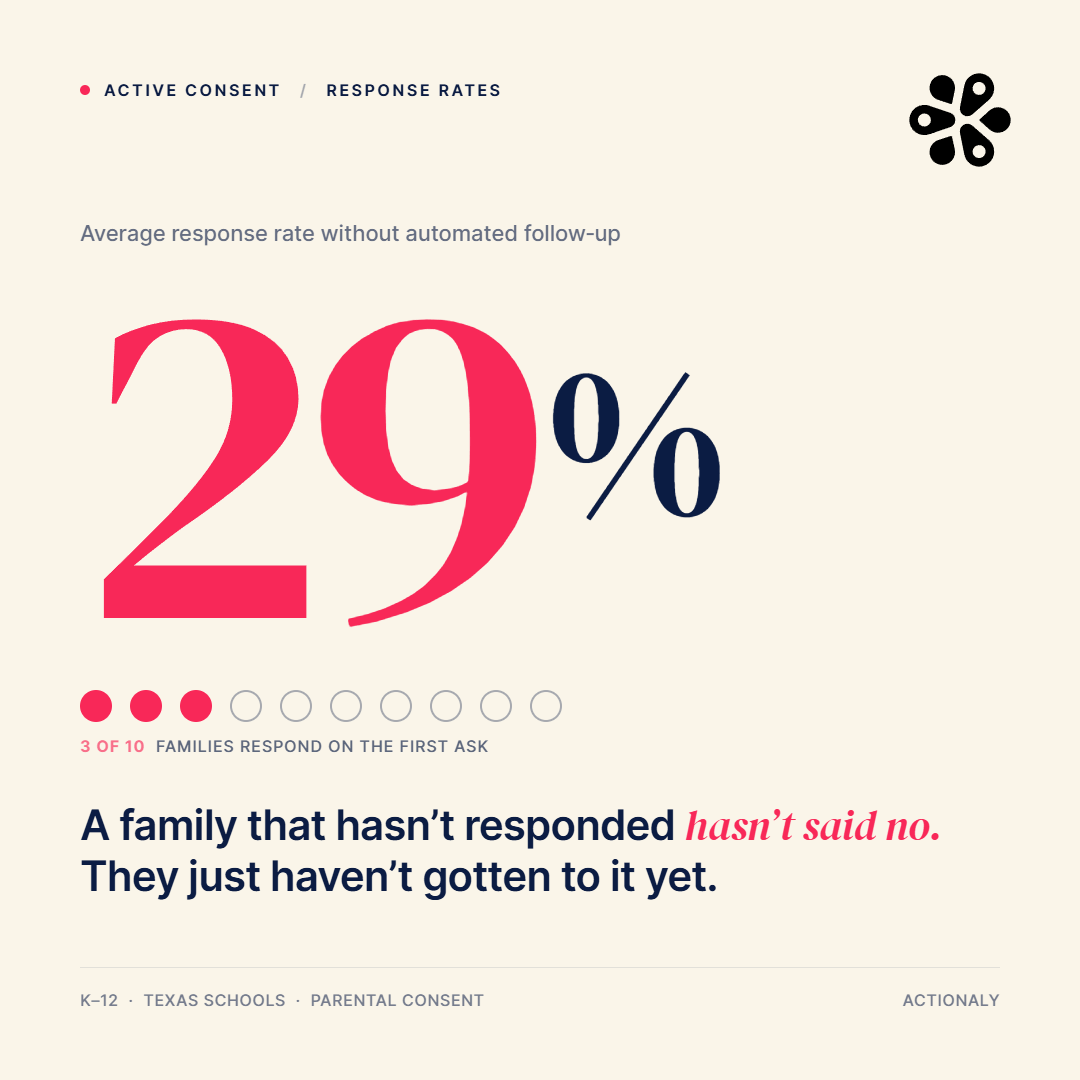
29% response rate under active consent. 7 out of 10 families need someone to follow up.
In most districts, that's one person already doing a dozen other things. The families aren't unwilling. They're busy.
In Kentucky, 14 districts switched from passive to active consent.
Participation dropped from 79% to 29%.
The gap wasn't refusal. It was forms not coming back.
Under SB 12, when 40% of parents miss the deadline. The data shows it's a workflow problem.
4-page consent form: 64% returned signed.
3-page version, similar schools: 81%.
One fewer page. 17 more points.
Form design isn't a polish item. It's consent infrastructure.
https://t.co/ZbCDilYxey
Opt-out: silence means yes. Opt-in: silence means no.
HB 1605 rewrote one sentence of Texas law and reversed the operational workflow for every health services team in the state. Student services now chases responses, not exceptions.
https://t.co/ZbCDilYxey
29% vs 75%+.
The gap between consent response rates with manual follow-up and automated multi-channel reminders. Same families, same forms, different workflow.
"Can Skyward just handle this?"
For annual enrollment packets, yes. For whether a nurse can do today's screening, no. The SIS runs on annual cycles. Program-level consent doesn't.
https://t.co/WCZQL7fr4I
"Pull the consent records for the counseling program."
That board-packet question is a multi-hour scavenger hunt in most districts: spreadsheets, paper files, SIS, Google Forms. When consent lives as a per-student record, pulling the report takes minutes.
TEA's SB 12 guidance arrived August 28, 2025. The law took effect September 1.
Four days to build consent forms, train staff, and set up tracking for a law that changed how health services work in every building.
Seven months later, some districts are still refining.
2,982 ed-tech tools per U.S. district last year. Most adopted mid-year, after enrollment consent already went home. The consent families signed in August wasn't built to cover a reading app added in October.
9 in 10 K-12 ed-tech leaders oversee their district's privacy program. 3 in 4 say it's not in their job description.
The #1 barrier to improving it? Not budget. Time.
https://t.co/ZbCDilYxey
#K12Education
A big issue we see: English-only consent form, sent through a login portal. Under SB 12, non-response counts the same as no consent. The student sits out. The family never saw the form.
Learn more here: https://t.co/ZbCDilYxey
Texas districts now manage 27+ distinct consent categories. Each one has its own workflow, timeline, and compliance risk. Two legislative sessions created all of it. The job title stayed the same. The job didn't.
https://t.co/ZbCDilYxey
80% of school nurses already reported burnout symptoms before SB 12 added consent verification to their workload. Admin tasks were already the biggest chunk of their day; bigger than direct student care.
Learn more here: https://t.co/gXc5rnfGlV
#TxEd#K12#ParentalConsent