3 years on, with 1,000s of academics using it, this is still my #1 note-taking rule:
Don’t just summarise papers.
Take notes on topics, separate from papers.
Source notes = papers.
Topic notes = concepts.
Link ideas → sources.
That’s how notes turn into a second brain 🧠
And writing stops being scary.
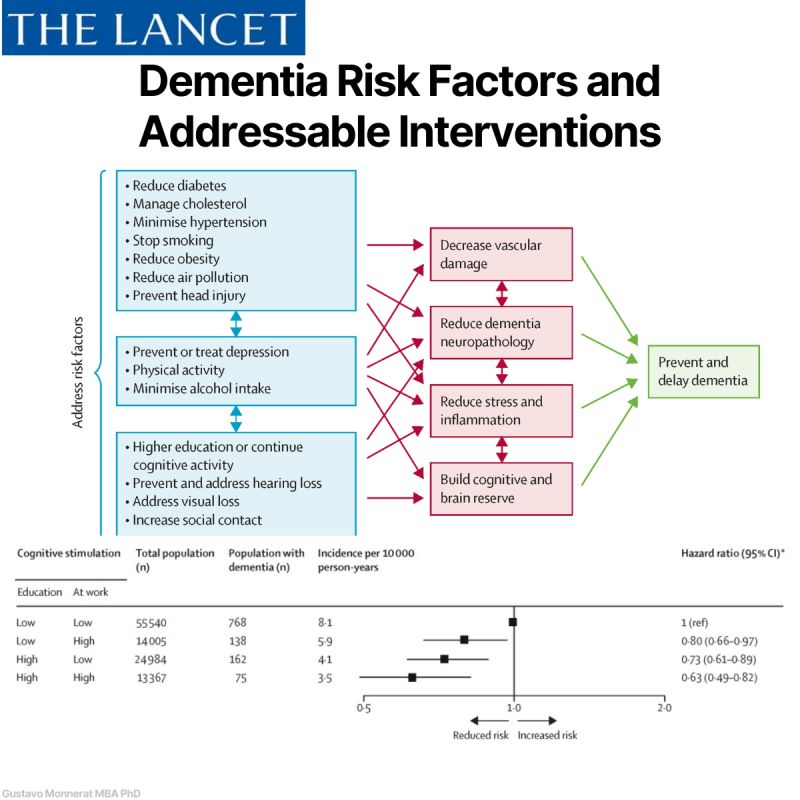
Can We Prevent Dementia? Science Says Yes
1. Cognitive reserve protects your brain by reducing blood vessel damage, lowering chronic inflammation, and keeping senses sharp.
2. Mental, physical, and social activity strengthen this reserve and build resilience.
3. Hearing loss and depression are major risks. Fixing them could prevent almost half of dementia cases.
4. Life-course habits matter. Small daily actions over decades add up.
Could AI tools for work, summarizing, and learning boost brain stimulation and lower dementia risk?
#DYK digital innovations offer real solutions for reducing disaster risk & its impacts?
Learn this and much more in The Impact of Disasters on Agriculture & Food Security 2025: Digital solutions for reducing risks and impacts
Download YOUR copy today👇
📕https://t.co/xYS9ViVGJx
2026,完全可以用notebooklm 的fast reasearch或 deep research 来自动收集资料,取代多年来手工google,一条条慢慢收集的过程。
主题研究 80% 的资料,可以 deep research 搞定;剩下少部分 20% 的资料,自己精挑细选,包括自己的 logseq 笔记,自己的阅读库资料等。
我录了一个小视频,看起来更直观。
Exercise vs Alzheimer’s: How Moving Your Body Protects Your Brain
Science-Backed Insights (2025 Review)
1. Alzheimer’s is not inevitable
Up to 30% of Alzheimer’s risk is linked to modifiable factors, including physical inactivity. Exercise is one of the strongest protective tools.
2. Exercise slows brain ageing linked to Alzheimer’s
Regular physical activity preserves hippocampal volume, supports memory, and delays cognitive decline, all early markers affected in Alzheimer’s disease.
3. Muscles release anti-Alzheimer’s signals
Exercise triggers muscle-brain crosstalk via myokines like BDNF, CSF1, VEGF, and cathepsin B, which promote neurogenesis, synaptic health, and brain blood flow.
4. BDNF protects memory circuits
Exercise-induced BDNF increases hippocampal size and memory performance, counteracting the hippocampal shrinkage seen in Alzheimer’s.
5. Exercise reduces neuroinflammation
Chronic brain inflammation accelerates Alzheimer’s pathology. Exercise regulates microglia activity and lowers inflammatory signalling in the ageing brain.
6. Better myelin, better cognition
Alzheimer’s is associated with early white-matter damage. Exercise supports myelination, improving neural communication and cognitive resilience.
7. Stronger blood-brain barrier = less amyloid buildup
Exercise improves blood-brain barrier integrity, enhancing clearance of amyloid-beta, a hallmark of Alzheimer’s disease.
8. ApoE4 risk is not destiny
Exercise stabilizes ApoE function, supports cholesterol balance in brain cells, and may reduce Alzheimer ’s-related damage even in genetically at-risk individuals.
Exercise doesn’t just slow ageing, it targets key Alzheimer’s mechanisms.
Move your muscles. Protect your memory. Future-proof your brain.
Creatine made simple: how your body builds and uses its energy buffer
Creatine is a molecule your body makes naturally to keep energy flowing smoothly, especially in muscles and the brain. Here’s how the system works:
1️⃣ Where It Begins
Creatine starts in your kidneys, where the amino acids arginine and glycine combine to form guanidinoacetate (GAA).
🟢 Example: This first step is like assembling the base structure of a battery.
2️⃣ The Liver Finishes the Job
Guanidinoacetate travels to the liver, where it’s methylated by S-adenosyl-methionine (SAM), a reaction that converts it into creatine.
🟢 Example: The liver adds the “charge” that activates creatine for energy storage.
3️⃣ Creatine Travels to Muscles
Once made, creatine moves through the bloodstream to muscles, the heart, and brain, where it acts as an energy reserve.
🟢 Example: About 95% of your creatine is stored in muscle tissue, ready to recharge your cells when energy runs low.
4️⃣ The Energy Exchange System
Inside muscle cells, creatine and ATP (your cell’s energy currency) are in constant exchange:
When energy is plentiful, ATP donates a phosphate to form phosphocreatine (stored energy).
During activity, phosphocreatine donates that phosphate back to ADP, quickly regenerating ATP.
🟢 Example: This is your body’s “instant energy buffer” during sprinting or lifting.
5️⃣ Creatine Recycling and Excretion
After use, some creatine converts into creatinine, a natural byproduct filtered out by the kidneys.
🟢 Example: This is why creatinine levels are used in blood tests to check kidney function.
6️⃣ Why It Matters
Creatine supports:
Rapid ATP regeneration in muscle and brain.
Cellular hydration and stability.
Methylation balance, since it uses SAM in its synthesis.
🟢 Example: Supplementing creatine doesn’t just enhance performance, it supports cellular metabolism and brain health too.
Creatine acts as the body’s built-in energy recycling system. Made in the kidneys and liver, stored in muscle, and constantly recharging ATP, it’s one of the most efficient energy buffers biology ever designed.
How to convert a paper into a poster in seconds?
1. Go to https://t.co/Fr0Y2Wp0vY
2. Upload the PDF of your research paper.
3. Enter the prompt to specify your poster requirements
4. That’s it. SciSpace will create a perfect poster for you
5. Once ready, download your poster in PPT format
Why do myokines matter? BDNF grows muscle, Myostatin breaks it down. Exercise flips the switch, inactivity keeps "the lights off"
Daily reminder to just move, even if only a bit, today
How do you stay strong?
Your brain ages at the same speed whether you have a PhD or high school diploma.
Your daily choices - exercise, sleep, social connection - matter more than the degrees on your wall.
Mitochondrial health is crucial for overall health. Several nutrient and non-nutrient compounds have evidence for supporting mitochondrial function and health. Of note, regarding their effects on mitochondrial health, it is typical that most research concerning this topic is conducted in rodent models or cell cultures. However, many (but not all) of these nutrients also have some level of clinical data suggesting that they support mitochondrial health in the appropriate doses, circumstances, and populations.
Doses, bioavailability, tissue distribution, population demographics, and circumstance (e.g., presence of disease), etc. would play primary roles in determining the type of effect, the magnitude of effect, and location of the effect (e.g., liver, brain, heart, skeletal muscle, etc.) that such nutrients would have on mitochondrial health